
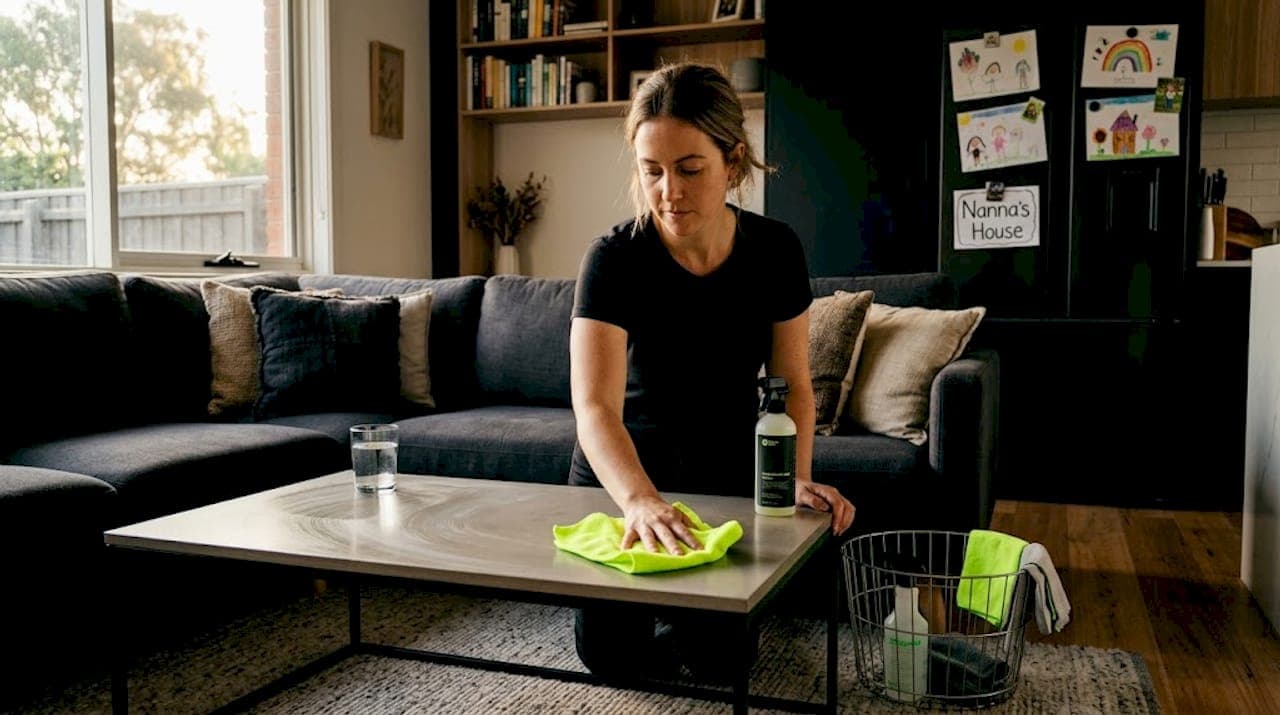
You scrub the house top to bottom, stand back, and feel that rare satisfaction. Then life happens. Within a week, the kitchen bench is buried again, the bathroom mirror is spotted, and the floor needs attention. Maintaining a clean home between deep cleans is where most people fall apart, not because they are lazy, but because nobody handed them a realistic system. This guide gives you one. You will find daily routines, weekly cycles, and a few techniques that genuinely reduce the effort required to keep things looking good without waiting for the next big clean.
Table of Contents
- Key takeaways
- Maintaining a clean home between deep cleans starts with the right tools
- Daily habits that keep your home tidy
- Weekly routines that work around your life
- The closing shift: resetting your home at night
- Staying consistent without burning out
- My honest take on keeping a home clean
- When your home needs more than a daily routine
- FAQ
Key takeaways
| Point | Details |
|---|---|
| Stock supplies room by room | Keeping tools where you use them removes friction and makes quick clean-ups far more likely. |
| Daily 15 minutes is enough | A focused daily routine targeting high-traffic areas prevents grime build-up between deep cleans. |
| Cycles beat rigid schedules | Flexible cleaning cycles reduce guilt and help you stay consistent without burning out. |
| The closing shift works | A nightly reset of dishes, counters, and clutter means you wake up to a calmer home every morning. |
| Consistency beats perfection | Small, regular efforts are more effective for long-term upkeep than waiting to do everything at once. |
Maintaining a clean home between deep cleans starts with the right tools
Before you build any routine, you need the right supplies in the right places. This sounds obvious until you realise how often cleaning gets skipped simply because the spray bottle is in the laundry and you are standing in the bathroom with thirty seconds to spare.
The core kit for most rooms is short. A microfibre cloth, an all-purpose spray, a small dustpan and brush, and a roll of paper towel cover the majority of quick tasks. For bathrooms, add a toilet brush and a tile spray. For the kitchen, a degreaser and a dish scrubber round things out.
Storing supplies in the room they are used reduces friction and increases the chance you will actually follow through on quick cleaning tasks. A small caddy under the bathroom sink, a basket of kitchen cleaning products in the cupboard beneath the sink, and a compact dustpan in the hallway closet each remove one more excuse to delay.
| Room | Must-have supplies |
|---|---|
| Kitchen | All-purpose spray, degreaser, microfibre cloth, dish scrubber |
| Bathroom | Tile spray, toilet brush, microfibre cloth, paper towel |
| Living areas | Microfibre duster, small dustpan and brush, fabric freshener |
| Bedroom | Microfibre cloth, linen spray, small bin with liner |
Pro Tip: Put your cleaning supplies in a small decorative basket or container. When it looks tidy, you are far more likely to leave it on the bench or shelf rather than hiding it away, which means it is always within reach when you need it.
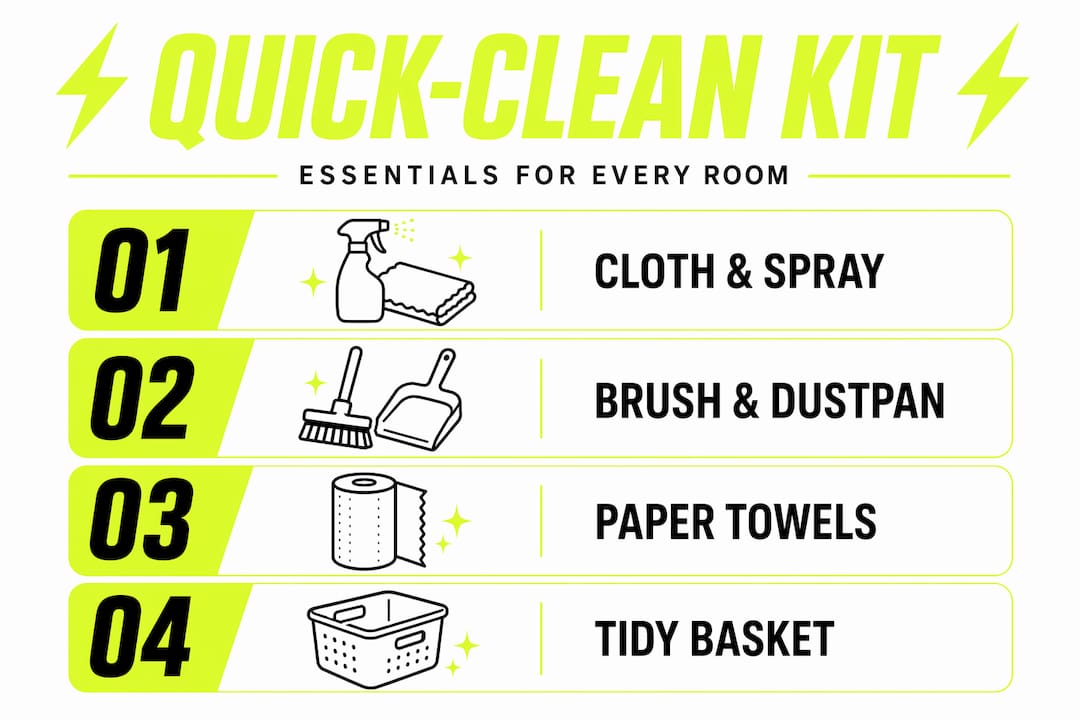
A quick-clean kit takes this one step further. Fill a small tote or caddy with your most-used products and keep it somewhere central, like a kitchen bench or bathroom shelf. When you have five minutes, you grab it and go. No searching, no delays, no excuses.
Daily habits that keep your home tidy
The single most effective thing you can do for maintaining cleanliness at home is commit to a short daily routine. Not an hour. Not even thirty minutes. A 15-minute focused daily routine prevents grime build-up and keeps your home functional between deeper sessions.
The five tasks that deliver the most return for your time are:
- Make the bed. It takes two minutes and immediately makes the bedroom feel ordered. A made bed has a disproportionate effect on how tidy a room looks.
- Do a quick floor check. Sweep or vacuum high-traffic areas like the kitchen, hallway, and living room. You are not doing a full vacuum. You are catching crumbs and debris before they spread.
- Wipe kitchen and bathroom surfaces. Benches, the stovetop, and the bathroom basin collect grime fast. A thirty-second wipe with a damp cloth keeps them from needing a scrub later.
- Deal with clutter. Put things back where they belong. Mail on the bench, shoes by the door, cups left on the coffee table. A single sweep through the main rooms takes less than five minutes.
- Run one load of laundry. Consistent daily execution of these five tasks significantly reduces weekly cleaning burdens and stops laundry from becoming a mountain.
One technique worth adopting straight away is the spray-and-move method. When you spray a surface, do not wipe it immediately. Move on to another task and come back. Letting cleaning products sit for 5 to 15 minutes breaks down grime and means you wipe rather than scrub. This alone cuts the physical effort of cleaning almost in half.
The mistake most people make is trying to do everything perfectly every day. You do not need to. You need to do the high-impact tasks consistently. A bed made and a wiped-down kitchen bench will make your home feel clean even if the windows have not been touched in a fortnight.
"Cleaning consistently with manageable tasks is more effective for long-term upkeep than striving for perfect cleaning at once." — Good Housekeeping
Pro Tip: If you have children or housemates, assign one of the five daily tasks to each person. You do not need to own the whole routine yourself. Even a seven-year-old can put shoes away and tidy their own clutter.
Weekly routines that work around your life
Most people approach weekly cleaning with a rigid list that assumes every day looks the same. Monday is floors, Tuesday is bathrooms, Wednesday is dusting. Then Wednesday becomes a chaotic workday and the whole schedule collapses, taking your motivation with it.
Moving from rigid schedules to flexible cleaning cycles reduces stress and improves consistency. A cleaning cycle works differently. Instead of assigning tasks to specific days, you have a list of weekly tasks and you work through them in order, picking up wherever you left off. If you miss a day, you simply continue from where you stopped rather than feeling behind.
Your weekly task pool might include:
- Vacuuming all rooms
- Mopping hard floors
- Cleaning the toilet and shower
- Wiping down mirrors and glass surfaces
- Emptying and wiping out bins
- Changing bed linen
- Cleaning the microwave and oven exterior
On a full day, you might knock off four of these. On a busy day, you do one. The cycle keeps moving regardless.
| Approach | How it works | Best for |
|---|---|---|
| Rigid schedule | Fixed tasks on fixed days | People with predictable, consistent weeks |
| Cleaning cycle | Rotating task list, no fixed days | People with variable schedules or irregular weeks |
| Zone cleaning | Focus on one room per day | Households with distinct, high-use zones |
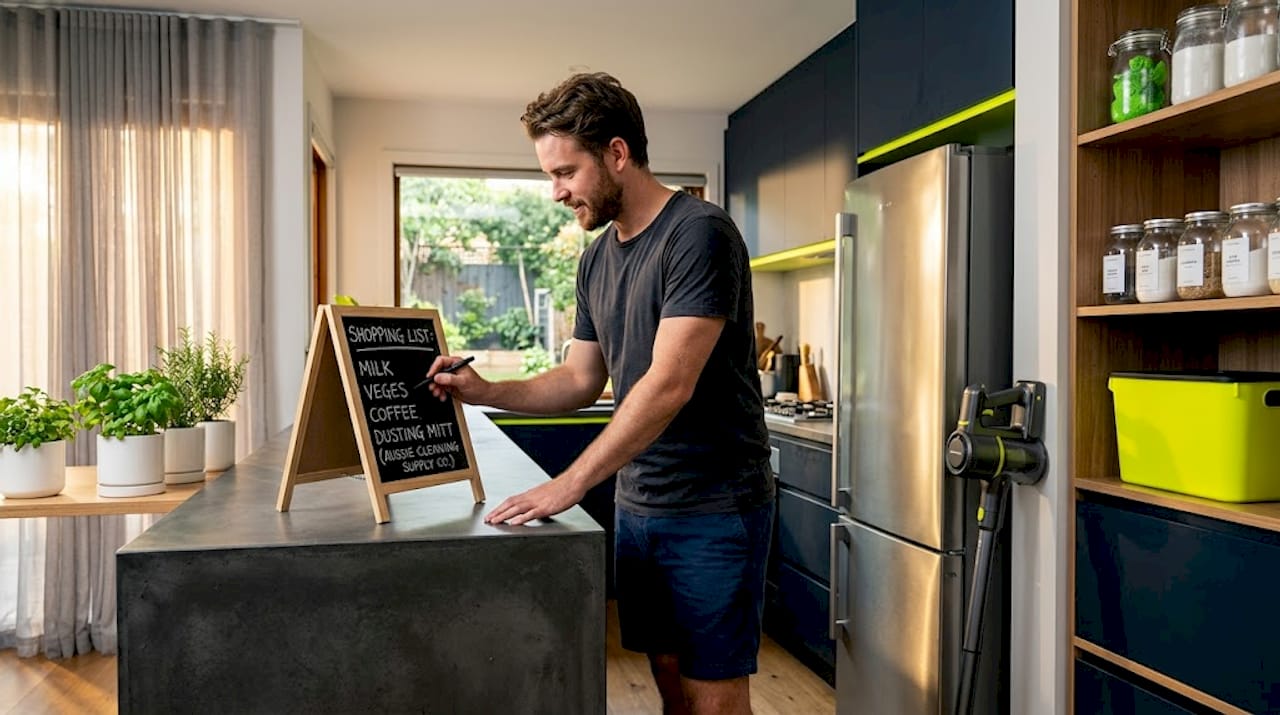
Pro Tip: Write your weekly task list on a small whiteboard or sticky note and cross off tasks as you complete them. The visual progress is genuinely motivating, and you always know exactly where to start next time.
The other shift worth making is around self-compassion. Skipping a day does not mean the system has failed. Flexible cleaning cycles help reduce guilt and burnout, which is what actually keeps people consistent over months rather than weeks. Perfection is not the goal. Progress is.
The closing shift: resetting your home at night
The closing shift is a concept borrowed from hospitality. At the end of a shift, staff reset the space for the next person. Applied at home, it means spending ten to fifteen minutes before bed returning your home to a neutral, calm state.
Here is what a basic closing shift looks like:
- Wash or stack dishes. Nothing makes a kitchen feel worse in the morning than last night's dinner still on the bench. Even loading the dishwasher counts.
- Wipe the kitchen bench and stovetop. One pass with a damp cloth takes sixty seconds and removes the day's crumbs and splashes.
- Do a clutter sweep. Walk through the main living areas with a basket and collect anything out of place. You can sort it properly tomorrow. Tonight, you are just removing visual noise.
- Set out what you need for morning. Coffee cup ready, bag by the door, tomorrow's clothes laid out. This is not cleaning, but it contributes to a calm start.
- Turn off lights and do a quick visual check. A tidy room feels intentional. That matters for how you feel when you wake up.
"A clear start and stop time for daily cleaning, like the closing shift, helps prevent the mental fatigue of ongoing chores." — Real Simple
The nightly reset tasks like dishes, wiping counters, and clutter removal prevent mess accumulation overnight, so your morning does not begin with yesterday's disorder. That psychological reset is more valuable than it sounds. Starting the day in a tidy space reduces background stress before you have even had breakfast.
Staying consistent without burning out
Even the best routine falls apart under pressure. Work gets intense, kids get sick, motivation disappears. Here is how to keep simple home upkeep tips working even when life is not cooperating.
- Use a reset basket. Collecting out-of-place items temporarily is more effective than perfect tidying during maintenance. Grab a basket, do one lap of the house, dump everything in it. Sort it later. Visual calm in under five minutes is achievable.
- Prioritise visible spaces. If you only have two minutes, wipe the kitchen bench and straighten the lounge cushions. The spaces you see most affect how you feel about your home overall.
- Involve everyone in the household. Assign age-appropriate tasks. Teenagers can clean their own bathrooms. Partners can own the bins or the vacuuming. You should not be the sole person maintaining cleanliness at home.
- Reduce decision fatigue. Keep your routine written down so you never have to think about what to do next. Decision fatigue is a real reason people stop cleaning. Remove the thinking and the doing becomes easier.
- Set a timer. Knowing a task ends in fifteen minutes makes it far easier to start. A structured approach that divides cleaning into daily resets, weekly maintenance, and deeper rotations prevents any single session from feeling overwhelming.
Pro Tip: If you are feeling behind and overwhelmed, do not try to catch up all at once. Pick the one room you use most and reset only that space. One tidy room changes your whole perception of the house.
My honest take on keeping a home clean
I have spent years watching people set up elaborate cleaning schedules that collapse within a fortnight. And I have done the same thing myself. The problem is not the schedule. The problem is the expectation that cleaning should be something you finish.
In my experience, the shift that actually works is accepting that a home is never done. It is maintained. That reframing changes everything. Instead of feeling behind, you feel like you are simply continuing. The closing shift helped me more than any other single habit because it gave me a defined end point each day. I was not cleaning indefinitely. I was cleaning until ten minutes before bed, and then I was done.
What I have also learned is that the homes that stay cleanest are not the ones with the most ambitious routines. They are the ones where the bar is set realistically and the routine is actually followed. A two-minute bench wipe done every day beats a two-hour deep clean done once a month. The daily maintenance routine wins because it never lets things get bad enough to require a heroic effort.
Find what works for your home, your schedule, and your household. Borrow the closing shift. Try the cleaning cycle. Keep your supplies where you use them. But above all, be kind to yourself when you miss a day. The routine is still there waiting for you.
— Lead
When your home needs more than a daily routine

Daily and weekly habits go a long way, but every home eventually needs a reset that goes deeper than a microfibre cloth can manage. Grease that has built up behind the stove, mould in the grout, or the aftermath of a renovation are not problems a fifteen-minute routine can solve.
That is where Grimescene comes in. Grimescene uses advanced non-toxic agents that neutralise grime at the source rather than masking it, making them safe for families, pets, and the environment. Their residential deep clean services are designed to complement the kind of daily and weekly maintenance this article covers. You handle the upkeep; they handle the reset.
If you manage a short-term rental, Grimescene's Scene Reset protocol delivers a thorough turnover clean that protects your ratings and keeps guests happy. For anything that falls outside your regular routine, book a rapid response appointment and let the professionals handle the heavy lifting.
FAQ
How long should daily home maintenance take?
A focused daily cleaning routine of 15 to 20 minutes is enough to maintain most homes between deep cleans. Prioritise high-traffic areas like the kitchen and bathroom for the best results.
What is the closing shift method for cleaning?
The closing shift is a nightly reset routine where you wash dishes, wipe benches, and do a clutter sweep before bed. It takes around ten minutes and means you wake up to a calm, ordered home each morning.
How do I keep my home tidy with a busy schedule?
Switch from a rigid cleaning schedule to a flexible cleaning cycle. Work through a list of weekly tasks in order and pick up wherever you left off, rather than feeling behind when a fixed day gets missed.
Where should I store cleaning supplies?
Store supplies in the room where you use them. A bathroom caddy, a kitchen cleaning basket, and a hallway dustpan each reduce the friction that causes quick clean-ups to get skipped.
How often should a home be professionally deep cleaned?
Most homes benefit from a professional deep clean every three to six months, depending on household size and usage. Regular daily and weekly maintenance extends the time between professional sessions and keeps the home in better condition overall.