
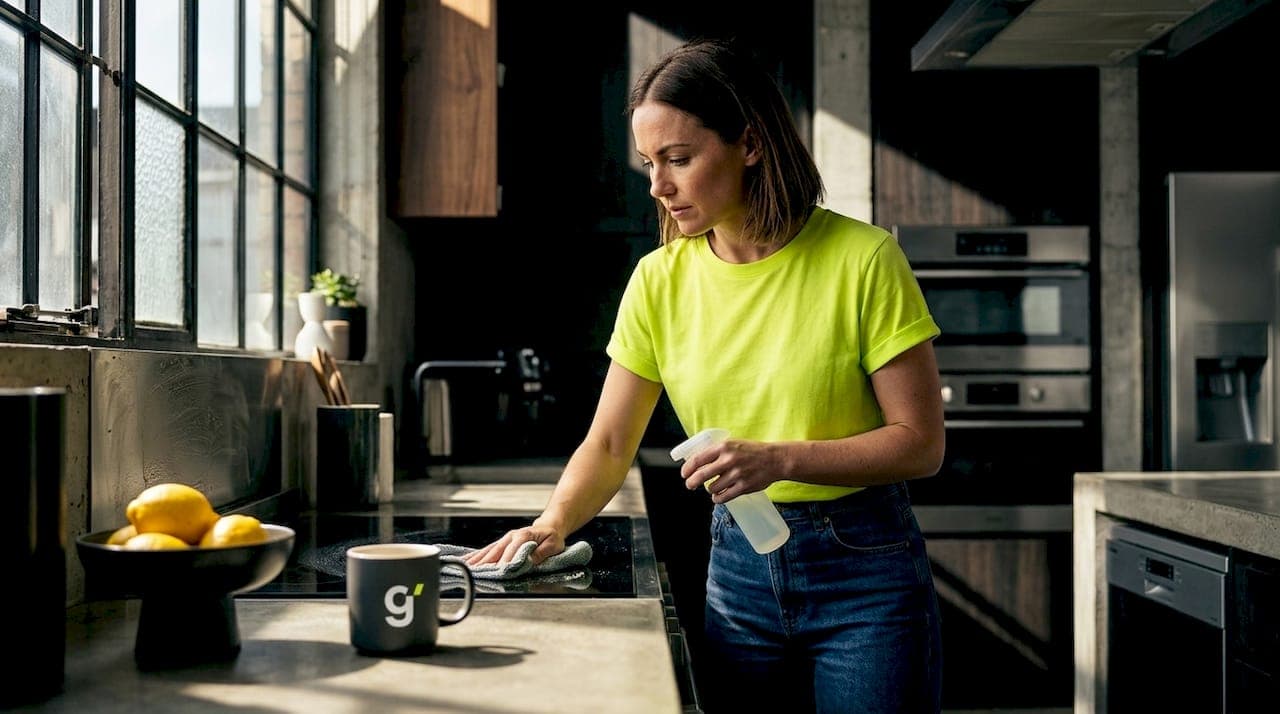
Stubborn grease on your stovetop, rangehood, or splashback is one of the most frustrating cleaning problems in any home. Most people reach straight for the strongest chemical degreaser they can find, not realising the fumes alone can trigger respiratory irritation within minutes. Removing grease without harsh chemicals is not only possible. It is, in many cases, just as effective. The pantry staples sitting in your kitchen right now, including dish soap, baking soda, and vinegar, are genuinely capable of dissolving and lifting grease when used correctly. This guide shows you exactly how.
Table of Contents
- Key takeaways
- What you need before you start
- How to clean grease safely, step by step
- Common mistakes and how to fix them
- Keeping surfaces grease-free long term
- My honest take on natural grease cleaners
- When DIY is not enough
- FAQ
Key takeaways
| Point | Details |
|---|---|
| Natural ingredients work | Baking soda, dish soap, vinegar, and salt tackle most household grease without toxic fumes. |
| Dwell time is critical | Letting your natural cleaner sit for 3 to 5 minutes dramatically improves grease breakdown before scrubbing. |
| Surface matters | Vinegar damages natural stone and raw wood. Use castile soap or dish soap on those surfaces instead. |
| Spot test every time | Test any new cleaner on a hidden area before full application to avoid discolouration or surface damage. |
| Prevention saves effort | Quick daily wipe-downs and good ventilation stop grease buildup before it becomes a stubborn problem. |
What you need before you start
Before you grab a sponge and start scrubbing, having the right ingredients and tools ready makes the difference between a clean surface and a frustrating repeat job. The good news is that you likely already have most of what you need.
The natural cleaning ingredient cheat sheet
| Ingredient | Best used for | Avoid on |
|---|---|---|
| Dish soap | All-purpose grease removal | N/A |
| Baking soda | Baked-on grease, paste scrubs | Delicate finishes |
| White vinegar | Greasy tiles, glass, stovetops | Natural stone, raw wood |
| Salt | Boosting paste adhesion | Scratching polished surfaces |
| Castile soap | Wood, stone, sensitive surfaces | N/A |
| Lemon juice | Light grease, odour removal | Natural stone |
As a lemon juice grease cleaner, fresh lemon juice brings mild acidity and a fresh scent to light grease jobs on glass and tile. It pairs beautifully with baking soda as a fizzing scrub for sinks and splashbacks.
For tools, you will want microfibre cloths, soft sponges, a spray bottle, an old toothbrush for corners, and a stiff-bristled brush for textured surfaces. Skip the steel wool. It scratches most kitchen surfaces and creates more work than it solves.
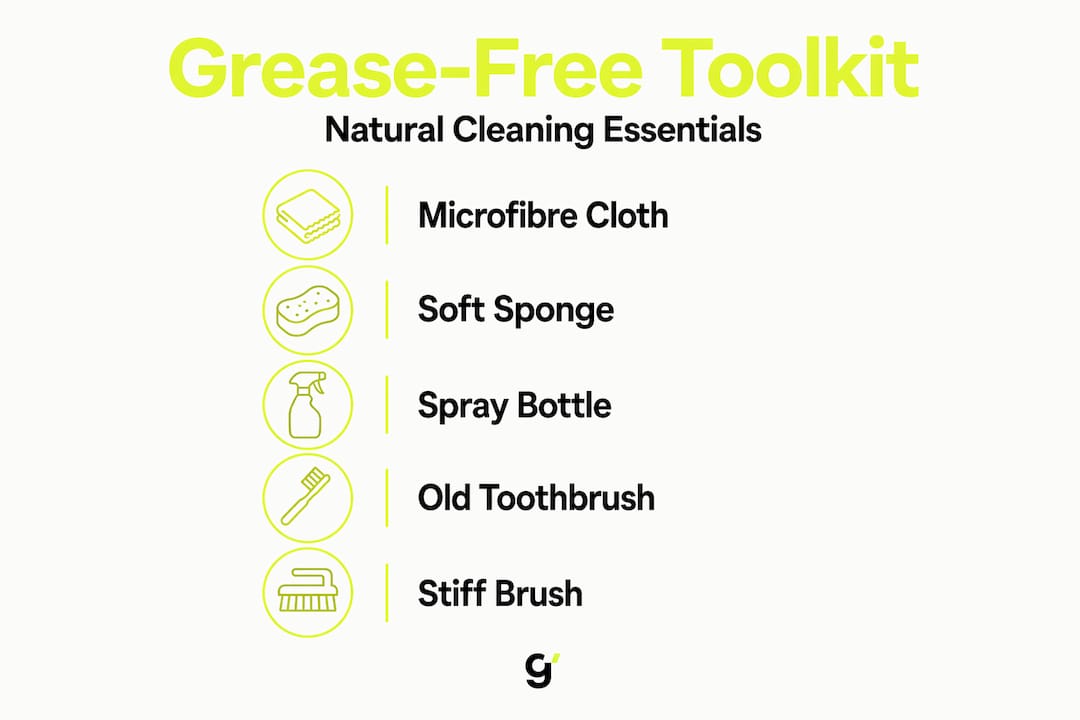
Pro Tip: Always spot test your cleaner on a small, hidden area before applying it to the full surface. This single habit prevents most cleaning disasters.
Good ventilation matters too, even when you are working with natural solutions. Open a window or run the rangehood fan. The goal with eco-friendly grease removal is not to avoid every precaution but to avoid the toxic ones.
How to clean grease safely, step by step
The process for removing grease with natural solutions follows a consistent pattern regardless of which ingredient you use: apply, dwell, scrub, rinse. Where it gets interesting is in matching the right recipe to the right surface.
For everyday kitchen surfaces
Start with the simplest homemade grease remover you can make: a solution of 8 cups warm water with 3 drops of dish soap. This ratio sounds almost too mild, but it works because of how dish soap actually functions at a molecular level. The surfactants in dish soap form micelles that wrap around grease droplets and allow water to carry them away. You are not dissolving the grease. You are trapping it.
For light to moderate grease on benchtops, stovetop surfaces, and tiles, follow these steps:
- Spray or wipe the solution onto the greasy surface.
- Let it sit for at least 3 minutes. Dwell time of 3 to 5 minutes gives the solution time to break down the grease before you scrub.
- Wipe firmly with a microfibre cloth using circular motions.
- Rinse with clean warm water and dry immediately to prevent streaks.
For baked-on and stubborn grease
This is where most natural cleaners get dismissed unfairly. People apply them like they would a spray-and-wipe and then wonder why they are not cutting through six months of rangehood buildup. The answer is a paste.
Combine baking soda, dish soap, and a pinch of salt into a thick paste. This combination creates both chemical and mild abrasive action that lifts stubborn residue without scratching. The salt improves the paste's adhesion to vertical surfaces like oven doors and rangehood panels, stopping it from sliding off before it has time to work.
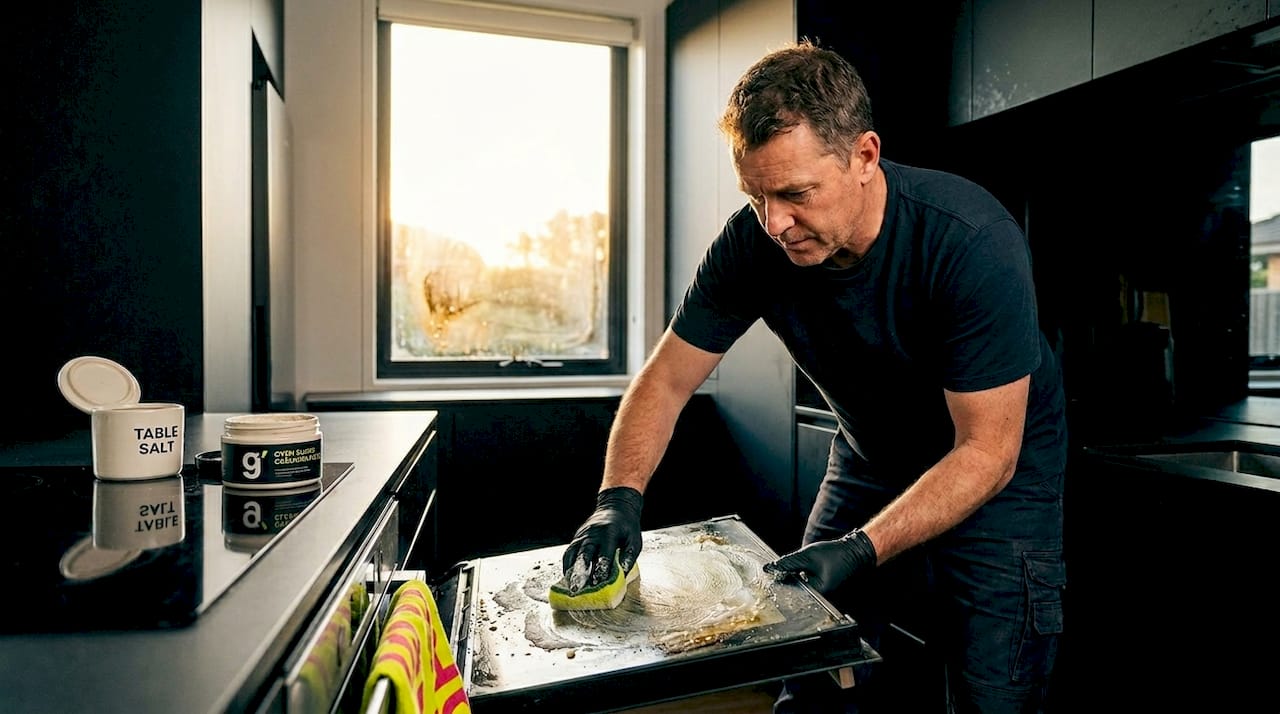
Apply the paste generously to the greasy area. Leave it for at least 10 minutes on thick buildup. Scrub with a soft sponge or brush, working in small sections. Rinse thoroughly and repeat if needed.
Pro Tip: For rangehood filters, remove them and submerge in a sink of very hot water with half a cup of baking soda and a few drops of dish soap. Let them soak for 20 minutes and the grease lifts with almost no scrubbing.
For wood, stone, and painted surfaces
These three surface types are where natural grease cleaners get it wrong most often. Vinegar can damage natural stone like marble or granite, and it can raise the grain on raw or lightly finished timber. Lemon juice has the same problem. On these surfaces, switch to a pH-neutral castile soap diluted in warm water.
For wood specifically, never spray the solution directly onto the surface. Spray the cloth instead and wipe gently. Excess moisture warps timber over time, and it is a mistake that cannot be undone.
Steam cleaning is another strong option for stubborn grease on sealed surfaces. Heat softens grease without any chemical input at all. A handheld steam cleaner uses very little water and is compatible with most hard surfaces in the kitchen.
Common mistakes and how to fix them
Natural grease cleaners are forgiving, but there are still several ways to make a cleaning session harder than it needs to be.
- Using vinegar on the wrong surfaces. Marble benchtops, slate tiles, and unsealed timber all react badly to acid. Always check your surface type before reaching for the vinegar.
- Not letting the cleaner dwell. Spraying and immediately wiping is the single most common reason people think natural cleaners do not work. Give the solution time to do its job.
- Over-soaking surfaces. Too much liquid on a wooden floor or laminate benchtop causes swelling and warping. Apply sparingly and dry quickly.
- Skipping the rinse. Baking soda and soap both leave residue if not rinsed properly. Residue attracts more dirt and can make surfaces look dull.
- Mixing the wrong things together. Never combine bleach with vinegar or ammonia-based cleaners. These mixes release toxic gases, which defeats the entire purpose of how to clean grease safely.
Drying your surfaces after cleaning is not optional. Moisture left on stovetops, benchtops, and tiled walls creates the conditions for mould and bacterial growth, undoing your cleaning effort within days.
If you have a particularly stubborn grease spot that is not lifting after two attempts, increase your dwell time rather than scrubbing harder. Aggressive scrubbing damages surfaces and often spreads the grease further.
Keeping surfaces grease-free long term
The most effective grease removal tip is also the least exciting one: clean more often, clean less intensely. A quick wipe after cooking takes thirty seconds. Removing the same grease after it has baked on for a week takes thirty minutes.
Switching to green cleaning habits makes this easier because you are not rationing a product or worried about fumes. Keep a spray bottle of diluted dish soap or a castile soap solution on the benchtop and use it after every cook.
Beyond the daily wipe-down, these habits make a meaningful difference:
- Run your rangehood fan during cooking to capture airborne grease before it settles on surfaces.
- Use a splashback or install one behind your stovetop to reduce grease spread dramatically.
- Store your natural cleaning solutions out of reach of children and pets, even though they are non-toxic. Concentrated soap is still a hazard for small kids and animals.
- Refresh your spray bottle solution weekly. Old diluted dish soap loses some effectiveness over time.
- Consider plant-based cleaning products that use biosurfactant technology for households with regular heavy cooking. These are available in most supermarkets and perform close to commercial degreasers.
Research backs the long-term health case for this switch. Switching to green cleaners reduces respiratory symptoms by 30% over four weeks compared to conventional chemical products. For anyone with asthma, allergies, or young children in the home, that number is hard to ignore.
Pro Tip: Improving your home's indoor air quality alongside switching to natural cleaners compounds the benefits. Cleaner air means fewer particles settling on surfaces, which reduces how often you need to clean in the first place.
My honest take on natural grease cleaners
I have seen kitchens where every cleaner has failed except a commercial solvent, and I have seen kitchens where a dish soap solution outperformed a $30 degreaser. The difference almost always comes down to technique, not product strength.
The biggest misconception I encounter is that "natural" means "weak." It does not. The micelle-forming action of surfactants is the same mechanism industrial degreasers exploit. The chemistry is identical in many cases. What changes is concentration and dwell time, both of which you can control at home.
What I have also learned is that people give up on natural methods too quickly because they expect instant results. Chemical cleaners often contain fast-acting solvents that give an immediate visual response. Natural cleaners work on a slightly longer timeline. Once you adjust your process to account for dwell time, the results genuinely match up.
Where I think natural methods do fall short is on truly industrial-scale grease buildup. If you are dealing with a kitchen that has not been cleaned in months, or a commercial-grade situation, DIY eco-friendly solutions will not get you there alone. That is not a failure of the ingredients. It is a matter of volume and penetration.
My practical advice: use natural methods as your daily and weekly habit. Reserve professional intervention for the jobs that have already compounded beyond what a spray bottle can handle.
— Lead
When DIY is not enough

Sometimes the grease has built up past the point where a homemade spray and a good scrub will fix it. That is where Grimescene comes in. Grimescene's approach to professional cleaning uses advanced non-toxic degreasing agents that neutralise grease and buildup at depth, without the chemical exposure that traditional cleaning services rely on. Whether it is a rental property needing a fast turnaround or a kitchen that has seen years of heavy cooking, the team is equipped for it.
For rental property owners, Grimescene's Scene Reset service handles complete property turnovers with the kind of grease-free finish that protects your host rating. Book directly through the rapid response appointments portal and have a team on site fast. Eco-friendly does not mean compromising on results when the professionals behind it know what they are doing.
FAQ
Can I use vinegar on all kitchen surfaces?
No. Vinegar damages natural stone surfaces like marble and granite, as well as unfinished timber. Use diluted castile soap on these surfaces instead.
How long should I leave a natural degreaser to work?
Allow 3 to 5 minutes of dwell time for light grease and up to 15 minutes for baked-on buildup. The solution needs time to break down grease before scrubbing improves the result.
Is dish soap actually effective at removing grease?
Yes. Dish soap's surfactants form micelles that encapsulate grease molecules and allow water to carry them away, making it genuinely effective for most household grease situations without any harsh solvents.
What is the best homemade grease remover for tough buildup?
A paste made from baking soda, dish soap, and a pinch of salt works well on stubborn grease. Apply it, leave it for at least 10 minutes, then scrub with a soft sponge and rinse thoroughly.
Are natural cleaning methods safe around children and pets?
Yes, when used as directed. Natural grease cleaners like diluted dish soap, baking soda solutions, and castile soap pose no toxic risk to children or pets in the concentrations used for household cleaning.