
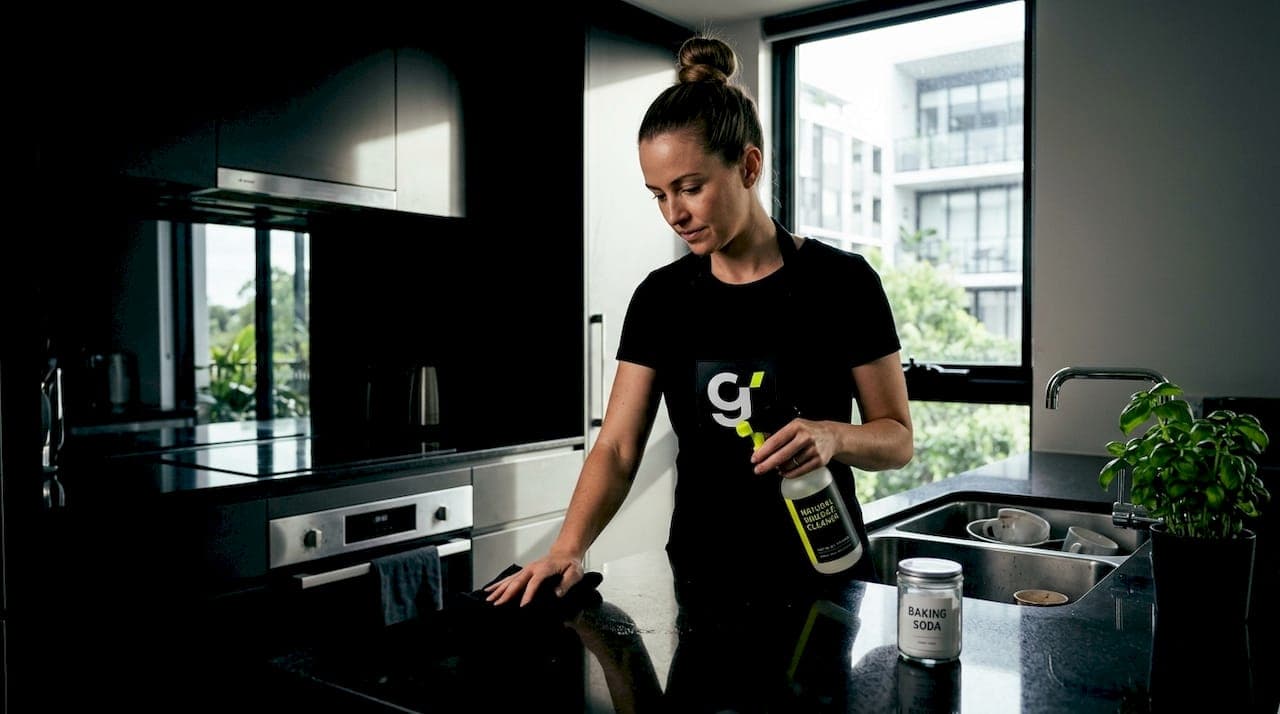
Most households have at least three effective types of natural cleaning agents sitting in the pantry right now, yet they reach for expensive commercial sprays out of habit. The problem is not a lack of options. It is the noise around "green" and "eco-friendly" claims that makes choosing genuinely safe, effective natural cleaning solutions harder than it should be. This article cuts through that noise, covering the most useful plant-based cleaners and homemade cleaning agents, how their chemistry affects what they can and cannot do, and how to match the right agent to the right job every time.
Table of Contents
- Key takeaways
- How to evaluate types of natural cleaning agents
- 1. White vinegar
- 2. Baking soda
- 3. Castile soap
- 4. Hydrogen peroxide (3%)
- 5. Essential oils
- 6. Lemon juice
- 7. Washing soda
- Comparison of natural cleaning agents
- Choosing the right agent for common situations
- What I have actually learned from years of natural cleaning
- When natural agents are not enough
- FAQ
Key takeaways
| Point | Details |
|---|---|
| pH determines cleaning power | Acidic agents tackle mineral deposits; alkaline agents cut grease. Match the chemistry to the mess. |
| Not all surfaces are equal | Vinegar damages marble, granite, and unsealed grout. Always check surface compatibility before applying. |
| Natural does not mean disinfecting | Most homemade cleaning agents clean rather than disinfect. Hydrogen peroxide at 3% is the exception. |
| Certifications cut through greenwashing | Look for EPA Safer Choice or DfE labels to verify genuine safety and efficacy claims. |
| Cost savings are real | Homemade sprays can cost as little as $0.25 per batch, making eco-friendly cleaning products affordable for any household. |
How to evaluate types of natural cleaning agents
Before you start mixing vinegar and baking soda in equal parts (please do not do that), it helps to understand what actually makes a natural cleaning agent effective and safe. The word "natural" on a label means almost nothing without context. What matters is the chemistry.
Certifications worth trusting
The EPA Safer Choice and DfE labels are the most reliable indicators of a genuinely safer product. These programmes evaluate ingredients one by one for health and environmental impact, and they verify antimicrobial performance where claimed. A product bearing either label has been through scrutiny that a hand-drawn leaf on packaging simply has not.
pH and why it changes everything
pH levels in natural cleaning products determine both cleaning power and surface safety. Acidic cleaners (below 7) dissolve mineral deposits and soap scum. Alkaline cleaners (above 7) break down grease and oils. Using the wrong one on the wrong surface causes damage, not cleanliness.
Key factors to consider when choosing any natural cleaning agent:
- Surface type: Stone, grout, metal, and sealed versus unsealed surfaces all respond differently to pH extremes
- Soil type: Grease needs alkaline; limescale needs acid; bacteria needs a genuine disinfectant
- Household safety: Some essential oils are toxic to cats and other pets
- Contact time: Natural agents need adequate dwell time to work. Spray and wipe immediately is rarely enough
Pro Tip: Always spot test any homemade cleaning agent on an inconspicuous area first, and label every DIY bottle with its contents and date. Unlabelled bottles are a safety risk, especially in households with children.
1. White vinegar
White vinegar is the workhorse of natural cleaning solutions. Its acetic acid content (typically 5%) makes it excellent at dissolving mineral deposits, cutting through soap scum, and deodorising surfaces. It is cheap, widely available, and genuinely effective on glass, tiles, and most kitchen surfaces.
The catch is its acidity. Vinegar damages marble, granite, natural stone, unsealed grout, cast iron, aluminium, and waxed wood. If your benchtop is stone, keep vinegar away from it entirely. It also should not be confused with a disinfectant. Vinegar cleans. It does not reliably kill pathogens to a regulatory standard.
Use it diluted (1 part vinegar to 1 part water) for everyday sprays, or at full strength on stubborn kettle limescale. The smell dissipates quickly once dry.
2. Baking soda
Baking soda (sodium bicarbonate) sits on the alkaline side of the pH scale, which makes it the natural partner to vinegar in terms of chemistry, though not in terms of mixing them together. Its mild abrasive texture makes it ideal for scrubbing without scratching, and it is one of the most effective natural deodorisers available.
Sprinkle it on a damp sponge to scrub sinks, stovetops, and oven interiors. Mix it into a paste with a small amount of water to tackle grout or baked-on food. It also works brilliantly in the fridge to absorb odours over time.
Baking soda is safe for most surfaces, gentle on skin, and costs almost nothing per use. It is one of the best natural cleaners for households with young children precisely because it carries no toxicity risk at normal concentrations.
3. Castile soap
Castile soap is a plant-based surfactant, traditionally made from olive oil, though modern versions use a blend of vegetable oils. Surfactants work by surrounding dirt and oil particles and allowing water to rinse them away. This makes castile soap one of the most versatile plant-based cleaners available.
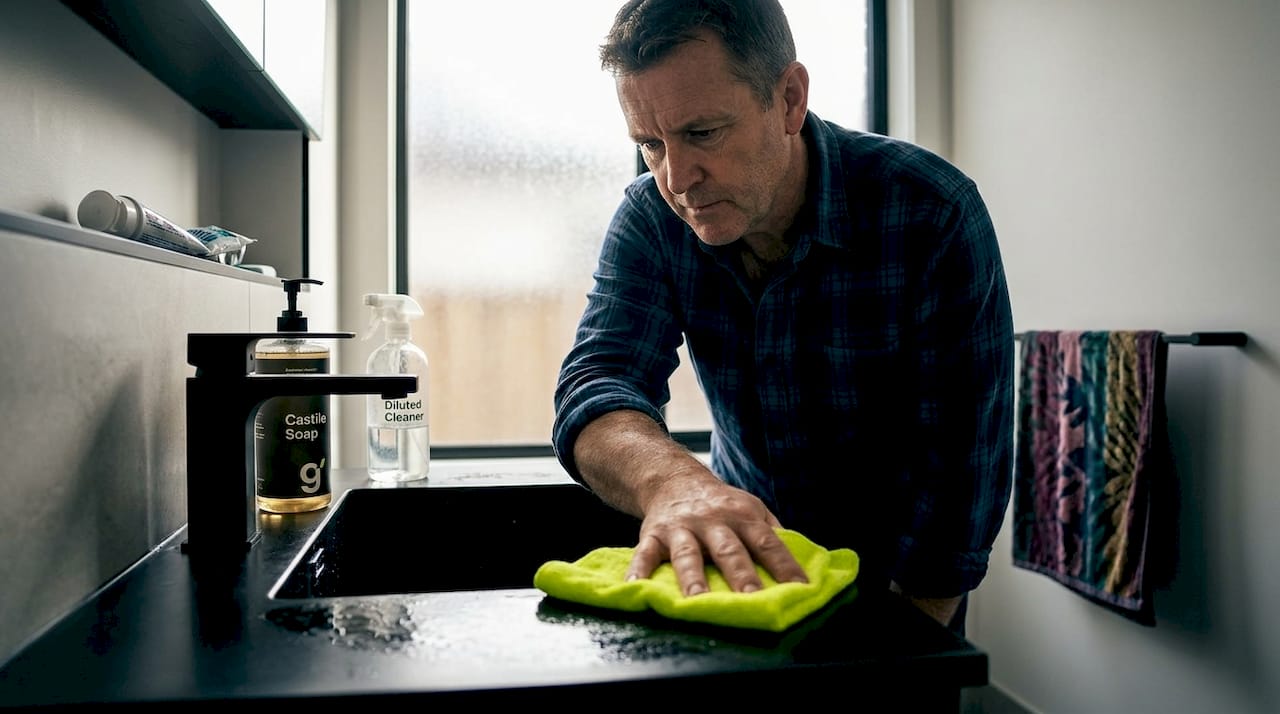
It works on floors, benchtops, bathroom surfaces, and even as a hand wash. A few drops in a spray bottle of water is enough for most everyday cleaning tasks. Diluted correctly, it is safe around children and pets and leaves no harsh chemical residue.
The one caution: do not mix castile soap with vinegar. The acid curdles the soap, creating a white residue and rendering both ingredients less effective. Use them separately, on different surfaces or at different times.
4. Hydrogen peroxide (3%)
Hydrogen peroxide at 3% concentration is the closest thing to a genuine disinfectant in the natural cleaning toolkit. It is recommended for sanitising virus-contaminated surfaces and outperforms vinegar for pathogen control. It breaks down into water and oxygen after use, leaving no harmful residue.
It works well on bathroom surfaces, cutting boards, and anywhere you need actual sanitising rather than just cleaning. Store it in its original dark bottle because light degrades it quickly.
Pro Tip: Do not mix hydrogen peroxide with vinegar in the same bottle. Used separately on a surface, one after the other, they can be effective. Combined in a bottle, they form peracetic acid, which is corrosive and irritating to skin and lungs.
5. Essential oils
Essential oils are the most misunderstood item in this list. They are aromatic, some have genuine antibacterial properties (tea tree and thyme oil in particular), and they make homemade cleaning agents smell pleasant. But DIY natural sprays with essential oils mostly clean rather than disinfect to any regulatory standard.
Use them for their fragrance and mild antimicrobial contribution, not as a substitute for a proper disinfectant. Tea tree oil added to a castile soap spray adds some antimicrobial benefit for everyday cleaning. Lavender and lemon work well in surface sprays.
The critical safety note: several essential oils, including tea tree, eucalyptus, and citrus oils, are toxic to cats. If you have cats in your home, skip essential oils in your cleaning products entirely.
6. Lemon juice
Fresh lemon juice behaves similarly to vinegar in terms of acidity, making it useful for cutting through mineral deposits and light grease. It also has mild bleaching properties in sunlight, which makes it handy for whitening grout or removing stains from cutting boards.
It is less economical than vinegar at scale, and it can go off quickly if left in a spray bottle. Use it fresh for targeted jobs rather than as a bulk cleaning solution. The same surface cautions that apply to vinegar apply here: keep it away from stone, unsealed grout, and metals prone to corrosion.
7. Washing soda
Washing soda (sodium carbonate) is the stronger sibling of baking soda. It is significantly more alkaline, which makes it far more effective on heavy grease, stubborn stains, and laundry. It is a common ingredient in eco-friendly cleaning products designed for tough jobs.
Wear gloves when using washing soda because its high alkalinity can irritate skin with prolonged contact. Do not use it on aluminium surfaces or fibreglass. For everything else, including greasy oven racks, laundry pre-treatment, and blocked drains, it is one of the most powerful homemade cleaning agents available without resorting to harsh chemicals.
Comparison of natural cleaning agents
| Agent | pH | Best uses | Avoid on | Pet safety | Cost per use |
|---|---|---|---|---|---|
| White vinegar | Acidic (~3) | Glass, tiles, limescale | Stone, grout, metals | Generally safe | Very low |
| Baking soda | Alkaline (~9) | Scrubbing, deodorising | No major restrictions | Safe | Very low |
| Castile soap | Alkaline (~9) | All-purpose, floors | Mix with vinegar | Safe | Low |
| Hydrogen peroxide | Neutral (~6) | Sanitising, bathrooms | Fabrics (can bleach) | Safe when dry | Low |
| Essential oils | Varies | Fragrance, mild antimicrobial | Cats present | Caution with cats | Low to moderate |
| Lemon juice | Acidic (~2) | Stain removal, cutting boards | Stone, metals | Safe | Moderate |
| Washing soda | Alkaline (~11) | Heavy grease, laundry | Aluminium, fibreglass | Safe when rinsed | Very low |
Choosing the right agent for common situations
Understanding the types of natural cleaning agents is one thing. Knowing which to reach for on a Tuesday morning when the stovetop is a disaster is another.
Kitchen: Grease and food spills call for alkaline agents. Castile soap or washing soda handles the stovetop and oven. Vinegar or lemon juice cuts through kettle limescale and mineral deposits on taps. For the cutting board, hydrogen peroxide is your best option for genuine sanitising.
Bathroom: Soap scum on tiles responds well to vinegar spray. For the toilet bowl, baking soda followed by vinegar creates a fizzing action that loosens buildup (though the fizz is mostly cosmetic; the cleaning comes from each agent separately). For sanitising after illness, hydrogen peroxide at 3% is the right choice.
Floors: Castile soap diluted in warm water suits most sealed hard floors. Avoid vinegar on timber floors with a wax or oil finish, as it strips the protective coating over time.
Delicate surfaces: Marble, granite, and natural stone need pH-neutral cleaners only. A few drops of castile soap in water is the safest option. Homemade sprays cost from $0.25 to $0.75 per batch, so making a dedicated gentle formula for delicate surfaces is no hardship.
On combining agents safely: The rules are simple. Never mix acids and bases in the same bottle. Mixing incompatible ingredients can neutralise both agents or create irritating compounds. Use them sequentially on a surface if needed, with a rinse in between.
Pro Tip: Keep two spray bottles in the kitchen: one with a diluted castile soap solution for everyday wiping, and one with diluted vinegar for mineral deposits and glass. You will cover 90% of kitchen cleaning tasks without ever reaching for a commercial product.
What I have actually learned from years of natural cleaning
I have spent years watching people swap out their commercial cleaners for natural alternatives and make the same mistakes. The biggest one is treating "natural" as a single category. It is not. Vinegar and washing soda are both natural. They are also chemical opposites, and mixing them wastes both.
The second mistake is expecting natural agents to disinfect. True disinfection requires correct chemical action, concentration, and contact time to meet regulatory standards. Most DIY sprays clean surfaces beautifully but do not meet that bar. That is fine for routine cleaning. It is not fine after someone in the house has been ill, or when you are dealing with raw meat contamination.
What I have found is that the best natural cleaners are the boring ones done correctly. White vinegar, baking soda, castile soap, and hydrogen peroxide cover almost every household need when you understand their chemistry and respect their limits. The marketing around exotic plant-based cleaners with twelve ingredients rarely outperforms these four.
My honest advice: start with the basics, learn what each one does well, and resist the urge to mix everything together in the hope it will be stronger. It usually is not.
— Lead
When natural agents are not enough
Natural cleaning solutions handle the vast majority of everyday household and workplace messes with ease. But there are situations where DIY approaches hit a wall. Post-construction dust and debris, heavy biological contamination, or the kind of deep grime that builds up in high-turnover rental properties genuinely requires professional-grade intervention.
Grimescene specialises in exactly these situations. Their professional cleaning services use advanced non-toxic agents that go well beyond what pantry staples can achieve, without the harsh chemical residues that traditional commercial cleaning leaves behind. For short-term rental hosts who need a guaranteed clean between guests, the Scene Reset for rentals delivers the kind of thorough turnover that protects your ratings. Workplaces dealing with post-event or post-construction mess can access dedicated workplace cleaning units built for exactly that scale. Natural agents are a brilliant first line. Grimescene is there when you need the second.
FAQ
What are the most effective types of natural cleaning agents?
White vinegar, baking soda, castile soap, and hydrogen peroxide at 3% cover the widest range of household cleaning tasks. Each works best when matched to the right surface and soil type.
Can natural cleaning agents actually disinfect?
Most cannot meet regulatory disinfection standards. Hydrogen peroxide at 3% is the exception and is recommended for sanitising surfaces after illness or contamination.
Is it safe to mix vinegar and baking soda?
Mixing them neutralises both agents and produces mostly water and carbon dioxide. Use them separately for best results. Never combine acids and bases in a sealed bottle.
Are essential oils safe to use in homemade cleaning agents?
For most households, yes. However, several essential oils including tea tree and eucalyptus are toxic to cats, so households with cats should avoid them in cleaning products entirely.
How do I know if an eco-friendly cleaning product is genuinely safe?
Look for EPA Safer Choice or DfE certification on the label. These programmes evaluate ingredients for health, environmental impact, and cleaning efficacy rather than relying on vague "green" marketing claims.