
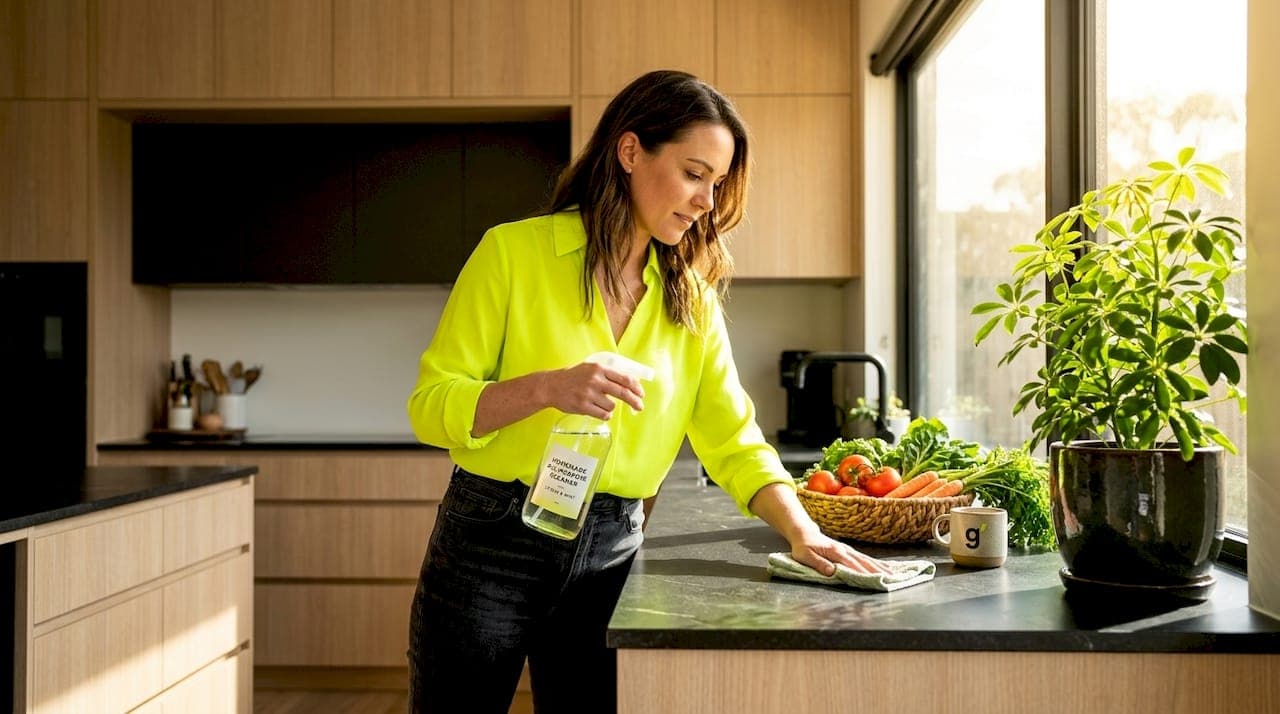
Most people assume switching to sustainable cleaning means scrubbing harder for worse results, or spending twice as much at the health food shop. Neither is true. A sustainable cleaning routine is one that gets your home genuinely clean while reducing the chemical load on your family, your pets, and the waterways your rinse water eventually reaches. This guide cuts through the greenwashing, explains what eco-conscious cleaning actually looks like in practice, and gives you a realistic framework for building a green cleaning routine that fits around real family life, not an idealised version of it.
Table of Contents
- Key takeaways
- What a sustainable cleaning routine actually is
- Choosing genuinely eco-friendly products and tools
- Building a cleaning schedule that lasts
- Sustainable laundry and water habits
- Common mistakes that derail sustainable cleaning
- My honest take on sustainable cleaning
- How Grimescene supports your sustainable home
- FAQ
Key takeaways
| Point | Details |
|---|---|
| Sustainability is a system, not a product | True eco-friendly cleaning covers product formulation, packaging, and how you use products, not just the label. |
| Certifications beat marketing claims | Look for third-party labels like EPA Safer Choice rather than vague "natural" or "chemical-free" wording. |
| Spread tasks across the week | A distributed cleaning schedule prevents burnout and keeps your home consistently maintained with less effort. |
| Laundry habits matter more than most realise | Cold washes, full loads, and a washing machine filter significantly cut microplastic and water waste. |
| Progress beats perfection | Gradual product swaps and small habit changes build a lasting routine far better than an overnight overhaul. |
What a sustainable cleaning routine actually is
A sustainable cleaning routine is a regular system for keeping your home clean that deliberately reduces harm to human health and the environment. That covers the products you choose, how you use them, how often you clean, and what you do with packaging when it runs out.
Here is where most people get confused. "Sustainable" does not mean "chemical-free." Every cleaning product, including water, is a chemical. What matters is the toxicity profile, the biodegradability, and the life-cycle impact of what you use. Industry experts like James Law of 2Pure Products emphasise that genuine sustainability covers product formulation, packaging, transport emissions, and in-use performance together. Swapping a plastic bottle of bleach for a plastic bottle of "natural" spray does not move the needle much.
The benefits, when you do it properly, are real across several areas:
- Health: Fewer volatile organic compounds and synthetic fragrances in your home air.
- Environment: Less chemical runoff into waterways and reduced plastic waste.
- Cost: Concentrated and refillable products typically cost less per use over time.
- Home longevity: Gentler products are less likely to degrade surfaces, grout, and finishes over years of use.
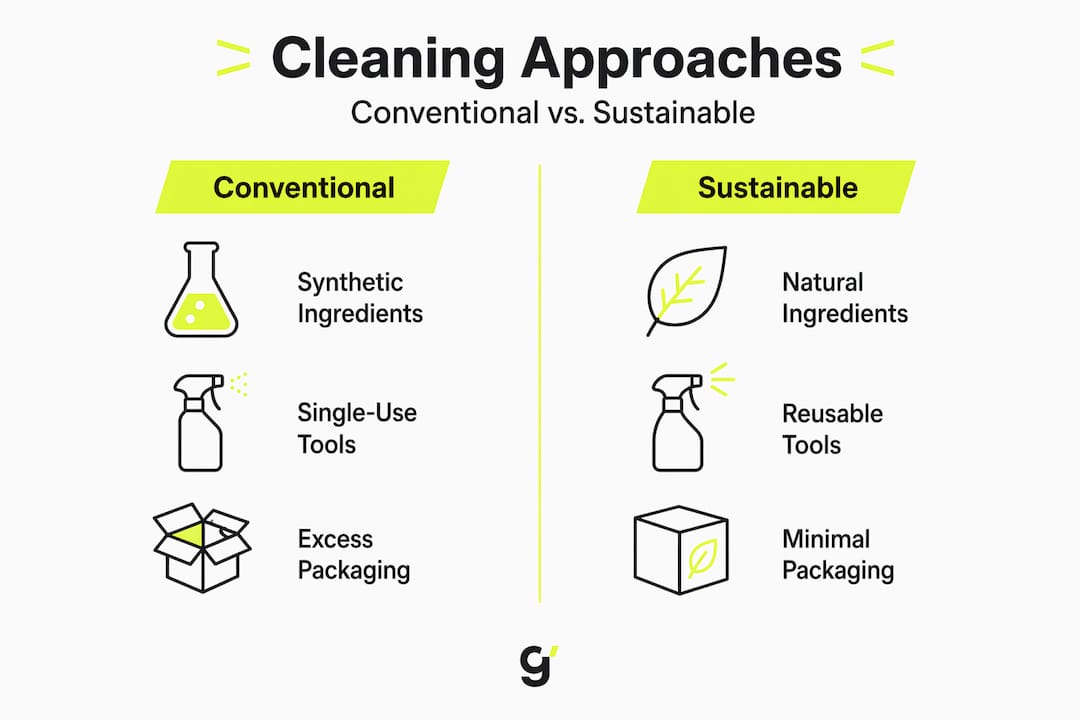
| Aspect | Conventional cleaning | Sustainable cleaning |
|---|---|---|
| Product ingredients | Synthetic, often petroleum-derived | Biodegradable, plant-based where possible |
| Packaging | Single-use plastic | Refillable, recycled, or minimal |
| Performance | Consistent, well-tested | Equally effective when certified |
| Cost over time | Higher per-use cost | Lower with concentrates and refills |
| Health impact | VOCs, irritants common | Reduced irritant and allergen load |
Pro Tip: When reading a product label, ignore "natural" and "eco" as standalone claims. Search for a named certification like EPA Safer Choice, which mandates specific health and environmental standards.
Choosing genuinely eco-friendly products and tools
The cleaning product aisle is full of green-coloured bottles making vague promises. Knowing how to separate genuine options from marketing noise is one of the most useful skills you can develop for a green cleaning routine.
Third-party certifications are your clearest signal. Credible eco-labels like EPA Safer Choice require manufacturers to meet documented standards for ingredient safety, aquatic toxicity, and packaging. A bottle that simply says "plant-based" has met no such bar.
Greenwashing is widespread, and the green cleaning market is growing fast enough that manufacturers have strong financial incentives to dress up conventional products in eco-friendly packaging. The safest approach is to treat any claim without a named certifying body as unverified.
When building your product toolkit, look for these characteristics:
- Concentrated formulas: You add water at home, which cuts transport emissions and packaging waste significantly.
- Refillable systems: Refill products reduce packaging waste and slot easily into a weekly cleaning setup.
- Biodegradable surfactants: These break down in waterways rather than accumulating.
- Fragrance transparency: Products that list specific fragrance ingredients rather than just "fragrance" are a better choice for indoor air quality.
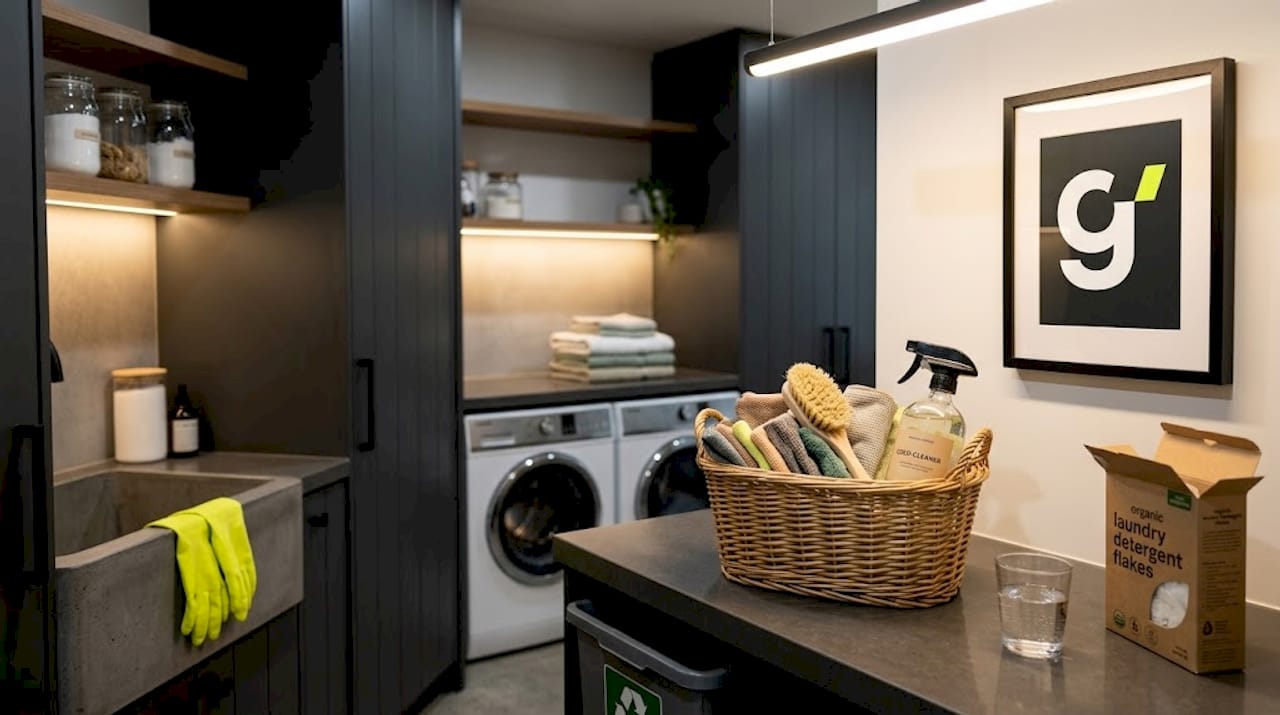
Your tools matter just as much as your products. Microfibre cloths replace disposable paper towels and, when used correctly, lift bacteria mechanically without needing chemical assistance. A good set of microfibre cloths, a reusable mop, and a few glass spray bottles for diluted concentrates will cover most of your routine cleaning needs.
Pro Tip: Do not throw out your existing conventional products to replace them all at once. Use them up, then replace each one with a certified eco-alternative as it runs out. This avoids waste and spreads the cost of transitioning over several months.
One more thing worth knowing: proper dosage matters. Overusing eco-friendly products causes residue build-up and reduces effectiveness, which leads people to assume green products do not work. Follow the recommended dilution ratios and give products adequate contact time on surfaces before wiping.
Building a cleaning schedule that lasts
The single biggest reason sustainable cleaning routines fail is not product choice. It is schedule design. People attempt a whole-home deep clean every few weeks, burn out, and abandon the routine entirely. A distributed schedule, where tasks are spread across the week in short sessions, is far more manageable and more sustainable long-term.
Here is a practical framework for building your own schedule:
- List every cleaning task in your home. Bathrooms, kitchen surfaces, floors, laundry, windows, and so on. Write them all down without filtering.
- Sort by frequency. Some tasks need daily attention (wiping the kitchen bench, a quick bathroom wipe-down). Others are weekly (mopping, vacuuming). Some are monthly or seasonal (oven, windows, behind appliances).
- Assign tasks to specific days. Monday might be bathrooms and laundry. Wednesday, kitchen and floors. Friday, a general tidy and vacuum. Spreading tasks prevents any single session from becoming overwhelming.
- Set a time limit per session. Twenty to thirty minutes is enough for most daily and weekly tasks when you are consistent. This makes starting easier because the end is always in sight.
- Review after four weeks. Adjust any tasks that are not fitting the rhythm. A schedule that works for your household in winter may need tweaking in summer.
A distributed cleaning approach also reduces the temptation to over-clean, which matters more than most people realise. Excessive scrubbing with any product, including gentle ones, can degrade grout, strip surface finishes, and wear out fabrics prematurely.
Pro Tip: Attach new cleaning habits to existing ones. Wiping the bathroom basin takes thirty seconds if you do it every morning after brushing your teeth. That one habit alone eliminates a significant chunk of your weekly bathroom clean.
Sustainable laundry and water habits
Laundry is one of the most overlooked areas of a sustainable home cleaning routine, and it is where some of the most impactful changes are easiest to make.
Synthetic fabrics shed microplastic fibres with every wash. These particles pass through most standard wastewater treatment systems and accumulate in waterways and marine life. A specialised washing machine filter can capture up to 87% of synthetic fibres during a wash cycle. That is a meaningful reduction for a one-time purchase that fits most machines.
Beyond microplastics, these habits make a real difference:
- Wash full loads only. Half loads use nearly the same water and energy as full ones.
- Use cold water. Modern detergents are formulated to work effectively in cold water, and the energy saving per wash is significant across a year.
- Skip the extra rinse cycle unless someone in your household has a genuine sensitivity. It uses water without improving cleanliness.
- Replace fabric softener with white vinegar. Adding 100 to 120ml of distilled white vinegar to the rinse cycle softens fabrics and removes detergent residue without the synthetic compounds in commercial softeners. It also extends the life of your towels and clothing.
Water conservation in general cleaning is straightforward. Fill a bucket rather than running a tap continuously. Use a spray bottle for surface cleaning instead of soaking cloths under a running tap. These are small habits, but across a household they add up to genuine savings.
Common mistakes that derail sustainable cleaning
Switching to a green cleaning routine is not complicated, but there are a few patterns that consistently trip people up.
Replacing everything at once is the most common. It creates unnecessary waste, is expensive upfront, and often leads to abandoning the whole effort when one product disappoints. Gradual replacement, swapping products one at a time as they run out, is far more effective for building lasting habits.
Misusing DIY solutions is another frequent issue. Vinegar and baking soda are popular home cleaning ingredients, but mixing them together produces a fizzing reaction that neutralises both, leaving you with salty water that cleans nothing. Vinegar also damages natural stone surfaces like marble and granite, so it should never be used in those areas.
Assuming "natural" means safe is a misunderstanding that can cause real problems. Some natural substances are highly irritating or toxic. The relevant question is not whether an ingredient comes from a plant, but whether it has been assessed for safety in the concentrations you are using it.
Neglecting performance when it matters most. Mechanical cleaning with microfibre and steam works well for routine maintenance, but there are situations where a certified disinfectant is genuinely necessary, particularly after illness or in high-contact areas. Sustainable cleaning means using chemicals responsibly, not avoiding them entirely.
Pro Tip: Keep one conventional disinfectant in your kit for situations that genuinely require it. Using it occasionally and deliberately is far more sustainable than using a weaker product repeatedly and ineffectively.
My honest take on sustainable cleaning
I have spent a long time thinking about what actually works in sustainable cleaning, and the conclusion I keep coming back to is this: the obsession with "chemical-free" is a distraction that helps no one.
What I have seen work, consistently, is a system. Not a perfect product, not an expensive overhaul. A system where you know what you are cleaning, why you are cleaning it, and what you are using to do it. Families who build that kind of routine, even imperfectly, get far better results than those who buy every eco-product on the market and use them without a plan.
The other thing I would push back on is the idea that sustainable cleaning is a sacrifice. In my experience, it is the opposite. A distributed schedule is less exhausting than a fortnightly marathon clean. Concentrated products are cheaper per use. Microfibre cloths outlast a year's worth of paper towels. The eco-friendly path and the practical path are the same path.
My advice: start with your schedule, then your laundry habits, then your products. In that order. The schedule gives you the structure to make product choices matter. Without it, even the best products get used inconsistently and the whole thing falls apart.
Progress over perfection. Every time.
— Lead
How Grimescene supports your sustainable home
Sometimes a home needs more than a routine can handle. Post-renovation dust, a deep clean before a new tenancy, or a property that has been left too long between cleans are all situations where a professional service aligned with your values makes sense.
Grimescene provides eco-conscious deep cleaning that goes beyond surface results. Their non-toxic agents neutralise buildup rather than masking it, which means your home is genuinely clean after a visit, not just visually presentable. For short-term rental hosts, their Scene Reset protocol delivers a thorough property turnover that protects your ratings without the harsh chemical residue that guests and families notice. If you need to book a rapid response for an urgent clean, Grimescene's team is set up to deploy quickly. Think of professional eco-cleaning as the reset that makes your sustainable routine easier to maintain going forward.
FAQ
What is a sustainable cleaning routine?
A sustainable cleaning routine is a regular home cleaning system that prioritises products and methods with lower environmental and health impacts. It covers product choice, packaging, cleaning frequency, and water use rather than just swapping one bottle for another.
Are eco-friendly cleaning products as effective as conventional ones?
Yes, when they carry credible third-party certifications like EPA Safer Choice. Certified products meet documented performance and safety standards, and proper dosage and contact time are key to getting the best results.
How do I reduce microplastics from laundry?
Installing a specialised washing machine filter can capture up to 87% of synthetic fibres per wash. Washing at lower temperatures and avoiding unnecessary rinse cycles also helps reduce the overall fibre shed.
Can I use vinegar and baking soda together for cleaning?
No. Mixing vinegar and baking soda neutralises both ingredients, producing salty water with no cleaning power. Use them separately for tasks they are individually suited to, and never use vinegar on natural stone surfaces.
How long does it take to build a sustainable cleaning routine?
Most households find a rhythm within four to six weeks of consistent practice. Starting with a distributed weekly schedule and replacing products gradually as they run out makes the transition manageable without disruption or unnecessary waste.