
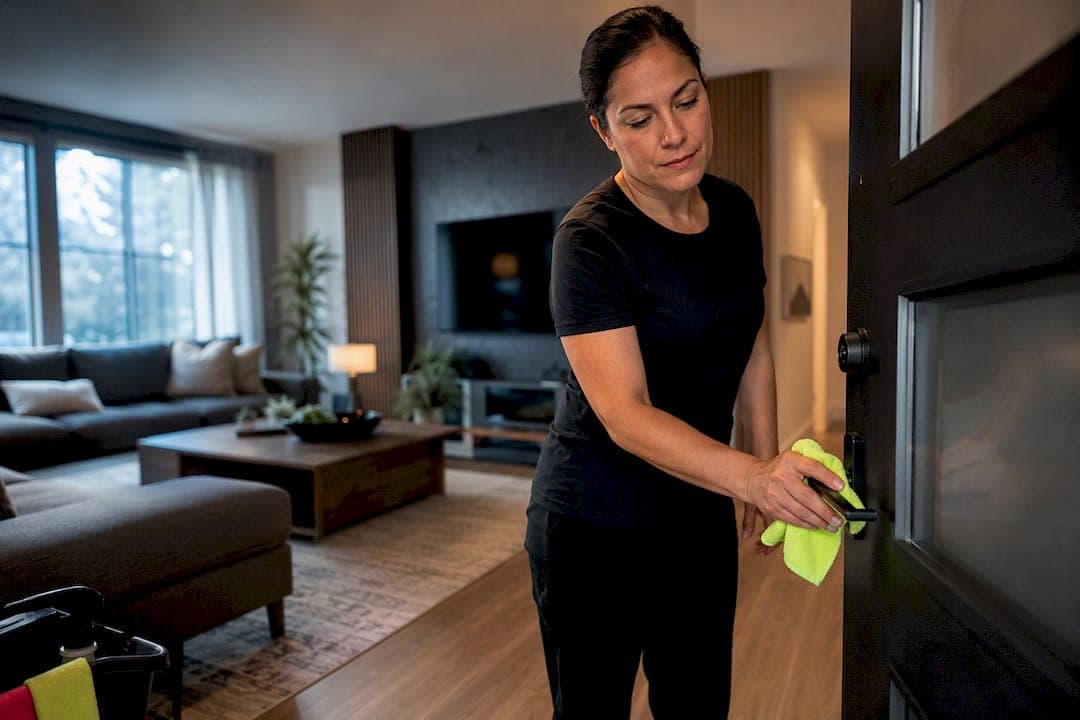
Airbnb turnover standards mean meeting a five-step protocol (prepare, clean, sanitise, check, reset) at every single changeover, not just before a big holiday booking. The fastest way to hit five stars consistently is a standardised room-by-room checklist backed by photo verification after every clean. That's separate from periodic deep cleaning, which handles the grime a normal turnover was never designed to reach.
TL;DR:
- Properly documenting each turnover with standardized checklists and photo proof is essential to prove consistent cleaning quality and protect against guest disputes.
- Turnover times vary by property size, typically ranging from 45 minutes for studios to up to four hours for larger homes, especially during same-day check-ins.
- Differentiating between routine turnover cleaning and quarterly deep cleans ensures thorough maintenance that prevents grime buildup and health hazards.
- Hiring professional cleaners becomes crucial for hosts with frequent bookings or managing multiple listings to maintain standards and avoid complaints.
- Building scalable systems includes training backup cleaners, automating photo uploads, and using detailed checklists to uphold standards as property management grows.
Table of Contents
- What does an Airbnb turnover standard actually require?
- What does a room-by-room Airbnb cleaning checklist look like?
- How long does a standard Airbnb turnover take?
- Is a deep clean the same as a turnover clean?
- When should you hire a professional cleaner for turnovers?
- How do you prove a turnover met your standard?
- How does the Scene Reset protocol apply the five-step standard?
- What's the smartest way to build a turnover standard that scales?
- How can Grime Scene Services handle your turnover standard for you?
- Sources
What does an Airbnb turnover standard actually require?
Airbnb's own enhanced cleaning protocol breaks a turnover into five stages: prepare the space, clean visible surfaces, sanitise high-touch points, check the work against a list, and reset the property for the next guest. It's a practical sequence, not a marketing slogan. Skip the "check" stage and you've got no way of knowing whether the "sanitise" stage actually happened properly.
Every turnover needs the full sequence run. What changes is scope. A weekend stay with no visible mess still gets sanitised door handles and a bathroom check. A property that's had a rowdy group through gets the same five steps, just with more elbow grease at each stage. Airbnb's host resource centre is blunt about the baseline: listings must be free of health hazards and cleaned between every single stay, no exceptions for short gaps or repeat guests.
The parts that make a turnover genuinely "host-ready" come down to three habits:
- Treat high-touch points (light switches, remotes, tap handles) as non-negotiable every time, not just during deep cleans.
- Run the same checklist regardless of who's cleaning, so quality doesn't depend on which cleaner is rostered on.
- Document the finished job with photos, because consistency you can't prove is consistency you can't defend when a guest complains.
Consistency, according to Airbnb's own expert cleaning guidance, is the single biggest driver of five-star cleanliness scores. Guests scrutinise every surface, so a protocol that varies from stay to stay is where ratings quietly erode.
What does a room-by-room Airbnb cleaning checklist look like?
A checklist only earns its keep if it's specific enough that two different cleaners produce the same result. Here's what "done" should mean in each part of the property.
- Bedrooms. Strip every bed completely, including mattress protectors, and remake with a fresh set. Lint-roll upholstered headboards and throws. Check under beds and behind bedside tables for stray items or dust. Confirm blackout curtains or blinds still close fully and aren't torn or jammed.
- Bathrooms. Sanitise every surface, including taps, the shower recess, and the toilet base, not just the bowl. Check grout lines and silicone seals for mildew, because that's the first thing a guest photographs for a bad review. Restock toilet paper, soap, and shampoo to the same level every time. Swap bathmats if they show any staining or a musty smell.
- Kitchen. Clear the fridge of anything the last guest left behind and wipe down shelves. Clean benchtops, the splashback, and the stovetop until there's no residue. Empty every bin, including small ones in the pantry. Check the dishwasher and oven are empty and free of leftover food or trays. Restock basics like dishwashing liquid, sponges, and bin liners.
- Living areas and exterior. Dust surfaces from top to bottom before vacuuming or mopping, so you're not resettling dust onto a clean floor. Test the television, Wi-Fi, and remotes to confirm they work, because a "clean" property with no working internet still gets a poor review. Check outdoor furniture for cobwebs, bird mess, or storm debris. Finish with a smell test at the front door, the same way a guest will experience it on arrival.
- Linen management. Keep at least two full sets of linen per bed, ideally three for properties running frequent same-day turnovers. Start the laundry cycle the moment a guest checks out rather than waiting until the rest of the clean is finished, so linen isn't the bottleneck holding up the next check-in.
Pro Tip: Laminate your room-by-room checklist and pin one copy in a cupboard the cleaner can find without asking. A checklist that lives only in your head or a shared document nobody opens on-site isn't a checklist, it's a wish.
How long does a standard Airbnb turnover take?
Turnover time depends heavily on property size and how the previous guests left it, but there are workable benchmarks. Industry reporting on turnover cleaning suggests most professional turnovers land somewhere between one and three hours, and that range holds up against what hosts managing multiple listings typically report.
- Studio and one-bedroom properties: roughly 45 to 90 minutes for a competent solo cleaner.
- Two-bedroom properties: 1.5 to 2.5 hours, especially with two bathrooms to sanitise.
- Three-bedroom-plus properties: 2.5 to 4 hours, often needing two people to hit a same-day deadline.
Same-day check-ins are where turnovers go wrong. A two-person team can cut the total time nearly in half by splitting bedrooms and bathrooms from kitchen and living areas. Keeping spare linen sets means you're not waiting on a washing machine cycle before you can make a bed. If the numbers still don't add up, use Airbnb's booking buffer to build in extra hours rather than rushing the checklist. Always have a backup cleaner on call. One cancellation on a same-day turnover shouldn't mean an unclean listing.
Is a deep clean the same as a turnover clean?
No, and treating them as interchangeable is where standards slip. A turnover clean resets the property for the next guest. A deep clean tackles the buildup that accumulates underneath and behind things a normal turnover never touches.
- Monthly: oven interior, grout scrubbing in bathrooms, window sills and tracks, vacuuming upholstery cushions and undersides.
- Quarterly: air vents and filters, carpet steam cleaning, behind and underneath large appliances like fridges and ovens.
- Out-of-cycle triggers: smoke odour, evidence of pests, unexplained stains, or anything that could count as a health hazard needs an immediate deep clean, not a wait for the next scheduled slot.
Book quarterly deep cleans in the gaps between confirmed reservations rather than trying to squeeze them into a normal turnover window. A property with a structured cleaning checklist that separates these two workloads holds its standard far longer than one relying on turnover cleans to eventually catch everything.
When should you hire a professional cleaner for turnovers?
Three or four bookings a month is manageable solo. Weekly turnovers across multiple listings, or managing a property remotely, usually isn't. If cleanliness complaints have shown up more than once, that's the clearest signal your current approach has hit its ceiling.
- Booking frequency and distance are the two biggest triggers. Hosts juggling back-to-back bookings or managing a property from another suburb or state typically find professional cleaners essential rather than optional.
- Minimum deliverables to demand from any service include adherence to a written checklist, photo verification after every job, restocking of consumables, proper linen handling, and current insurance.
- Contract terms worth confirming upfront include cleaning frequency, exact scope of work, what happens if the assigned cleaner is unavailable, and simple performance measures like on-time completion and photo compliance.
Anyone selecting a disinfectant for use between guests, whether it's the host or a hired cleaner, should be following TGA guidance on appropriate disinfectant use, including correct dwell times. A disinfectant wiped off before it's had time to work isn't sanitising anything.
How do you prove a turnover met your standard?
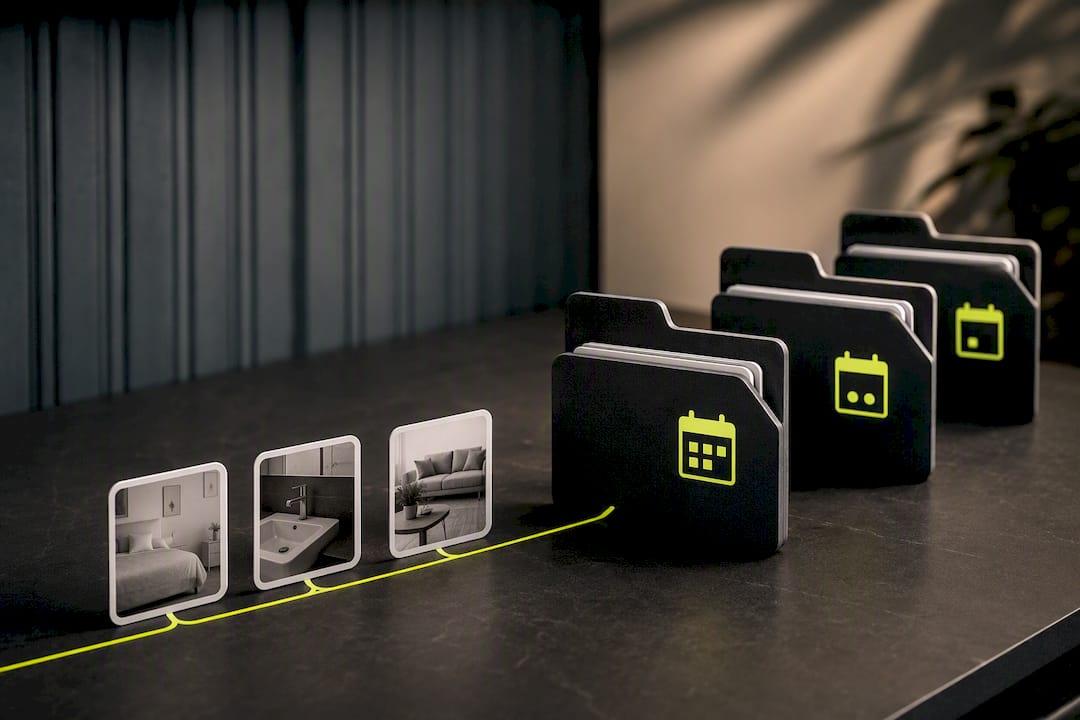
Photo documentation is the practical answer, and it's worth doing properly rather than a rushed snap on the way out the door. A consistent set, say five to eight shots per turnover covering beds, bathroom surfaces, kitchen benches, and the general living area, gives you a record that means something if a guest disputes the clean.
- Shoot from the same angle in each room every time, so photos are genuinely comparable turnover to turnover.
- Name files with the date and listing so you can pull up evidence fast if a dispute lands weeks later.
- Build a simple pass or fail checklist against each photo, and set a rule for when a fail escalates to a deep clean rather than a redo.
Keep records for at least a few months. If a guest lodges a cleanliness complaint, Airbnb's help resources make clear that documented evidence carries far more weight than a host's word alone.
Pro Tip: File photos in folders by date, not by guest name. When you're scrambling to respond to a complaint at 11pm, "15 March" is a lot faster to find than trying to remember which guest it was.
How does the Scene Reset protocol apply the five-step standard?
Grimescene's Scene Reset protocol for short-term rentals follows the same five-stage logic Airbnb sets out, just executed with non-toxic, bleach-free agents instead of harsh chemicals. Prepare and clean stages strip the property back fully; sanitise targets high-touch points with eco-friendly disinfectant choices safe around pets and kids; check runs a room-by-room inspection against a written list; reset restocks and stages the property for the next arrival.
- Photo proof supplied after every clean, matching the standard hosts need for dispute defence.
- Linen rental included, removing the laundry bottleneck on tight same-day turnovers.
- Consumable restocking handled as part of the standard job, not billed as an extra.
- Rapid response availability for last-minute bookings or back-to-back same-day changeovers.
Hosts can request adjustments to the standard scope, such as adding a monthly deep clean rotation on top of regular turnovers, when booking through Grimescene.
What's the smartest way to build a turnover standard that scales?
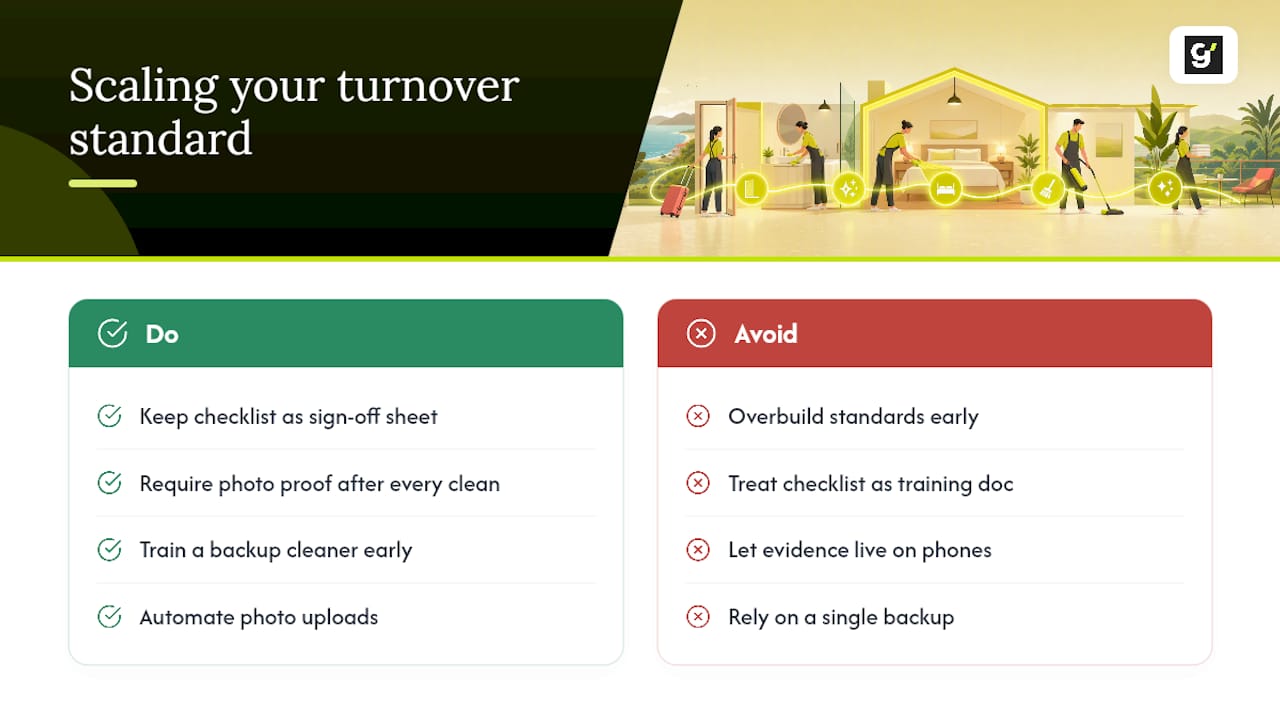
Most hosts overbuild their standard early and then can't maintain it once bookings pick up. For one to five properties, the baseline that actually holds is simple: one written checklist, photo proof after every clean, and a trained backup cleaner who knows the property without a walkthrough. Beyond five properties, that backup stops being optional and becomes a rostering requirement, because a single point of failure at scale means a guaranteed unclean listing eventually.
The three priorities that matter most are training a genuine backup before you need one, documenting every clean as a habit rather than an afterthought, and automating photo uploads so evidence doesn't live scattered across someone's phone. The most common mistake is treating the checklist as a training document instead of a live inspection tool. Fix that by making the checklist the actual sign-off sheet for every job, not paperwork that gets written once and ignored.
— Lead
How can Grime Scene Services handle your turnover standard for you?
If you'd rather hand the checklist, the photo proof, and the linen logistics to someone else, Grimescene is built for exactly that gap. The Short Term Rental Tactical Units package runs the Scene Reset protocol on your listing, with linen rental and consumable restocking included so you're not chasing supplies between guests. For the quarterly or trigger-based deep cleans that sit outside normal turnovers, the Deep Decontamination Full Sweep service covers grout, vents, and behind-appliance grime without bleach or harsh chemicals anywhere near your guests.
Before booking, have your property size, typical turnover window, and any recurring problem areas ready, that's enough for a quote covering both regular turnovers and periodic deep cleans. If pest activity has ever shown up between guests, pair your booking with a pest inspection ahead of peak season so it's ruled out before it becomes a review. Get in touch with Grimescene to lock in a turnover schedule that doesn't depend on you being home to check it happened.