
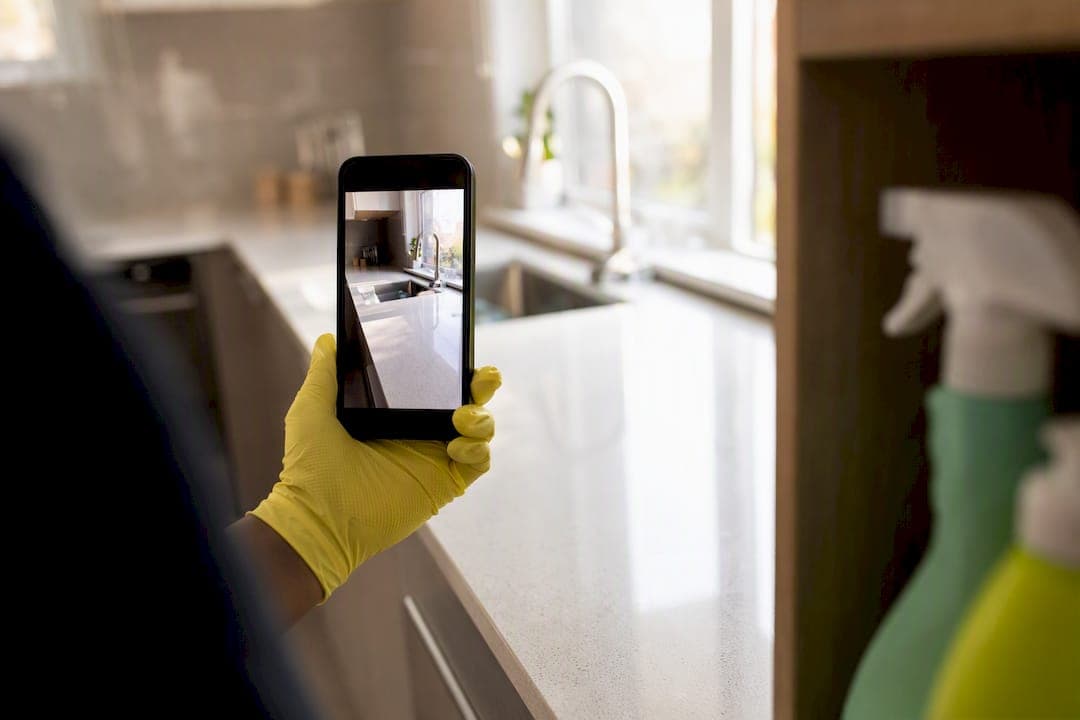
A reliable Airbnb turnover comes down to two things: a room-by-room clean and photo verification at every checkpoint. Skip the second part and the first one is just an honour system. If you manage your own turnovers or supervise a cleaner, run this six-step sequence before every guest arrives, and make photos non-negotiable.
- Strip and launder all linens on a hot cycle
- Clean and disinfect the bathroom, including grout and high-touch points
- Degrease the stovetop and wipe down all kitchen surfaces
- Vacuum and mop every floor, moving furniture where needed
- Restock consumables to par level (toilet paper, soap, coffee)
- Photograph each finished room before locking up
Pro Tip: Text yourself the photos as you go. If a guest ever disputes cleanliness, you've got a timestamped record sitting in your own message thread.
Key Takeaways
A dependable Airbnb turnover comes from a documented room-by-room process enforced with photo verification, not from trusting a cleaner's word alone.
| Point | Details |
|---|---|
| Enforce with photos | Require timestamped photos of beds, bathrooms, and kitchens before approving any turnover. |
| Follow the workflow order | Clean top-to-bottom then dry-to-wet in every room to avoid re-soiling finished surfaces. |
| Stock to par levels | Keep at least three linen sets per bed and a fixed supply kit on site at all times. |
| Separate turnover from deep clean | Run standard turnovers between guests and a full deep clean every 3 to 6 months. |
| Call in specialist remediation | Book Grimescene's Scene Reset for post-construction mess or persistent odour and allergen issues a standard clean can't fix. |
Where to go for further Airbnb cleaning guidance
See NSW Fair Trading's code of conduct, Properly's checklist template, and internal guides on compliance documentation.
Table of Contents
- Why pre-clean preparation matters for your Airbnb cleaning checklist
- What goes in a room-by-room Airbnb turnover checklist?
- What should be in your Airbnb cleaning supplies kit?
- How do you verify an Airbnb clean was done properly?
- How long should a turnover clean take, and how often should you deep clean?
- How do you keep cleaning quality consistent across cleaners?
- When does a turnover clean need professional decontamination?
- Book a Scene Reset for your next Airbnb turnover
- Sources
Why pre-clean preparation matters for your Airbnb cleaning checklist
Most turnover problems start before anyone picks up a cloth. A cleaner who arrives without knowing what's broken, what's missing, or how much time they've actually got will either rush the job or blow the schedule for the next guest.
Start with a walkthrough that takes no more than five minutes. Walk every room, photograph anything damaged or worn, and jot down maintenance issues (a loose tap, a flickering globe) before cleaning begins, so nothing gets scrubbed over and forgotten. This is also when you check ventilation. Open windows, run exhaust fans in the bathroom and kitchen, and let the property air out while the first tasks get underway.
Set par levels for everything consumable. As a rule of thumb, keep at least three linen sets per bed on hand so a delayed laundry run never holds up a same-day turnover. Store spares in a labelled cupboard the cleaner can access without hunting.
- Photograph pre-existing damage before touching a surface
- Check smoke alarms and ventilation are working
- Confirm consumable stock against your par list
- Block a realistic time window based on property size, not guesswork
What goes in a room-by-room Airbnb turnover checklist?
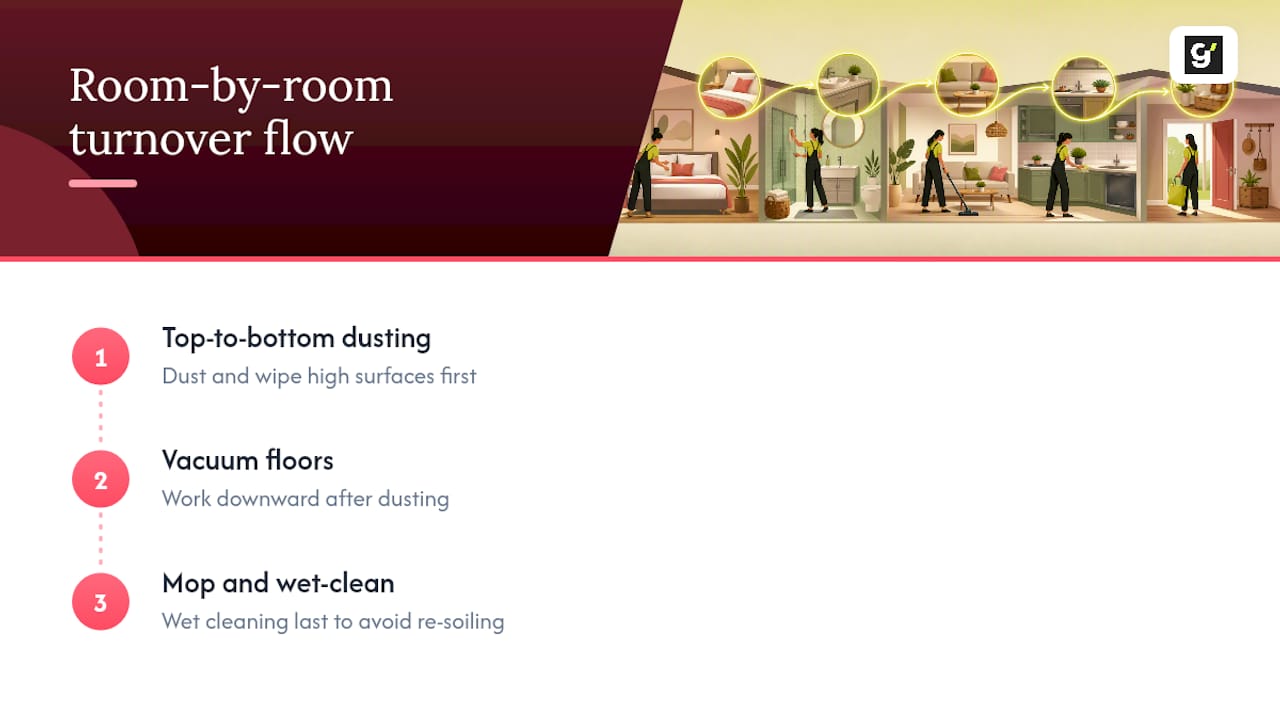
A proper vacation rental cleaning checklist works room by room, not task by task. That's the only way a cleaner (or you, at 8am with coffee in hand) can move through a property without doubling back. The standard workflow is top-to-bottom, then dry-to-wet: dust and wipe down high surfaces first, vacuum, and finish with mopping and wet cleaning last, so you're never re-soiling something you just finished cleaning.
Kitchen
The kitchen carries the most guest complaints of any room, and most of them come from inside appliances rather than the visible surfaces.
- Clean inside the microwave, oven, and fridge, checking for leftover food
- Degrease the stovetop and range hood filter
- Sanitise all benchtops and the sink
- Run the dishwasher empty with a cleaning tablet if it's had heavy use
- Wipe down cabinet fronts and handles
- Check the fridge is stocked with any welcome items and nothing from the last guest remains
A more detailed kitchen cleaning guide covers appliance-specific standards if you want to go deeper, and specific appliance cleaning benchmarks are worth reviewing if your property has commercial-grade equipment.
Bathrooms
Bathrooms are where guests judge cleanliness fastest, and where mould and limescale build up quietest.
- Descale showerheads, taps, and glass screens
- Spot-clean grout lines, particularly in the shower base
- Disinfect the toilet inside and out, including the base and handle
- Wipe down light switches, door handles, and the exhaust fan cover
- Launder bath mats and towels on a high-heat cycle
- Replace shower curtains or liners showing mildew
Staging matters here too. Folded towels and a clean mirror do more for guest perception than the parts they can't see, and a bathroom staging checklist breaks down exactly what to prioritise.
Bedrooms
Fresh linen is the single biggest driver of a guest's first impression, so this is not the room to rush.
- Strip all linen and inspect mattress protectors for stains
- Make beds with hospital corners or an equivalent tight fold
- Vacuum under the bed frame, not just around it
- Check drawers and wardrobes for items left by previous guests
- Dust skirting boards, lamps, and bedside tables
Living areas and additional spaces
Living rooms hide grime in places most cleaners skip on a time crunch: remote controls, light switches, and under sofa cushions.
- Disinfect remotes, light switches, and door handles
- Vacuum under and between sofa cushions
- Dust electronics, including the TV screen and any visible cords
- Clean upholstery spot marks with an appropriate fabric cleaner
- Sweep and tidy balconies or outdoor furniture
- Check the laundry room, entryway, and any storage cupboards for leftover items
Work each room in the same order every time, and exit through the door furthest from where you entered so you never walk back over a floor you've just mopped.
What should be in your Airbnb cleaning supplies kit?
A cleaner who has to leave the property mid-turnover to buy supplies has already blown your schedule. Keep a fixed kit on site, restocked after every clean, so nobody's improvising with dish soap on the bathroom tiles.
- Microfibre cloths (separate colours for kitchen, bathroom, and general use)
- A HEPA-filter vacuum for allergen and pet hair pickup
- A steam mop for hard floors
- Grout brush, squeegee, and descaling solution
- Multi-surface disinfectant and a degreaser for the kitchen
- Spare vacuum bags, mop heads, and gloves
On products, eco-friendly and bleach-free options are worth the switch, not just for guest allergies but because harsh chemical smells linger and read as "trying too hard to mask something" rather than genuinely clean. Look for plant-based degreasers and non-toxic disinfectants that still meet surface-sanitising standards.
Label everything and store consumables at eye level so a new cleaner can find what they need on their first shift. Before starting, a cleaner should confirm: full supply kit present, consumables at par, linens counted, and vacuum bag not full.
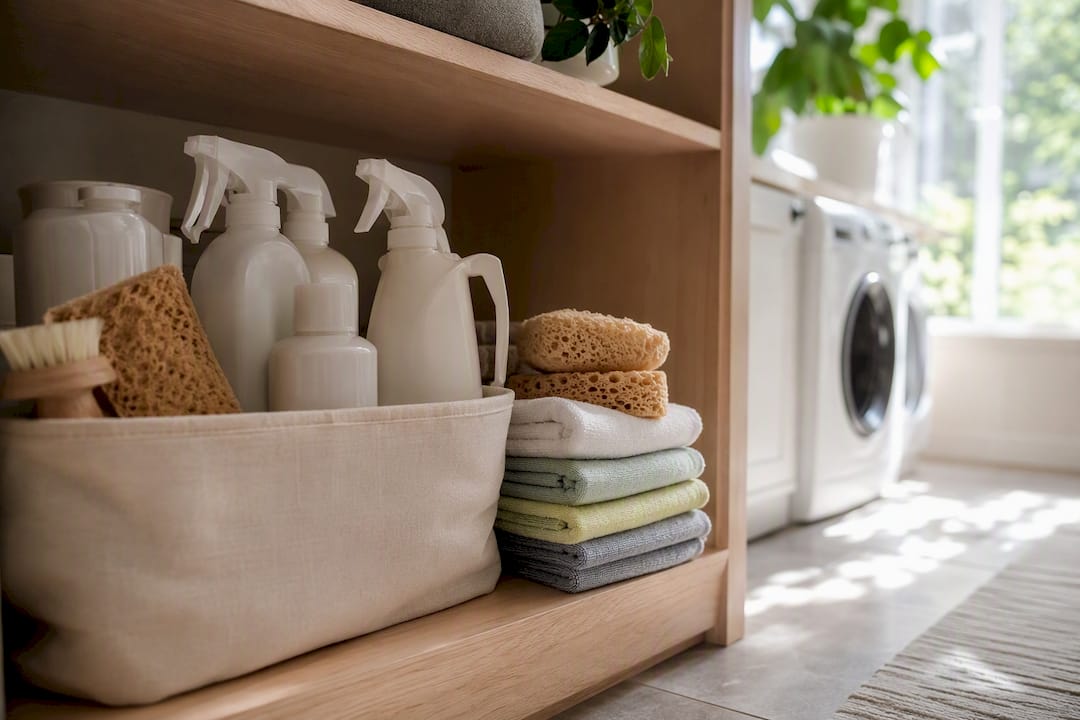
Pro Tip: Keep a small "emergency kit" separate from daily supplies, stocked with stain remover, an odour neutraliser, and spare light globes, for the turnovers that go sideways.
How do you verify an Airbnb clean was done properly?
Verification is what separates a checklist from a promise. A cleaner can tick every box on a piece of paper and still miss a hair in the shower drain. Photos close that gap.
Require photos for anything a guest will notice in the first sixty seconds: made beds, the bathroom, kitchen benches, and the general living area. Photo-verified checklists tied to specific tasks make disputes far easier to resolve, because you've got timestamped evidence rather than someone's word against another.
- Walk the property as if you were the arriving guest, checking smell first
- Test that every light, tap, and appliance actually works
- Confirm doors lock and any keypad or lockbox code is current
- Check the photo set against your checklist before approving payment
A fresh-eyes walkthrough catches what a tired cleaner won't. If something smells off or a lock sticks, you want to know before the guest does, not after the review lands.
If standards slip, don't skip straight to punishment. Send a specific, photo-referenced message ("bathroom mirror still has spots, see attached") and ask for a fix before the next booking. Apps like MadeComfy's interactive checklist build this timestamp-and-approval step into the workflow directly, which removes the awkwardness of chasing photos by text.
How long should a turnover clean take, and how often should you deep clean?
Time and money are the two constraints most hosts underestimate. A studio or one-bedroom turnover typically runs 1.5 to 2.5 hours; a three-bedroom house can run 3 to 5 hours depending on guest count and how the property was left.
Deep cleans are a different job entirely, covering things a turnover skips: inside cupboards, behind appliances, upholstery steam cleaning, and window tracks. Run one every 3 to 6 months, more often in high-turnover properties or ahead of peak booking seasons.
- Book deep cleans before your busiest season starts, not during it
- Add seasonal tasks (gutters, outdoor furniture, air conditioning filters) at the same time
- Price your cleaning fee to cover actual labour and consumables, not a flat guess
- Review the fee twice a year against your real costs, not competitor listings
A seasonal deep-clean schedule helps you plan these around your booking calendar rather than reacting to a bad review.
How do you keep cleaning quality consistent across cleaners?
Consistency comes from training once, verifying constantly, and paying fairly for the actual time the checklist takes.
Walk your first cleaner through a full turnover yourself, room by room, showing exactly what "done" looks like rather than handing over a document and hoping. Pay for the real time the job takes, not a flat rate that quietly rewards rushing. Track a small set of numbers: photo compliance rate, guest complaints per month, and average turnover time.
- Run a supervised first turnover for every new cleaner
- Pay based on realistic time estimates, not guesswork
- Track photo compliance and guest complaints as your two core metrics
- Use the same checklist across every property before adding a new one
Pro Tip: If you're managing more than two properties, standardise the checklist itself before you standardise anything else. A cleaner switching between different formats per property is where consistency quietly breaks down.
A guest-review guide to cleaning consistency covers how these habits show up directly in your ratings.
When does a turnover clean need professional decontamination?
A standard turnover handles day-to-day grime. It doesn't touch deep-set odours, mould behind walls, allergen buildup, or post-construction dust, and pushing a regular cleaner to handle those jobs usually just spreads the problem around.
That's the gap Grimescene's Scene Reset protocol is built for: a deep decontamination sweep using non-toxic, bleach-free agents that neutralise buildup rather than mask it.
- Use it after major renovations or construction work on the property
- Book it when odour or allergen complaints persist despite regular cleaning
- Schedule it seasonally alongside your standard deep-clean cadence
- Run your usual room-by-room checklist between professional resets, not instead of them
Book a Scene Reset for your next Airbnb turnover
Running the checklist yourself works until a bad odour, an allergen complaint, or a post-renovation mess shows up that a standard clean can't fix. That's where Grimescene's Short Term Rental service and Full Sweep decontamination earn their place in your turnover plan.
The Short Term Rental service handles turnovers end to end, including linen rental and consumable restocking, so you're not chasing par levels between guests. The Full Sweep goes further: a genuine decontamination pass using non-toxic agents, built for post-construction mess or the kind of persistent odour and allergen issues a regular clean never quite resolves. Hosts choose a specialist for exactly this reason: verified results without spending their own weekend scrubbing grout.
If your next turnover needs more than a checklist can deliver, request a quote for the Full Sweep or check Short Term Rental availability for your next changeover date.
A note from Grimescene on why photos changed everything
Hosts lose ratings over things they never see themselves. Once we started requiring photo proof at every turnover, disputes dropped and standards held. Test it on your next changeover.
— Lead
Sources
- Code of Conduct for the short-term rental accommodation industry (NSW Fair Trading)
- Free Airbnb Cleaning Checklist App (MadeComfy)
- The Complete Airbnb Cleaning Checklist (Properly)
- Vacation rental cleaning checklist (Lodgify)