
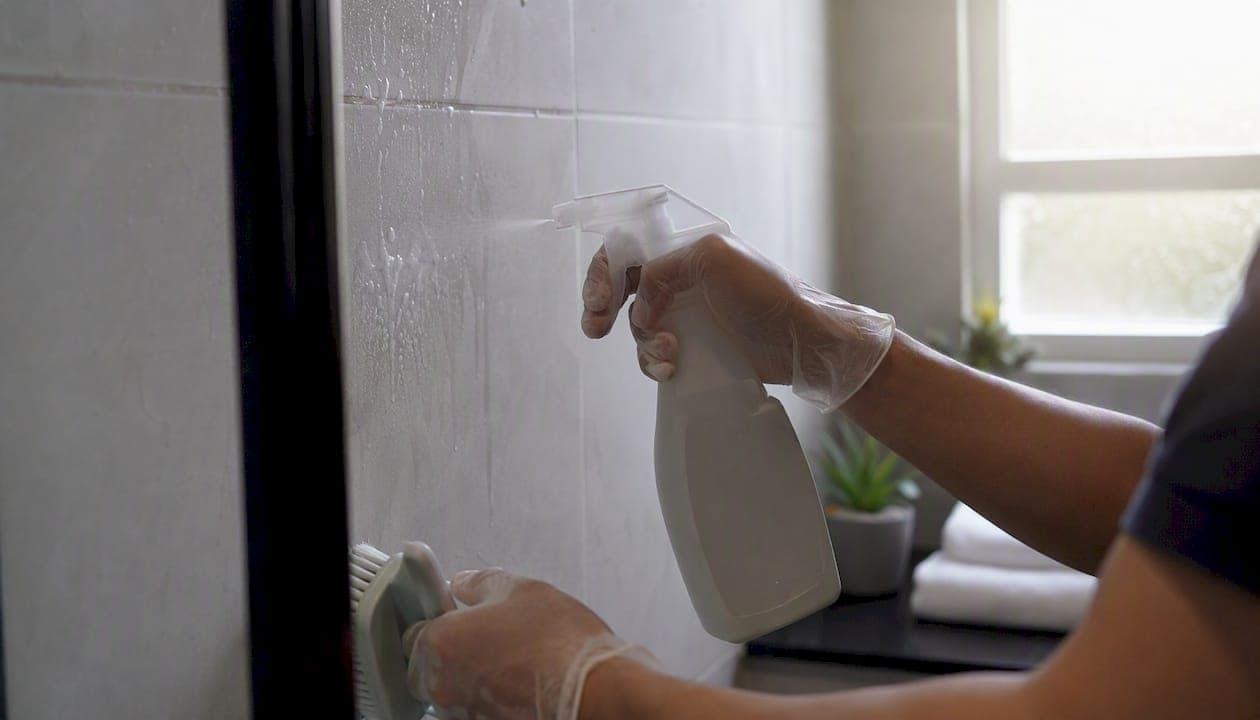
Before you do anything else in a vacated rental bathroom, run this five-minute reset. It targets the three triggers that generate the most cleanliness complaints: hair, soap scum, and stains. The bathroom is the most review-sensitive space in any rental, so getting this right before every turnover is non-negotiable.
Day-of reset checklist:
- Strip used towels, bath mats, and any personal items left behind
- Wipe the toilet seat, rim, and base with a disinfectant cloth, then check under the rim
- Spray and wipe the mirror, tap, and basin in one pass
- Squeegee or wipe the shower screen; check the drain for hair
- Mop or wipe the floor last, working toward the door
- Restock toilet paper, hand soap, and fresh towels
- Do a final visual scan from the doorway at standing height, then crouch for a low-angle check
That last step catches what overhead light hides. Hair on tiles, streaks on glass, and water marks on chrome all disappear under a standard ceiling light but show up immediately at a low angle.
Pro Tip: *Crouch at the doorway and look across the floor and bench surfaces at a 15-degree angle before you call the bathroom done.
Key takeaways
A bathroom staging and cleanliness checklist for rentals works best when daily resets, monthly deep cleans, and staged presentation are treated as three separate, scheduled routines rather than one occasional task.
| Point | Details |
|---|---|
| Day-of reset sequence | Strip, clean top-to-bottom, restock, then do a low-angle visual check before leaving. |
| Separate resets from deep cleans | Daily resets prevent complaints; monthly descaling and caulk checks protect fixtures long-term. |
| Staging lifts perception | Remove personal items, use uniform white linens, and limit surfaces to two or three premium props. |
| Document for compliance | Dated entry and exit photos plus a signed condition report are the evidence Australian tenancy authorities expect. |
| Grimescene Scene Reset | When mould, failed caulk, or recurring issues exceed DIY capacity, Grimescene's Scene Reset restores inspection-ready standard using non-toxic agents. |
Table of Contents
- What does a full bathroom turnover checklist cover?
- How often should you deep clean a rental bathroom?
- How do you stage a bathroom to look hotel-clean?
- Which small repairs make the biggest difference before listing?
- What do Australian tenancy rules say about end-of-tenancy cleaning?
- Which tools and products get professional results safely?
- When should you call a professional for a rental bathroom?
- Why treating the bathroom as a guest-confidence zone pays off
- Grimescene's rental turnover services across Australia
- Sources
What does a full bathroom turnover checklist cover?
A consistent turnover follows a fixed path: reset first, then top to bottom, clean to dirty, with staging last. This sequence prevents re-soiling surfaces you have already cleaned and keeps the job repeatable across different cleaners. A professional turnover system emphasises left-to-right, top-to-bottom movement and standardised restocking to reduce errors across multiple properties.
Reset and remove
- Remove all used linens, towels, and bath mats
- Empty the bin and replace the liner
- Clear any personal items left by the previous tenant or guest
- Remove any cleaning products left in the shower or under the vanity
Fixture-by-fixture tasks
Mirror and glass (3–5 minutes) Spray glass cleaner and wipe in a single horizontal pass, then a vertical pass. Check for toothpaste spots at close range.
Toilet (5–7 minutes)
- Inside bowl: apply cleaner under the rim, let it dwell, then scrub
- Seat, lid, and hinge points: wipe with disinfectant
- Base and behind the toilet: wipe down to floor level; this is the spot inspectors check first
Sink and vanity (3–5 minutes)
- Scrub the basin and tap with a microfibre cloth
- Wipe the vanity surface, soap dish, and any shelving
- Check the drain for hair and soap build-up
Shower or bath (8–10 minutes)
- Spray tiles and grout lines; let the product dwell for two minutes before scrubbing
- Wipe the showerhead and check for limescale
- Clean the shower door or curtain, including the bottom rail where mould collects
- Check the drain and remove any hair
Floor (3–5 minutes) Sweep or vacuum first, then mop. Work from the back corner toward the door so you do not walk across a wet floor.
Exhaust fan and vents Wipe visible dust from the vent cover with a damp cloth. A dusty vent is a common inspection flag.
Restock and stage
- Fresh bath towels and hand towels per bathroom, folded uniformly
- Toilet paper on the holder, plus spare visible in the cupboard or on the shelf
- Hand soap refilled or replaced
- Hair dryer present and cord tidy
- Final photo from the doorway for your records
How often should you deep clean a rental bathroom?
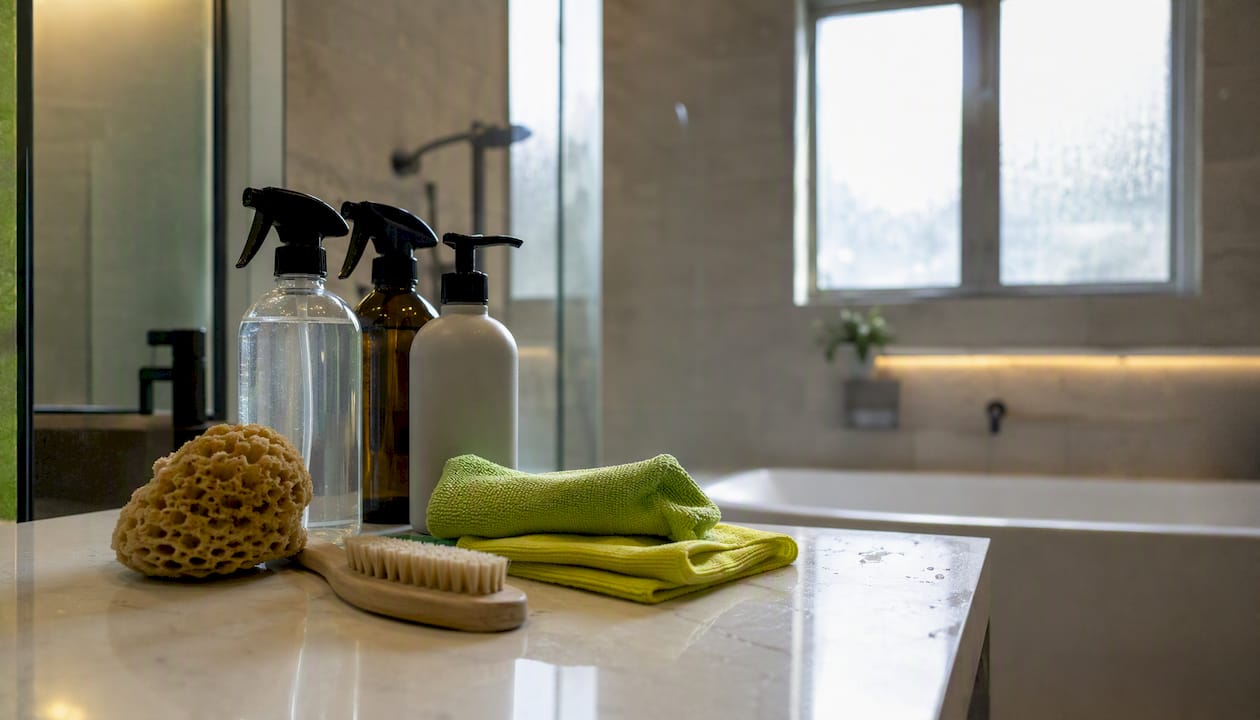
Separating quick resets from scheduled deep cleans is what keeps a rental bathroom in good condition long-term. A daily reset prevents most guest complaints; monthly and seasonal tasks protect the fixtures themselves. The Better Homes & Gardens bathroom cleaning breakdown is a practical template many hosts adapt for turnover scheduling.
| Frequency | Tasks | Why it matters |
|---|---|---|
| Daily / per turnover | Wipe surfaces, clean toilet, mop floor, restock consumables | Prevents hair and soap residue accumulating between guests |
| Weekly | Sanitise high-touch points (taps, door handles, light switches), check grout for early mould | Catches problems before they become permanent |
| Monthly | Descale showerhead, snake or flush drain, inspect caulk for discolouration | Prevents mineral build-up and slow drains that generate complaints |
| Seasonal | Replace discoloured caulk, deep-clean exhaust fan, check for tile grout cracking | Protects fixtures and avoids costly repairs at lease-end |
Pro Tip: Schedule your seasonal deep clean to land at the end of a tenancy cycle, not the start of one. Doing it before a new tenant moves in means you are presenting a genuinely fresh property, and any repairs identified can be completed before occupancy rather than during it.
How do you stage a bathroom to look hotel-clean?
Cleaning and staging are different jobs. A bathroom can be hygienically clean and still look cluttered or tired. The Home Staging Institute recommends minimal décor, streak-free glass, neutral palettes, and updated caulking as the highest-impact staging tasks.
Declutter rules:
- Remove all personal toiletries entirely
- Leave a maximum of two or three premium items: a quality hand soap, a small candle, or a single tray with two items on it
- No half-empty bottles, no mismatched products
Linen standards:
- Uniform colour across all towels in the property (white or a single neutral)
- Replace any towel with a stain, worn edge, or pilling
- Fold towels in thirds and stack or hang consistently across every bathroom
Lighting and scent:
- Replace any blown or yellowed bulbs before listing; warm-white LEDs at 3,000K give a clean, hotel-like feel
- A very light fragrance only: a reed diffuser with a neutral scent, or nothing at all
- Avoid plug-in air fresheners, which inspectors and guests often associate with masking odours
What inspectors and guests actually look at:
- Streak-free mirror and glass
- Toilet paper roll aligned and full
- No visible mould in grout lines or caulk
- Vent cover free of dust
- No hair anywhere
Pro Tip: Remove the bath mat for listing photos. Place a folded white towel and a single bar of quality soap on a small tray near the basin. It reads as intentional and spa-like in photos, which lifts click-through rates on listing platforms.
Which small repairs make the biggest difference before listing?
Low-cost fixes in a bathroom have an outsized effect on how a property is perceived. Peeling caulk, discoloured grout, a dripping tap, or a slow drain all signal neglect to an inspector, even when the rest of the property is immaculate. Grout condition directly affects guest reviews in ways that are disproportionate to the cost of fixing it.
Common trouble spots and what to do:
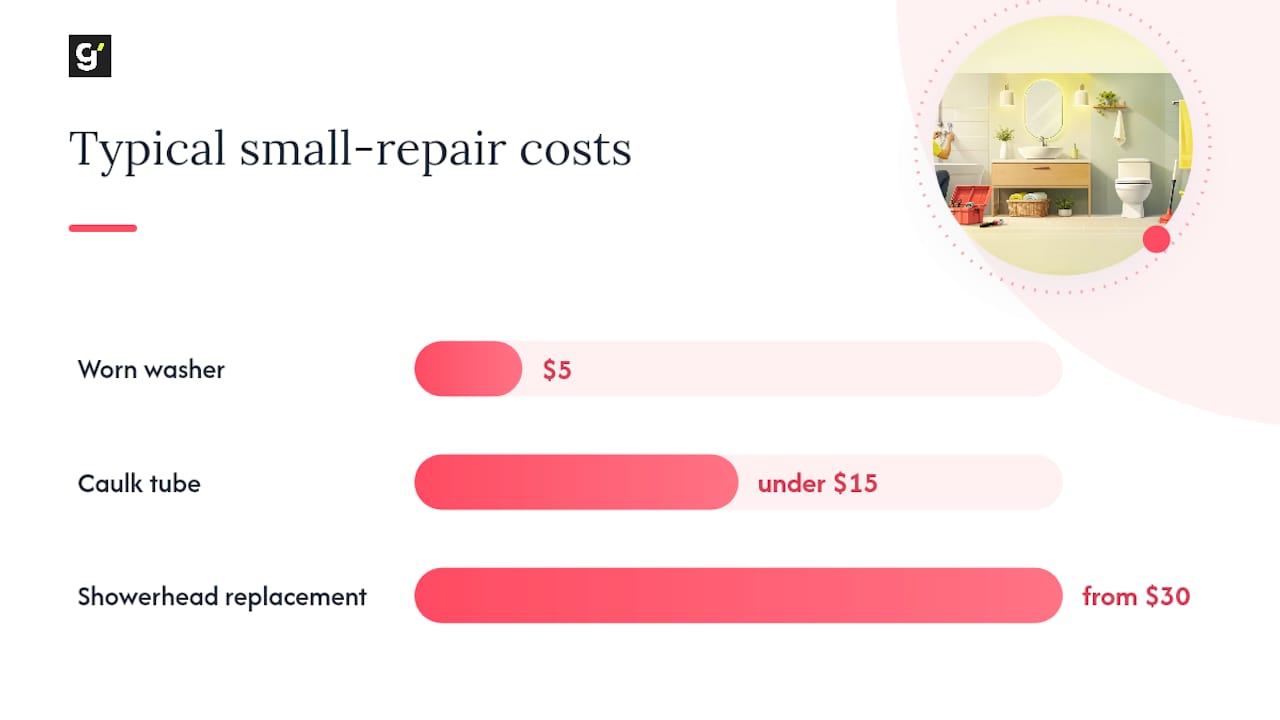
- Peeling or stained caulk: Replace it. Bleaching stained silicone sealant rarely works and the discolouration returns within weeks. A tube of bathroom silicone costs under $15 and takes 30 minutes to apply. The return on effort is high.
- Discoloured grout: Try a grout cleaner first (Selleys or similar). If the discolouration is deep or the grout is crumbling, regrout the affected lines. A tiler can regrout a shower in a half-day.
- Dripping taps: A worn washer is a $5 fix for a competent DIYer. If the tap body is corroded, call a licensed plumber. Leaving a drip costs more in water bills than the repair.
- Limescale on showerheads: Soak in white vinegar for 30–60 minutes. If the showerhead is heavily calcified or the finish is damaged, replace it. A basic replacement starts at around $30.
- Slow drains: Use a drain snake or a biodegradable drain cleaner before listing. A blocked drain is one of the most common guest complaints.
DIY vs. trades guidance: Caulk replacement, showerhead replacement, and drain clearing are reasonable DIY tasks. Regrouting, tap body replacement, and anything involving the water supply line should go to a licensed tradesperson.
Pro Tip: Always replace caulk rather than bleach it when it has gone black or brown. Bleach lightens the surface but the mould spores remain in the silicone. New caulk costs almost nothing and looks immediately professional.
What do Australian tenancy rules say about end-of-tenancy cleaning?
Australian tenancy obligations vary by state, but the consistent expectation across jurisdictions is that tenants return a property in the same condition it was in at the start of the tenancy, fair wear and tear excepted. The Queensland RTA guidance states clearly that tenants must leave the premises clean when vacating, and this standard is what landlords and agents reference when assessing returns.
In Victoria, the Residential Tenancies Act 1997 provides the legislative framework for tenancy obligations, including cleanliness expectations documented in condition reports. Consumer Affairs Victoria's condition report guidance explains what evidence supports bond disputes and end-of-tenancy claims.
What inspectors commonly document in bathrooms:
- Hair in drains, on floors, or on surfaces
- Mould in grout lines, caulk, or on ceiling corners
- Stained or peeling caulk
- Soap scum on tiles, screens, or taps
- Persistent odour
Documentation checklist for landlords and agents:
- Dated entry photos showing the bathroom at the start of tenancy
- Dated exit photos from the same angles
- A signed condition report noting the bathroom's condition at both points
- A receipt from a professional cleaner if a clean was completed before or after tenancy
Legal note: The information in this article is general guidance only and does not constitute formal legal advice. Tenancy obligations differ between states and territories. For your specific situation, consult your state's tenancy authority: RTA Queensland, Consumer Affairs Victoria, or the relevant authority in your state.
Which tools and products get professional results safely?
The right kit makes a consistent turnover faster and reduces the risk of damaging fixtures with harsh chemicals. For rental properties, eco-friendly and bleach-free products protect both surfaces and the people who use them.
Essential tools:
- Microfibre cloths (colour-coded by zone: one for toilet, one for surfaces)
- Grout brush or old toothbrush for tile lines
- Toilet wand with disposable heads
- Squeegee for shower screens
- Refillable pump spray bottles
- Drain snake or drain auger
- Extendable duster for exhaust fans and ceiling corners
Products by task:
- Descaler: White vinegar (DIY) or a commercial citric-acid descaler for showerheads and taps. Both are available at Woolworths, Coles, or Bunnings.
- Bleach-free disinfectant: Seventh Generation, Ecostore, or Method are widely available in Australia and safe for use around children and pets.
- Mild abrasive for grout: Baking soda paste or a dedicated grout cleaner such as Selleys Grout Cleaner.
- Glass cleaner: A diluted white vinegar spray or a streak-free commercial glass cleaner.
Hosts managing multiple properties should standardise on one product set. It simplifies stock ordering, reduces training time for cleaners, and means you always know what is in the cupboard. For sustainable cleaning practices that scale across a portfolio, refillable concentrate systems cut both cost and plastic waste.
Pro Tip: Label every product bottle with its dilution ratio and the surfaces it is safe for. This protects fixtures from accidental damage and means any cleaner you bring in can work to your standard without a lengthy briefing.
When should you call a professional for a rental bathroom?
Some bathroom problems sit beyond what a standard turnover clean can fix. Knowing when to escalate saves time, protects your bond or rating, and prevents a small issue from becoming a structural one.
Call a professional when you see:
- Persistent mould that returns within days of cleaning, particularly on ceilings or behind fittings
- Caulk that has failed, lifted, or gone black across multiple lines
- Recurring drain blockages that a snake does not clear
- Repeated low cleanliness scores despite regular cleaning
- Any biohazard situation or post-hoarding remediation
Grimescene's Scene Reset protocol is designed specifically for these situations. The process runs in sequence: a detailed inspection, targeted deep decontamination using non-toxic agents, repairs coordination for caulk and grout where required, consumable restocking, and a final staged visual check. The result is an inspection-ready bathroom that meets the standard a condition report demands.
What a Scene Reset delivers: A bathroom that passes a condition report inspection, with refreshed caulk and grout lines where required, cleared drains, descaled fixtures, and restocked consumables. Grimescene uses bleach-free, non-toxic agents throughout, which means no chemical residue for the next tenant.
For hosts managing short-term rental turnovers at volume, Grimescene also offers recurring turnover cover with linen and consumable restocking included. For urgent situations, a rapid response tactical clean can be on-site within hours.
Why treating the bathroom as a guest-confidence zone pays off
The bathroom is where guests form their strongest impression of a property's cleanliness. It is small, enclosed, and examined closely. A spotless kitchen can be undone by a single hair on the bathroom floor or a ring of soap scum around the basin. The ROI of getting it right is real: fewer cleanliness complaints, better reviews, and fewer maintenance surprises at lease-end because small problems get caught early.
The triggers that generate complaints are almost always the same: hair, soap scum, and mould. All three are preventable with a consistent daily reset and a monthly deep-clean schedule. The challenge for hosts managing multiple properties is keeping that standard consistent across different cleaners. Reference photos solve this. A set of dated photos showing exactly how the bathroom should look after a turnover gives any cleaner a target to match, without a lengthy verbal brief.
Cleanliness also directly supports tenant retention. Tenants who move into a visibly well-maintained property are more likely to treat it with care and less likely to dispute the condition at exit. That dynamic starts in the bathroom.
Grimescene's rental turnover services across Australia
The checklist in this article covers what you can manage yourself. When the bathroom needs more than a reset, Grimescene delivers a faster, cleaner outcome than DIY escalation.
Grimescene's short-term rental turnover service covers the full cycle: deep clean, linen restocking, consumable refill, and a staged final check. For serious maintenance situations, the deep decontamination Full Sweep addresses mould, failed caulk, mineral build-up, and biohazard remediation using non-toxic, bleach-free agents. No harsh chemicals, no residue, and no shortcuts.
Grimescene operates across Australia. If your rental bathroom has fallen behind the standard this checklist describes, get a quote for a Scene Reset or a Full Sweep and have it inspection-ready before your next tenant moves in.
Sources
The following resources were used to shape the guidance in this checklist. Consult the tenancy authority links for your specific state before making any decisions about bond claims or end-of-tenancy obligations. This article is general information, not formal legal advice.
Australian tenancy authorities:
- Cleaning
- Residential Tenancies Act 1997
- Condition reports
- Ultimate bathroom cleaning checklist
- Staging a bathroom
Cleaning and staging references: