
Grout condition directly shapes guest reviews. Stained, odorous, or crumbling grout in a bathroom triggers a negative cleanliness judgement within seconds of a guest walking in, and that judgement rarely stays confined to the bathroom. It colours the entire stay. Bathroom cleanliness operates as a basic factor in hospitality: guests expect it, never praise it, and penalise hard when it falls short. Avoiding even a single negative bathroom review can preserve $1,200–$2,000 in future booking value for a property.
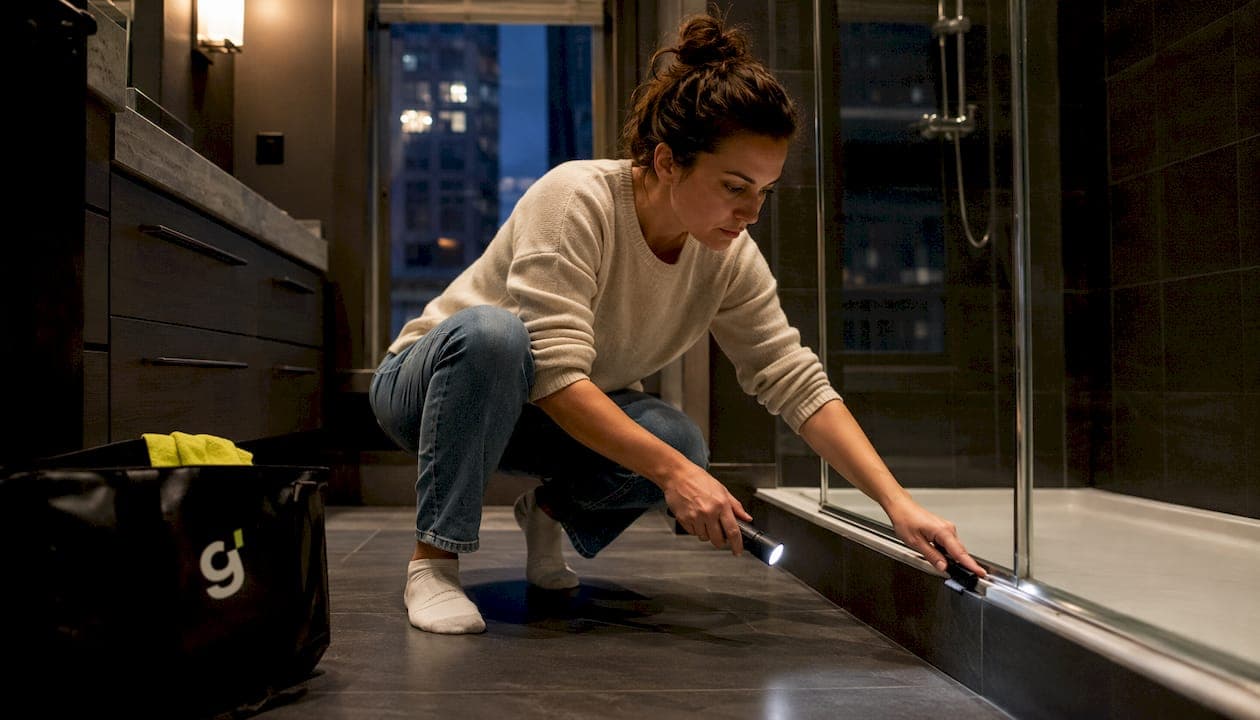
Before your next guest arrives: walk into the bathroom, crouch to eye level at the shower base, and check the grout lines for darkening, residue, or a musty smell. If you find either, spot-treat now and book a professional deep clean within the week.
Table of Contents
- Why guests notice grout in seconds
- How grout problems translate into bad reviews and fewer bookings
- What stained grout usually signals about your bathroom's hygiene
- Turnover checklist: quick steps to reduce grout complaints before arrival
- When DIY cleaning isn't enough and you need a professional
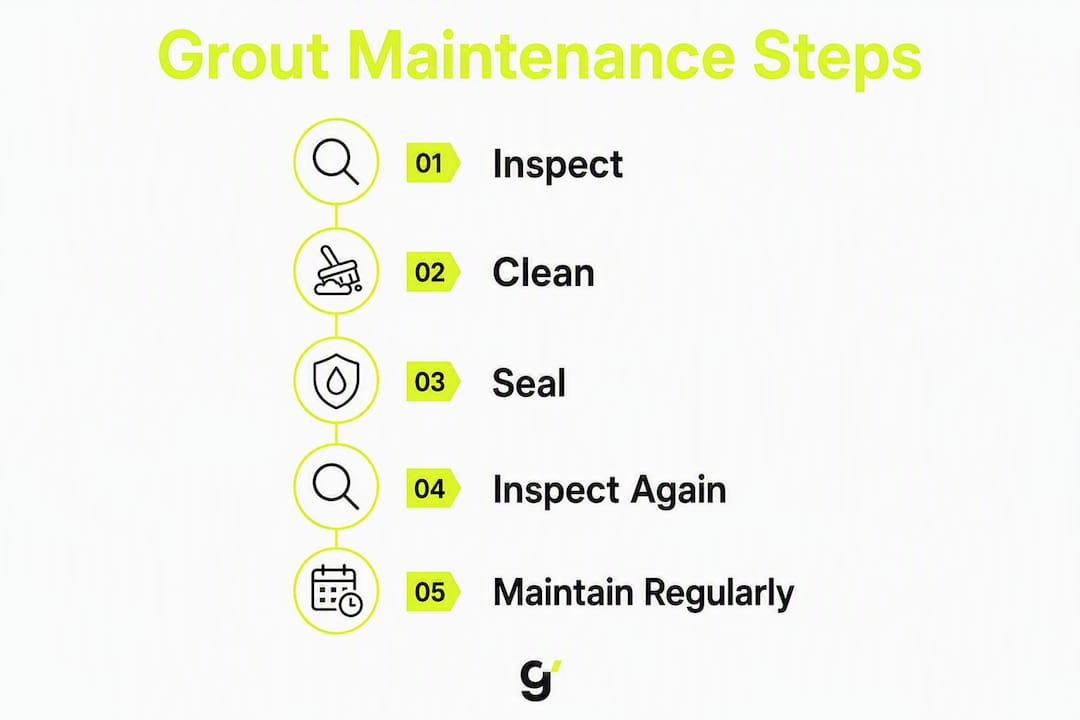
- A repeatable maintenance schedule that protects your ratings
- Grimescene's Scene Reset keeps your bathroom review-ready
- Key takeaways
- The case for treating grout as a priority, not an afterthought
- Useful sources and further reading
Why guests notice grout in seconds
Guests form a cleanliness judgement almost immediately upon entering a bathroom. Smell and visible residue are the two fastest triggers, and grout lines concentrate both. A bathroom is a zero-tolerance zone: guests are more forgiving of a scuff on a bedroom wall than a dark grout line near the shower drain.
The psychology is straightforward. Bathrooms carry an inherent hygiene expectation that other rooms don't. When something looks wrong there, the brain reads it as a contamination signal, not just an aesthetic one. Guests generalise fast: one dirty grout line becomes "the whole place wasn't clean."
The cues guests notice first, in rough order:
- Musty or mildew odour on entry
- Dark or discoloured grout lines around the shower, bath, or floor tiles
- Soap scum residue sitting in grout channels
- Grout that looks wet or slimy between uses
- Visible mould spots, even small ones
Pro Tip: Crouch to shower-floor level during every turnover inspection. Standing height misses the grout discolouration that guests see when they step in.
How grout problems translate into bad reviews and fewer bookings
Visible grout issues commonly appear in negative review narratives, and guests often photograph bathroom problems and post them directly on platforms like Airbnb and Google. A photo of dark grout lines is hard to argue against in a host response.
The mechanics work in three layers. First, negativity bias: a single cleanliness failure carries more weight in a review than several positives. Second, generalisation: one bathroom flaw creates doubt about the whole property's hygiene. Third, platform weighting: cleanliness is a scored category on major booking platforms, and even a 0.1–0.5 point drop in overall rating measurably affects demand and pricing power for independent hosts.
Review language like this doesn't just cost one booking. It sits on your listing permanently, and prospective guests read it. The impact on occupancy rates compounds over time: a recurring cleanliness complaint suppresses click-through and conversion long after the underlying problem is fixed.
What stained grout usually signals about your bathroom's hygiene
Stained grout is rarely just a surface problem. Porous grout absorbs moisture and can harbour bacteria or mould for up to six months before visible darkening becomes obvious during a standard turnover inspection. By the time you see it, the biological load has been building for a while.
Common underlying problems that visible staining points to:
- Mould colonies growing inside the grout body, not just on the surface
- Trapped detergent residue that feeds microbial growth
- A failing or absent grout sealant allowing water ingress
- Moisture behind tiles from a slow leak or inadequate waterproofing
- Grout that has become soft or crumbly, losing its structural seal
Pro Tip: Press lightly on grout lines near the shower base and bath edges. Soft or spongy grout means moisture has compromised the substrate beneath — a surface clean won't fix it, and the problem will return within days.
Epoxy grout handles moisture far better than standard cement-based grout and resists biological growth more effectively. If your property still has original cement grout in a high-use shower, that's a long-term vulnerability worth noting in your maintenance plan. Renovation planning resources like common remodel mistakes highlight how grout selection at installation directly affects long-term maintenance burden.
Turnover checklist: quick steps to reduce grout complaints before arrival
A targeted 10–15 minute grout check and spot treatment during turnover can stop most immediate guest complaints. Housekeeping commonly waits for visible dirt before acting, but by that point the grout has often been absorbing contaminants for months. Getting ahead of it is the whole game.
- Visual check — crouch to shower-floor level and scan all grout lines for darkening, residue, or wet spots.
- Odour test — stand in the shower recess with the door closed for 10 seconds. A musty smell means biological growth, not just surface dirt.
- Spot clean — apply a non-toxic, bleach-free grout cleaner to affected lines, let it dwell for 5 minutes, then scrub with a stiff-bristle grout brush.
- Rinse and dry — rinse thoroughly and use a squeegee or dry cloth on tile surfaces to reduce moisture retention between stays.
- Temporary mitigation — if grout is stained but a professional clean isn't booked yet, place fresh white towels prominently and use a light, clean-scented bathroom spray to reduce odour perception.
| Action | Time required | Priority |
|---|---|---|
| Visual grout inspection | 2–3 min | Now (every turnover) |
| Odour check in shower recess | 1 min | Now (every turnover) |
| Spot clean visible staining | 5–10 min | Same day |
| Squeegee tiles and dry grout | 2 min | Now (every turnover) |
| Book professional deep clean | 5 min | Within a week if staining persists |
Pro Tip: Never use bleach-based products in an occupied or recently vacated short-term rental without full ventilation. Non-toxic, enzyme-based cleaners are safer for guests with sensitivities and won't off-gas into soft furnishings.
When DIY cleaning isn't enough and you need a professional
Call a professional if you're seeing persistent odour, widespread grout darkening, or the same complaint appearing across multiple guest reviews. Surface cleaning won't resolve what's happening inside the grout body.
Concrete signs to escalate:
- Grout re-appears dirty within 2–3 days of cleaning
- A musty or damp smell returns between guest stays
- Visible mould in grout lines, even after scrubbing
- Grout that feels soft, crumbly, or hollow when pressed
- Moisture or bubbling paint on walls adjacent to the shower
A professional deep decontamination addresses the biological load inside the grout, not just the surface layer. Outcomes typically include grout colour restoration, odour neutralisation at the source, and sealant reapplication to prevent re-contamination. For stubborn grout buildup, professional-grade equipment and non-toxic agents reach depths a grout brush simply can't.
Pro Tip: Ask your cleaning professional specifically whether they neutralise biological growth or just clean the surface. The distinction matters for how long the result lasts between stays.
A repeatable maintenance schedule that protects your ratings
A simple preventive schedule prevents the majority of guest-facing grout failures. Structured monthly inspections catch most bathroom defects during a low-cost repair window, well before they become emergency-cost problems or guest complaints.
Treat the bathroom as a risk surface, not a cost centre. The ROI on preventive grout maintenance is strong: a small recurring investment in inspection and spot treatment avoids the compounding revenue loss of a persistent cleanliness rating.
| Task | Frequency | Who | Time/cost estimate |
|---|---|---|---|
| Visual grout inspection + odour check | Every turnover | Host or cleaner | 5 min, no cost |
| Spot clean visible staining | Weekly or as needed | Cleaner | 10–15 min, minimal product cost |
| Full grout scrub and tile dry | Monthly | Cleaner | 10–15 min |
| Moisture and sealant inspection | Monthly | Host or cleaner | 10 min |
| Sealant reapplication | Monthly | Professional or experienced host | 1–2 hrs, low material cost |
| Deep decontamination | Annually or after complaint | Professional | 2–4 hrs, professional fee |
For scheduling templates you can adapt to your property, the grout and tile cleaning guide covers recommended products and cadences in detail.
Grimescene's Scene Reset keeps your bathroom review-ready

Grimescene offers eco-friendly deep decontamination and targeted grout restoration built specifically for short-term rental turnovers in Australia. The Scene Reset protocol goes beyond surface cleaning: non-toxic agents neutralise biological buildup inside grout lines, odour is addressed at the source, and sealant is reapplied where needed. No harsh chemicals, no bleach off-gassing between guest stays.
For hosts dealing with a persistent problem, the Deep Decontamination Full Sweep is the right starting point. If you need a fast turnaround before an imminent arrival, the Rapid Response tactical clean covers urgent situations. Recurring short-term rental service packages include turnovers, linen rental, and consumable restocking so your property stays consistently review-ready. Book directly online to lock in your next service date.
Key takeaways
Grout condition is one of the highest-impact, most fixable sources of negative guest reviews — and a simple inspection and maintenance routine is all that separates a five-star bathroom from a complaint.
| Point | Details |
|---|---|
| Grout triggers instant judgements | Guests assess bathroom cleanliness within seconds; smell and visible grout are the first cues. |
| One bad review costs real money | A single avoided negative bathroom review preserves $1,200–$2,000 in future booking value. |
| Staining signals deeper problems | Discoloured grout often indicates mould or moisture inside the grout body, not just surface dirt. |
| Monthly inspections catch issues early | Structured monthly inspections catch most bathroom defects during a low-cost repair window, not emergency cost. |
| Grimescene's Scene Reset | Eco-friendly deep decontamination and grout restoration for short-term rental turnovers across Australia. |
The case for treating grout as a priority, not an afterthought
The conventional wisdom in short-term rental management is to focus on presentation: fresh linen, good photography, a welcome hamper. Those things matter. But the single most common source of a one-star cleanliness rating isn't a missing amenity or a scuffed wall. It's a bathroom that smells wrong or looks like it hasn't been properly cleaned in months, and grout is almost always the reason.
What hosts underestimate is how invisible the problem is until it's already in a review. Grout absorbs contamination long before it looks dirty. By the time a guest photographs it and posts it on a platform, the issue has been building for weeks or months. A reactive approach, cleaning what you can see, misses the window where the fix is cheap and easy.
The Scene Reset protocol Grimescene uses addresses this directly: non-toxic agents that penetrate the grout body rather than just cleaning the surface, combined with a sealant reapplication that closes the door on re-contamination. The cleaning frequency and property value relationship is real and measurable. Treating grout as a scheduled maintenance item, not an emergency response, is the difference between consistent five-star cleanliness scores and a listing that quietly bleeds bookings.
Useful sources and further reading
External industry sources cited in this article:
- Why hotel guest satisfaction starts in the bathroom — Good Faith Amenities: industry observations on bathroom cleanliness as a basic guest expectation.
- Hotel cleanliness standards: what guests remember most — Solenis: guest behaviour research on smell, residue, and zero-tolerance zones.
- Hotel bathroom renovation and maintenance guide — Oxmaint: data on grout absorption timelines, inspection cadences, and the cost of avoided negative reviews.
- The science of online reviews and sales — Made for Builders: academic and industry work on how small rating changes affect demand.
Grimescene internal guides:
- Grout and tile cleaning best practices: 2026 guide
- Removing stubborn grout buildup: steps that work
- How professional cleaning boosts occupancy rates
- How cleaning frequency affects property value and health