

A guest's first impression of your kitchen comes down to three things: what they see, what they smell, and what they touch. Get those right, and you're already ahead of most hosts. Here's the core kitchen cleaning guest expectations list to work from before anyone walks through your door.
Before guest arrival, cover these non-negotiables:
- Wipe all countertops and the backsplash with a pH-neutral disinfectant
- Clean the stovetop, burner grates, and behind the knobs
- Wipe the exterior of every appliance (fridge, microwave, toaster, coffee maker)
- Clean inside the microwave, including the turntable and door seal
- Clear the fridge of old food, then wipe all shelves and drawers
- Scrub the sink and shine the tap
- Disinfect high-touch surfaces including cabinet handles, appliance knobs, and light switches
- Replace the bin liner and wipe the inside and outside of the bin
- Sweep and mop the floor, including under the fridge and stove
- Swap out used tea towels and dishcloths for fresh ones
- Remove all clutter from benchtops to give the kitchen a clean, open feel
- Check for odours and ventilate the room before guests arrive
That list covers the visible and the hygienic. The sections below explain the why behind each step and fill in the gaps most hosts miss.
What cleaning supplies do you actually need?
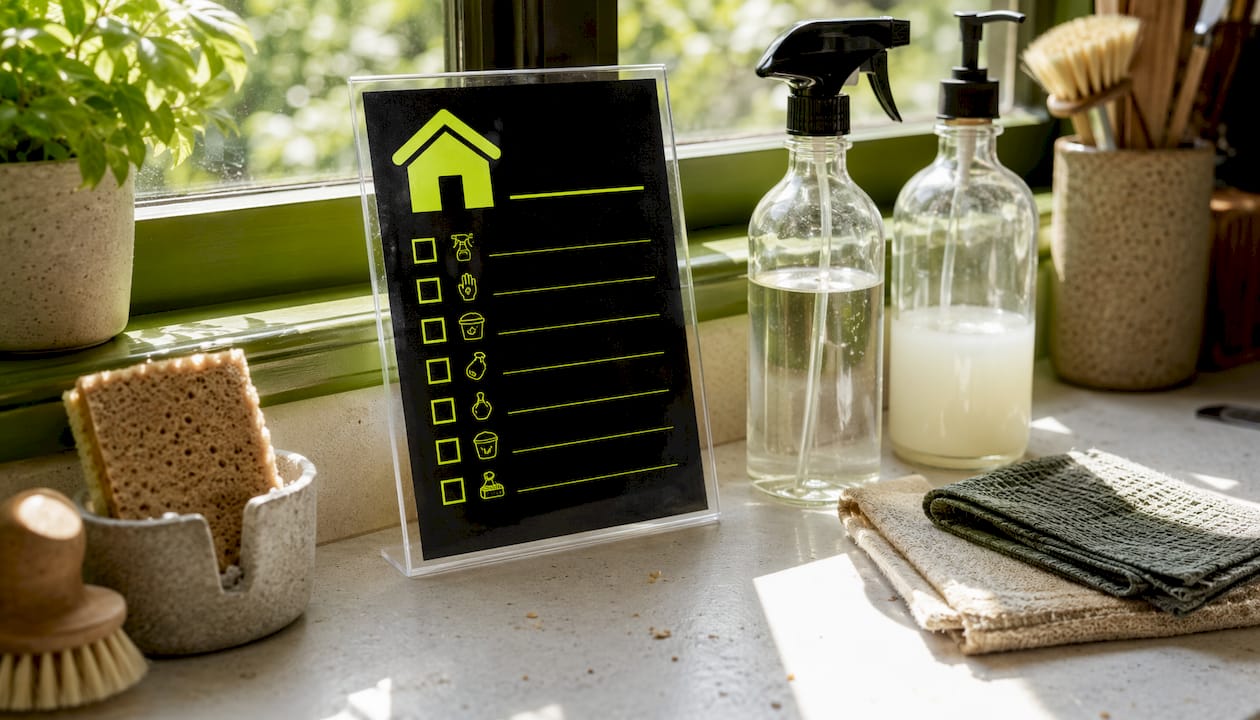
The right supplies make the difference between a kitchen that looks clean and one that actually is. Start with a pH-neutral disinfectant: it removes pathogens from food-contact surfaces without leaving residue that could affect taste or irritate skin. Harsh chemical cleaners can leave fumes that guests notice the moment they walk in, which is the opposite of welcoming.
Microfibre cloths are the single most effective tool for kitchen hygiene. They physically trap bacteria rather than just spreading it around, and they work without chemicals on most surfaces. Use a colour-coded system: one colour for the sink area, another for benchtops, another for appliance exteriors. That separation prevents cross-contamination between zones.
Beyond cloths, stock these before any guest turnover:
- Eco-friendly, non-toxic all-purpose cleaner (safe for families and pets)
- Degreaser for the stovetop and rangehood filter
- Rubber gloves
- Stiff-bristled brush for the sink and grout
- Fresh sponges (replace them regularly; a sour-smelling sponge undoes everything else)
- Mop and bucket
- Bin liners
Kitchen textiles including tea towels and dishcloths should be washed at 60°C or higher after each use. Anything lower and you're not actually killing bacteria, just moving it around. For hosts wanting guidance on selecting safe products, the eco cleaning supplies options available for Australian homes are worth reviewing before your next shop.
Pro Tip: Avoid aerosol sprays near food preparation surfaces. Opt for trigger-spray bottles with non-toxic formulas, which give you control over application and leave no airborne residue.
The full kitchen cleaning checklist, including the spots hosts miss
Daily tasks keep the kitchen functional. Weekly and monthly tasks keep it genuinely hygienic.
Daily tasks
- Wash all dishes, pots, and pans; empty the dishwasher promptly
- Wipe benchtops after every meal prep session
- Sweep the floor (crumbs attract pests fast)
- Wipe the stovetop while it's still warm
- Take out the bin and replace the liner
- Pack away all food and put stray items back in their place
Weekly tasks
- Mop the floor, including under the fridge and stove
- Scrub the sink and disinfect the tap
- Wipe down all appliance exteriors and the fridge door handle
- Clean inside the microwave
- Check the fridge for expired food and wipe the shelves
- Wash all kitchen cloths and tea towels at 60°C+
- Wipe cabinet faces, drawer fronts, and appliance knobs
- Disinfect light switches and door handles
Monthly and deep-clean tasks
Deep cleaning frequency should follow actual kitchen usage, not a fixed calendar date. A kitchen used daily for cooking needs monthly deep cleans; a lightly used space can stretch further.
- Clean the oven interior thoroughly (a monthly task for active kitchens)
- Degrease and clean the rangehood filter
- Wipe inside all cabinets and drawers
- Disinfect the bin inside and out with an antibacterial agent
- Clean the dishwasher with white vinegar and baking soda
- Pull the fridge away from the wall and clean behind it
The spots hosts consistently overlook
Guests notice these even when they can't name why the kitchen feels "off":
- Cabinet and drawer handles (bacteria accumulate here constantly)
- The area behind burner knobs
- Light switches and power point covers
- The seal around the fridge door
- The rangehood filter (grease and bacteria build up quickly)
- Inside the bin, not just the liner
For odour control, ventilate the kitchen for at least 20 minutes before guests arrive. Natural deodorisers like baking soda work well in the fridge and bin area. Avoid synthetic air fresheners, which can mask smells without addressing the source and sometimes trigger sensitivities.
For food-related messes and grease, act quickly. Grease that sits overnight becomes significantly harder to remove and can cause discolouration on benchtops. A degreaser applied and left for two minutes before wiping cuts the effort in half.
How do guests actually judge kitchen cleanliness?
Guests assess kitchens on sight, smell, and touch, in that order. Sticky surfaces, residue in the sink, and leftover food in the fridge are the three fastest ways to earn a negative review. The smell hits before they even open a cupboard.
Airbnb host guidelines place the responsibility for a sanitised, deep-cleaned kitchen squarely on the host before each arrival. Guests are expected to tidy, not deep clean. That distinction matters practically: if you're relying on the previous guest to leave things spotless, you're taking a real risk with your rating.
The professional standard to aim for is HACCP-aligned hygiene, which means preventing cross-contamination, using non-toxic agents that leave no harmful residue, and disinfecting all contact points, not just the visible surfaces. Eco-friendly, non-toxic products meet this standard while keeping the space safe for families and pets. What environmentally responsible cleaning involves goes beyond just swapping products; it's about applying them correctly and consistently.
Cleanliness is the most cited category in negative Airbnb reviews. The top kitchen complaints are sticky surfaces, dirty dishes, and a stale smell on arrival.
Pro Tip: Skip the bleach on food-contact surfaces. A pH-neutral disinfectant cleans just as effectively without the fumes, residue, or risk of damaging benchtop finishes.
Balancing cleaning frequency with usage intensity is where most hosts get it wrong. A kitchen that sees heavy cooking every day needs daily disinfection of contact points, not just a weekly wipe. Lighter-use kitchens can follow a less intensive schedule, but the pre-guest deep clean is non-negotiable regardless. For hosts managing rental reset protocols, having a documented process makes the standard repeatable.
Step-by-step cleaning timeline before guests arrive
A structured timeline stops things from being missed under pressure.
Two days before
- Run a full deep clean of the oven, fridge interior, and rangehood filter
- Wash all kitchen textiles at 60°C and set aside fresh replacements
- Restock supplies: bin liners, dish soap, sponges, hand soap
The day before
- Wipe all appliance exteriors and cabinet faces
- Disinfect handles, knobs, light switches, and the sink tap
- Clear and wipe all benchtops; remove any clutter
- Check the fridge is empty of old food and smells neutral
- Empty and disinfect the bin, then fit a fresh liner
Morning of arrival
- Sweep and mop the floor
- Do a final wipe of benchtops and the stovetop
- Ventilate the kitchen for at least 20 minutes
- Place fresh tea towels and a clean sponge in visible spots
- Do a smell check: open the fridge, check the bin area, and stand at the entrance
That last smell check is the one step most hosts skip. Guests smell the kitchen before they see it properly, and a neutral, fresh scent signals cleanliness more reliably than any surface shine.
Key takeaways
A guest-ready kitchen requires daily maintenance, a thorough pre-arrival deep clean, and consistent attention to high-touch surfaces that most hosts overlook.
| Point | Details |
|---|---|
| High-touch surfaces matter most | Disinfect cabinet handles, appliance knobs, and light switches before every guest arrival. |
| Textiles need heat washing | Wash tea towels and dishcloths at 60°C or higher after each use to eliminate bacteria. |
| Smell is the first impression | Ventilate the kitchen thoroughly before guests arrive and use natural deodorisers. |
| Deep clean frequency follows usage | Schedule deep cleans for active kitchens regularly, adjusting based on how often the kitchen is used. |
| Bins are a hidden hygiene risk | Empty and disinfect the bin daily; bacterial growth from uncleaned bins is a top guest complaint. |

When the checklist feels too long to tackle alone, Grimescene's deep decontamination service handles the full scope: oven interiors, rangehood filters, high-touch disinfection, and every overlooked corner, using non-toxic agents that are safe for families and pets. The Scene Reset protocol is built specifically for hosts who need a reliable, repeatable standard before every guest arrival. Short-term rental hosts can book a tailored clean that protects their rating without the hours of effort.