
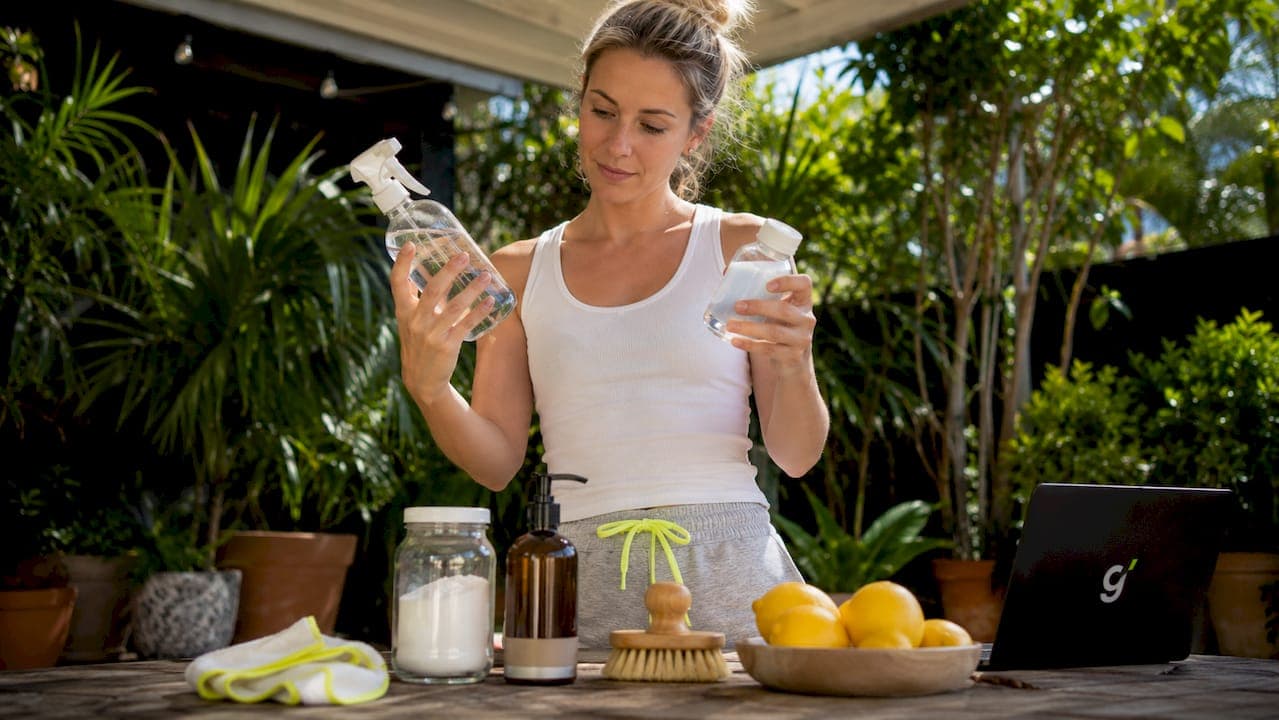
An eco cleaning supplies starter guide begins with four core ingredients: white vinegar, baking soda, castile soap, and essential oils. Together, these cover roughly 90% of household cleaning tasks without plastic waste or harsh chemical exposure. The full kit costs under $40 and lasts several months, making it one of the most affordable switches an Australian household can make. This guide covers what to buy, how to use it safely, and how to spot greenwashing when you want to supplement your kit with commercial products.
What belongs in an eco cleaning supplies starter kit?
The core eco-friendly cleaning supplies are white vinegar, baking soda, castile soap, microfibre cloths, glass spray bottles, natural bristle brushes, and 3% hydrogen peroxide. These seven items handle the vast majority of household cleaning without generating plastic waste or exposing your family to synthetic solvents. Understanding what each one does stops you from buying duplicates or using the wrong ingredient on the wrong surface.
The four key ingredients and what they do
- White vinegar dissolves mineral deposits, soap scum, and light grime. Use it diluted 1:1 with water on glass, tiles, and bench tops. Avoid it on natural stone, unsealed grout, and cast iron because its acidity causes permanent surface damage.
- Baking soda acts as a gentle abrasive and deodoriser. Sprinkle it directly on sinks, bath tubs, and oven interiors, then scrub with a damp cloth. It neutralises odours rather than masking them.
- Castile soap is a plant-based concentrate that works on floors, benches, dishes, and even laundry. A few drops in water creates a surfactant solution that lifts grease from most surfaces. Dr. Bronner's is the most widely available castile soap in Australian supermarkets and health stores.
- Essential oils add antimicrobial properties and fragrance. Tea tree oil is the most studied for household use. Lavender and eucalyptus are popular in Australian homes and both offer mild antibacterial action.
Tools that make the kit work
| Tool | Purpose | Why it matters |
|---|---|---|
| Glass spray bottles (500ml) | Mixing and storing solutions | Resist degradation from acids and essential oils |
| Microfibre cloths | Wiping and scrubbing | Trap bacteria mechanically without chemicals |
| Natural bristle brush | Grout, tiles, and corners | Provides the scrubbing action eco products depend on |
| Amber glass jars | Storing essential oils | Protect oils from UV light degradation |
| Measuring jug | Accurate dilution | Prevents waste and surface damage from over-concentration |
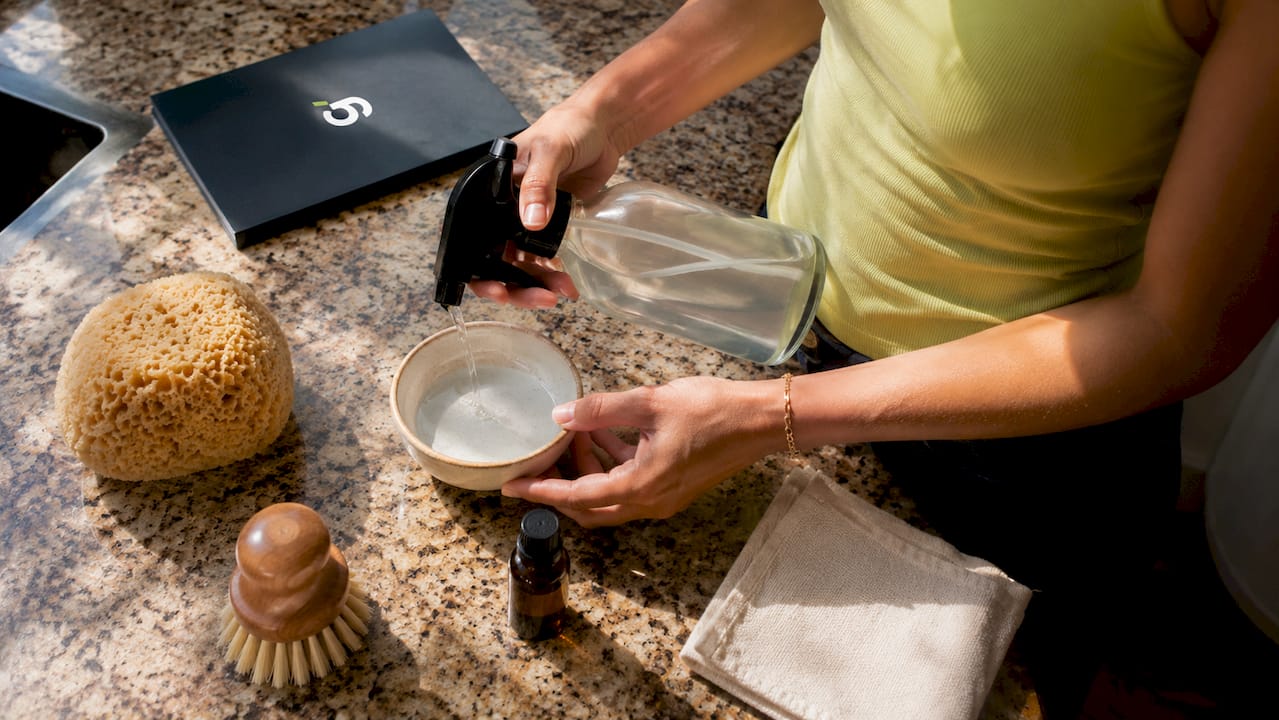
Pro Tip: Store your glass spray bottles away from direct sunlight. Essential oils and vinegar solutions degrade faster in heat and UV exposure, reducing their effectiveness within weeks.
For a deeper look at how each of these natural cleaning agents works at a chemistry level, Grimescene's ingredient guide breaks it down without the jargon.
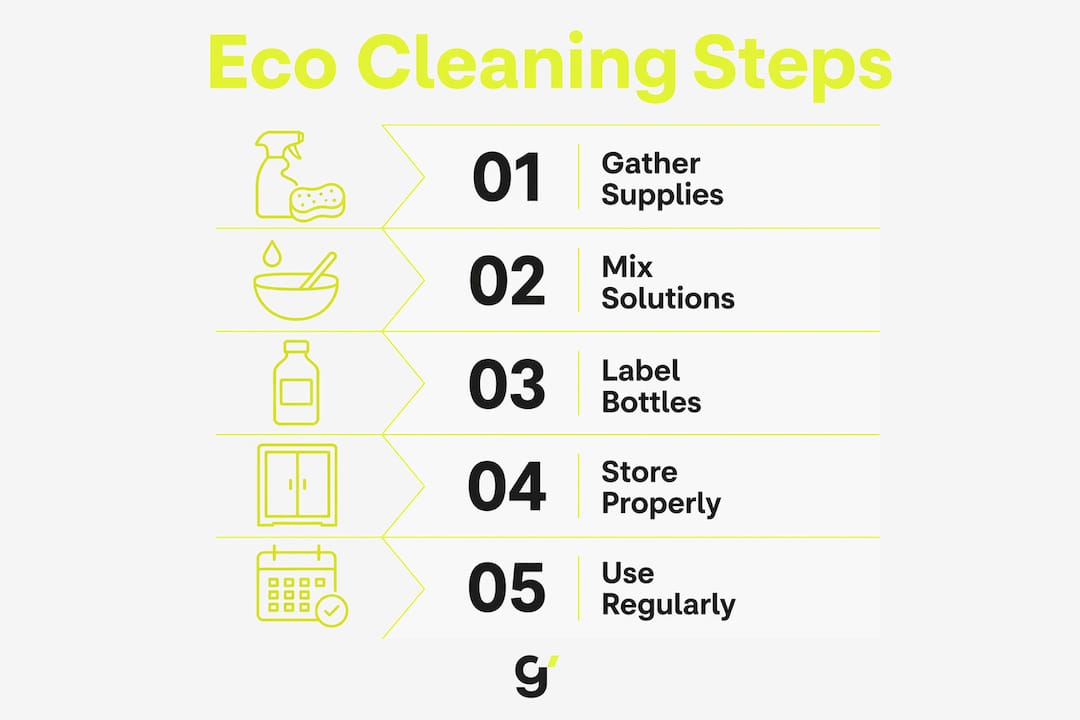
How to make and use homemade natural cleaning solutions
Homemade solutions are the practical core of any green cleaning products guide. The recipes below use only starter kit ingredients and cover the three rooms where most household grime accumulates: kitchen, bathroom, and general living areas.
Three recipes that cover most cleaning tasks
-
All-purpose spray cleaner. Mix 250ml white vinegar, 250ml water, and 10 drops of tea tree oil in a glass spray bottle. Shake before each use. Apply to bench tops, sinks, and tiles. Leave for 30 seconds, then wipe with a microfibre cloth. Do not use on marble, granite, or unsealed stone.
-
Bathroom scrub paste. Combine half a cup of baking soda with enough castile soap to form a thick paste, roughly 2–3 tablespoons. Add 5 drops of eucalyptus oil. Apply to bath tubs, sinks, and shower recesses with a damp cloth or natural bristle brush. Rinse thoroughly. This paste is safe on ceramic, porcelain, and fibreglass.
-
Kitchen degreaser. Mix 1 tablespoon of castile soap with 500ml of warm water and 10 drops of lemon essential oil. Spray directly onto stovetops, range hoods, and splashbacks. Let it sit for one minute before wiping. For stubborn grease, sprinkle baking soda first, then spray the castile solution over the top.
Pro Tip: Label every bottle with the recipe and date you made it. Vinegar solutions are best used within four weeks. Castile soap solutions can separate over time, so a quick shake before use keeps the concentration consistent.
One adjustment most people need to make when switching to natural cleaning is expectation management. Natural cleaning requires more mechanical scrubbing than conventional solvent-based products. That is not a flaw in the formula. It is how the chemistry works. Eco solutions lift and loosen grime; your scrubbing removes it. A natural bristle brush is not optional equipment.
The safest and most effective eco cleaning approach is regular maintenance with soap, water, and mechanical scrubbing. Consistent cleaning prevents germ build-up far more effectively than occasional heavy chemical treatments. For households with young children or pets, this routine approach also reduces chemical exposure at floor level where kids and animals spend most of their time. Grimescene's green cleaning routine guide maps this out week by week for busy households.
For situations where disinfection is genuinely needed, such as after illness or in bathrooms, safe active ingredients include 3% hydrogen peroxide, citric acid, L-lactic acid, or ethanol. These are effective alternatives to bleach when used correctly.
How to spot greenwashing when choosing commercial eco products
Greenwashing is the practice of marketing a product as environmentally friendly without any independent verification to back the claim. The terms "natural," "eco-friendly," and "plant-based" carry no legal definition in Australia. Any brand can print them on a label without meeting a single environmental standard.
The solution is third-party certification. Credible certifications include EPA Safer Choice (United States), EWG Verified, and the EU Ecolabel. In Australia, look for products carrying the Good Environmental Choice Australia (GECA) label, which applies the same rigour to products sold locally. These programmes require manufacturers to disclose every ingredient and meet tested safety thresholds for human health and aquatic toxicity.
"Non-regulated terms like 'natural' or 'eco-friendly' are often marketing without standards. Consumers should rely on independent third-party certifications to identify truly safer products." — US EPA
When you need to supplement your DIY kit with a commercial product, apply this three-step check:
- Look for a certification logo. EPA Safer Choice, EWG Verified, GECA, or EU Ecolabel on the label means the product has been independently assessed.
- Read the ingredient list. Genuine eco products disclose every ingredient. Vague terms like "fragrance" or "surfactant blend" without further detail are a warning sign.
- Check the brand's transparency page. Credible brands publish full ingredient disclosure and safety data sheets on their websites. If you cannot find this information within two clicks, treat the product with scepticism.
For a practical breakdown of how to verify product certifications before you buy, Grimescene's commercial eco cleaning explainer covers the Australian context specifically.
Tips for transitioning to eco cleaning without creating more waste
The most sustainable transition to eco cleaning is a gradual one. Using up existing conventional products before replacing them avoids the waste and carbon footprint of discarding working products prematurely. Replace each item with an eco alternative only when the original runs out.
Practical steps for a smooth transition:
- Start with one room. The bathroom is the easiest starting point because the surfaces are straightforward and the cleaning tasks are predictable. Master your bathroom scrub paste and all-purpose spray before moving to the kitchen.
- Store essential oils in amber glass. Clear bottles allow UV light to degrade the active compounds in tea tree, lavender, and eucalyptus oils within weeks. Amber glass extends shelf life significantly.
- Never use vinegar on natural stone. Vinegar damages marble and granite through repeated acid contact. If your home has stone bench tops or floors, use a diluted castile soap solution instead. Always test any new solution on a small, hidden area first.
- Avoid mixing baking soda and vinegar in a spray bottle. They neutralise each other on contact, producing water and carbon dioxide. Use them separately for maximum effect.
- Refresh your kit every three months. Check diluted solutions for cloudiness or separation. Replace essential oils annually if stored correctly, or every six months if stored in clear bottles.
Pro Tip: Refillable containers are the single biggest waste reduction you can make in your cleaning routine. Many Australian health food stores and zero-waste shops now offer bulk refills of castile soap and white vinegar, cutting both cost and packaging.
Routine cleaning with mechanical scrubbing is the first line of defence before reaching for any disinfectant. Consistent daily and weekly maintenance keeps pathogen loads low without the need for heavy chemical intervention. This is the principle that makes eco cleaning genuinely effective rather than just well-intentioned.
For guidance on protecting specific surfaces during the transition, Grimescene's article on eco cleaning and home finishes covers stone, timber, grout, and stainless steel in detail.
Key takeaways
Switching to eco cleaning works best when you start with a small, proven kit and build consistent habits around mechanical scrubbing and regular maintenance.
| Point | Details |
|---|---|
| Core kit costs under $40 | White vinegar, baking soda, castile soap, and essential oils cover 90% of household cleaning tasks. |
| Scrubbing is non-negotiable | Eco solutions loosen grime; physical scrubbing removes it. A natural bristle brush is part of the kit. |
| Certifications beat label claims | Look for EPA Safer Choice, EWG Verified, or GECA logos. Terms like "natural" carry no legal standard in Australia. |
| Transition gradually | Use up existing products before replacing them to avoid unnecessary waste and cost. |
| Surface safety matters | Never use vinegar on marble, granite, unsealed grout, or cast iron. Test new solutions on a hidden area first. |
What I have learned after years of eco cleaning
When I first switched to natural cleaning supplies, I expected the same instant results I got from conventional products. That expectation lasted about one bathroom clean. The baking soda paste worked beautifully on the bath tub, but I had to actually scrub. Not a quick wipe. A proper scrub. That adjustment took a few weeks to accept.
The insight that changed everything for me was understanding that vinegar is not a disinfectant in any meaningful medical sense. It is excellent at dissolving mineral deposits and cutting through light grime. For genuine disinfection after illness, 3% hydrogen peroxide is the right tool. Most beginner guides gloss over this distinction, and it leads people to either over-rely on vinegar or dismiss eco cleaning entirely when it does not kill every germ on contact.
The other thing nobody tells you upfront is how much you save. After the initial kit outlay, my monthly cleaning spend dropped significantly. Castile soap concentrate lasts months. Baking soda and vinegar are pantry staples. The ongoing cost is minimal compared to a trolley full of single-purpose commercial cleaners.
My honest advice for anyone starting out: pick one recipe, use it consistently for two weeks, and notice the results before adding anything else. The learning curve is short. The habit is what takes time to build. Once you have it, switching back to conventional products feels unnecessary.
— Lead
How Grimescene supports your eco cleaning lifestyle

Grimescene's non-toxic cleaning services are built on the same principles as this guide: no harsh chemicals, no masking grime, and no shortcuts that leave residue behind. For households managing short-term rentals, the Scene Reset protocol delivers a thorough, eco-friendly turnover clean that protects your host rating and your guests' health. Grimescene uses advanced non-toxic agents that neutralise buildup rather than covering it, making every clean genuinely safe for families, pets, and the surfaces in your home. If you want professional eco cleaning that matches the standards in this guide, explore Grimescene's service options today.
FAQ
What is the cheapest way to start eco cleaning?
A starter kit of white vinegar, baking soda, and castile soap costs under $40 and covers most household cleaning tasks for several months.
Does vinegar actually disinfect surfaces?
Vinegar is effective for mineral deposits and light grime but is not a reliable disinfectant. For proper sanitising, use 3% hydrogen peroxide or citric acid-based products instead.
How do I know if a cleaning product is genuinely eco-friendly?
Ignore unverified label terms like "natural" or "eco-friendly." Look for independent certifications such as EPA Safer Choice, EWG Verified, or the Good Environmental Choice Australia (GECA) label.
Can I use vinegar on all surfaces in my home?
No. Vinegar damages natural stone like marble and granite, unsealed grout, and cast iron. Use diluted castile soap on these surfaces instead.
How often should I replace my homemade cleaning solutions?
Vinegar-based sprays are best used within four weeks. Essential oils stored in amber glass last up to 12 months. Castile soap solutions can be made fresh weekly for best results.