
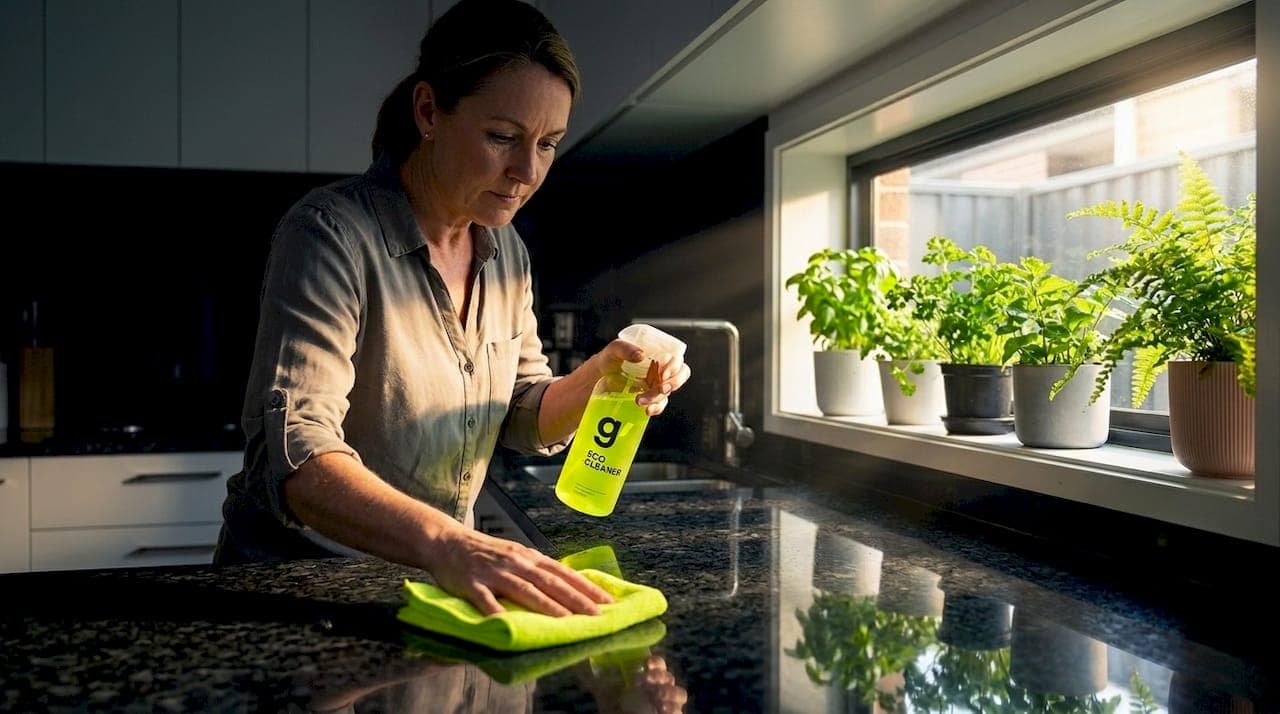
Eco cleaning protects home finishes by using pH-balanced, residue-free formulations that remove grime without stripping protective coatings or etching delicate surfaces. Where conventional cleaners rely on harsh acids, alkalis, and abrasive solvents, green cleaning for surfaces works through gentler chemistry that leaves finishes intact. Products carrying the EPA Safer Choice certification, such as Prosoco DailyKlean and Zep Neutral pH Floor Cleaner, demonstrate that protecting home finishes and avoiding harmful compounds are not competing goals. Understanding how eco cleaning protects home finishes means understanding pH balance, residue management, and the science of reduced abrasion.
How eco cleaning protects home finishes through chemistry
The chemistry of an eco cleaning product determines whether it preserves or degrades a surface finish. Three properties matter most: pH level, residue profile, and solvent selection.
pH balance is the single biggest factor in finish preservation. Acidic cleaners etch marble, limestone, and polished concrete. Alkaline cleaners strip wax coatings and dull painted timber. A neutral pH formulation sits between these extremes, cleaning effectively without triggering the chemical reactions that cause etching or dulling. Zep Concentrated Neutral pH Floor Cleaner, for example, dilutes to 128 gallons per litre and maintains finish integrity across sealed floors precisely because it avoids pH extremes.
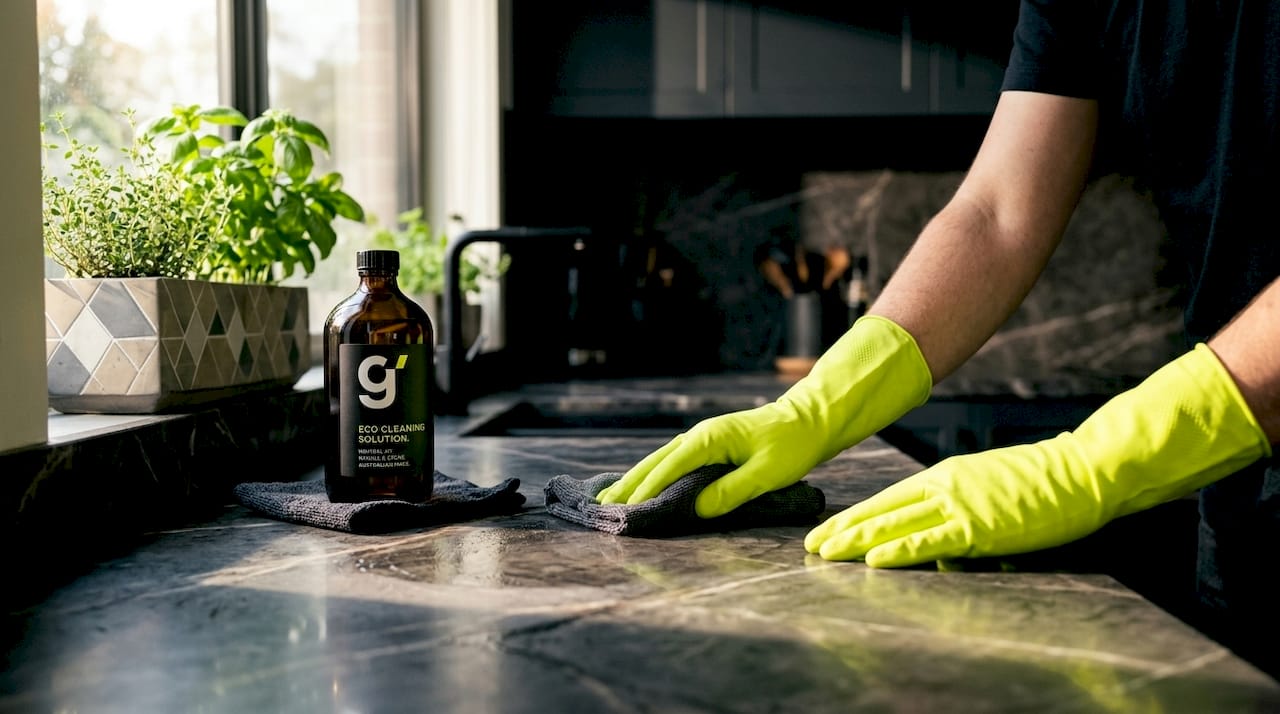
Residue-free formulations matter because leftover film attracts grit. That grit becomes an abrasive layer underfoot or under a cloth, grinding micro-scratches into the finish with every subsequent clean. Prosoco DailyKlean is formulated without phosphates, hazardous solvents, or harmful surfactants, which means it leaves no film that could trap particles and accelerate wear.
Solvent selection separates genuinely protective eco products from greenwashed alternatives. Harsh solvents dissolve not just grime but also the binders and sealants that give finishes their sheen and durability. Eco formulations replace these with plant-derived or biodegradable solvents that lift soiling without attacking the substrate beneath.
Pro Tip: Check the product's Safety Data Sheet before using any cleaner on a sealed or coated surface. The pH value is listed there, and anything below 6 or above 9 is a risk for most residential finishes.
How do eco products reduce wear on different finish types?
Different finishes fail in different ways, and eco cleaning addresses each failure mode through specific product properties.
| Finish type | Primary risk | Eco cleaning approach |
|---|---|---|
| Sealed natural stone (granite, marble, quartz) | Etching from acidic cleaners; stain absorption | Neutral pH cleaner plus protective barrier (e.g. Zep Natural Stone Cleaner and Protectant) |
| Painted timber cabinets | Paint lifting, colour fade from solvents | Diluted, solvent-free formulas; low-abrasion microfibre application |
| Glass (shower screens, windows) | Mineral deposit bonding; corrosion from hard water | Nano coating such as GoGoNano EcoGlass Protector to seal pores |
| Vinyl and laminate flooring | Coating strip from alkaline cleaners; residue dulling | Residue-free neutral pH cleaner; no-rinse formulas |
For natural stone, the Zep Natural Stone Cleaner and Protectant combines cleaning with an invisible protective barrier that resists stains and re-soiling on granite, marble, and quartz. This two-in-one approach reduces the number of cleaning steps, which directly reduces the mechanical contact that causes micro-scratches.
Glass finishes present a different challenge. Hard water deposits bond to unprotected glass and require aggressive scrubbing to remove, which damages the surface over time. The GoGoNano EcoGlass Protector applies a nano coating that seals glass pores, preventing mineral deposits from bonding in the first place. Less bonding means less scrubbing, and less scrubbing means the glass surface stays intact longer.
Painted cabinets are among the most vulnerable finishes in a home. Solvent-heavy cleaners lift paint binders, causing peeling and colour fade. A guide on cleaning painted cabinets confirms that diluted, gentle formulas applied with a soft cloth are the only safe routine for maintaining painted surfaces without accelerating wear.
Pro Tip: Reducing scrubbing frequency preserves finish by preventing micro-scratches from grit trapped in residue. Maintenance cleaning twice a week with a residue-free product beats a weekly aggressive scrub every time.
What certifications help you choose finish-safe eco products?
The word "eco" on a label carries no legal weight in Australia or the United States. Certification does. Knowing which marks to look for protects you from greenwashed products that may still damage your finishes.
-
EPA Safer Choice. The EPA Safer Choice programme certifies products whose every ingredient has been reviewed for safety to human health and the environment. Products carrying this mark have passed formulation scrutiny, not just marketing review. Prosoco DailyKlean holds this recognition.
-
Design for the Environment (DfE). DfE labelling, also administered by the EPA, signals that a product's chemistry meets safer standards for aquatic and human health. It appears on many commercial and residential cleaning products and is searchable through the EPA's online product database.
-
Third-party verification vs. marketing claims. A product labelled "natural," "green," or "plant-based" without a certification body behind it is making an unverified claim. Third-party certification requires independent testing and ongoing compliance. Marketing language requires nothing.
-
Manufacturer transparency. Credible eco brands publish full ingredient lists and Safety Data Sheets. If a product's formulation is not publicly available, treat it with scepticism regardless of its label claims.
-
Online verification tools. The EPA's Safer Choice product search and the Environmental Working Group's (EWG) Healthy Cleaning database both allow you to verify whether a specific product meets credible standards before you buy.
Choosing certified products is the most reliable way to align eco-friendly cleaning benefits with genuine finish protection. Certification removes the guesswork that comes with marketing language and gives you a defensible basis for every product decision in your home.
How to apply eco cleaning practices to protect specific finishes
Knowing which products to use is only half the equation. How you apply them determines whether your finishes benefit or suffer.
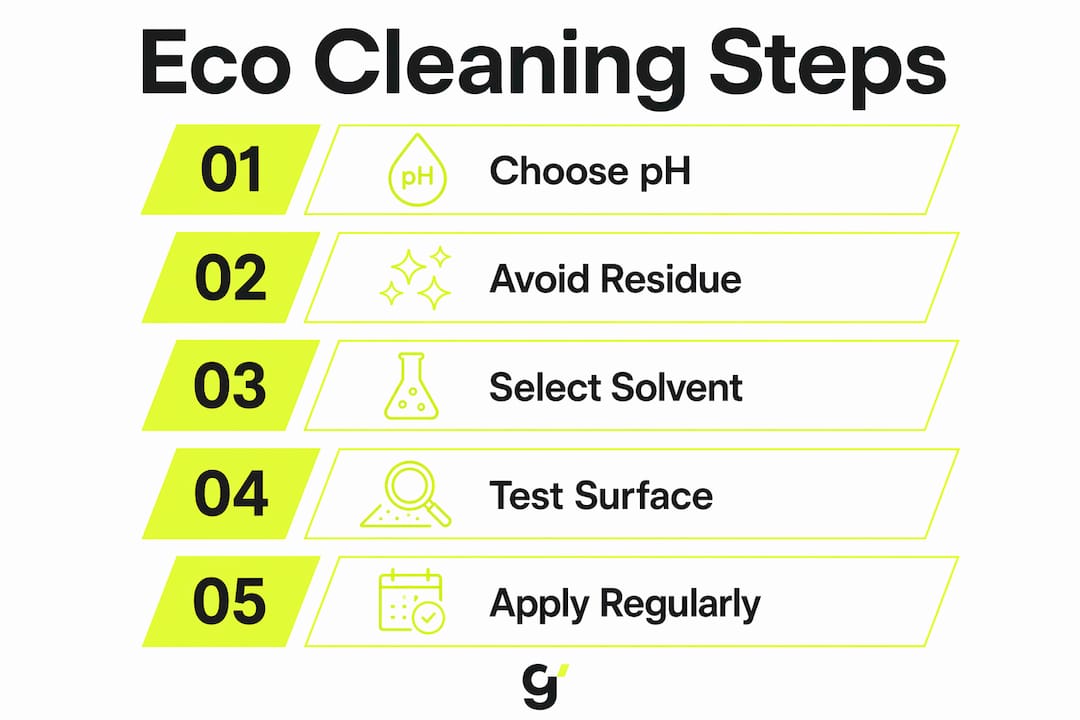
A safe finish protection workflow follows five consistent steps: identify the finish, select a matched cleaner, spot-test, dilute correctly, and use the right tools. This approach reduces both chemical and mechanical wear, which matters especially in rental properties and homes with mixed surface types.
-
Identify your finish type first. Sealed stone, unsealed stone, painted timber, lacquered timber, vinyl, laminate, and glass each require different chemistry. Check manufacturer documentation or ask a flooring specialist if you are unsure. Applying the wrong product, even a certified eco one, can cause irreversible damage.
-
Spot-test every new product. Apply a small amount to an inconspicuous area, wait the recommended dwell time, then wipe and inspect. This takes two minutes and can prevent permanent etching or discolouration across an entire floor or benchtop.
-
Dilute to the manufacturer's specification. Concentrated eco cleaners are formulated to work at specific dilution ratios. Using them undiluted does not clean better. It increases chemical concentration on the surface and raises the risk of finish damage.
-
Use microfibre cloths and mop heads. Microfibre lifts particles rather than dragging them across the surface. This is the single most effective tool change you can make to reduce mechanical abrasion, and it works with any eco cleaning product.
-
Maintain a regular, light-touch routine. A sustainable cleaning routine built around frequent, low-intensity cleaning protects finishes far better than infrequent deep cleans. Residue and grit accumulate between cleans and cause more damage the longer they sit.
-
Protect glass proactively. Apply a nano coating like GoGoNano EcoGlass Protector to shower screens and windows after cleaning. The coating reduces future mineral bonding, which means your next clean requires less effort and less contact with the surface.
For sealed stone specifically, pair a neutral pH cleaner with a stone-safe protectant at least once a month. This replenishes the protective barrier that resists staining and reduces the frequency of deeper cleaning sessions.
Common misconceptions about eco cleaning and finish protection
Several persistent myths lead homeowners to either over-trust or under-use eco cleaning products. Both errors cost money and damage finishes.
-
"Eco means no chemicals." Every cleaning product contains chemistry. Eco formulations replace harmful compounds with safer alternatives, not with an absence of active ingredients. The goal is appropriate chemistry, not chemistry-free cleaning.
-
"All eco products are safe for all surfaces." This is the most damaging myth. pH imbalance in eco products can still etch stone, strip coatings, and dull finishes. A bio-based acidic cleaner is still acidic. Surface-specific selection is non-negotiable.
-
"Eco products are less effective, so you need to scrub harder." Harder scrubbing is the enemy of finish longevity. Certified eco products like Prosoco DailyKlean are formulated to remove soiling without requiring aggressive mechanical action. Scrubbing harder with any product accelerates micro-scratch formation.
-
"Natural ingredients are always gentler." Vinegar and lemon juice are natural and both are acidic enough to permanently etch marble and limestone. Natural origin does not equal surface safety. Formulation and pH matter more than ingredient source.
Understanding these distinctions helps you make better product choices and apply them correctly. The types of natural cleaning agents available vary widely in their surface compatibility, and matching agent to surface is the core skill in protective eco cleaning.
Key takeaways
Eco cleaning protects home finishes through pH-balanced, residue-free formulations that reduce chemical etching and mechanical abrasion across all surface types.
| Point | Details |
|---|---|
| pH balance is the priority | Neutral pH cleaners prevent etching on stone, painted timber, and vinyl without stripping protective coatings. |
| Residue-free formulas reduce abrasion | Products like Prosoco DailyKlean leave no film, eliminating the grit layer that causes micro-scratches over time. |
| Certification beats marketing claims | EPA Safer Choice and DfE labels verify ingredient safety; "eco" or "green" labels without certification do not. |
| Surface identification comes first | Matching the cleaner to the finish type is more important than the product's eco credentials alone. |
| Microfibre tools complete the system | The right cloth or mop head reduces mechanical wear regardless of which certified eco product you use. |
What I have learned from watching eco cleaning work in real homes
The most common mistake I see homeowners make is treating eco cleaning as a single category. They buy one certified product, apply it to every surface in the house, and then wonder why their marble benchtop has gone dull or their timber floors have lost their sheen. Eco cleaning is not a monolith. It is a discipline that requires matching chemistry to surface, and that matching step is where most people skip ahead.
What I find genuinely impressive about the better-formulated eco products is how they shift the cleaning model from intervention to maintenance. Prosoco DailyKlean and the Zep stone range are not designed for the once-a-month aggressive clean. They are designed for frequent, light contact that keeps residue from accumulating in the first place. That philosophy, cleaning more often but more gently, is what actually extends finish life. It is also what makes eco cleaning compatible with a busy household rather than an extra burden.
The certification piece matters more than most people realise. I have seen products labelled "plant-based" and "non-toxic" that still contain pH levels capable of etching polished concrete. The EPA Safer Choice database takes about 30 seconds to search and removes all of that uncertainty. If you are going to invest in protecting your finishes, spend those 30 seconds before you spend money on a product.
The practical upshot is this: eco cleaning done correctly is not a compromise. It is a more precise approach to surface care that happens to be safer for your household and the environment. The finishes in your home will last longer, and you will use fewer products to maintain them.
— Lead
Protect your finishes with Grimescene's eco cleaning services

Grimescene specialises in eco-friendly cleaning that is calibrated to the surfaces in your home, not just the grime on them. Every service uses non-toxic agents selected for finish compatibility, which means your sealed stone, painted cabinetry, and glass surfaces receive the right chemistry every time. For homeowners wanting consistent finish protection without the guesswork, Grimescene's residential cleaning services cover routine maintenance and deep decontamination using the same certified-product discipline described in this article. For short-term rental hosts, the Scene Reset protocol delivers a finish-safe turnover clean that keeps surfaces looking new across high-frequency guest cycles.
FAQ
What makes eco cleaning products safe for home finishes?
Eco cleaning products protect finishes through neutral pH formulations, residue-free chemistry, and the absence of harsh solvents that strip coatings. Products certified under the EPA Safer Choice programme have had every ingredient reviewed for surface and health safety.
Can eco cleaners damage natural stone?
Yes, if the product is acidic or alkaline rather than pH-neutral. Even bio-based formulas can etch marble or limestone if the pH is outside the safe range. Always use a stone-safe neutral cleaner and spot-test before full application.
How often should I clean home finishes with eco products?
Frequent, light-touch cleaning with a residue-free eco product outperforms infrequent aggressive scrubbing for finish longevity. A routine maintenance approach two to three times per week reduces grit accumulation and minimises the mechanical wear that dulls surfaces over time.
How do I verify that an eco cleaning product is genuinely certified?
Use the EPA's Safer Choice product search or the EWG Healthy Cleaning database to confirm certification before purchasing. Marketing terms like "natural" or "green" carry no regulatory requirement and should not be treated as equivalent to third-party certification.
Does eco cleaning also protect the water supply?
Residue-free, biodegradable formulations reduce the volume of harmful surfactants and solvents entering waterways through household drains. How eco cleaning protects water supply is directly linked to the same ingredient standards that protect your finishes: fewer harsh compounds means less chemical load on both surfaces and the broader environment.