
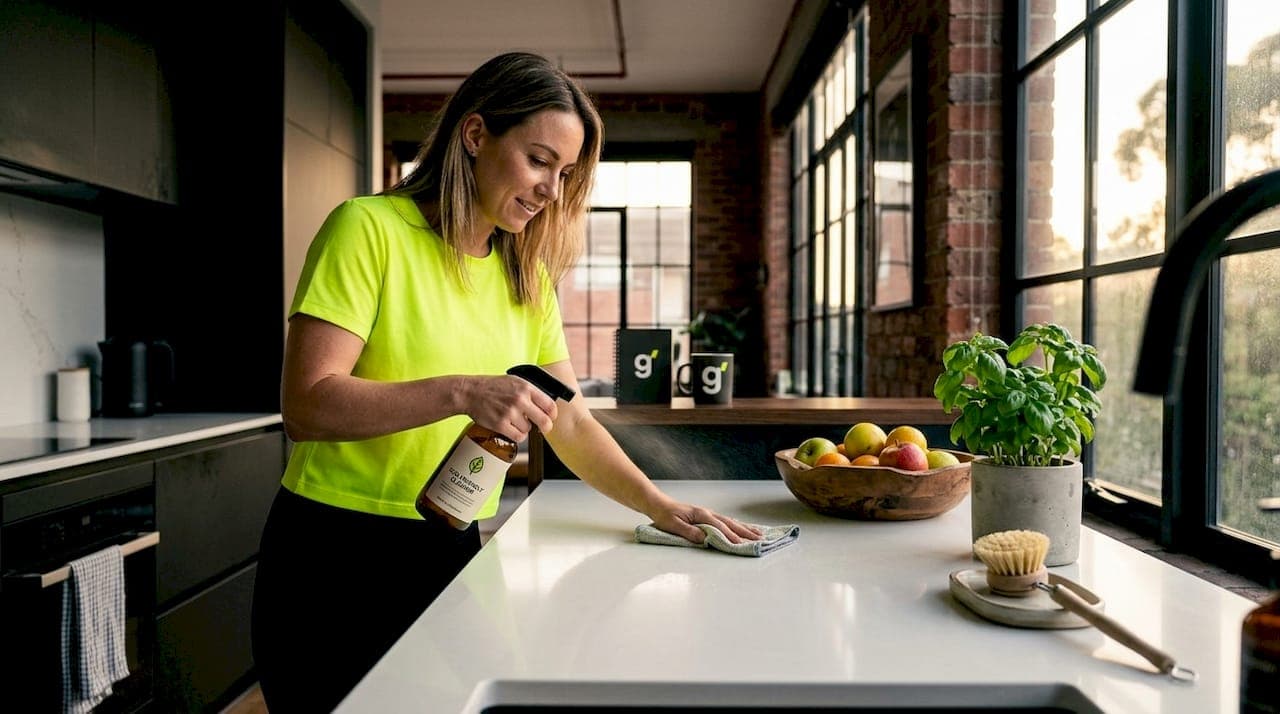
Eco cleaners are products formulated with safer, less toxic ingredients that maintain a healthy home environment without the chemical burden of conventional cleaners. The role of eco cleaners in home maintenance goes well beyond surface cleanliness. These products, often certified under programmes like the EPA Safer Choice label, reduce your family's exposure to volatile organic compounds (VOCs), skin irritants, and respiratory hazards while delivering effective everyday cleaning. For Australian homeowners and renters, switching to green cleaning products is one of the most direct ways to protect indoor health and reduce your household's ecological footprint at the same time.
What are the benefits of eco cleaners in home maintenance?
Eco cleaners deliver three distinct advantages: better health outcomes, reduced environmental harm, and practical cost savings over time. Each of these matters differently depending on whether you own your home or rent it, but all three apply to anyone who cleans regularly.
Health protection comes first. The EPA warns that conventional cleaners irritate eyes, skin, and the respiratory tract through harsh chemical formulations. Eco cleaners minimise these risks by replacing those compounds with biodegradable, lower-toxicity alternatives. For households with young children, elderly residents, or pets, this is not a minor consideration. It is the difference between a cleaning routine that protects your household and one that quietly undermines it.
The benefits of eco cleaners extend to indoor air quality in ways many homeowners overlook:
- Reduced VOC load. Conventional spray cleaners release VOCs that linger in enclosed rooms. Eco-certified products are formulated to limit these emissions, keeping the air you breathe cleaner between uses.
- Safer residues on surfaces. Kitchen benchtops, children's toys, and pet bedding all come into contact with cleaning product residues. Biodegradable formulations break down faster and leave fewer harmful traces.
- Biodegradable disposal. When eco cleaners wash down the drain, their ingredients break down in waterways rather than accumulating as persistent chemical pollutants.
- Third-party verified safety. Products carrying the EPA Safer Choice or Design for the Environment (DfE) labels have been independently assessed against stringent safety and environmental criteria. This matters because vague "green" or "natural" claims on packaging carry no regulatory weight.
Pro Tip: When shopping for green cleaning products, look for the EPA Safer Choice logo or DfE certification rather than relying on colour-coded packaging or words like "plant-based." Third-party verification is the only reliable signal.
The environmental benefits of cleaning with eco products compound over time. Biodegradable ingredients reduce the chemical load entering municipal water systems. Concentrated formulations, like those designed for dilution, mean less plastic packaging per clean. Choosing natural cleaning agents for routine tasks is one of the simplest ways to shrink your household's chemical footprint without sacrificing cleanliness.
How do eco cleaners compare with conventional products?
Eco cleaners perform comparably to conventional products for routine home cleaning tasks. The persistent myth that "chemical-free" means "less effective" collapses when you look at certified formulations designed for real-world use.
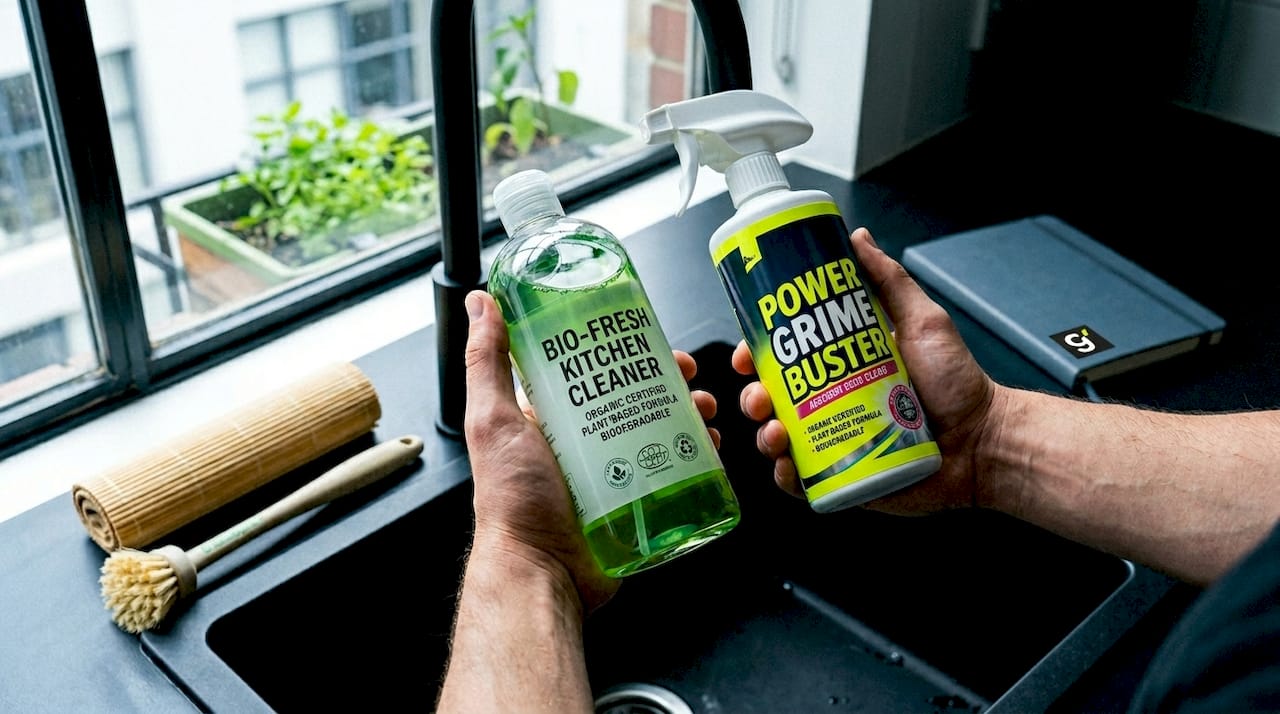
| Feature | Eco cleaners | Conventional cleaners |
|---|---|---|
| Ingredient safety | Safer, lower-toxicity formulations | May contain harsh irritants and VOCs |
| Surface residue | Biodegradable, breaks down quickly | Can leave persistent chemical traces |
| Certification | EPA Safer Choice, DfE verified | Often no independent safety verification |
| Dilution efficiency | Many are concentrate-based | Typically sold ready-to-use |
| Environmental disposal | Biodegrades in waterways | May persist as chemical pollutants |
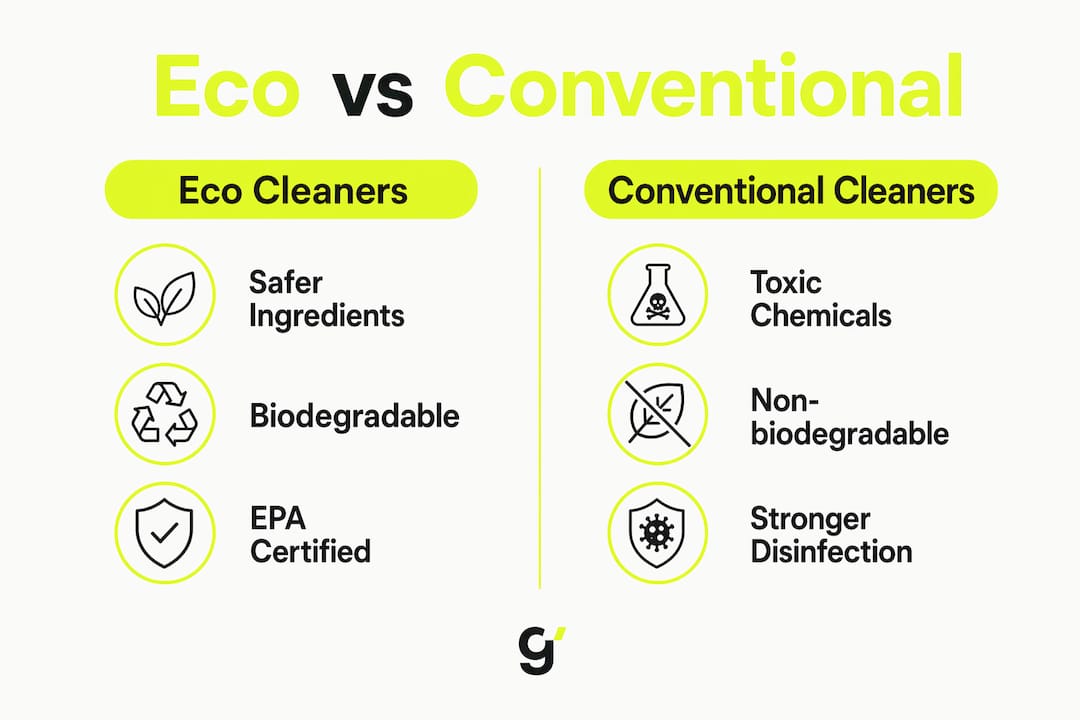
Where conventional cleaners do hold an advantage is in heavy-duty disinfection. Hospital-grade disinfectants are formulated for pathogen elimination in clinical settings, a need that rarely applies to a residential kitchen or bathroom. Excessive disinfectant use increases chemical exposure without improving hygiene in low-risk home environments. Eco cleaning is about targeted chemical use, not blanket disinfection.
Greenwashing is a real risk in this category. Products labelled "eco," "green," or "natural" without certification may contain the same irritants as conventional cleaners, just with better packaging. Prosoco's Enviro Klean All-Purpose Cleaner is one example of a Safer Choice-certified product formulated for dilution at up to 10 parts water, reducing both chemical exposure and product consumption per clean. That kind of transparency, backed by certification, is what separates genuine sustainable cleaning solutions from marketing.
Pro Tip: If a product claims to be eco-friendly but lists no certification body, search the EPA Safer Choice product database before buying. It takes 30 seconds and removes all guesswork.
A sustainable cleaning routine built around certified eco products will outperform an ad hoc mix of conventional sprays for both safety and long-term cost, particularly when you factor in concentrate dilution ratios.
How to use eco cleaners effectively in your home routine
Knowing which products to buy is only half the equation. How you use eco cleaners determines whether you get the full health and environmental benefit or simply swap one ineffective habit for another.
- Clean before you sanitise. CDC guidance is clear: removing dirt first makes any subsequent sanitising or disinfecting significantly more effective. Applying a sanitiser to a greasy surface is largely wasted effort. Wipe down surfaces with your eco cleaner, then apply a sanitiser only where genuinely needed, such as after handling raw meat.
- Read the label for dilution and contact time. Eco cleaners are not interchangeable. A concentrate designed for a 1:10 dilution used at full strength wastes product and can irritate skin. Contact time matters too. Many formulations need 30 to 60 seconds of dwell time to work properly.
- Pair mechanical removal with chemical cleaning. Vacuuming, wiping, and scrubbing physically remove grime and reduce the microbial load before any cleaner is applied. This approach means you use less product overall and get better results. For grease specifically, removing grease without harsh chemicals often relies more on mechanical action and warm water than on chemical strength.
- Establish consistent routines across your household. One person using eco products while another reaches for bleach-based sprays undermines the whole system. Consistent routines in shared households prevent unnecessary chemical use and maximise health benefits for everyone.
- Explore bioenzyme cleaners for organic waste. Bioenzyme products derived from citrus waste, like those made by the Mumbai-based company Urthy, break down grease and organic matter and continue working after you have finished cleaning. They support soil and water health rather than degrading it, making them one of the most genuinely sustainable options available.
Pro Tip: Keep a small spray bottle of diluted eco all-purpose cleaner near your kitchen sink. Wiping down benchtops immediately after cooking takes 20 seconds and prevents the kind of buildup that eventually requires heavy-duty intervention.
How do eco cleaners improve your home's air and water quality?
The impact of eco-friendly cleaners on your home environment extends well beyond the surfaces you scrub. Indoor air quality and local water health are both directly affected by the products you use and how you dispose of them.
Indoor air quality is shaped by multiple factors, and cleaning products are a significant but often underestimated contributor. Research on active indoor green wall systems found that VOC reduction of 24 to 40% was achievable within 15 minutes of exposure, with pollutant reduction reaching 96 to 98% for compounds like formaldehyde and sulfur dioxide over 24 hours. That figure illustrates how quickly airborne pollutants accumulate and how responsive indoor environments are to intervention. Eco cleaners reduce the source load of VOCs entering your air in the first place, which means complementary systems like ventilation and indoor plants have less work to do.
| Environmental impact | Conventional cleaners | Eco cleaners |
|---|---|---|
| VOC emissions indoors | High, from solvents and fragrances | Low, formulated to minimise emissions |
| Waterway impact after disposal | Persistent chemical pollutants | Biodegrades with minimal aquatic harm |
| Soil microbial activity | Can disrupt beneficial microbes | Bioenzyme types actively support microbes |
Water health is the less visible benefit. When conventional cleaning products wash into drains, their active ingredients enter municipal water treatment systems and, in some cases, local waterways. Biodegradable eco cleaner formulations break down before causing harm. Bioenzyme cleaners go further: their active cultures support soil microbial activity and continue breaking down organic matter in pipes and drains after the cleaning is done.
"Indoor air quality improvements from eco cleaning depend on systems like ventilation and pollutant source control, not just product choice." Eco cleaners are one layer of a broader home health strategy, not a standalone solution.
For renters particularly, improving bedroom air quality through product choices is one of the few modifications available without landlord approval. Switching to low-VOC eco cleaners in enclosed spaces like bedrooms and bathrooms is a practical, low-cost way to reduce your daily chemical exposure without touching the building itself.
Key takeaways
Eco cleaners reduce chemical exposure, protect indoor air quality, and support water health when used correctly and consistently as part of a structured home maintenance routine.
| Point | Details |
|---|---|
| Certification over claims | Choose EPA Safer Choice or DfE-certified products rather than trusting vague "natural" labels. |
| Clean before sanitising | Remove dirt and grime first to improve sanitiser effectiveness and reduce overall chemical use. |
| Dilution and contact time | Follow label instructions precisely; eco concentrates used incorrectly waste product and reduce results. |
| Bioenzyme cleaners | Products like those from Urthy offer ongoing environmental benefits beyond the cleaning session itself. |
| Whole-home air strategy | Eco cleaners reduce VOC sources but work best alongside ventilation and indoor plant systems. |
What I have learned from years of eco cleaning in real homes
The most common mistake I see is treating eco cleaning as a product swap rather than a practice change. People buy a certified green cleaner, use it the same way they used their old bleach spray, and then wonder why results feel inconsistent. The product is not the problem. The method is.
What actually works is the sequence: clean first, sanitise selectively, and use mechanical action before you reach for any spray. That workflow applies whether you are using a bioenzyme concentrate or a Safer Choice-certified all-purpose cleaner. The chemistry is designed to work with a clean surface, not to compensate for one that has not been wiped down properly.
The other thing I have noticed is that households with multiple adults struggle most with consistency. One person commits to eco products and another keeps a bottle of conventional disinfectant under the sink "just in case." That undermines the air quality and residue benefits almost entirely. The fix is not a lecture. It is making the eco option the easiest option: pre-diluted in a labelled spray bottle, stored where the old product used to live.
What genuinely surprised me was how quickly indoor air quality improved once VOC-heavy sprays were removed from regular rotation. Within a few weeks, the faint chemical smell that I had normalised in bathrooms and kitchens was simply gone. That is not a placebo effect. It is what happens when you stop introducing VOC sources into enclosed spaces multiple times a week.
Eco cleaning is not about perfection or ideological purity. It is about making better choices consistently, reading the label, diluting correctly, and maintaining a clean home between deep cleans so that heavy intervention is rarely needed.
— Lead
Professional eco cleaning with Grimescene
Grimescene brings the same principles covered in this article to professional cleaning services for homes and short-term rentals across Australia. Their non-toxic agents neutralise buildup rather than masking it, and every service is designed to leave your space genuinely clean without the chemical residue that conventional deep cleans leave behind. For rental hosts, the Scene Reset protocol delivers turnover cleans that protect your ratings and your guests' health in equal measure. Whether you need a one-off deep decontamination or a consistent routine patrol, Grimescene's rapid response team is ready to deploy on your schedule.
FAQ
What are eco cleaners?
Eco cleaners are cleaning products formulated with safer, biodegradable ingredients that minimise harm to human health and the environment. Products certified under programmes like the EPA Safer Choice label meet independently verified safety and environmental standards.
Are eco cleaners as effective as conventional cleaners?
For routine home cleaning tasks, certified eco cleaners perform comparably to conventional products. Where conventional cleaners hold an edge is in clinical-grade disinfection, a need that rarely applies in residential settings.
How do I know if a product is genuinely eco-friendly?
Look for third-party certifications like EPA Safer Choice or DfE rather than relying on packaging claims. Vague terms like "natural" or "plant-based" carry no regulatory requirement and can appear on products containing harsh irritants.
Can eco cleaners improve indoor air quality?
Yes. Eco cleaners reduce the VOC load introduced into your home during routine cleaning. Combined with ventilation and indoor plants, switching to low-VOC certified products measurably reduces airborne chemical concentrations in enclosed spaces.
What are bioenzyme cleaners and are they worth using?
Bioenzyme cleaners use cultures derived from organic waste, such as citrus peels, to break down grease and organic matter. They continue working after the cleaning session ends and support water and soil health, making them one of the most genuinely sustainable options in the eco cleaning category.