
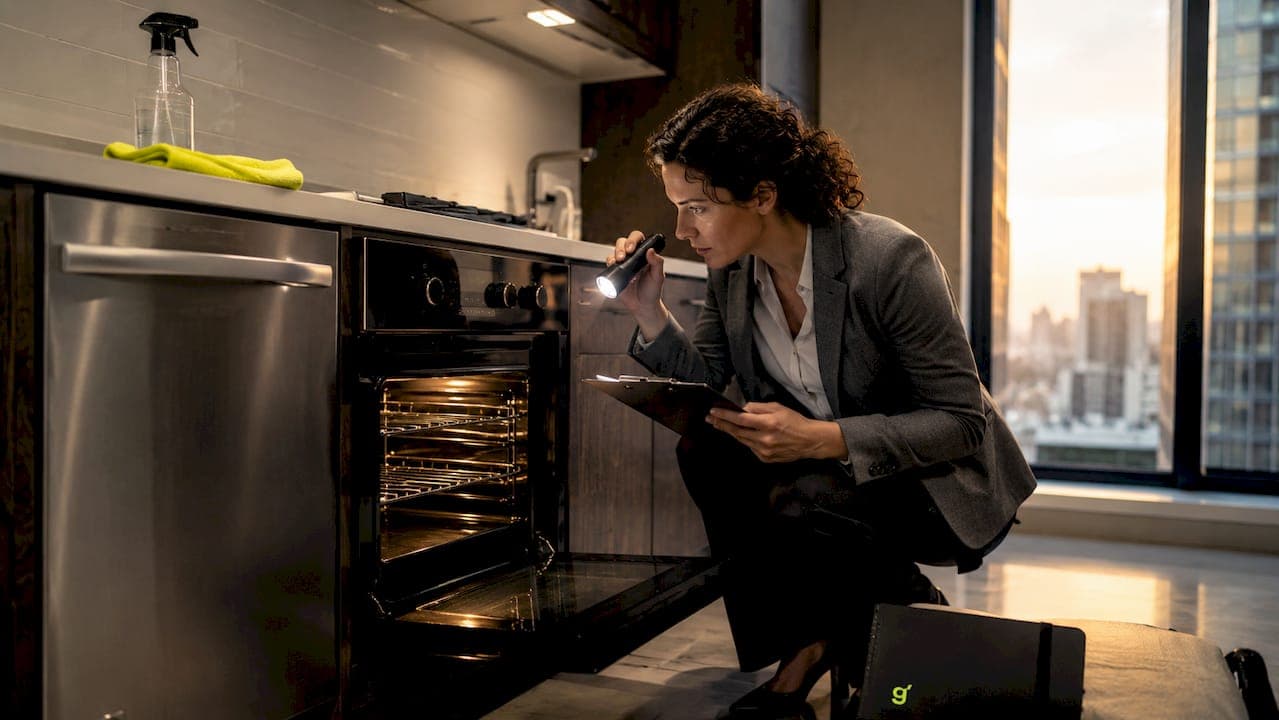
Appliance cleaning standards for rental properties define the condition appliances must reach at tenancy end: restored to their documented move-in state, beyond normal wear and tear. Australian tenancy legislation across every state and territory supports this standard, and cleaning charges apply only when deterioration exceeds reasonable use. The distinction matters enormously. A greasy oven left by a tenant is a cleaning liability. A faded oven seal worn through ordinary use is not. Getting this right protects your bond claim, reduces tribunal disputes, and keeps your property in lettable condition between tenancies.
1. What are the top 10 appliance cleaning standards rental properties must meet at turnover?
The industry term for this process is "end-of-tenancy cleaning," and it covers far more than wiping benchtops. Each appliance must be assessed against its documented entry condition. These are the ten standards every property manager should enforce.
Oven interior, racks, and door glass
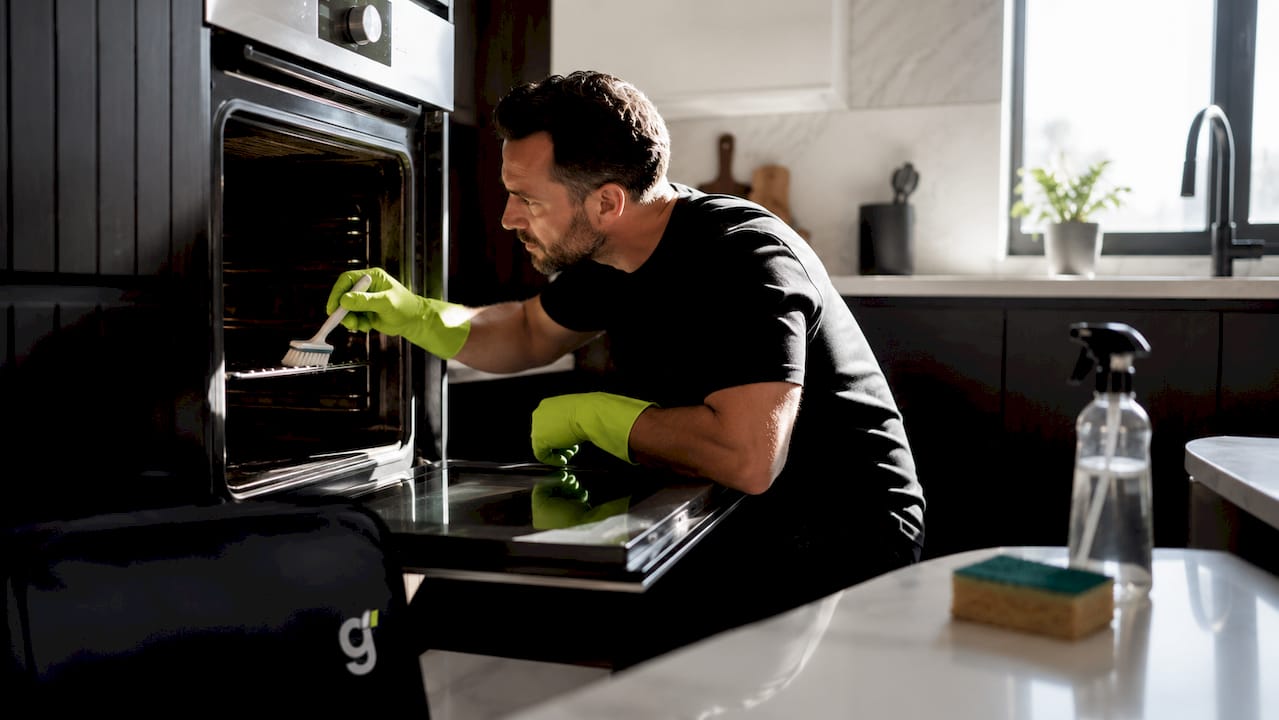
The oven is the most disputed appliance at tenancy end. Carbon deposits, baked-on grease, and discoloured door glass all require targeted degreasing, not just a wipe-down. Racks must be soaked and scrubbed, and the glass panel between the oven door layers often needs disassembly to clean properly. A professional-grade alkaline degreaser applied with dwell time is the only reliable method for heavy carbon buildup.
Range hood filters and fan blades
Grease accumulates in range hood mesh filters and on fan blades with every cooking session. Filters should be removed, soaked in hot degreasing solution, and dried before reinsertion. Fan blades require a damp cloth wipe to remove sticky residue. Blocked filters are a fire risk, which means this task carries a safety obligation beyond aesthetics.
Dishwasher interior, filter, and door seals
The dishwasher filter traps food debris and, if left uncleaned, produces persistent odours. Lease clauses should itemise tasks like "dishwasher filter cleaned and free of debris" to make the standard enforceable. Door seals collect mould and soap scum and must be wiped with a mould-inhibiting solution. Running an empty hot cycle with a cleaning tablet after manual cleaning confirms the appliance is odour-free.
Refrigerator interior, defrost, and coils
The refrigerator interior must be fully emptied, defrosted if applicable, and wiped with a food-safe sanitiser. Shelves and drawers require individual cleaning. Refrigerator coils collect dust and reduce efficiency when neglected, so vacuuming or brushing them is a standard maintenance task that also applies at turnover. A fridge returned with odours or sticky residue fails the entry condition benchmark.
Microwave interior
Splattered food inside a microwave hardens quickly and becomes difficult to remove without steam or a targeted cleaner. The turntable plate must be removed and washed separately. The interior ceiling, walls, and door seal all require wiping. A lemon-water steam method loosens most residue before scrubbing.
Cleaning behind and beneath movable appliances
Grime accumulates behind and beneath fridges, washing machines, and dishwashers throughout a tenancy. This area is almost never cleaned during regular maintenance. Post-tenancy grime buildup in these zones can include grease, food debris, and moisture damage. Pulling appliances out and cleaning the floor and wall behind them is a non-negotiable part of a proper turnover clean.
Mould, soap scum, and mineral deposits on taps and sinks
Taps and sinks adjacent to appliances accumulate mineral deposits from hard water and soap scum from regular use. A descaling solution removes calcium buildup from tap aerators and sink basins. Mould around sink seals requires a mould-specific treatment, not a general surface spray. Leaving these untreated creates a hygiene issue that tenants and inspectors will flag immediately.
Exhaust fan covers and light fixtures near appliances
Exhaust fans above cooking areas collect grease and dust on their covers and internal blades. Covers should be removed, washed, and dried before refitting. Light fixtures near the stove or rangehood accumulate grease film and require wiping with a degreasing cloth. These are easy to overlook but appear clearly in photographic condition reports.
Verification against photographic entry condition
Every appliance cleaning task must be verified against the move-in condition report. Timestamped photos of oven interiors and dishwasher filters taken at move-in are the legal anchor for any bond deduction claim. Without this comparison, a tribunal will default in favour of the tenant. The exit inspection should mirror the entry report, appliance by appliance.
Pro Tip: Take photos of appliance interiors with the door fully open and a light source inside. Dark oven cavities and fridge interiors are notoriously hard to photograph clearly, and poor images weaken your evidence at tribunal.
Professional cleaning receipts
When a landlord engages a professional cleaner to restore appliances to entry condition, a receipt from that cleaner supports the bond deduction claim. The receipt should itemise specific tasks completed, not just list a flat fee. This documentation, combined with photographic evidence, creates a clear paper trail that holds up in dispute resolution.
2. How to document and verify appliance cleaning standards to avoid disputes
Documentation is the difference between a successful bond claim and a tribunal loss. A strong move-in report with photos prevents disputes over cleaning standards and establishes the baseline for all assessments at tenancy end. The process requires consistency and detail from day one.
The core elements of a reliable documentation system include:
- Timestamped photographs of every appliance interior and exterior taken on the day of move-in, stored in a cloud-based system accessible to both landlord and tenant
- An itemised entry condition report signed by the tenant, with specific appliance descriptions such as "oven interior clean, no carbon deposits" or "dishwasher filter clear of debris"
- Lease clauses that define clean with specific appliance tasks listed, because vague lease language gives tenants room to argue and tribunals room to dismiss claims
- A matching exit inspection checklist that references each entry condition item directly, completed during the final inspection with the tenant present where possible
- Written records of any cleaning completed during the tenancy, including professional service receipts, to demonstrate ongoing maintenance
Pro Tip: Use a property management app that timestamps and geotags photos automatically. This removes any argument about when or where images were taken, which is a common challenge in tribunal proceedings.
The tenant's signature on the entry condition report is not just a formality. It confirms they accept the documented baseline as accurate. Without that signature, the report carries less weight in a dispute.
3. Regular maintenance cleaning vs. turnover cleaning for appliances
These two cleaning types serve different purposes and require different time commitments. Confusing them leads to underpriced quotes, underprepared properties, and unnecessary bond disputes.
| Feature | Regular maintenance clean | Turnover clean |
|---|---|---|
| Frequency | Monthly or quarterly | Between every tenancy |
| Focus areas | Visible surfaces, general hygiene | Hidden grime, appliance internals, seals |
| Appliance depth | Wipe exteriors and accessible interiors | Full disassembly of filters, racks, and seals |
| Time required | 1–2 hours for a standard property | 3–6 hours for a standard property |
| Typical cost | Lower, routine rate | $250–$475 for a 2–3 bedroom unit |
| Purpose | Maintain liveable condition | Restore to entry condition standard |
Turnover cleaning resets the whole property to entry condition, targeting areas that regular maintenance never reaches. Appliance seals, extractor fan filters, and the spaces behind appliances are the most commonly neglected zones. Skipping a proper turnover clean almost always creates a bond dispute, because the exit condition will not match the documented entry standard.
The cost difference between a maintenance clean and a turnover clean reflects the labour involved. A turnover clean for a standard 2–3 bedroom property requires significantly more labour and targets hard-to-reach appliance areas that accumulate grime over an entire tenancy. Budgeting for this properly is part of sound property management.
4. How to build a practical appliance maintenance checklist for rental properties
A recurring maintenance checklist reduces the workload at turnover and extends appliance lifespan. Regular maintenance improves appliance lifespan and reduces costly breakdowns, which directly protects your rental income. The checklist below organises tasks by frequency.
Monthly tasks:
- Wipe microwave interior and turntable
- Clean dishwasher door seals and run a cleaning cycle
- Check washing machine drum for residue and wipe the door seal
- Clear range hood filter of visible grease
Quarterly tasks:
- Remove and soak range hood mesh filters
- Clean refrigerator interior shelves and drawers
- Inspect washing machine hoses for wear or leaks
- Wipe exhaust fan covers and remove dust from blades
Annual tasks:
- Vacuum or brush refrigerator coils
- Inspect and clean dryer vents to prevent fire risk
- Run an oven self-clean cycle or apply a deep degreaser
- Check dishwasher filter and spray arms for blockages
Incorporating tenant responsibilities into the lease agreement reduces the end-of-tenancy cleaning burden. Clauses that specify monthly microwave cleaning or quarterly dishwasher filter maintenance set clear expectations. Seasonal cleaning tasks for rental properties follow a similar rhythm and are worth building into your property management calendar. When tenants understand their obligations from day one, the property arrives at turnover in far better condition.
Pro Tip: Attach the maintenance checklist to the lease as a signed schedule. This transforms it from a suggestion into a contractual obligation, which strengthens your position if cleaning disputes arise at bond time.
Key takeaways
Appliance cleaning standards for rental properties require landlords to restore every appliance to its documented move-in condition, supported by photographic evidence, itemised lease clauses, and a structured maintenance schedule.
| Point | Details |
|---|---|
| Legal cleaning standard | Landlords can only charge for cleaning that restores appliances beyond normal wear and tear to documented entry condition. |
| Documentation is essential | Timestamped photos and signed entry condition reports are the legal foundation for any bond deduction claim. |
| Turnover vs. maintenance clean | Turnover cleans take 3–6 hours and cost $250–$475, targeting hidden grime that maintenance cleans never reach. |
| Lease clauses reduce disputes | Itemising specific appliance tasks in the lease, such as "oven free of carbon," makes cleaning standards enforceable. |
| Maintenance checklists protect value | Monthly, quarterly, and annual appliance tasks extend lifespan and reduce the workload at each tenancy end. |
What I've learned from years of rental property cleaning disputes
The most expensive mistake I see property managers make is treating the entry condition report as a formality. They take a few wide-angle photos of the kitchen and call it done. Then a tenant leaves a grease-caked oven, and there is no close-up of the oven interior from move-in to prove the difference. The bond claim fails. The landlord pays for the clean out of pocket.
The second mistake is assuming tenants know what "clean" means. They do not, and neither do tribunals unless you define it in writing. A lease clause that says "property must be returned in a clean condition" is almost useless. A clause that says "oven interior free of carbon deposits, racks scrubbed, door glass clear" is enforceable. The specificity is the point.
I have also seen landlords underestimate the value of a consistent cleaning contractor relationship. When you work with the same professional team across multiple properties, they learn your standards, your documentation process, and your timeline requirements. That consistency shows up in the quality of the work and the reliability of the receipts, which matter at tribunal. Viewing cleaning as property value preservation rather than a compliance box to tick changes how you manage the whole process. Properties that are cleaned properly between every tenancy attract better tenants, hold their value longer, and generate fewer disputes. The cost of a proper turnover clean is always less than the cost of a bond dispute.
— Lead
Grimescene's rental turnover cleaning for landlords
Rental turnover cleaning is one of the most time-sensitive tasks in property management, and getting it wrong costs more than the clean itself.

Grimescene's Scene Reset protocol is built specifically for rental turnovers. The service covers full appliance cleaning including oven degreasing, range hood filter removal, dishwasher seal treatment, and refrigerator coil cleaning, all completed with non-toxic agents that are safe for the next tenant from day one. Grimescene provides itemised service receipts that support bond claims and match the documentation standards tribunals expect. For properties that need a fast reset between tenancies, the 2-hour tactical clean delivers a thorough appliance and surface clean on a schedule that works around your vacancy window.
FAQ
What cleaning can a landlord charge a tenant for?
Landlords can charge only for cleaning needed to restore the property to its documented move-in condition, excluding deterioration from normal use. Charges must be supported by photographic evidence and itemised receipts.
How do I make appliance cleaning standards enforceable in a lease?
List specific tasks in the lease, such as "oven free of carbon deposits" and "dishwasher filter cleaned." Vague lease language gives tenants room to dispute charges at tribunal.
How long does a rental turnover clean take?
A professional turnover clean for a standard 2–3 bedroom property takes 3–6 hours and covers appliance internals, seals, filters, and areas behind appliances that regular maintenance misses.
What is the difference between normal wear and tear and a cleaning issue?
Normal wear and tear includes faded seals or minor surface scuffs from ordinary use. A cleaning issue is tenant-caused buildup such as grease, carbon deposits, or mould that requires active remediation to restore the appliance to entry condition.
How often should rental property appliances be professionally cleaned?
Appliances should receive a full professional clean at every tenancy end. Between tenancies, a quarterly maintenance clean of filters, seals, and interiors reduces buildup and extends appliance lifespan.