

The role of cleaning in tenant retention is direct and measurable. A property that presents as spotless at move-in and stays that way throughout the tenancy generates fewer complaints, higher renewal rates, and shorter vacancy periods between leases. Average tenant turnover costs around $2,500 when you factor in cleaning, repairs, vacancy days, and admin. Professional cleaning at $100 to $300 per turnover is not an expense. It is a hedge against that larger loss. Property managers who treat cleanliness as a retention strategy, rather than a cosmetic courtesy, consistently outperform those who treat it as an afterthought.
What is turnover cleaning and why does it matter for tenant retention?
Turnover cleaning is the deep remediation of a rental property between tenancies. It differs from routine maintenance cleaning in both scope and purpose. Routine cleaning maintains a baseline standard during an active tenancy. Turnover cleaning resets the property to a condition that a new tenant would find genuinely impressive, not merely acceptable.
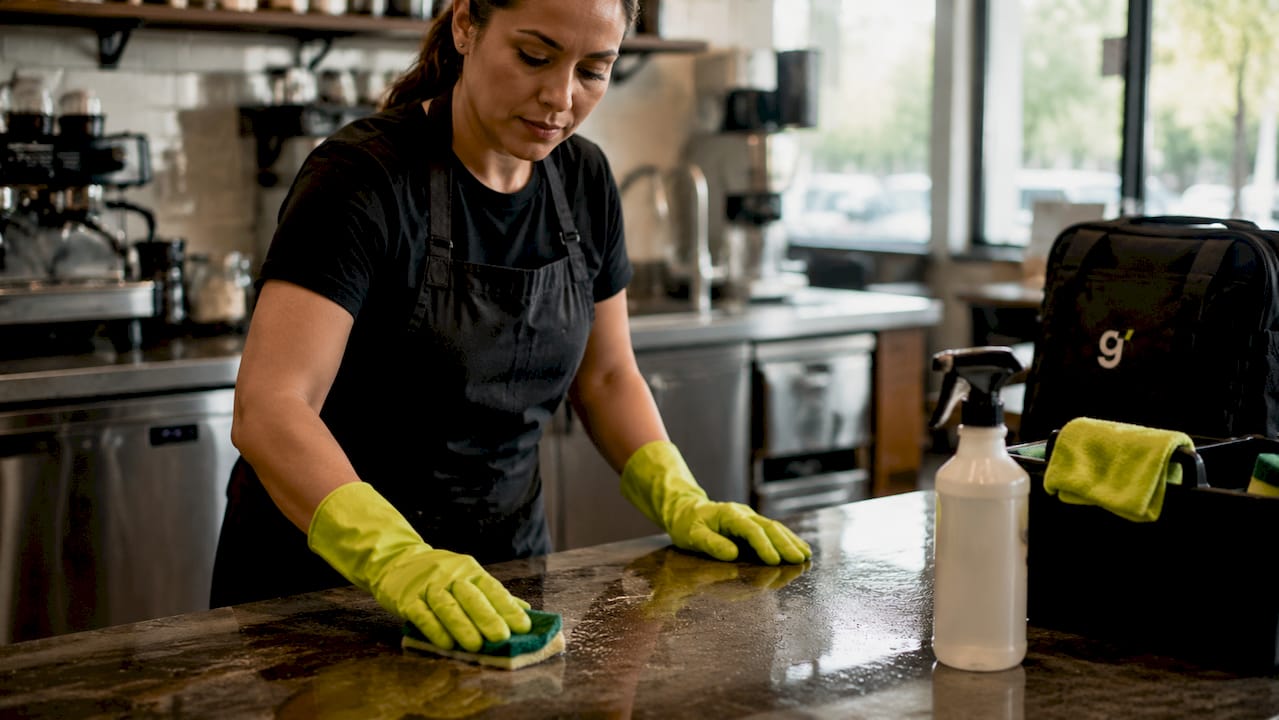
A full turnover clean takes 3 to 6 hours and covers appliance interiors, grout lines, window tracks, skirting boards, light fixtures, and exhaust fans. These are the areas that accumulate grime invisibly during a tenancy and become immediately visible to a fresh set of eyes. A new tenant who opens the oven on day one and finds baked-on grease forms a negative impression that is very difficult to reverse.
The connection to retention is not intuitive at first. Turnover cleaning affects the incoming tenant, so how does it influence whether they stay? The answer is that first impressions set the standard for the entire tenancy. A tenant who moves into a genuinely clean property develops a higher baseline expectation of the landlord's professionalism. That expectation, when consistently met, translates into trust and renewal.
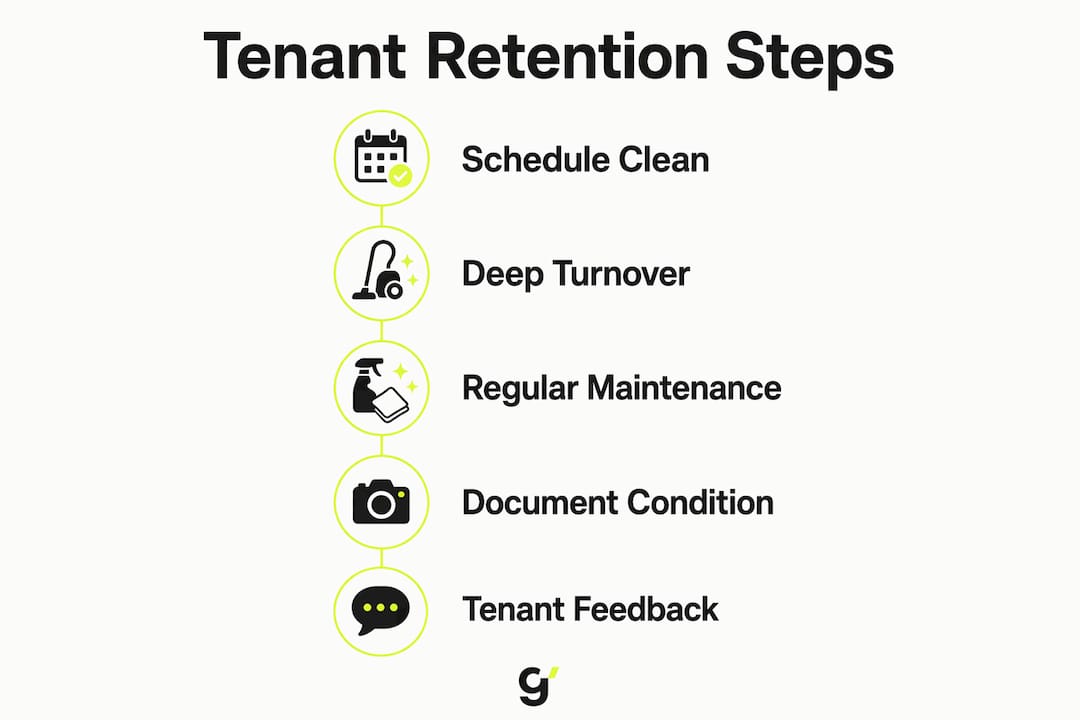
Here is a practical sequence for a reliable turnover clean:
- Complete all repairs and maintenance before the clean begins, not after. Tradespeople leave dust, debris, and scuff marks. Cleaning after repairs avoids rework.
- Photograph every room and surface before cleaning commences. This establishes a documented baseline for condition.
- Clean from top to bottom: ceilings, light fittings, walls, benchtops, appliances, floors, and finally outdoor areas.
- Address grout, window tracks, and exhaust fans specifically. These are the most commonly missed items and the most noticed by incoming tenants.
- Conduct a post-clean inspection with a checklist before handing over keys.
Pro Tip: Schedule your turnover clean for the morning after the outgoing tenant vacates, not the afternoon before the new tenant arrives. This gives you a buffer to address anything the cleaner missed without rushing.
Skipping a full turnover clean is a false economy. Early tenancy complaints reduce renewal likelihood significantly, and those complaints most often originate from cleanliness failures in the first two weeks. The cost of one additional vacancy month far exceeds the cost of a thorough professional clean.
How does ongoing cleaning affect tenant satisfaction and lease renewals?
The retention benefit comes from consistent cleanliness throughout the tenancy, not from a single impressive move-in clean. This is the insight most landlords miss. A property that dazzles at handover but deteriorates in common areas, shared spaces, or building amenities will still generate complaints and non-renewals.
For multi-unit buildings and properties with shared facilities, ongoing cleaning is a direct lever on renewal rates. Tenants who encounter clean lobbies, stairwells, and laundry rooms report higher satisfaction with their overall living experience, even when their individual unit is unchanged. The building's cleanliness signals that management cares, and that signal matters at renewal time.
A clean environment reduces online complaints and correlates with faster re-leasing and stronger rental yields. This is not a soft benefit. Fewer negative reviews on platforms like Google or Domain mean a larger pool of prospective tenants and more negotiating power on rent.
Key practices for maintaining cleaning quality throughout a tenancy:
- Schedule periodic inspections that include a cleaning assessment, not just a condition check. Odours, stained grout, and oven grease are early warning signs of a tenancy heading toward non-renewal.
- Track maintenance tickets by category. A spike in cleaning-related complaints signals a gap in your cleaning programme that needs addressing before it affects the renewal conversation.
- Communicate proactively with tenants about any scheduled cleaning of common areas. Tenants who feel informed feel respected, and that directly influences their decision to renew.
- Use cleanliness scores from routine inspections as a leading indicator of renewal risk. A property scoring poorly at the six-month inspection is statistically more likely to face a non-renewal at the twelve-month mark.
For detailed guidance on maintaining standards between deep cleans, a structured maintenance schedule makes the difference between reactive and proactive property management.
Pro Tip: Ask your outgoing tenants directly why they chose not to renew. Cleanliness issues appear in exit surveys far more often than landlords expect, and they are almost always fixable with a modest investment in scheduled cleaning.
In what ways does indoor environment quality connect with cleaning and tenant health?
Indoor environment quality is the emerging frontier in the importance of cleanliness in rentals. Research published in Atmosphere found that combined air quality interventions improved asthma control scores significantly in adult tenants. The interventions included HEPA filtration, source control, and tenant education. Cleaning was not peripheral to the outcome. It was central to it.
The practical implication for landlords is that cleaning quality influences tenant health, and tenant health influences lease renewals. A tenant managing poorly controlled asthma in a dusty, mould-prone property is a tenant who will leave at the first opportunity.
A separate study within the EDIAQI project found that source control dominates indoor particulate variability, not filter efficiency. Cooking emissions, printing, and accumulated dust are the primary drivers of poor indoor air quality. A HEPA filter placed in the corner of a room does very little if the source of contamination is not addressed through regular cleaning and ventilation.
The table below summarises the practical relationship between cleaning actions and indoor environment outcomes:
| Cleaning action | Indoor environment benefit | Tenant retention link |
|---|---|---|
| Regular exhaust fan cleaning | Reduces moisture and mould risk | Fewer respiratory complaints |
| Vacuuming with HEPA filtration | Removes PM2.5 and allergens | Improved comfort for allergy sufferers |
| Oven and rangehood degreasing | Reduces cooking emission residue | Better air quality in living areas |
| Grout and tile cleaning | Prevents mould colonisation | Reduces visible deterioration tenants notice |
| Carpet deep cleaning | Removes dust mite habitat | Supports asthma and allergy management |
For landlords interested in eco-friendly cleaning methods that avoid introducing chemical irritants into the indoor environment, non-toxic agents are worth considering. They address grime without replacing one air quality problem with another.
How can landlords document cleaning to reduce disputes and build tenant trust?
Documentation is the professional practice that separates landlords who win deposit disputes from those who lose them. Treating a turnover clean like evidence collection means photographing the property before and after cleaning, not just before and after the tenancy.
The sequencing matters enormously. Repairs must precede cleaning, and cleaning must precede the final photographic record. A property photographed after cleaning but before a tradesperson visits will show damage that the landlord introduced, not the tenant. That sequence error has cost landlords deposit disputes they should have won.
Practical documentation standards that reduce conflict and build goodwill:
- Use a room-by-room checklist that records the condition of every surface, fixture, and appliance. Generic condition reports are insufficient for dispute resolution.
- Photograph in natural light where possible. Flash photography flattens detail and makes surfaces appear cleaner than they are.
- Date-stamp all photographs automatically through your phone's camera settings or a property management platform like Console Cloud or PropertyMe.
- Share the post-clean inspection report with the incoming tenant at key handover. Tenants who see the standard of cleanliness documented at move-in are less likely to dispute it at move-out.
- Include re-clean clauses in vendor contracts so that any missed areas are rectified at no additional cost before the new tenancy begins.
The goodwill benefit of transparent documentation is underappreciated. A tenant who receives a thorough condition report at move-in understands that the landlord is organised and professional. That perception reduces the likelihood of disputes throughout the tenancy, not just at the end.
Self-cleaning versus professional services: what works for landlords?
The decision to self-clean or hire professionals is a function of scale, time, and condition. For a single property in good condition, a thorough self-clean is feasible. For a portfolio of three or more properties, or any property coming out of a difficult tenancy, professional cleaning is the more cost-effective choice when you account for your own time honestly.
The cleaning impact on tenants is measurable in re-leasing speed and rental yield. Properties presented to a professional standard attract a better quality of prospective tenant and lease faster. The reducing vacancy days cleaning strategy is straightforward: a property that photographs well and presents well generates more enquiries, more applications, and a shorter time on market.
Indicators that professional cleaning is the right call:
- The outgoing tenancy lasted more than two years. Grime accumulates in ways that are not visible during routine inspections and require specialist equipment to address.
- The property has carpet, grout, or exhaust systems that have not been professionally cleaned in the past twelve months.
- You are managing more than two properties simultaneously and cannot dedicate a full day to each turnover.
- The outgoing tenant left the property in below-average condition. Professional remediation is faster and more thorough than a landlord working alone.
When selecting a cleaning vendor, prioritise those who offer documented scope of work, re-clean guarantees, and clear communication protocols. Formal vendor agreements improve cleaning consistency and give you recourse when standards are not met. A vendor who resists putting their scope in writing is a vendor who will resist accountability later.
For properties with post-tenancy grime buildup, the scale of remediation required often surprises landlords who relied on routine inspections. Professional deep cleaning in these cases is not optional. It is the baseline for presenting the property competitively.
Key takeaways
Consistent, documented cleaning is the single most cost-effective strategy a landlord can deploy to reduce vacancy days and increase lease renewals.
| Point | Details |
|---|---|
| Turnover cleaning drives first impressions | A thorough reset clean sets the standard that shapes a tenant's entire tenancy experience. |
| Ongoing cleanliness prevents non-renewals | Consistent maintenance cleaning reduces complaints and signals professional management to tenants. |
| Indoor air quality links cleaning to health | Source control through regular cleaning reduces allergens and supports tenant well-being and retention. |
| Documentation protects landlords and builds trust | Before-and-after records reduce deposit disputes and demonstrate professionalism to incoming tenants. |
| Professional cleaning reduces vacancy days | Vendor-managed turnover cleans present properties faster and attract higher-quality tenant applications. |
The cleaning standard that most landlords set too low
Property managers often treat cleaning as the last item on the turnover checklist rather than the first strategic decision. After fifteen years of observing rental properties across different markets, the pattern is consistent: landlords who lose good tenants to competitors are rarely losing on price or location. They are losing on presentation and the feeling that the property is cared for.
The uncomfortable truth is that tenants talk. A tenant who moves into a property with a clean oven, fresh grout, and no musty smell tells their friends. A tenant who discovers a greasy rangehood and a stained shower recess on day one tells their friends too, and they post about it. The word-of-mouth effect of cleaning quality is real and largely invisible to landlords who do not track it.
What I have found genuinely underappreciated is the indoor environment dimension. Most landlords think about cleaning in terms of visible surfaces. The research on PM2.5 reduction and asthma control points to something deeper: the air quality inside a rental property affects how tenants feel every single day. A tenant who sleeps better, breathes easier, and experiences fewer health disruptions in your property is a tenant who associates your property with wellbeing. That association is a powerful retention force that no rent discount can replicate.
My practical recommendation is to treat your cleaning programme the way you treat your maintenance programme: scheduled, documented, and vendor-managed. The landlords who do this consistently report fewer disputes, lower vacancy rates, and tenants who renew without negotiation.
— Lead
How Grimescene helps property managers retain tenants through expert cleaning
Grimescene's Scene Reset protocol is built specifically for rental property turnovers. The service covers deep remediation of appliances, grout, exhaust systems, and high-traffic surfaces using non-toxic agents that do not leave chemical residues behind. Every clean is documented with before-and-after records, giving property managers the evidentiary trail they need for deposit protection and tenant onboarding. For landlords managing short-term rental properties, Grimescene's tactical cleaning units turn properties around fast without sacrificing the standard that protects your ratings and attracts quality tenants. To get your property tenant-ready with a rapid response team, book your clean and deploy Grimescene's crew on your schedule.
FAQ
How does cleaning directly affect tenant retention rates?
Consistent cleanliness prevents early tenancy complaints and signals professional management, both of which increase the likelihood of lease renewal. Tenants who experience a clean, well-maintained property are more likely to renew without negotiation.
What does a professional turnover clean typically include?
A full turnover clean covers appliance interiors, grout, window tracks, skirting boards, light fixtures, and exhaust fans, and takes between three and six hours to complete. These are the areas most noticed by incoming tenants and most likely to generate complaints if missed.
Is professional cleaning worth the cost for landlords?
Professional cleaning at $100 to $300 per turnover is significantly cheaper than the cost of one additional vacancy month, which contributes to an average turnover cost of $2,500. For properties with more than two years of tenancy or below-average exit condition, professional remediation is the more cost-effective choice.
How does indoor air quality relate to tenant satisfaction?
Research shows that environmental interventions improve asthma control and tenant well-being, with source control through regular cleaning being the primary driver of indoor air quality improvement. Tenants who feel healthier in a property are more likely to stay.
What documentation should landlords keep for cleaning and condition records?
Landlords should maintain room-by-room checklists with date-stamped photographs taken before and after every turnover clean. Sharing this record with incoming tenants at key handover reduces disputes and establishes a professional standard from day one.