
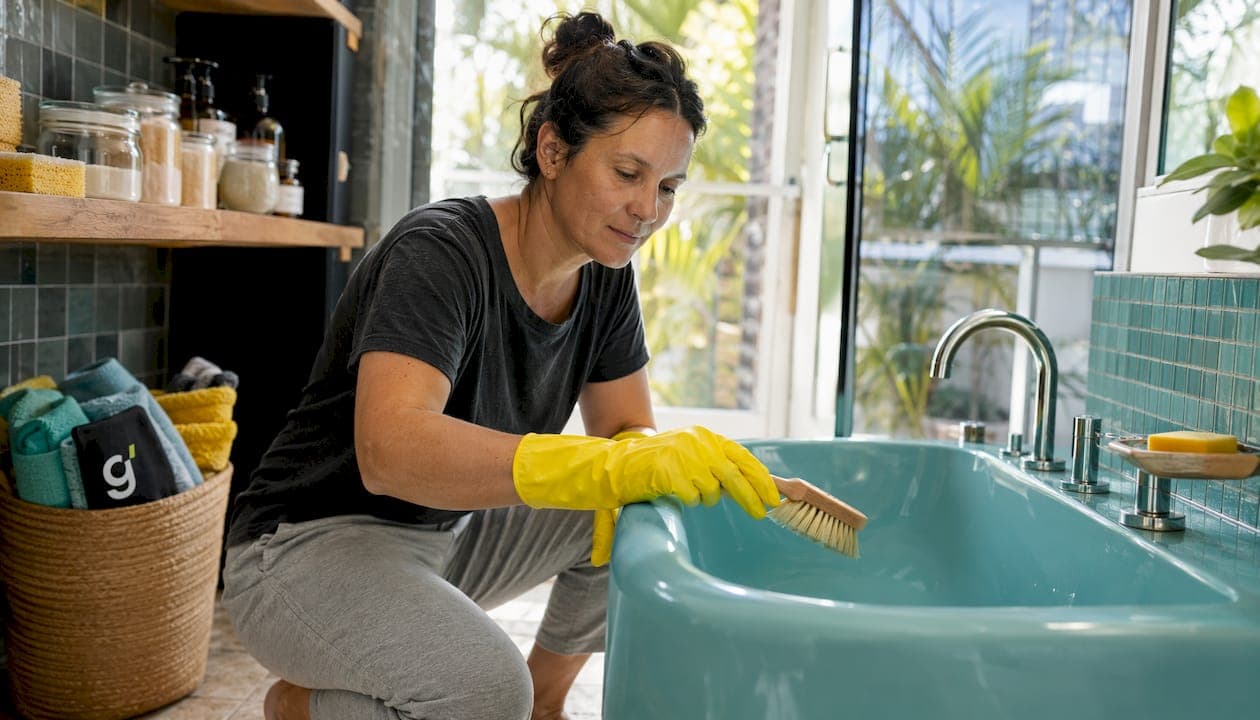
Baking soda, white vinegar, and liquid castile soap clean a bathroom thoroughly without a single harsh chemical. That is the core claim of this guide, and it holds up across tiles, grout, toilets, sinks, showers, and mirrors. The trick is knowing which ingredient goes where, which combinations to avoid, and which tools protect your surfaces while doing the work.
Your chemical-free scrubbing kit starts with three ingredients and three tools:
- Baking soda (bicarbonate of soda): mild abrasive, neutralises odours, lifts grime from grout and tile
- White vinegar: dissolves mineral deposits, soap scum, and hard water stains on glass and chrome
- Liquid castile soap: plant-derived cleaner that cuts body oils and general grime on most surfaces
- Microfiber cloths: lift and trap particles without scratching
- Non-abrasive scrub brush: reaches grout lines and curved surfaces without gouging
- Spray bottles: two at minimum, one for vinegar solution, one for castile soap mix
Prep the surface before you scrub. Clear items off shelves and benchtops, then dry-dust with a microfiber cloth to remove loose hair and debris. Scrubbing wet grime into dry dust just spreads it around.
Pro Tip: Apply your scrub in small circular motions with light pressure. Starting gentle and increasing only if needed protects tile glazing, chrome, and porcelain from micro-scratches that accumulate over time.
How to clean each bathroom area without chemicals
Tiles and grout
Make a paste from baking soda and a small amount of water, roughly the consistency of toothpaste. Apply it directly to grout lines and stained tile corners, then work it in with an old toothbrush using short circular strokes. Let it sit for 1–2 minutes before rinsing. For tiles with heavier soap scum, follow the baking soda with a light spray of white vinegar, but apply them separately, not mixed together in the same bottle.
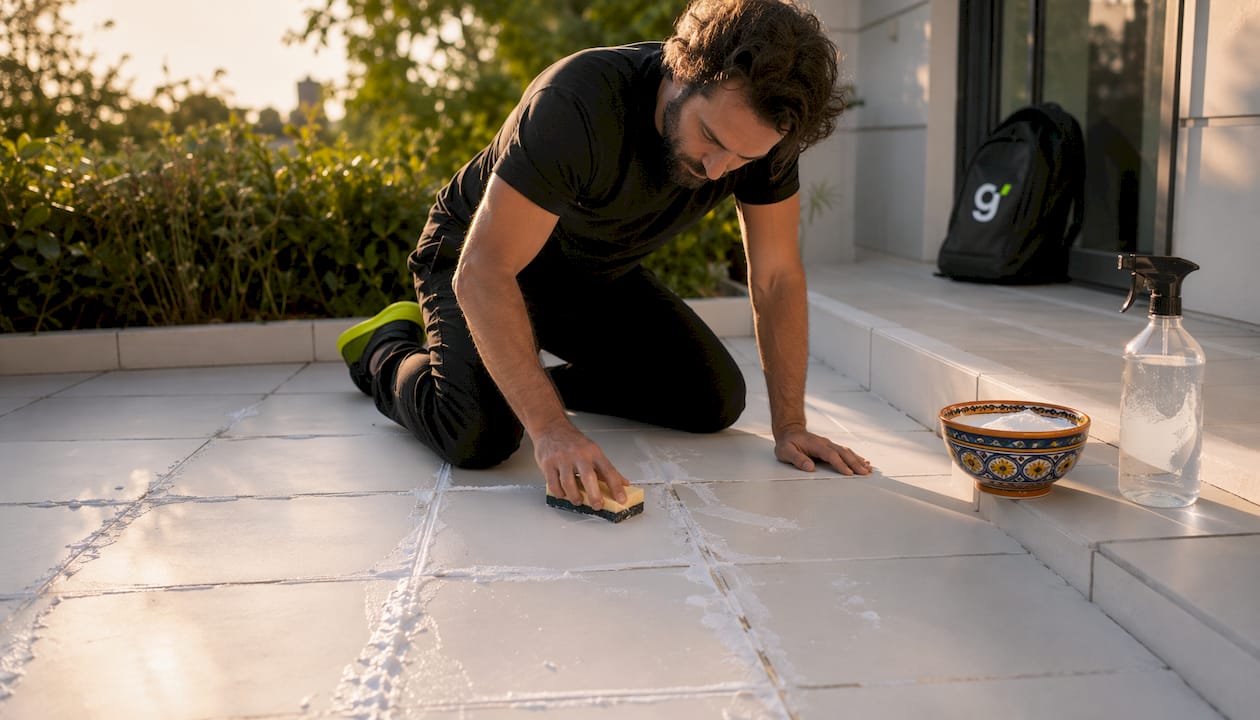
Do not use vinegar on natural stone tiles. Vinegar's acidity causes irreversible etching and pitting on marble, granite, and limestone. Stick to pH-neutral castile soap on stone surfaces.
Toilet bowl and exterior
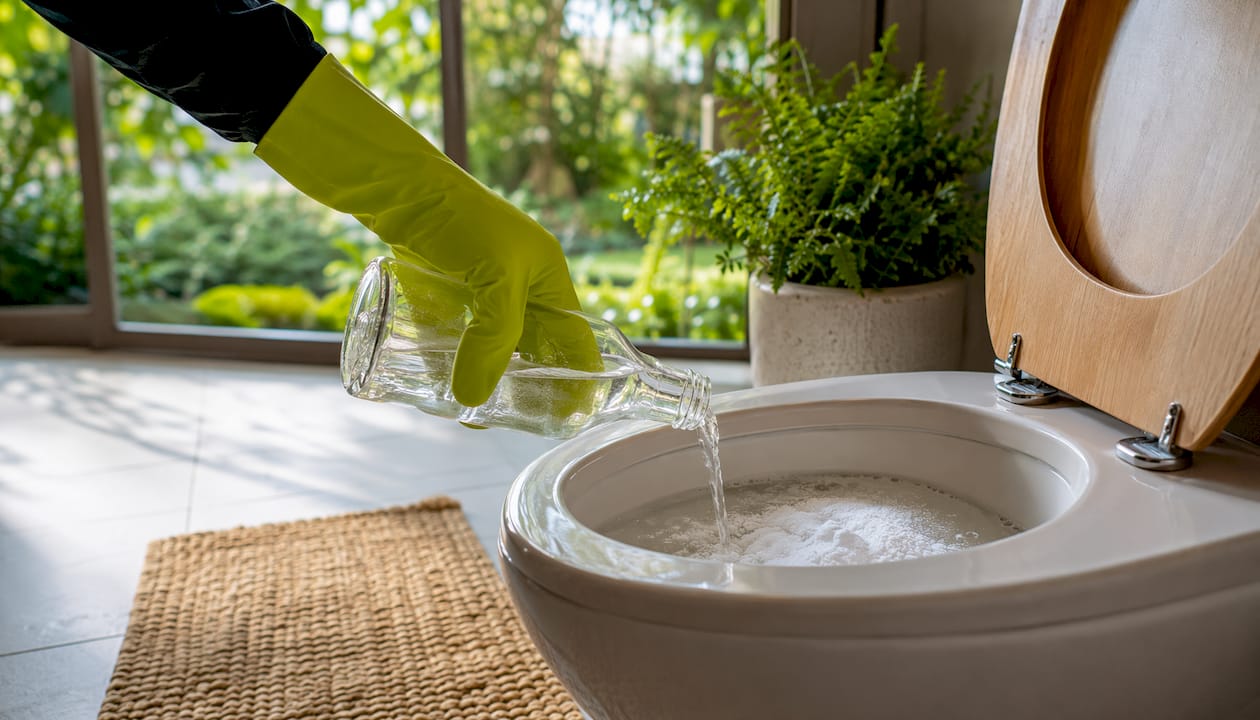
Pour a generous amount of baking soda into the bowl, then add a splash of white vinegar for a foaming reaction that loosens visible residue. Scrub under the rim with a toilet brush and let the mixture sit for several minutes before flushing. For the exterior, wipe the tank, seat, and base with a cloth dampened in a diluted castile soap solution. Rinse and dry.
Sinks and taps
A few drops of liquid castile soap in warm water cuts through toothpaste residue and body oils on porcelain sinks. Apply with a soft cloth or non-scratch sponge, then rinse thoroughly. For mineral buildup around tap bases, soak a cloth in undiluted white vinegar and press it against the deposit for 10–15 minutes before wiping clean.
Shower walls and screens
Spray white vinegar directly onto shower screens and walls where soap scum and hard water marks accumulate. For stubborn buildup, press a vinegar-soaked cloth onto the spot and leave it for 10 minutes. Wipe with a microfiber cloth, then rinse. Running the exhaust fan during and after showers reduces soap scum and mildew buildup significantly, cutting down how hard you need to scrub each week.
Mirrors
Dilute white vinegar with water in a spray bottle at roughly equal parts. Spray lightly onto the mirror and wipe in overlapping strokes with a dry microfiber cloth. Avoid soaking the edges, where moisture can seep behind the glass backing. If you live in an area with hard water, using distilled water in your vinegar spray prevents the mineral streaks that tap water leaves behind.
Pro Tip: Always dry-dust before any wet cleaning. Wiping loose debris with a damp cloth just smears it into a paste that takes twice as long to remove.
Comparing chemical-free bathroom cleaners available in Australia
The products below cover the full range from ready-to-use concentrates to simple pantry staples. Each suits a different situation.
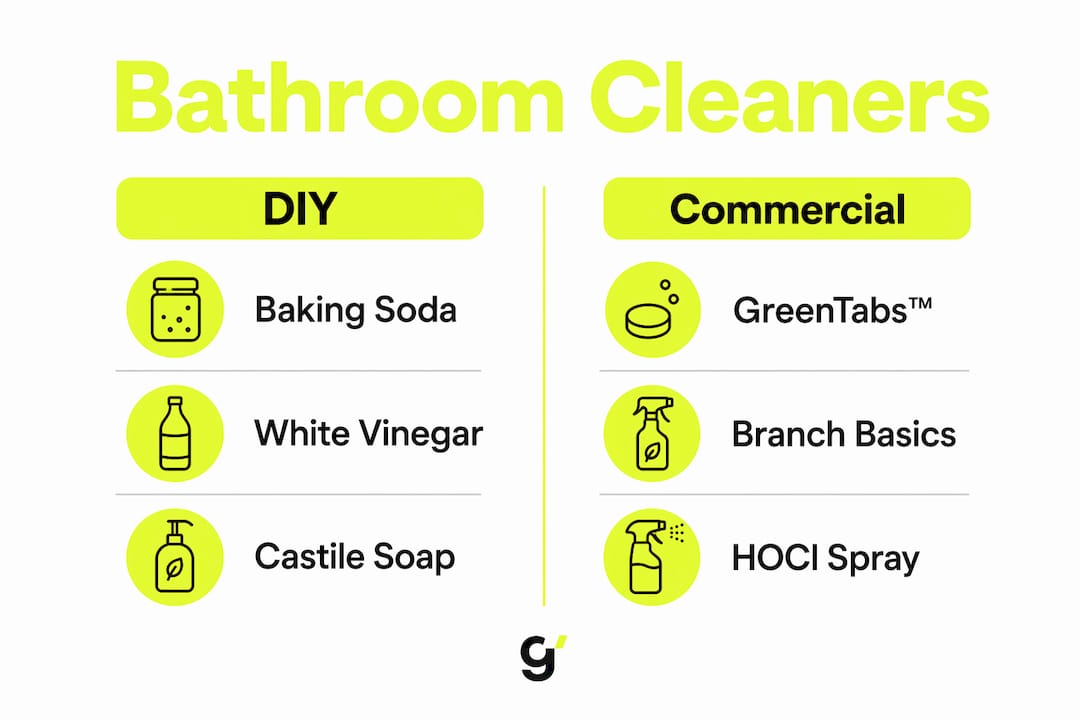
| Product | Type | Effectiveness | Environmental impact | Available in Australia | Ease of use | Best for |
|---|---|---|---|---|---|---|
| GreenTabs™ | Tablet concentrate | High on soap scum and grime | Minimal packaging, zero plastic waste | Yes | Very easy, dissolve and spray | Zero-waste, hassle-free dosing |
| Branch Basics Bathroom + Oxygen Boost | Plant-based concentrate + booster | High, especially tough stains | Biodegradable, refillable | Limited, online import | Moderate | Families needing powerful stain removal |
| Homemade Baking Soda Scrub | DIY paste | Moderate to high on grout and porcelain | Zero packaging waste | Pantry staple, universal | Easy | Budget-conscious DIY cleaning |
| HOCl bathroom spray (homemade from tablets) | DIY disinfectant spray | High disinfection, rapid action | No harsh chemical residues | Tablets available online | Moderate | Chemical-free disinfection on demand |
| White Vinegar | Acidic natural cleaner | High on mineral deposits and soap scum | Minimal | Supermarkets nationwide | Very easy | Hard water stains on glass and chrome |
| Liquid Castile Soap | Plant-derived surfactant | Moderate, excellent on oils | Biodegradable, no synthetics | Health food stores, online | Very easy | Multi-surface general cleaning |
| Bicarbonate of Soda (Baking Soda) | Mild abrasive and deodoriser | Moderate on grime, high on odours | Zero impact | Supermarkets nationwide | Very easy | Grout, tubs, sinks, drain deodorising |
| Homemade Baking Soda Paste for Grout | DIY paste | Moderate, targeted grout action | Zero packaging waste | Pantry staple | Easy | Targeted grout brightening |
| Homemade Vinegar Toilet Bowl Cleaner | DIY foaming cleaner | Moderate on stains and odours | Minimal | Pantry staple | Very easy | Chemical-free toilet maintenance |
| Branch Basics Oxygen Boost | Oxygen-activated booster | High on tough stains and whitening | Biodegradable | Limited, online import | Easy | Boosting stain removal on white surfaces |
GreenTabs™ stands out for anyone who wants zero-plastic dosing without measuring or mixing. Each tablet dissolves in water to produce a ready-to-use spray, which removes the spill risk and packaging waste of conventional bottles. For Australian households, GreenTabs™ is available locally and suits renters who want a tidy, minimal kit.
Branch Basics Bathroom + Oxygen Boost is the strongest performer for families dealing with heavy soap scum and body oil buildup. The oxygen booster activates on contact with stains, lifting them without bleach or synthetic surfactants. Australian availability is limited to online import, so factor in lead time.
The Homemade Baking Soda Scrub costs almost nothing and works well on porcelain, ceramic tile, and chrome. The recipe is a quarter cup of baking soda, one tablespoon of liquid castile soap, and enough water to reach a thick paste. It cleans a full bathroom's worth of surfaces in one batch.
HOCl bathroom spray is hypochlorous acid generated at home from effervescent tablets. It disinfects surfaces rapidly and breaks down to water and oxygen after use, leaving no toxic residue. It suits anyone who wants genuine disinfection without bleach.
For a broader look at how these and other natural agents compare across different cleaning tasks, the Grimescene guide to natural cleaning agents covers the chemistry in plain terms.
DIY recipes and safety rules you need to know
Recipe 1: Homemade Baking Soda Scrub
- Combine a quarter cup of baking soda with one tablespoon of liquid castile soap in a small bowl.
- Add four drops of lemon essential oil if you have it.
- Stir in cool water gradually until the paste reaches a thick, smooth consistency similar to cake frosting.
- Dampen the surface, apply the paste with a sponge or brush using circular motions, and let it sit for 1–2 minutes.
- Scrub gently, then rinse thoroughly with clean water.
This batch cleans a double sink, bathtub, and shower walls in one go. Mix only what you need; the paste loses potency quickly and is not worth storing.
Recipe 2: Homemade Vinegar Toilet Bowl Cleaner
- Pour half a cup of baking soda into the toilet bowl.
- Add half a cup of white vinegar and allow the foaming reaction to work for 5 minutes.
- Scrub under the rim with a toilet brush.
- Let the mixture sit for another 5 minutes, then flush.
Recipe 3: HOCl bathroom spray
- Fill a clean spray bottle with 500ml of water.
- Drop in one HOCl effervescent tablet and wait for it to fully dissolve.
- Spray directly onto toilet handles, tap levers, and other high-touch surfaces.
- Wipe after 30 seconds. No rinsing required.
Critical safety rules
- Never mix vinegar and hydrogen peroxide in the same container. Combining them creates peracetic acid, a corrosive compound that irritates eyes, skin, and the respiratory system.
- Never mix castile soap with vinegar. The acid breaks the soap back into its base oils, producing a curdled, goopy residue that reduces cleaning power rather than boosting it.
- Keep baking soda off natural stone. Its mild abrasive action scratches marble, granite, and limestone over time.
- Patch test first. Apply any new DIY cleaner to a small hidden area and wait 10 minutes before using it across the whole surface.
- Store DIY cleaners correctly. Vinegar sprays keep well in a sealed spray bottle for months. Baking soda pastes should be made fresh each session. HOCl spray is most effective within 24 hours of mixing.
If you live in a hard water area, mixing your DIY cleaners with distilled water rather than tap water prevents the mineral deposits that reduce their effectiveness and leave streaks on chrome and glass.
What the evidence says about chemical-free cleaning
The case for ditching harsh chemicals in the bathroom is not just about personal preference. Volatile organic compounds released by conventional cleaners accumulate in enclosed spaces like bathrooms, where ventilation is limited and exposure is concentrated. Natural cleaning routines reduce that exposure by replacing synthetic solvents with ingredients that do not off-gas at room temperature.
Independent testing of baking soda confirms it acts as a mild abrasive and deodoriser that removes residue from tile grout without damaging the surface. Castile soap testing shows it breaks down oils and dirt efficiently without synthetic preservatives or harsh detergents. Both findings align with what Australian households report when switching from conventional spray cleaners to pantry-based alternatives.
The Australian Competition and Consumer Commission (ACCC) guidelines on environmental claims are worth knowing when you shop for eco-labelled products. A product marketed as "natural" or "green" is not automatically chemical-free or biodegradable. Look for specific ingredient disclosure and third-party certification rather than vague label claims.
Pro Tip: Check the ingredient list, not the front label. A product claiming to be "plant-based" can still contain synthetic preservatives and fragrance compounds. Castile soap and baking soda have one or two ingredients. That transparency is the real signal.
For a deeper look at which eco-cleaning claims hold up and which do not, the Grimescene article on eco cleaning myths is a useful reference.
Why harsh chemicals in the bathroom are worth avoiding
Conventional bathroom cleaners often contain chlorine bleach, ammonia, and synthetic fragrances. In a small, poorly ventilated space, these compounds build up fast. Research published in NCBI links repeated exposure to certain cleaning chemicals with respiratory irritation and sensitisation, particularly in people with asthma or allergies.
The environmental cost runs beyond the bathroom. Phosphates and synthetic surfactants in conventional cleaners wash into waterways, where they disrupt aquatic ecosystems. Packaging waste from single-use plastic bottles adds to the problem. Switching to concentrated formats like GreenTabs™ tablets or Branch Basics refillable systems cuts both the chemical load and the plastic footprint.
Children and pets are disproportionately exposed to residues left on bathroom surfaces after cleaning. A toddler touching a freshly cleaned toilet seat or bath rim picks up whatever was used to clean it. Non-toxic agents like baking soda and castile soap leave no harmful residue after rinsing.
What "chemical-free" actually means on a product label
Strictly speaking, nothing is free of chemicals. Water is a chemical. Baking soda is sodium bicarbonate. The term "chemical-free" in cleaning product marketing has no regulated definition in Australia, which means manufacturers can use it freely regardless of what is actually in the bottle.
The ACCC's environmental claims guidelines require that marketing claims be truthful, specific, and substantiated. A product labelled "chemical-free" that contains synthetic preservatives or artificial fragrance compounds is making a misleading claim under Australian Consumer Law.
What the term practically signals, when used honestly, is the absence of synthetic petrochemical compounds, chlorine bleach, ammonia, and phosphates. The products in this guide that genuinely meet that standard are baking soda, white vinegar, liquid castile soap, and HOCl spray made from effervescent tablets. GreenTabs™ and Branch Basics both publish their ingredient lists, which is the minimum standard worth demanding from any product carrying an eco label.
Safety warnings and common mistakes to avoid
The most dangerous mistake in natural bathroom cleaning is combining agents that react badly together. Vinegar and hydrogen peroxide is the most common error. Applied separately to a surface, both are effective and safe. Mixed in the same bottle or applied one immediately after the other on a wet surface, they form peracetic acid, which is corrosive and irritates the eyes, skin, and airways.
A few other mistakes that regularly cause problems:
- Mixing castile soap and vinegar. The acid curdles the soap into an oily residue that is harder to rinse off than either ingredient alone.
- Using baking soda on natural stone. Marble, granite, and limestone are acid-sensitive and scratch easily. Baking soda's abrasive action damages the polished surface permanently.
- Skipping the rinse. Leaving baking soda or soap residue on surfaces attracts dust and dulls finishes over time.
- Assuming "natural" means safe to mix freely. Essential oils, for example, can degrade certain plastics and rubber seals in spray bottles.
- Using too much pressure when scrubbing. Start light. Chrome and glazed tile scratch more easily than they look, and micro-scratches trap grime, making future cleaning harder.
For anyone managing a home with marble or stone surfaces, the Grimescene guide on protecting home finishes covers which natural agents are safe on which materials.
Grimescene's eco deep cleaning: when DIY isn't enough
DIY methods handle routine bathroom maintenance well. Post-construction grime, heavy mould remediation, or a short-term rental turnover that needs to be guest-ready in hours are a different situation entirely.
Grimescene's Deep Decontamination Full Sweep uses advanced non-toxic agents that neutralise buildup rather than masking it, covering residential and commercial bathrooms with the same chemical-free commitment this guide is built around. For urgent situations, the Rapid Response Tactical Clean delivers a thorough, chemical-free result in two hours. Short-term rental hosts can use Grimescene's Scene Reset protocol to guarantee a sparkling turnover that protects host ratings without exposing guests to harsh chemical residues.
Every Grimescene service uses non-toxic agents that are safe for families, pets, and the surfaces being cleaned. It is the professional extension of the same principles in this guide, for the jobs that go beyond what a spray bottle and a scrub brush can handle.
Key takeaways
Baking soda, white vinegar, and liquid castile soap cover the vast majority of bathroom cleaning tasks without any harsh chemicals, provided you use them on the right surfaces and never mix incompatible agents.
| Point | Details |
|---|---|
| Use the right agent per surface | Vinegar dissolves mineral deposits; baking soda scrubs grout; castile soap lifts oils. Never use vinegar on natural stone. |
| Never mix vinegar and hydrogen peroxide | Combining them creates peracetic acid, a corrosive irritant that harms eyes, skin, and airways. |
| Maintain regularly to avoid heavy buildup | Small daily routines like wiping surfaces and ensuring good ventilation reduce the scrubbing load at each clean; for more advice, see these top tips to refurbishing your kitchen. |
| Check eco labels carefully | "Chemical-free" has no regulated definition in Australia; demand a full ingredient list before trusting the claim. |
| Grimescene for deep or rental cleans | Grimescene's Deep Decontamination and Scene Reset services use non-toxic agents for jobs that go beyond routine DIY maintenance. |