
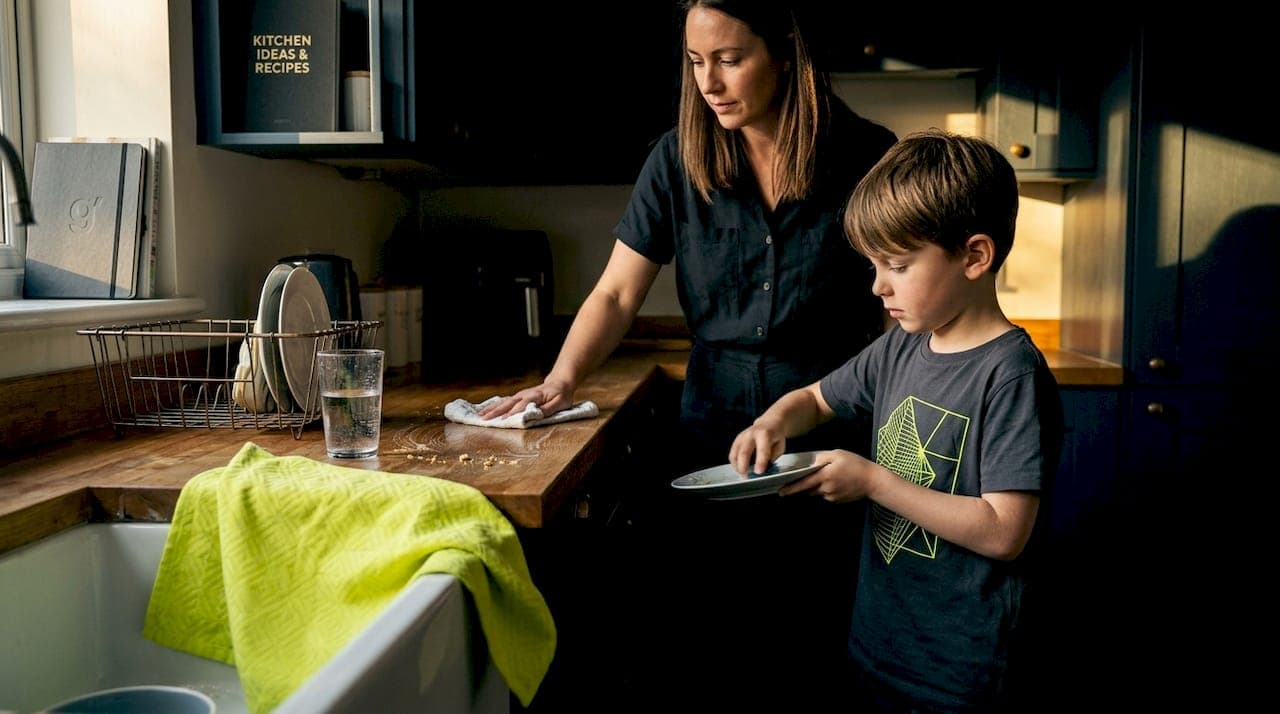
Most people assume that once a surface looks clean, it is clean. That assumption is where the trouble starts. Understanding what is residue-free cleaning method means recognising that many conventional products leave behind an invisible film of surfactants, disinfectants, or other agents long after you have wiped and walked away. These traces are not always harmful in small amounts, but they accumulate, affect indoor air quality, and matter significantly for households with children, pets, or sensitivity to chemicals. This article explains what residue-free cleaning truly involves, how to verify it, and which techniques work best for environmentally conscious homes.
Table of Contents
- Key takeaways
- What the residue-free cleaning method actually means
- Detecting residues: why you cannot trust your eyes
- Residue-free techniques and products for home use
- How to clean without leaving residue: a practical guide
- Common myths and real challenges
- My take on what most people miss
- Grimescene's approach to residue-free cleaning
- Common questions
Key takeaways
| Point | Details |
|---|---|
| Residue-free means no trace left | Cleaning agents should leave no physical film or chemical trace on a surface after the process is complete. |
| Visual inspection is not enough | Residues from cleaning products are often invisible; measurement tools like conductivity testing are needed to confirm absence. |
| Eco products still need rinsing | Many eco-friendly and natural cleaners still leave residue if not rinsed thoroughly and correctly. |
| Verification matters at home too | Simple onsite checks and technique adjustments can make household cleaning genuinely residue-free, not just visually clean. |
| Method, not just product, determines outcome | Choosing the right product is only part of the picture; contact time, rinsing, and drying all determine the final result. |
What the residue-free cleaning method actually means
The phrase "residue-free cleaning method" describes an outcome standard, not a single product or brand category. In technical terms, residue-free cleaning removes contamination and leaves no physical film or trace after application. The industry term you will encounter in professional and regulated contexts is cleaning validation, which is the process of proving that residues have been removed to an acceptable level.
At home, the concept translates more simply. When you spray a surface cleaner and wipe it off, the question is whether any of the cleaner itself remains on the surface. Many standard cleaning products contain surfactants, fragrances, and preservatives that do not fully evaporate. Without proper rinsing, these compounds stay on the countertop, the bath surround, or the floor where your children sit.
Here is what distinguishes residue-free cleaning from routine cleaning:
- Routine cleaning targets visible dirt and grime, often using products with non-volatile components that remain after application.
- Residue-free cleaning targets both the grime and the cleaning agent itself, treating the product as a temporary tool, not a permanent addition to the surface.
- High-reliability industries such as medical device manufacturing use specialised, high-volatility chemistries and vapour recovery systems to prevent any trace being left behind.
- Home applications rely on correct product selection, dilution, contact time, rinsing, and drying to achieve the same standard at a practical level.
The distinction matters because what is chemical-free cleaning in common marketing language is rarely truly chemical-free. Water is a chemical. The more accurate claim is that a method leaves no harmful or unintended residue after the cleaning cycle is complete.
Detecting residues: why you cannot trust your eyes
The uncomfortable reality is that residues from cleaning agents often come from the cleaning product itself rather than the original dirt, and they are invisible to the naked eye. A surface can look spotless under normal light and still carry a measurable film of detergent or disinfectant.
| Detection method | Setting | What it measures | Sensitivity |
|---|---|---|---|
| Conductivity wipe testing | On-site, home or professional | Ionic residues from detergents and disinfectants | Moderate to high |
| UV fluorescence inspection | On-site, professional | Organic residues, biological matter | Moderate |
| Analytical lab testing | Laboratory | Specific compounds at trace levels | Very high |
| Visual inspection | Anywhere | Surface appearance only | Low |
Conductivity measurement using wetted wipes and a conductivity metre provides quick, practical feedback on residue presence in real time. It works because ionic cleaning agents change the electrical conductivity of a water-dampened wipe. If the reading is elevated above baseline, residue is present.
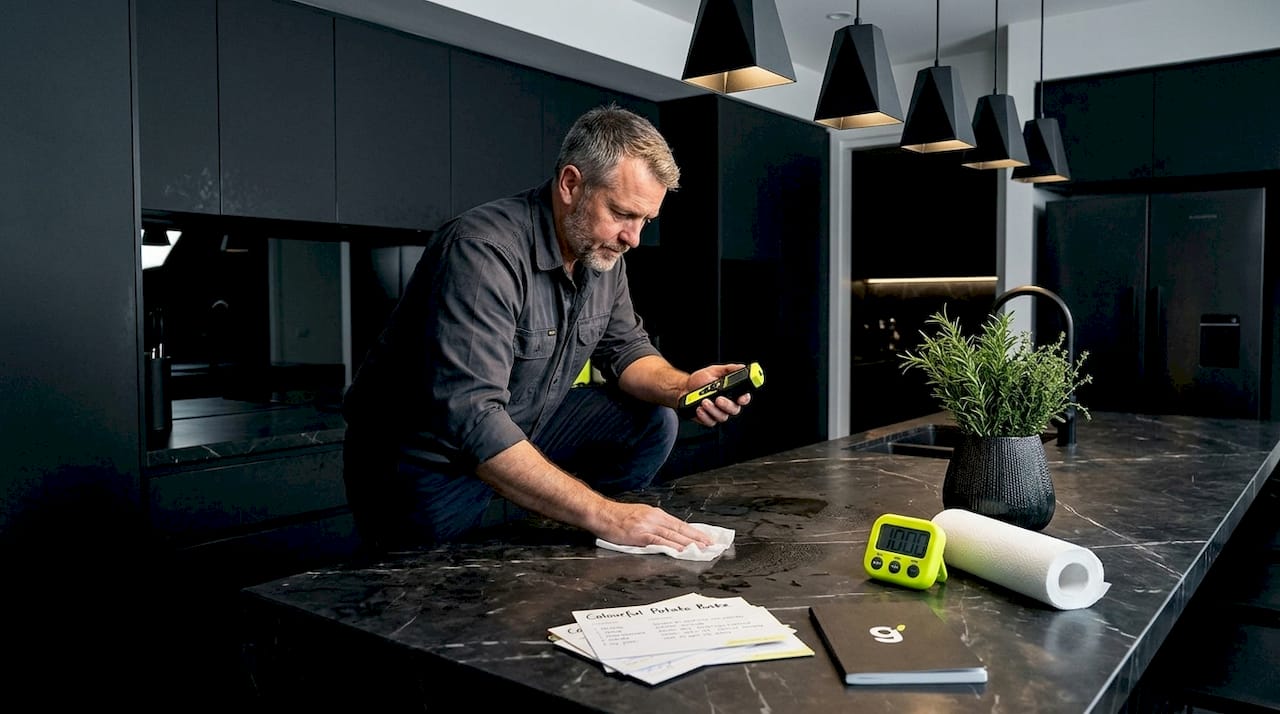
In regulated contexts such as medical cleaning, validated cleaning controls residue variability with measurement methods chosen to match the residue type and the sensitivity required. The same principle applies at home, even if the tools are simpler.
Pro Tip: Run a damp white cloth over a "clean" kitchen bench 10 minutes after you have finished cleaning. If the cloth picks up colour or leaves a slightly sticky texture, your product is leaving residue. This simple check is a practical analogue to conductivity wipe testing.
For families concerned about chemical exposure, verifying absence of residue, rather than simply assuming cleanliness, is the step that closes the gap between marketing claims and reality.
Residue-free techniques and products for home use
The best residue-free products and techniques share one characteristic: they are engineered so that whatever is applied to a surface either evaporates fully, rinses completely, or never forms a non-volatile film in the first place.
Several proven approaches work well in a household setting:
- Steam cleaning uses superheated water vapour to lift and dissolve grime. Because no chemical agent is introduced, there is nothing to leave behind once the steam condenses and dries.
- Activated or electrolysed water (sometimes called EOW or ECA water) is plain water treated with electrolysis to produce a mild sanitising solution. It breaks down to water after use, leaving no chemical residue.
- No-rinse cleaning systems are engineered specifically around this problem. One example is a particle removal system designed to lower vapour pressure while containing no PFAS or major VOCs, allowing simultaneous cleaning and rinsing without leaving surfactant residue.
- Self-cleaning fabric coatings represent a remarkable recent development. Research shows a detergent-free fabric coating reduces water, electricity, and time use by approximately 82%, enabling laundry to be cleaned with a simple water rinse and no detergent residue at all, maintaining performance for over 100 wash cycles.
- Natural cleaning agents such as diluted white vinegar or bicarbonate of soda rinse away cleanly and leave minimal residue when used correctly. You can explore a broader range of options in this guide to natural cleaning agents for home use.
Comparing the most common approaches helps clarify the trade-offs:
| Method | Residue risk | Environmental impact | Practical for families? |
|---|---|---|---|
| Conventional chemical spray | Moderate to high | Higher VOC and surfactant load | Yes, but requires thorough rinsing |
| Steam cleaning | Very low | Minimal, no chemicals | Yes |
| Eco-certified liquid cleaners | Low to moderate | Lower, but requires rinsing | Yes |
| Electrolysed water | Very low | Minimal | Yes, with correct equipment |
| No-rinse engineered systems | Low (product-dependent) | Variable | Less common for home use |
Pro Tip: When selecting eco-friendly liquid cleaners, look for products with a short ingredient list and no "fragrance" or "perfume" listed. Synthetic fragrance compounds are among the most common residue-leaving ingredients in otherwise well-formulated products.
Building these methods into a sustainable cleaning routine reduces chemical load in your home and in the waterways that receive your wastewater.
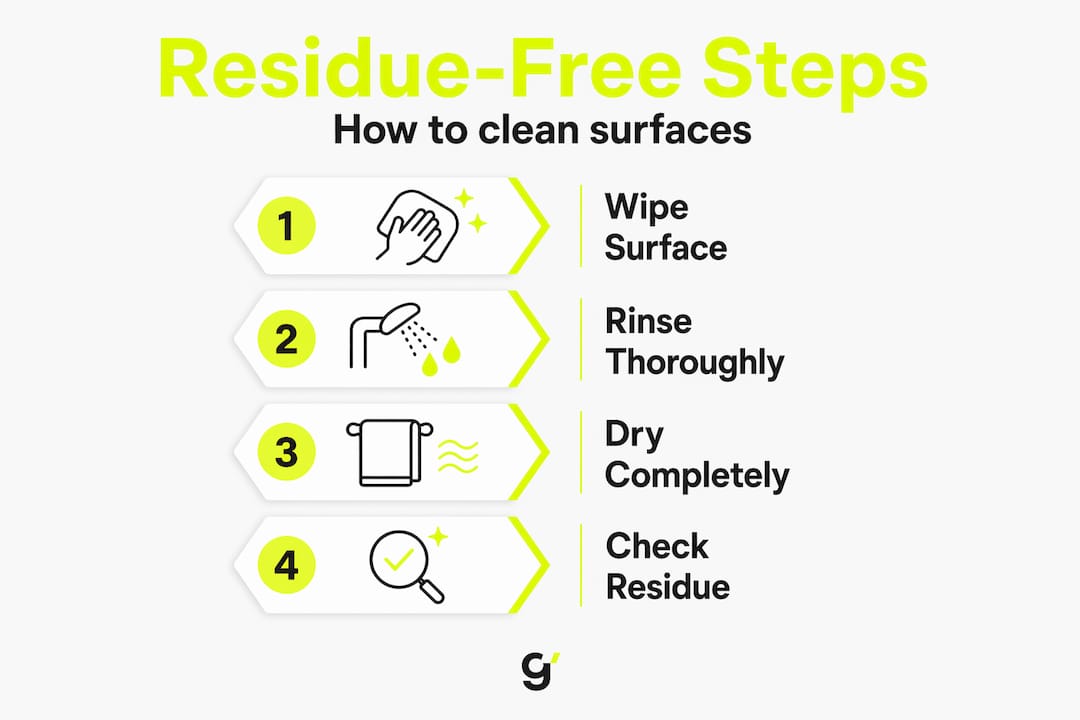
How to clean without leaving residue: a practical guide
Applying residue-free cleaning in a real home takes a repeatable process, not just a better product. The steps below work across kitchens, bathrooms, and laundry areas.
-
Select the right product for the surface and soil type. A heavy-duty degreaser on a lightly soiled bench will leave far more residue than necessary. Match the cleaning agent to the actual task. For grease in the kitchen, targeted solutions for removing grease without harsh chemicals are a good starting point.
-
Dilute correctly. Concentrated products used at full strength leave more residue, not less. Follow the manufacturer's dilution guidelines precisely.
-
Apply and allow the correct contact time. Products need adequate contact time to do their work. Wiping immediately after application means the product has not fully functioned, encouraging you to use more next time.
-
Rinse thoroughly. This is the step most households skip. For benchtops and tiles, wipe with a clean, damp cloth after the cleaning pass. For floors, follow a wash with a clean-water mop pass. For laundry, run an extra rinse cycle if you have used a concentrated detergent.
-
Dry the surface. Residues concentrate as water evaporates. Removing water promptly, with a clean dry cloth or allowing airflow, prevents the remaining mineral and chemical trace from drying as a film.
-
Verify the result. Use a damp white cloth as described earlier, or simply feel the surface. A clean, residue-free surface should feel smooth and dry, not slightly waxy or tacky.
-
Repeat consistently. Residue build-up is cumulative. A single good cleaning session can be undone by weeks of incomplete rinsing. Keeping up with regular maintenance between deep cleans prevents the problem from compounding.
Getting the kitchen right is often the most impactful change for families, since food preparation surfaces have the highest standard for residue absence. Practical guidance on eco-friendly kitchen cleaning can complement the steps above.
Common myths and real challenges
One of the most persistent myths is that residue-free cleaning and chemical-free cleaning are the same thing. They are not. Chemical-free cleaning technologies reduce harmful residues and VOC exposure, but they still require validated protocols and trained application to deliver on that promise. The method is a system, not just a product swap.
"Residue-free should be understood as an outcome category, not a product claim. Achieving it requires verification steps beyond visual inspection to confirm that no harmful residues remain." — adapted from conductivity measurement research findings
Another common misunderstanding is that eco-friendly or "natural" products automatically leave no residue. This is not the case. Soap nuts, castile soap, and some plant-derived surfactants all leave residue on surfaces if not rinsed properly. The environmental profile of a product and its residue behaviour are separate characteristics.
Surface geometry also matters more than most people realise. Residue removal strategies must account for whether residues are polar, partially soluble, or physically trapped in a surface texture. A tile grout line, a matte finish benchtop, and a glass splashback all require different rinsing approaches to achieve the same residue-free outcome.
The trade-off between convenience and residue outcome is real. Spray-and-leave products are convenient by design, but convenience is often achieved by leaving a light film of active ingredient behind. Knowing that trade-off exists lets you make deliberate choices rather than assumptions.
My take on what most people miss
I have seen a lot of cleaning products come and go, and the pattern is consistent. People invest in a better product and then apply it exactly the same way they applied the old one. The rinsing step gets skipped. The contact time gets ignored. The verification never happens. And then the "residue-free" product gets blamed for not working.
What I have come to believe, from watching how professional cleaning validation works in high-stakes settings, is that the rinsing and drying steps are where residue-free cleaning is actually won or lost. The product is maybe 40% of the outcome. Technique is the rest.
I also think the marketing language around "natural" and "eco" cleaning has genuinely confused people. A product being plant-based does not make it residue-free. I have tested surfaces after using plant-based cleaners without proper rinsing and found the same tacky film I would expect from a conventional spray. The chemistry is friendlier to the environment, but the application discipline still matters.
My honest advice: pick a simpler product, rinse properly, and verify the result once in a while. That combination will do more for your family's health and your surfaces than any premium product used carelessly.
— Lead
Grimescene's approach to residue-free cleaning

Understanding the method is one thing. Having it delivered consistently, especially in a home that has seen construction work, heavy use, or short-term rental turnover, is another matter entirely. Grimescene is built specifically for situations where surface-level cleaning is not enough. Their non-toxic agents are formulated to neutralise buildup rather than mask it, and every service is designed with residue control as a core outcome, not an afterthought. For property owners and families who want the confidence of a professionally verified clean, Grimescene's tactical cleaning services cover both routine maintenance and deep decontamination. Short-term rental hosts can also take advantage of the Scene Reset protocol, which delivers the kind of thorough, residue-free turnover that protects guest ratings and keeps properties in top condition.
Common questions
What does residue-free cleaning mean?
Residue-free cleaning means that after the cleaning process is complete, no physical film, chemical trace, or cleaning agent remains on the surface. It is an outcome standard, not a product category.
Is residue-free cleaning the same as chemical-free cleaning?
Not exactly. Chemical-free cleaning aims to avoid synthetic chemicals entirely, while residue-free cleaning focuses on ensuring no cleaning agent is left behind, regardless of its origin. A natural product can still leave residue if not rinsed correctly.
How can I tell if my cleaning is leaving residue?
Wipe a "clean" surface with a damp white cloth after it has dried. If the cloth picks up colour, film, or a waxy texture, residue is present. Conductivity wipe testing offers a more precise measurement for those who want a reliable, repeatable check.
Are eco-friendly products automatically residue-free?
No. Many eco-certified and plant-based cleaners contain surfactants that leave residue without thorough rinsing. The environmental credentials of a product are separate from its residue behaviour in practice.
Why does residue-free cleaning matter for families?
Residue from cleaning agents can accumulate on surfaces where children and pets have direct contact, affecting skin and indoor air quality over time. Removing those traces reduces unnecessary chemical exposure in the home.