
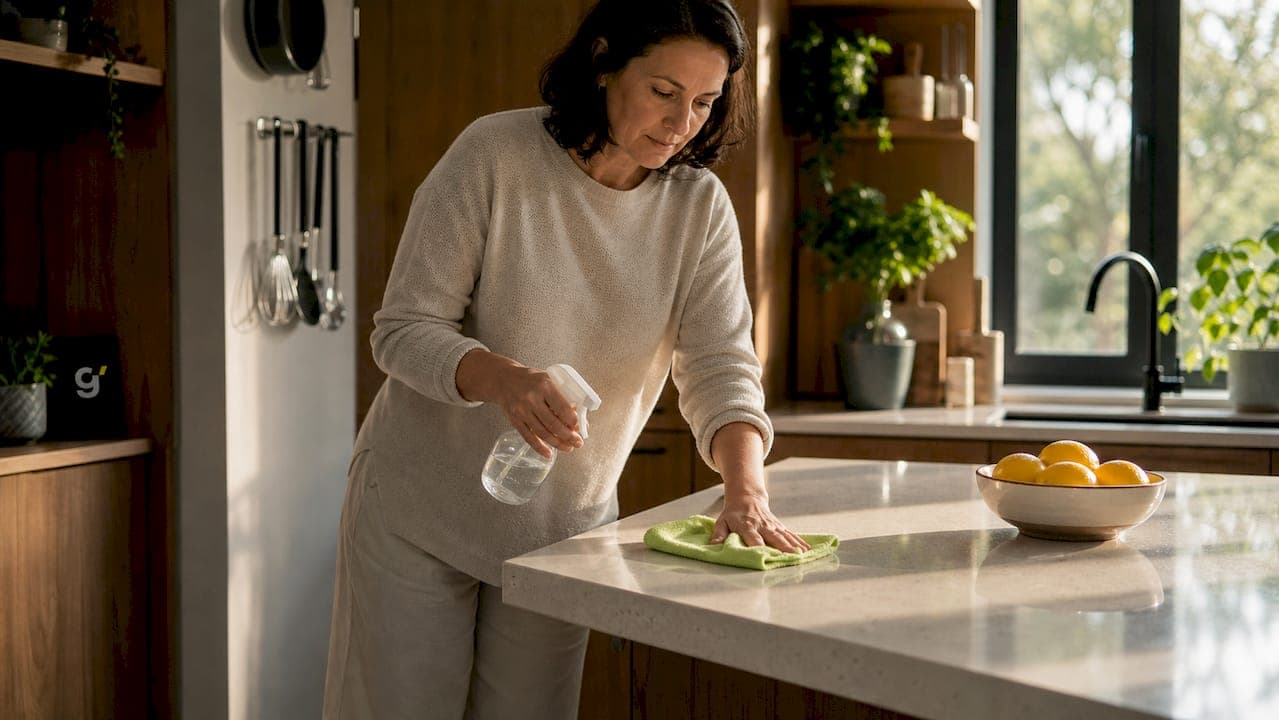
A non-abrasive cleaner is any cleaning product formulated to remove dirt, grease, and grime through chemical action rather than physical scrubbing or gritty materials. These products, sometimes called gentle or surface-safe cleaners in the industry, are the go-to choice for households with delicate surfaces, pets, babies, or allergy sufferers. Understanding what is non-abrasive cleaner explained properly means looking beyond the label and into the formulation itself. Products like Prosoco's Enviro Klean Klean 'N Release and EPA Safer Choice certified all-purpose degreasers represent the category well. This article covers how they work, why they matter, and how to choose the right one for your home.
What is a non-abrasive cleaner? the core definition
A non-abrasive cleaner is defined as a product that cleans without causing abrasion, meaning it does not scratch, etch, or physically wear down the surface being cleaned. The term contrasts directly with abrasive cleaners, which rely on gritty powders, scouring pads, or rough scrubbing action to dislodge soil. Non-abrasive products instead use chemistry to do the heavy lifting.
The distinction matters most on sensitive materials. Polished metals, acrylic splashbacks, stone benchtops, and coated plastics are all vulnerable to the micro-scratches that abrasive products leave behind. Abrasive cleaning damage is often irreversible, requiring refinishing or full replacement. Non-abrasive methods sidestep that risk entirely.
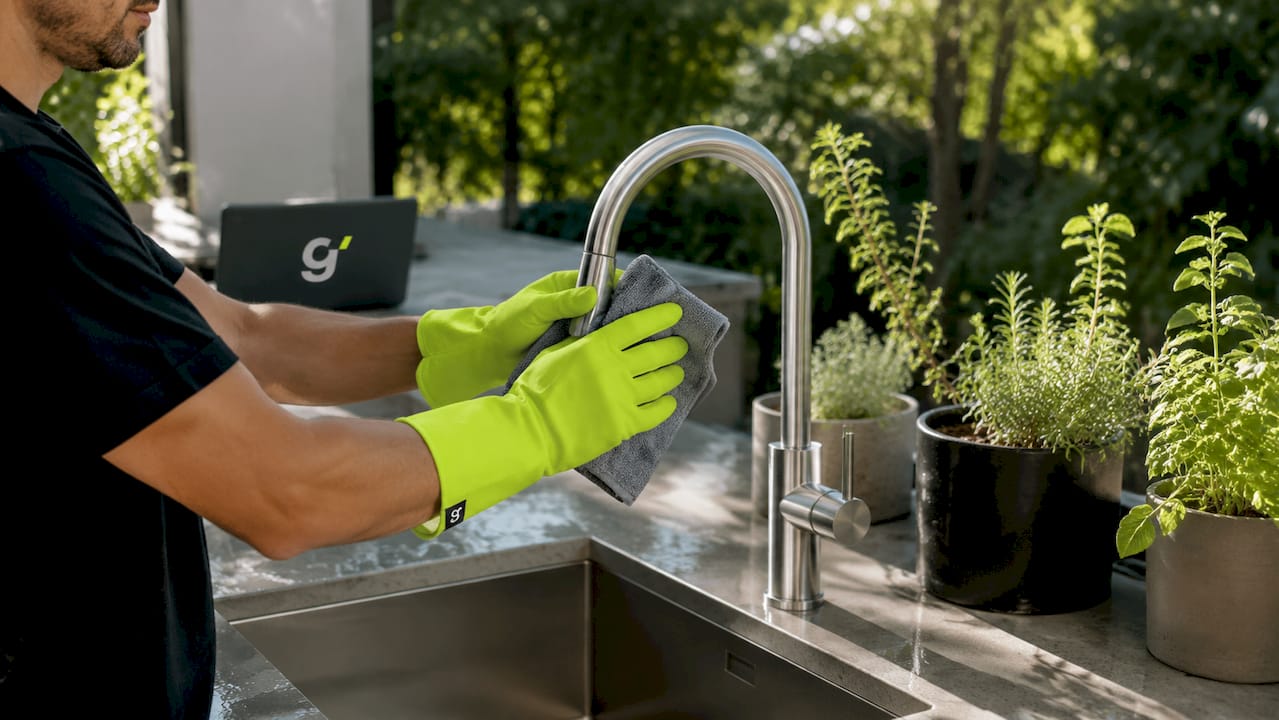
The industry term you will see on professional product sheets is "non-mechanical cleaning" or "chemical soil removal." Both phrases describe the same principle: chemical action replaces mechanical force to lift contaminants without touching the surface structure beneath. For families managing a busy home, that distinction translates directly into surfaces that stay looking new for longer.
How do non-abrasive cleaners work chemically?
Non-abrasive cleaners work by deploying surfactants, pH-balanced formulas, and emulsifiers to break the bond between soil and the surface. There is no grit involved. The chemistry does what scrubbing would otherwise do, but without the physical contact that causes damage.
Here is what happens at the molecular level when you apply a quality non-abrasive cleaner:
- Surfactants reduce surface tension. They allow the cleaning solution to spread across and penetrate soiled areas rather than beading up on top.
- Micelle formation encapsulates grease. Surfactant molecules surround oil and grease particles, trapping them so they can be rinsed away cleanly. Surfactants form micelles that lift oils without any scrubbing required.
- Neutral pH protects coatings. Neutral-pH cleaners in the pH 6.5–7.5 range have been shown to achieve 94% soil removal with no dulling after months of regular use. That result is significant because it proves chemical cleaning can match abrasive performance without the surface cost.
- Emulsifiers handle mixed soils. Many household messes combine water-based and oil-based residues. Emulsifiers in non-abrasive formulas handle both in a single pass.
- Low-residue formulas rinse clean. Residue left behind by poorly formulated products causes streaking and haze, which is a separate problem from abrasion but equally frustrating.
One expert framing worth remembering is that effective non-abrasive cleaning targets the bond, not the surface. The cleaner attacks what holds the grime in place, not the material underneath.
Pro Tip: For homes with pets or allergy sufferers, choose surfactant-based cleaners that are fragrance-free and carry a recognised certification like EPA Safer Choice. A product can be non-abrasive in action but still chemically irritating if it contains harsh fragrances or disinfectants.
Cleaning and disinfecting are also two separate steps. Cleaning before disinfecting with surfactants is more effective for microbial removal than applying a disinfectant to a dirty surface. Non-abrasive cleaners handle the first step exceptionally well.
What are the benefits of non-abrasive cleaners?
The benefits of non-abrasive cleaners fall into three clear categories: surface preservation, health safety, and environmental impact. Each one matters to families making everyday cleaning decisions.
Surface preservation
Sensitive finishes on stainless steel, glass, natural stone, and coated plastics stay intact when you clean without abrasion. Scratches from abrasive products are not just cosmetic. They create micro-grooves where bacteria and grime accumulate, making future cleaning harder. Non-abrasive methods break that cycle.
Health and safety for sensitive households
Families with babies, pets, or allergy sufferers benefit from milder formulations. Products that are fragrance-free, phosphate-free, and free of volatile organic compounds (VOCs) reduce airborne irritants during and after cleaning. Safer cleaning for babies and pets requires reducing harsh residues and choosing products with clear ingredient disclosure. That standard is easier to meet with non-abrasive, low-residue formulas.
Environmental impact
Biodegradable surfactants break down after use rather than persisting in waterways. Phosphate-free formulas prevent algal blooms in local waterways. Concentrated formats reduce plastic packaging waste. These are real, measurable benefits, not just marketing language. Learning how eco cleaning protects home finishes shows that safer chemistry and effective cleaning are not competing goals.
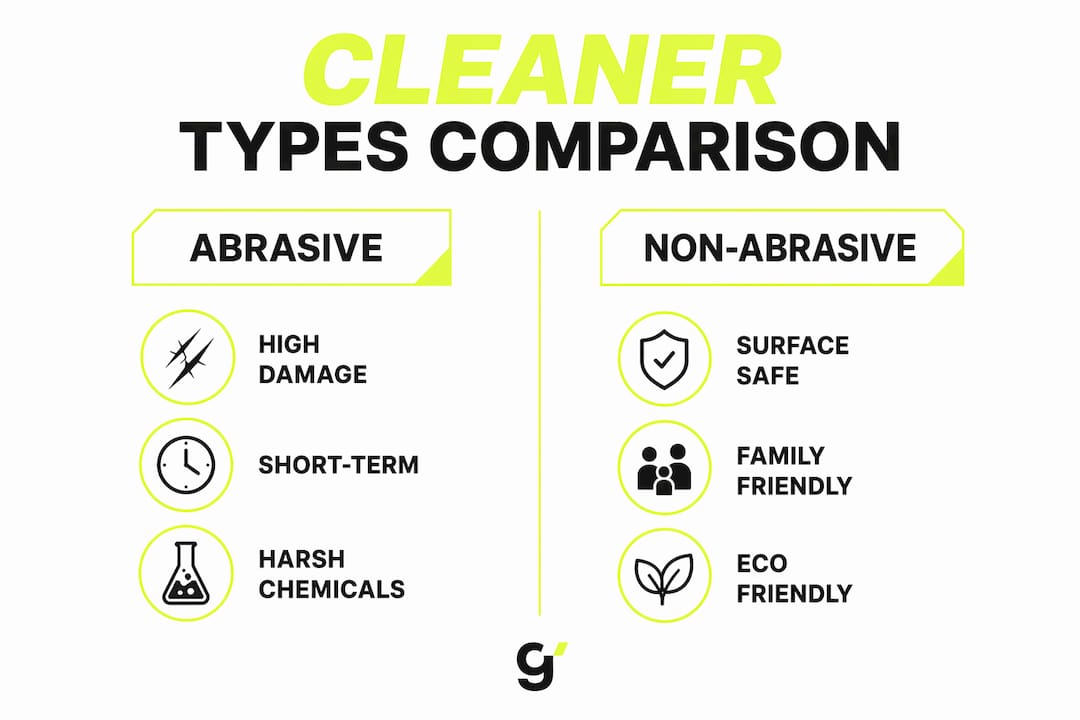
| Factor | Abrasive Cleaners | Non-Abrasive Cleaners |
|---|---|---|
| Surface damage risk | High, scratches and dulling | Low, no physical abrasion |
| Chemical residues | Variable, often high | Low with quality formulas |
| Suitability for pets and babies | Poor, often harsh fragrances | Good, fragrance-free options available |
| Environmental impact | Often phosphate-heavy | Biodegradable options widely available |
| Effectiveness on grease | Moderate, relies on scrubbing | High, surfactant-based encapsulation |
The table makes the trade-off clear. Abrasive cleaners trade surface integrity for scrubbing power. Non-abrasive cleaners deliver comparable or better results without that cost.
Examples of non-abrasive cleaners and how to identify them
Knowing what to look for on a label is the practical skill that makes all the difference. Non-abrasive cleaners span several product types, and not all of them are marketed with that term front and centre.
Common examples and product types include:
- Neutral-pH all-purpose cleaners. These are the most versatile option for daily home use. Look for a stated pH of 6.5–7.5 on the label or product data sheet.
- EPA Safer Choice certified products. The EPA Safer Choice certification signals that a product meets strict standards for ingredient safety, including fragrance-free and phosphate-free formulations. Prosoco's Klean 'N Release is one well-known example in this category.
- Essential oil-based cleaners. Plant-derived surfactants combined with essential oils offer a low-residue clean. Check that the essential oil concentration is low enough not to irritate pets, as some oils are toxic to cats and dogs.
- Enzyme-based cleaners. Enzymes break down organic matter like food, urine, and grease at the molecular level. They are particularly effective for pet households.
- DIY options. A solution of warm water and a small amount of castile soap (such as Dr. Bronner's) functions as a basic non-abrasive cleaner for most hard surfaces.
When reading labels, look for these markers of a genuinely non-abrasive, safe formula:
- No listed abrasive agents (silica, calcium carbonate, pumice)
- pH stated between 6 and 8
- Fragrance-free or naturally scented with disclosed ingredients
- Phosphate-free and biodegradable surfactants
- A recognised certification seal (EPA Safer Choice, Good Environmental Choice Australia)
Pro Tip: Hidden abrasion does not always come from the cleaner itself. Using a rough scouring pad or stiff brush with an otherwise gentle product still causes micro-scratches. Pair your non-abrasive cleaner with a microfibre cloth or soft sponge for genuinely scratch-free results.
Checking types of natural cleaning agents for your home can help you match the right product type to each surface and cleaning task.
Non-abrasive cleaning methods: best practices at home
The right product paired with the wrong technique still produces poor results. Non-abrasive cleaning methods work best when you follow a consistent sequence and use the correct tools.
- Remove loose debris first. Wipe or sweep away dry soil before applying any cleaner. Applying liquid to dry grit can drag particles across the surface and cause the very scratching you are trying to avoid.
- Dilute concentrates correctly. Many non-abrasive cleaners are sold as concentrates. Follow the dilution ratio on the label precisely. Over-concentrated solution leaves residue; under-concentrated solution cleans poorly.
- Apply and dwell. Spray or wipe the cleaner onto the surface and allow it to sit for 30–60 seconds. This dwell time lets surfactants penetrate and emulsify soil before you wipe.
- Wipe top to bottom with a microfibre cloth. Professional cleaning techniques use microfibre cloths because they trap dirt particles within the fibres rather than pushing them across the surface. Work from top to bottom so loosened soil falls away from already-cleaned areas.
- Rinse if the label recommends it. Some formulas, particularly those used on food-contact surfaces, require a water rinse after cleaning. Skipping this step is the most common cause of streaking and haze.
- Clean before you disinfect. If a surface needs both cleaning and sanitising, always clean first. Disinfectants applied to soiled surfaces are far less effective because organic matter neutralises the active ingredient.
- Use one product across multiple surfaces where possible. A quality neutral-pH cleaner handles benchtops, appliance exteriors, bathroom tiles, and sealed floors. Reducing the number of products in your cleaning kit also reduces the risk of accidental chemical mixing.
Understanding why grime buildup damages home surfaces reinforces why consistent technique matters as much as product choice.
Key takeaways
Non-abrasive cleaners are the most effective choice for households that need thorough cleaning without sacrificing surface integrity or chemical safety.
| Point | Details |
|---|---|
| Definition is chemistry-based | Non-abrasive cleaners use surfactants and pH balance, not grit or scrubbing, to remove soil. |
| Neutral pH preserves finishes | Products in the pH 6.5–7.5 range achieve high soil removal with no dulling over time. |
| Non-abrasive does not mean non-toxic | Always verify fragrance-free and certified formulations for homes with pets and allergy sufferers. |
| Technique matters as much as product | Microfibre cloths, correct dilution, and a clean-before-disinfect sequence maximise results. |
| Certifications guide safe choices | EPA Safer Choice and Good Environmental Choice Australia seals confirm both safety and performance. |
Why i think most households are still getting this wrong
After years of working with cleaning chemistry and seeing the results up close, the pattern I notice most is this: families switch to "gentle" products but keep using the same rough tools and skipping the rinse step. The product label says non-abrasive, but the technique is still abrasive. The surface still dulls. The family concludes the gentle cleaner does not work, and they go back to the harsh stuff.
The second mistake I see constantly is confusing non-abrasive with non-toxic. A cleaner can be completely free of grit and still contain synthetic fragrances, quaternary ammonium compounds, or other ingredients that irritate airways and trigger allergies. For a household with a dog, a toddler, or someone managing asthma, that distinction is not minor. It is the whole point.
Marketing language makes this harder. Words like "natural," "gentle," and "eco" appear on products that still contain irritants. The only reliable shortcut is a certification seal from a body with published ingredient standards, such as EPA Safer Choice or Good Environmental Choice Australia. Everything else requires reading the full ingredient list.
The good news is that genuinely safe, effective non-abrasive cleaning is not complicated once you understand what you are looking for. The chemistry is on your side. You just need to pair it with the right tools and the right sequence.
— Lead
How Grimescene cleans thoroughly without damaging your home
Grimescene uses non-abrasive, non-toxic cleaning methods across every service it offers, from routine residential cleans to post-construction decontamination and short-term rental turnovers. Every product in the Grimescene kit is selected for surface compatibility, low residue, and safety around families and pets.
The Scene Reset protocol for short-term rental properties is a strong example of non-abrasive methods at scale. It delivers a deep, residue-free clean that preserves surfaces, protects host ratings, and keeps guests safe. If you need a professional clean that does not compromise your surfaces or your household's health, Grimescene's cleaning services are built exactly for that. For rental property owners, the short-term rental service handles high-turnover cleans with the same surface-safe standards.
FAQ
What is a non-abrasive cleaner in simple terms?
A non-abrasive cleaner is a product that removes dirt and grease using chemical action rather than scrubbing or gritty materials, so it does not scratch or dull surfaces. It relies on surfactants and balanced pH to lift soil without physical contact damage.
Are non-abrasive cleaners effective on tough grease and grime?
Non-abrasive cleaners are highly effective on grease because surfactants encapsulate oil particles and lift them away without scrubbing. Neutral-pH formulas have demonstrated 94% soil removal with no surface dulling over extended use.
How do i know if a cleaner is truly non-abrasive?
Check the label for the absence of abrasive agents such as silica, pumice, or calcium carbonate, and look for a stated pH between 6 and 8. Certification seals like EPA Safer Choice confirm both the formulation safety and the absence of harsh mechanical ingredients.
Is a non-abrasive cleaner safe for homes with pets and babies?
A non-abrasive cleaner is safer than an abrasive one, but you also need to verify the formulation is fragrance-free and free of harsh disinfectants. Products that are both non-abrasive and EPA Safer Choice certified, such as Prosoco's Klean 'N Release, meet both the mechanical and chemical safety standards.
What is the difference between cleaning and disinfecting with non-abrasive products?
Cleaning removes physical soil and grease using surfactants, while disinfecting kills microbes using active biocidal ingredients. Always clean first with a non-abrasive product before applying a disinfectant, as organic matter on a dirty surface significantly reduces disinfectant effectiveness.