
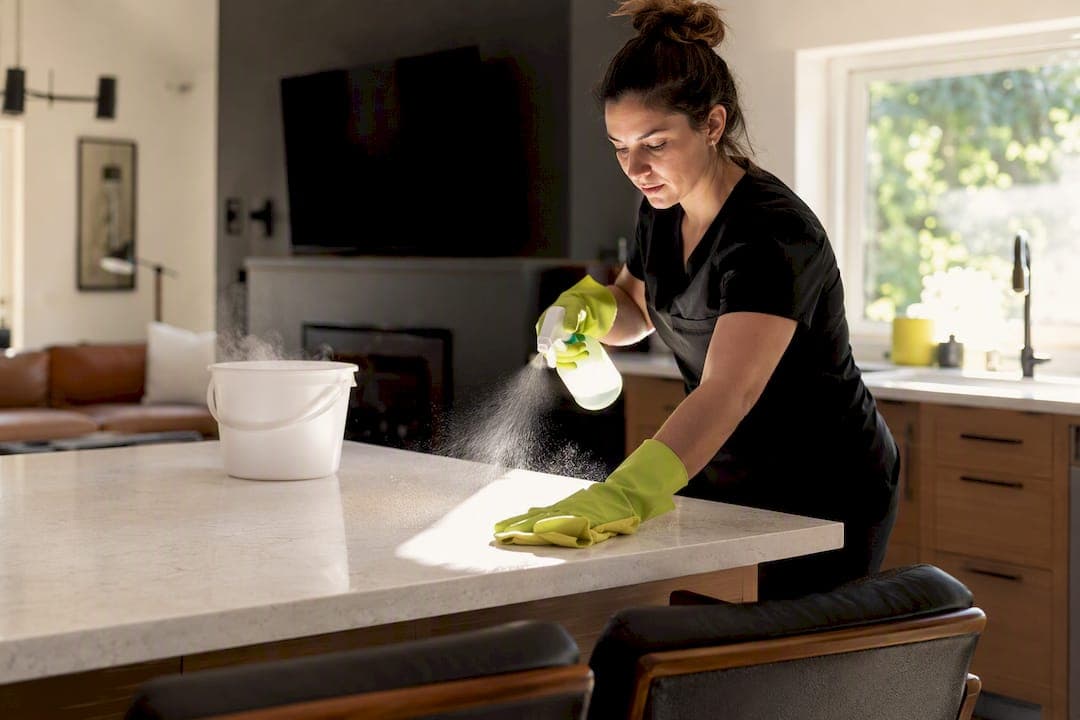
Hire a specialist turnover cleaning provider, not a general house cleaner, and definitely don't try to run every changeover yourself once you're managing more than one listing. Cleanliness carries more weight than almost any other review category, and a missed turn doesn't just cost you one booking, it costs you the guests who read the review afterwards. Documented SOPs and post-clean inspections lifted average cleanliness scores from 4.66 to 4.83 in Lodgify's 2026 turnover cleaning analysis, which is the difference between a listing that ranks and one that quietly slides down the search results.
The fastest way to protect your cleanliness score is to hand the job to a provider who can prove the clean happened, not just promise it happened.
Before you sign anyone up, check for four things: calendar sync or iCal integration so cleans get scheduled automatically, photo verification on every job, a written room-by-room checklist rather than a verbal understanding, and police checks plus insurance on whoever's holding your keys.
Key Takeaways
Professional turnover cleaning protects cleanliness scores through documented SOPs, photo verification and automated scheduling, not through hope and a good cleaner's phone number.
| Point | Details |
|---|---|
| Cleanliness drives bookings | Documented SOPs and inspections lifted scores from 4.66 to 4.83 in Lodgify's analysis. |
| Know the checklist scope | Cover bedrooms, bathrooms, kitchen and living areas room by room, every single turn. |
| Automate the handoff | Calendar sync removes the manual scheduling errors that cause missed turns. |
| Budget realistically | Standard turnovers run roughly US$150 to US$300 and 1 to 3 hours depending on property size. |
| Choose an accountable provider | Grime Scene Services pairs photo-verified turnovers with vetted, insured crews and linen options. |
Table of Contents
- What does an Airbnb turnover clean actually include?
- How do professional turnover cleaning services actually work?
- How do you choose the right turnover cleaning partner?
- What does turnover cleaning cost and how long does it take?
- What operational habits separate reliable hosts from the rest?
- How Grime Scene Services handles your turnovers
- Frequently asked questions
- Sources
What does an Airbnb turnover clean actually include?
A proper turnover clean resets the property to the exact standard the last guest saw on arrival, room by room, every single time.
Bedrooms: strip and launder all bedding, check mattresses and pillows for stains or damage, remake beds to a staged standard (think hotel corners, not just "made"), and check under furniture for anything a departing guest left behind.
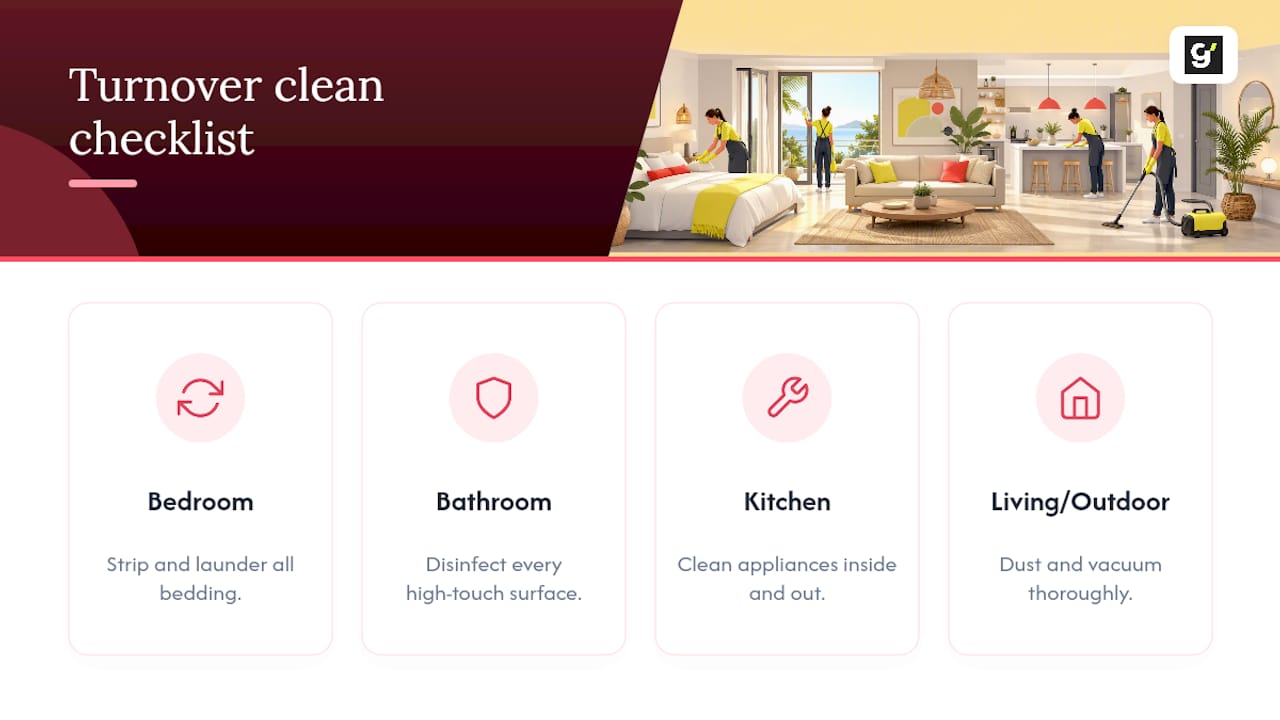
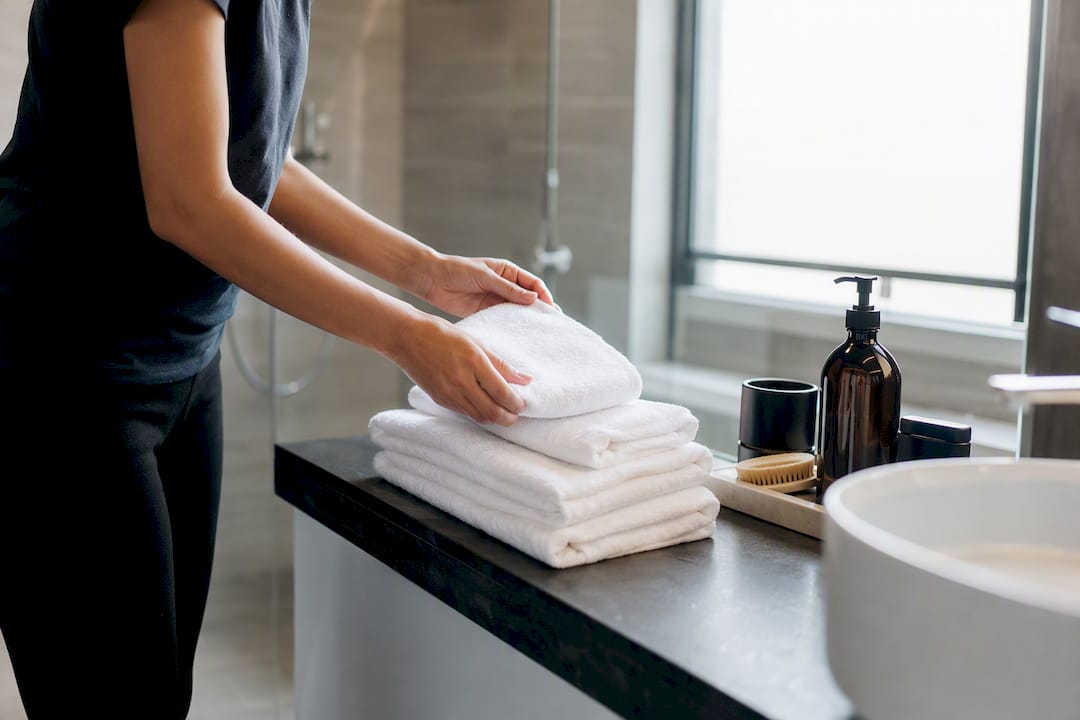
Bathrooms: disinfect every high-touch surface, including taps and door handles, restock toilet paper and toiletries, check grout and drains for buildup, and fold towels to a consistent presentation. Guest expectations for bathroom staging are unforgiving. A hair in the shower is the difference between a five-star review and a paragraph complaint.
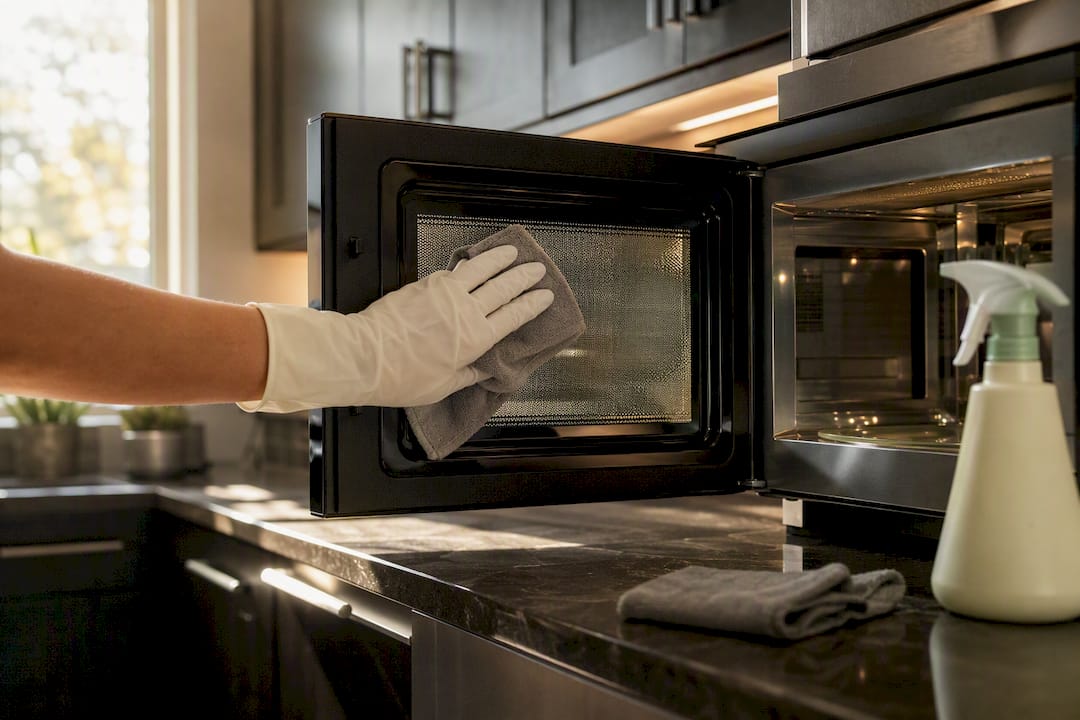
Kitchen: clean appliances inside and out (the microwave interior is one of the most commonly missed spots in turnover cleans), wipe down counters and cabinet fronts, run and empty the dishwasher, and restock basics like dish soap and coffee.
Living and outdoor areas: dust and vacuum thoroughly, wipe remotes and light switches (another spot guests notice and cleaners routinely skip), and clear any litter from balconies or outdoor furniture.
Linen can run on-site, through an off-site laundry service, or via a linen-swap system with minimum par levels so you're never caught short between bookings.
Pro Tip: A turnover clean and a deep clean are not the same job. Turnovers happen after every stay. Deep cleans, covering grout, appliance interiors and upholstery, belong on a seasonal maintenance schedule every three to six months, per Spotless's operations guide.
How do professional turnover cleaning services actually work?
The good providers run a tight loop from booking to report, and understanding that loop is how you judge whether a provider is set up to scale with your portfolio or just winging it.
- Your booking calendar syncs via iCal or a direct integration, and the checkout triggers a work order automatically, no phone calls required.
- The system assigns a cleaner and notifies them with access details, parking instructions and any host-specific notes attached to that property's card.
- On-site, the crew works top to bottom and dry to wet, dusting before wiping, and finishing floors last so nobody tracks across a wet mop job.
- Laundry runs in parallel with cleaning wherever possible to cut total turnaround time.
- Before sign-off, the cleaner completes a photo-verified checklist and files a timestamped report you can review remotely.
Access logistics matter more than most hosts expect. Smart locks and lockboxes need backup plans, because a dead battery at 11am with a 3pm check-in is a real problem, not a hypothetical one.
- Calendar sync (via tools like Hauzed) removes the manual rebooking errors that cause missed turns.
- Photo verification and final inspection create the paper trail you need if a guest disputes cleanliness after the fact.
- Add-ons, linen programmes, restocking, same-day turns, usually carry a premium, and that premium is often worth paying.
How do you choose the right turnover cleaning partner?
Vet providers the same way you'd vet a business partner, because that's effectively what they are.
What to look for:
- Calendar integration that removes manual scheduling
- A written, room-by-room SOP you can actually read, not a vague promise of "thorough cleaning"
- Photo verification attached to every job, not just on request
- Police checks and public liability insurance on every crew member who'll hold your keys
- Clear linen and laundry options with stated turnaround times
- A defined re-clean guarantee if a guest flags an issue
Questions to ask before you sign:
- Can I see a sample checklist and a sample photo report from a recent job?
- What's your re-clean policy if a guest complains within 24 hours of check-in?
- What's your cancellation and notice window, and are there fees either way?
- How do you vet and background-check your cleaners?
- What happens if something's broken or missing after a clean?
Red flags are usually obvious once you know to look. A provider who bills strictly hourly for turnovers rather than a flat per-clean rate hasn't standardised their process. No insurance, no photo proof, and reluctance to show you an actual SOP are all reasons to keep looking.
Pro Tip: Get the cancellation fee and minimum notice period in writing before your first booking. A provider that won't commit to terms on paper won't commit to showing up on a bad Tuesday either.
What does turnover cleaning cost and how long does it take?
Budget realistically and you'll avoid the two most common host mistakes: underpricing your cleaning fee, or panicking when a same-day turn costs more than a standard one.
A standard turnover typically runs 1 to 3 hours and costs roughly US$150 to US$300 in the US market, scaling up with bedroom count, bathroom count, and extras like a pool or hot tub. Short-term rental cleans generally sit 20 to 40% above equivalent residential cleaning rates, and that gap reflects real cost drivers, not padding, tight deadlines, linen handling, and the need for same-day availability.
What pushes a quote up:
- Extra bedrooms and bathrooms beyond a standard one-bed, one-bath layout
- Pools, hot tubs or extensive outdoor entertaining areas
- Full linen service versus a bring-your-own-linen arrangement
- Same-day or under-12-hour notice turns
- Post-party or heavy-recovery cleans after a rowdy stay
Higher cleanliness scores have historically tracked with measurable occupancy advantages, so treat your cleaning fee as an investment in bookings, not just a pass-through cost. Build your guest-facing cleaning fee to cover your actual provider cost plus a margin, and be transparent about what it includes. Hosts who hide the real cost inside the nightly rate tend to get more pricing complaints, not fewer.
What operational habits separate reliable hosts from the rest?
Automating the booking-to-clean handoff removes the single biggest cause of missed turns: a human forgetting to schedule a job. Photo-verified checklists built into the work order hold cleaners accountable and give you timestamped proof if a dispute ever comes up.
Every new cleaner should walk the property once with a documented property card covering your specific preferences and staged photos, before their first solo turn. Beyond that, run deep cleans every three to six months, use quiet booking windows for bigger maintenance jobs, and always have a named backup cleaner. Operators who close every turn with a photo-backed inspection report fewer cleanliness complaints across the board.
Why a specialist turnover service earns its fee
Hosts running more than one listing find the maths straightforward: a specialist service saves hours each week and cuts the odds of a cleanliness complaint landing on your review page. Self-managing can still work for a single small property on a tight budget, but only with a written checklist and a genuine backup plan for sick days.
How Grime Scene Services handles your turnovers
There are DIY checklists, general cleaners, and ops platforms that just schedule work, but none of them combine eco-friendly product standards with the full turnover workflow the way a purpose-built rental cleaning service does. Grime Scene Services runs its short-term rental turnover offering on calendar sync, photo-verified reports and vetted crews, with linen rental and consumable restocking handled so you're not chasing supplies between bookings.
Every crew member is police-checked and covered by insurance, and every clean uses non-toxic, bleach-free agents, which matters if you've got pet-friendly or family-focused listings where guests actually read the fine print. If a property needs more than a standard reset, after a rowdy party or a longer vacancy, the deep decontamination service covers that heavier job separately. Get in touch to request a quote or book a trial turnover and see the photo report for yourself.
Frequently asked questions
How often should I schedule a deep clean versus a turnover clean? Turnover cleans happen after every guest stay. Deep cleans, covering grout, appliance interiors and upholstery, belong on a three to six month cycle, separate from your regular turnover schedule.
What's the difference between a turnover clean and a standard house clean? A turnover clean resets a property to guest-ready standard on a strict deadline and includes linen changes and restocking.
What are the most commonly missed items in a turnover clean? Remotes, light switches, inside the microwave and the tops of ceiling fans are the usual culprits. A documented room-by-room checklist catches these consistently, where memory alone doesn't.
Should I ask for photo proof of every clean? Yes. Photo-verified checklists give you a timestamped record you can check remotely and use if a guest disputes cleanliness after check-in.
Can I still clean my own property and save money? It's workable for a single small listing on a tight budget, provided you use a written checklist and have a genuine backup cleaner lined up for the days you can't get there yourself.
Sources
For checklist templates and SOP benchmarks, keep Lodgify's cleaning checklist, Spotless's operations guide and Houfy's turnover checklist handy for ongoing reference.
- Vacation rental cleaning checklist 2026 — Lodgify
- Vacation Rental Turnover Cleaning: How to Nail Same-Day Turns (2026) — Hostfully
- Airbnb turnover cleaning playbook — Opora
- Vacation rental turnover cleaning checklist 2026 — Houfy
- Vacation rental cleaning checklist (updated July 2026) — AvantStay