
Ventilate first, contain the area, then follow a five-phase decontamination sequence. Doing it yourself (DIY) is reasonable for small isolated oil spots, light dust, or a routine seasonal clear-out with no biological risk. Call a professional the moment you see structural mould, sewage, suspected asbestos, a large fuel soak, or any persistent odour that survives basic cleaning.
Immediate first actions (do these before anything else):
- Open all doors and windows; position a box fan to push air outward, not inward
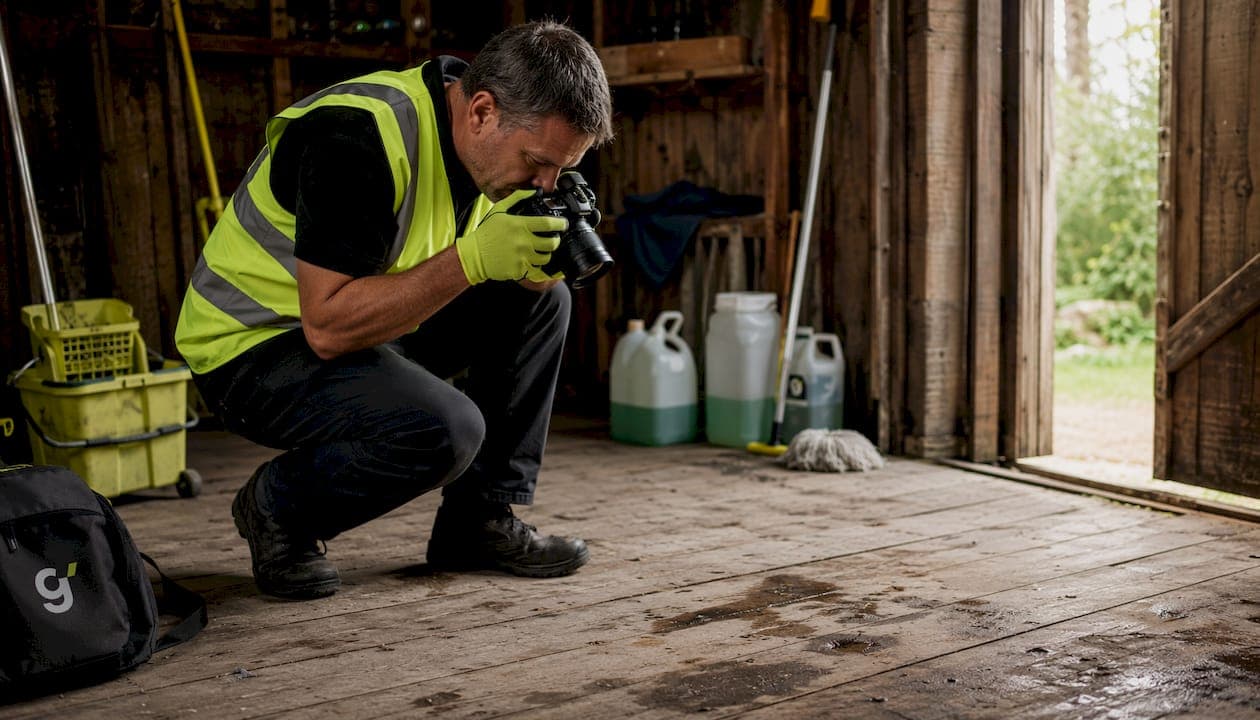
- Photograph every contamination zone before touching anything (essential for insurance claims and service quotes)
- Remove obvious liquid containers, fuel cans, and loose hazardous materials to a ventilated outdoor space
- Rope off or close the internal door to the house to prevent cross-contamination
Quick brief for hosts and property managers handing this to a contractor:
- Photos of each affected zone, labelled by contamination type
- Known spill history (fuel, oil, sewage, mould)
- Access details and any asbestos-register entries for the property
- Turnaround deadline and guest or tenant re-entry time
Pro Tip: Photograph every stain, discolouration, and odour source before moving a single item. Timestamps and GPS metadata on phone photos are accepted by most Australian insurers and give a professional service provider everything they need to scope the job accurately.
Table of Contents
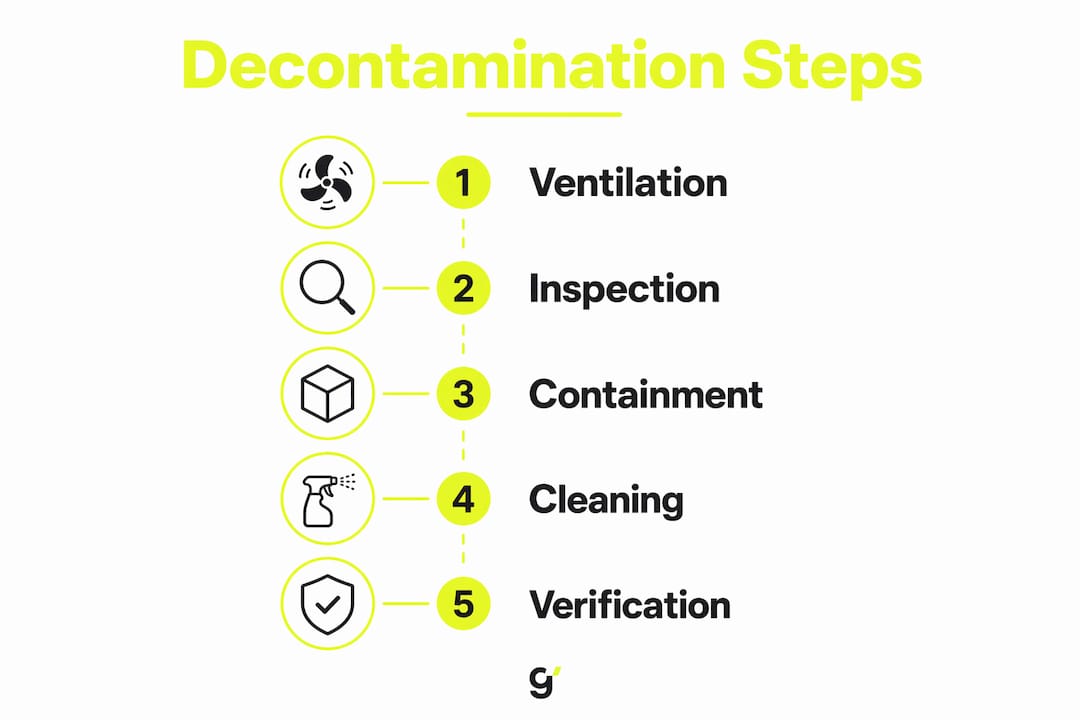
- Garage decontamination step by step: the five-phase process
- What Australian safety rules apply to garage decontamination?
- When should you call a professional instead of doing it yourself?
- What should a professional decontamination service include?
- How long does it take, and what drives the cost?
- How to stop recontamination after a deep clean
- Key takeaways
- What providers see that most clients miss
- Grimescene handles the jobs that can't wait
- Useful sources for further reading
Garage decontamination step by step: the five-phase process
A correctly executed three-phase approach saves time and prevents repeat cleaning; a typical 2-car garage clean and organise job can take 4–6 hours.
Phase 1: Inspection and risk triage
- Walk the entire space before touching anything. Note contamination type: mould, oil or fuel residue, organic waste, sewage, chemical spill, or suspected asbestos-containing materials (ACMs).
- Document with photos and a written log. Mark zones on a rough sketch if multiple contamination types are present.
- Check for moisture intrusion at slab edges, wall bases, and floor penetrations. Damp concrete is a mould precursor.
- If you spot friable or damaged sheeting on walls or ceilings that pre-dates 1990, stop. Call a licensed asbestos assessor before proceeding.
Phase 2: Containment and source control
- Ventilate with a box fan or exhaust fan positioned to move air outside. This reduces fumes and airborne spores while you work.
- Isolate the garage from the house. Seal the internal door with a towel or tape if contamination is severe.
- Remove all liquid containers, fuel cans, and loose hazardous items to an outdoor area.
- Bag contaminated soft materials (cardboard, fabric, porous items) immediately. These cannot be cleaned effectively and harbour mould spores.
Phase 3: Removal and deep clean
- For fresh oil spills, apply kitty litter or an absorbent granule, leave for 2–3 hours, then sweep and scrub. For set-in stains, apply an alkaline concrete degreaser, scrub, dwell for 10–15 minutes, and rinse. A pressure washer at 1,500–3,000 PSI cuts through old residue on unpainted concrete.
- For mould, apply a suitable antimicrobial agent (Grimescene uses non-toxic, bleach-free formulations rather than dilute bleach, which can damage surfaces and leave residues). Let the product dwell before scrubbing. Masking odours with air fresheners is futile; the source must be physically removed or the organism killed.
- Clean walls and surfaces top-down using a phosphate-free detergent solution. Rinse with clean water.
- For persistent organic odours from bins or containers, scrub with a baking soda paste, rinse with white vinegar, and sun-dry before returning items.
Pro Tip: Enzyme-based degreasers break down hydrocarbon chains at a molecular level rather than simply lifting surface grease. For porous concrete with deep oil penetration, they outperform standard alkaline degreasers and leave no toxic residue.
Phase 4: Drying and moisture control
- Run a dehumidifier and box fan simultaneously. Target indoor humidity below 55% before closing the space.
- Check floor penetrations and slab edges again once wet cleaning is complete. Any remaining damp patches need a second drying cycle before you proceed.
Phase 5: Verification and handback
- Visual check: no visible staining, mould, or residue.
- Odour test: stand in the closed space for 60 seconds. Any residual smell indicates an unresolved source.
- Humidity reading: confirm below 55% with a hygrometer.
- For rental turnovers, complete a signed acceptance checklist before re-entry. This is the basis of Grimescene's Scene Reset protocol.
What Australian safety rules apply to garage decontamination?
PPE by contamination type:
- Oil and fuel: Nitrile gloves, safety glasses, P2 respirator if working in a confined space
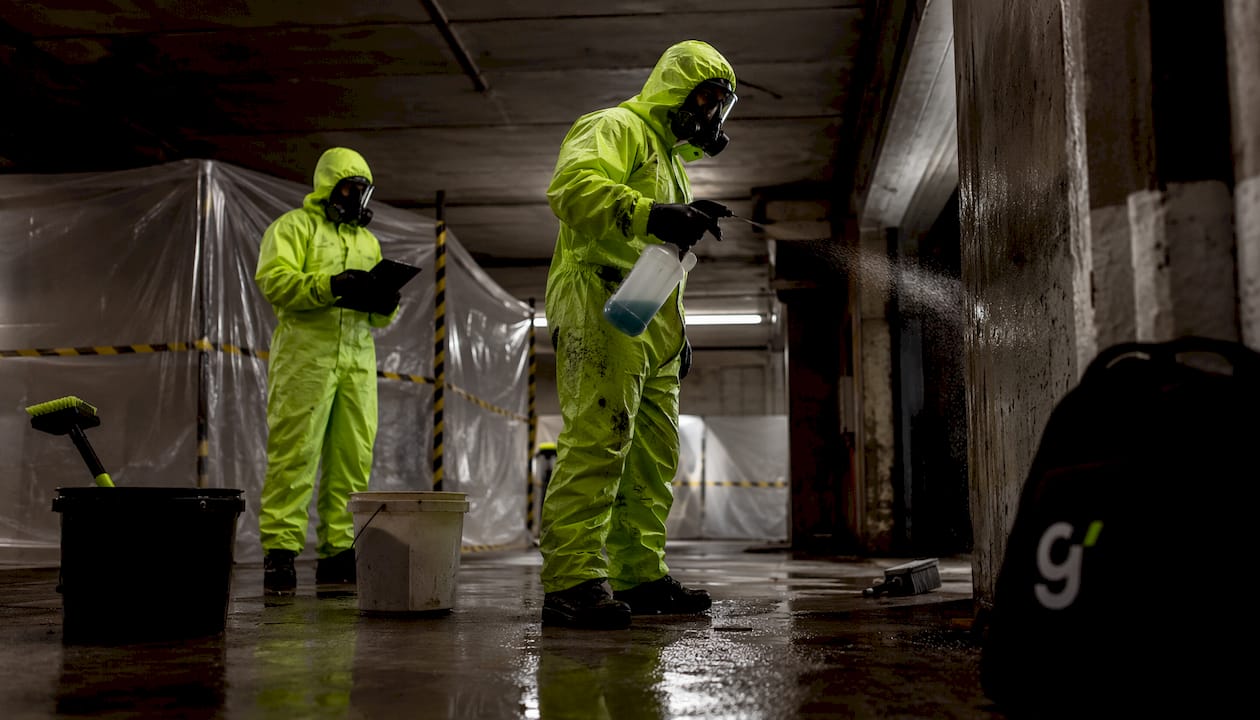
- Mould: N95 or P2 respirator, nitrile gloves, eye protection, disposable coveralls
- Sewage or biohazard: Full disposable coveralls, P2 respirator, nitrile gloves, face shield
- Chemical spills: Chemical-resistant gloves, safety glasses, P2 respirator; check the Safety Data Sheet for the specific substance
Hazardous waste disposal in Australia:
- Used absorbents, contaminated rags, and PPE from chemical or fuel spills are classified as hazardous waste under state EPA regulations. They cannot go into general bins.
- Most Australian councils run free or low-cost household hazardous waste drop-off programmes. Check your local council website for dates and accepted materials.
- Liquid waste (used solvents, fuel residues) must be stored in sealed, labelled containers and taken to an approved facility. Pouring them down a drain is an offence under the Protection of the Environment Operations Act 1997 in NSW and equivalent legislation in other states.
Pro Tip: Safe Work Australia's Hazardous Chemicals Code of Practice is the primary reference for chemical handling in residential and commercial settings. Download it free at safework.gov.au before briefing any contractor.
When should you call a professional instead of doing it yourself?
Red flags that mean stop and call a pro:
- Visible mould across multiple surfaces or penetrating wall cavities
- Any sewage, biohazard, or human waste material
- Large oil or fuel soak covering more than a square metre of porous concrete
- Friable or damaged sheeting that may contain asbestos
- Persistent odour after a full basic clean (signals absorbed contamination or active organisms)
- Water ingress across the slab or rising damp at wall bases
Scenarios where DIY is reasonable:
- A single small oil spot on sealed concrete with no odour
- Light dust, cobwebs, and general grime with no biological contamination
- A routine seasonal declutter where no spills or moisture issues are present
For rental hosts, the decision shifts quickly. A guest re-entry deadline of 2–4 hours leaves no margin for a DIY attempt that uncovers a bigger problem. Grimescene's Rapid Response service is built specifically for that window.
Brief checklist when calling a pro:
- Photos of each zone with contamination type labelled
- Known spill or incident history
- Property access details and any asbestos register entries
- Re-entry deadline and any guest or tenant constraints
Pro Tip: Ask the provider whether their quote includes waste disposal. Many low-cost quotes exclude hazardous waste removal, which can double the final bill.
What should a professional decontamination service include?
| Scope item | What to look for |
|---|---|
| Pre-inspection and written scope | Photos, contamination type identified, method recommended in writing |
| Containment measures | Plastic sheeting, internal door sealed, negative airflow for severe mould |
| Cleaning methods | Non-toxic enzyme degreasers, phosphate-free detergents, bleach-free antimicrobials |
| Drying and moisture control | Mechanical drying, dehumidification, humidity readings recorded |
| Verification deliverables | Post-clean humidity reading, odour check, signed handback report |
| Rental turnover guarantee | Scene Reset protocol or equivalent written guarantee |
| Trust signals | Insurance documentation, rapid-response capability, published procedures |
A provider who cannot supply a written scope before starting and a signed handback report after finishing is not operating to a professional standard. For rental turnovers, the Deep Decontamination Full Sweep from Grimescene covers all of the above, including the Scene Reset guarantee.
How long does it take, and what drives the cost?
A standard 2-car garage deep decontamination runs 4–6 hours. A rapid-response tactical clean covers urgent contamination control in 2 hours.
Primary cost drivers:
- Contamination type: sewage and mould remediation cost more than oil removal due to PPE, disposal, and dwell time
- Square metreage and number of affected surfaces
- Hazardous waste disposal fees (liquid waste, contaminated absorbents)
- Moisture testing and drying time if the slab is wet
- Rental turnover add-ons: linen, consumable restocking, rush premium for same-day bookings
Booking tips to reduce your quote:
- Clear the floor before the team arrives. An empty garage cuts labour time significantly.
- Have waste disposal sorted in advance (council drop-off booked, containers labelled).
- Provide easy equipment access: wide driveway clearance, power and water points identified.
- Book during off-peak periods if the timeline allows.
How to stop recontamination after a deep clean
The Zone system is the single most effective long-term prevention habit. Assign dedicated areas for lawn and garden, automotive, sports, and seasonal storage. Label each zone clearly and return items only to their assigned area after a clean.
Routine patrol schedule:
- Daily: Quick visual check for new spills or leaks, especially under vehicles
- Weekly: Sweep floor, check bins are sealed, confirm fuel and chemical containers are upright and capped
- Monthly: Odour check with the door closed, humidity reading, inspect slab edges for moisture
- Quarterly: Full inspection of walls, ceiling, and floor penetrations; check for mould in corners and behind stored items
Ventilation and moisture control:
- Run an exhaust fan or box fan during and after any wet work
- Keep indoor humidity below 55% year-round; a basic hygrometer costs under $20 at most hardware stores
- Check floor drainage points quarterly and clear any blockages
- A garage floor moisture protection plan, including sealant or coating, significantly reduces absorption of spills and moisture ingress
Storage practices:
- Sealed hard plastic bins for porous materials (fabric, paper, cardboard)
- Dedicated locked cabinet for fuels, solvents, and chemicals with a hazardous materials label
- Wall-mounted racks to keep items off the floor and away from moisture
Key takeaways
Effective garage decontamination requires ventilation first, followed by a five-phase sequence of inspection, containment, removal, drying, and verification, with professional help mandatory for mould, sewage, or suspected asbestos.
| Point | Details |
|---|---|
| Ventilate before anything else | Open doors, run a fan outward, and seal the internal house door before any cleaning begins. |
| Follow the five-phase sequence | Inspection → containment → removal and deep clean → drying → verification; skipping phases causes recontamination. |
| Three red flags always mean call a pro | Structural mould, sewage or biohazard material, and suspected asbestos require licensed professional intervention. |
| Zone system prevents recurrence | Assign labelled storage zones and run a monthly patrol to catch moisture and spills before they become contamination events. |
| Grimescene covers the full scope | The Deep Decontamination Full Sweep and Scene Reset protocol deliver verified, eco-friendly handbacks for rental turnovers and residential properties. |
What providers see that most clients miss
The most common mistake is attempting to organise before decluttering. Clients move items around, create tidy-looking zones, and then call for a clean. The result is a professional team working around stored items that should have been removed first, which adds time and cost and often means contaminated materials get sealed back into the space.
The second mistake is masking odours. A strong-smelling air freshener in a garage with an active mould colony or an oil-soaked slab is not a solution. The odour signals a live source, and that source will keep growing until it is physically removed or neutralised. Grimescene's approach starts with a documented pre-inspection that identifies the source before any product is applied.
For rental hosts, the Scene Reset protocol changes the handback dynamic. Instead of a verbal "it looks fine," hosts receive a signed report with humidity readings and an odour check result. That documentation protects the host's rating and gives the next guest a verifiable clean start. Grimescene publishes detailed guides and procedures on its blog, so property managers can review the methodology before booking.
Grimescene handles the jobs that can't wait
When a contaminated garage sits between a departing guest and a check-in deadline, the margin for error is zero. Grimescene's Deep Decontamination Full Sweep covers the complete five-phase process using non-toxic, bleach-free agents, with a signed handback report and Scene Reset guarantee for rental turnovers. For urgent situations, the Rapid Response 2-Hour Tactical Clean gets a team on-site fast.

Services include routine patrols, post-construction cleaning, biohazard sanitisation, and linen and consumable restocking for short-term rental turnovers. Every job is insured, documented, and completed with eco-friendly agents safe for families, pets, and the property itself. To request a quote or book a rapid response, visit grimescene.services and include your photos, contamination type, and re-entry deadline in the booking brief.
Useful sources for further reading
- Safe Work Australia: Hazardous chemicals code of practice and PPE guidance for residential and commercial cleaning work
- NSW EPA Household Chemical Cleanout: Free drop-off programme for hazardous household waste; check your state EPA for equivalent programmes
- Grimescene blog: why garage cleaning improves air quality: Evidence-based breakdown of how decontamination reduces airborne contaminants
- Grimescene blog: what is remediation cleaning: Detailed guide to eco-friendly neutralisation methods and verification steps
- Precision Concrete Coating: garage floor moisture causes and fixes: Technical guidance on why concrete slabs absorb moisture and corrective steps to reduce contamination risk
- Grimescene blog: preparing your home for professional cleaning: Practical steps to take before a booked decontamination service to reduce time and cost