
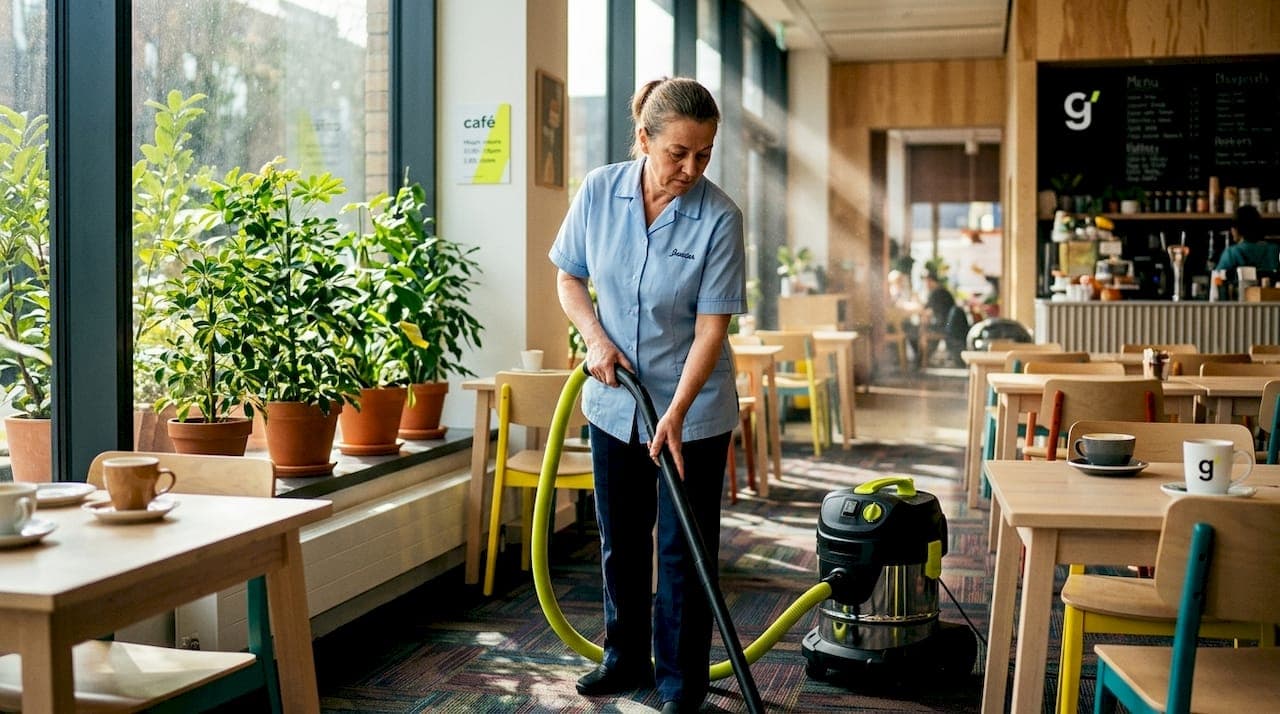
Janitorial cleaning is defined as recurring, schedule-based maintenance that preserves daily hygiene and appearance across occupied properties, while remediation cleaning is a specialised, project-based response to specific contamination hazards such as mould, sewage, or biohazards. Understanding the role of janitorial vs remediation cleaning is not an academic exercise for property managers. Confusing the two creates compliance gaps, liability exposure, and health risks that routine cleaning budgets cannot cover. These are distinct disciplines with different scopes, methodologies, and regulatory obligations, and treating them as interchangeable is one of the most common and costly mistakes in facilities management.
What are the key differences between janitorial and remediation cleaning?
Janitorial cleaning is recurring and performed on operational properties, covering tasks like trash removal, restroom sanitation, floor care, and surface disinfection across office buildings, retail spaces, and multifamily residential complexes. The defining characteristic is the schedule. Work is planned, predictable, and priced per visit or per month. Occupants barely notice it because the goal is maintenance, not intervention.
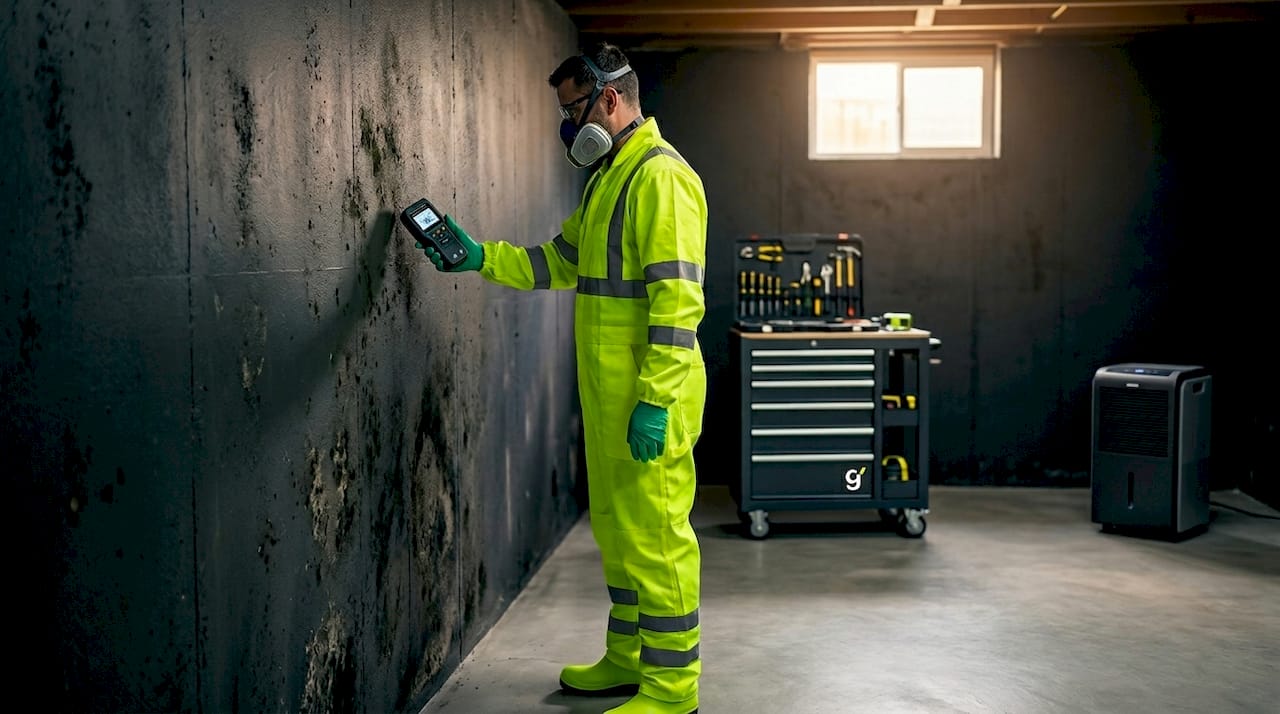
Remediation cleaning operates on an entirely different logic. Remediation is non-recurring and project-based, triggered by a specific hazard event rather than a calendar. Mould outbreaks, sewage backflows, trauma scenes, and post-flood contamination all require remediation. The scope is defined by the hazard, not the facility footprint.
The table below captures the core operational contrasts between the two service types.
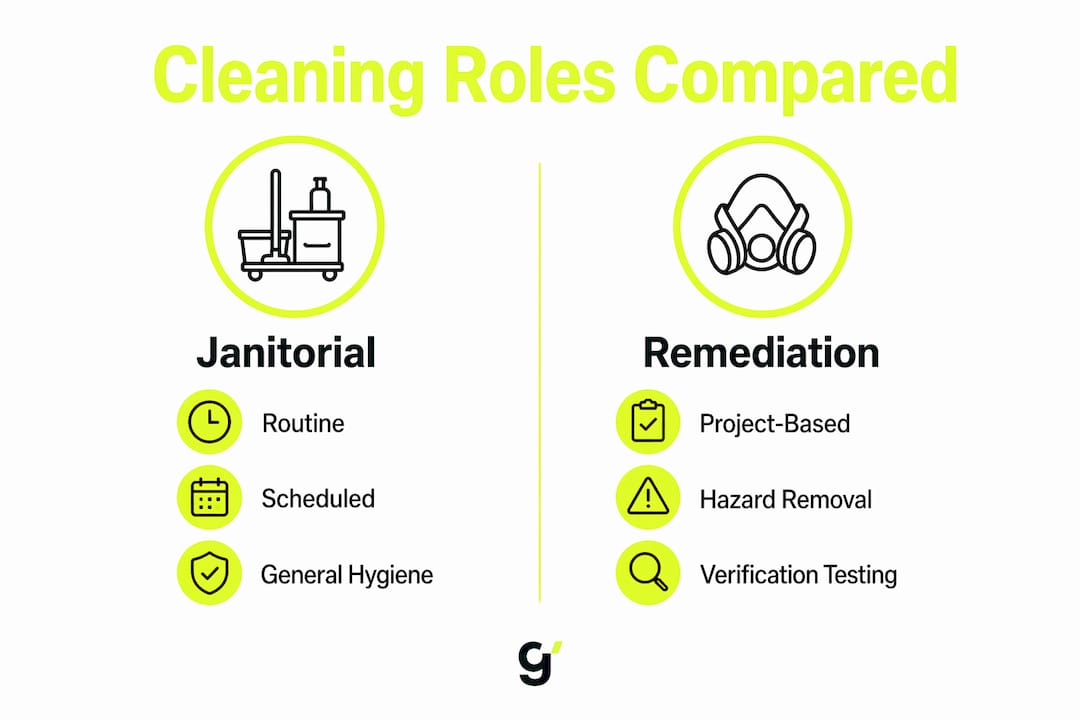
| Feature | Janitorial cleaning | Remediation cleaning |
|---|---|---|
| Frequency | Recurring (daily, weekly, monthly) | Event-driven, project-based |
| Trigger | Scheduled maintenance | Specific contamination or hazard |
| Primary goal | Maintain hygiene and appearance | Remove or neutralise hazards |
| Equipment | Standard mops, vacuums, surface sprays | HEPA vacuums, containment barriers, PPE |
| Verification | Visual inspection | ATP testing, air sampling, surface sampling |
| Regulatory exposure | Low to moderate | High, with documentation requirements |
The practical implication for property managers is straightforward. Janitorial services vs remediation are not substitutes for each other. A commercial cleaner who mops floors daily cannot be expected to contain a mould outbreak behind a wall cavity. Deploying the wrong service type wastes money and, more critically, leaves hazards unresolved.
Pro Tip: When onboarding a new cleaning contractor, ask them directly whether their licence and insurance cover remediation work. Many janitorial providers are not covered for hazardous contamination events, and discovering that gap after an incident is far more expensive than clarifying it upfront.
How do remediation cleaning processes differ in methodology?
The methodology gap between janitorial and remediation cleaning is wider than most property managers realise. Janitorial cleaning focuses on surface-level disinfection and routine maintenance. Remediation cleaning requires physical disruption of contamination before any chemical treatment is applied.
Mechanical disruption of biofilms is critical in remediation because chemical disinfection alone cannot penetrate the protective matrix that microbes form on surfaces. Applying a disinfectant spray over an undisturbed biofilm is the equivalent of painting over rust. The surface looks treated, but the contamination remains active underneath.
The remediation cleaning process follows a structured sequence:
- Assessment and containment. The affected zone is isolated using physical barriers and negative air pressure to prevent cross-contamination to clean areas.
- Mechanical removal. Physical scrubbing, abrasion, or extraction dislodges embedded contamination. HEPA vacuuming captures particulates down to 0.3 microns before chemical agents are applied.
- Chemical treatment. Disinfectants are applied only after physical removal, ensuring they contact the actual surface rather than a layer of organic residue.
- Verification testing. ATP testing, air sampling, and surface sampling confirm that contamination has been removed to safe levels, not just visually obscured.
Physical cleaning can reduce microbial burden by approximately 4 log10 prior to chemical disinfection. That figure means mechanical removal alone eliminates 99.99% of microbial load before a single disinfectant is applied. This is why verification via ATP testing is standard practice in remediation but absent from janitorial contracts. Janitorial cleaning controls germs and maintains appearance, but it cannot address embedded hazards requiring the specialised protocols that remediation demands.
Pro Tip: Request post-remediation verification reports as a contractual deliverable, not an optional add-on. ATP test results and air quality readings give you documented evidence of compliance, which matters significantly if an insurance claim or regulatory audit follows.
What are the compliance and contract management considerations?
The compliance obligations attached to remediation cleaning are categorically different from those governing janitorial services. Remediation engagements require detailed scopes of work, hazard-specific documentation, and adherence to environmental health and safety regulations that simply do not apply to routine cleaning contracts.
Separating janitorial and remediation scopes in procurement documents is a recognised best practice for property managers. When both service types are bundled into a single contract, the result is almost always ambiguity about who is responsible when a contamination event occurs. That ambiguity translates directly into liability exposure for the property owner or manager.
Key procurement principles for property managers include the following:
- Define janitorial tasks by frequency and location, specifying which areas receive which services on which schedule.
- Define remediation services as event-triggered deliverables with explicit scope, methodology, and verification requirements.
- Confirm that remediation contractors hold appropriate licences, carry public liability and professional indemnity insurance, and can provide regulatory compliance documentation.
- Never assume a janitorial contractor's general liability policy covers hazardous remediation work. It rarely does.
"Procurement documents should clearly define janitorial frequency-based tasks distinct from event-driven remediation services to ensure clarity of deliverables and compliance." — National Property Services Authority
The distinction also matters for insurance purposes. If a mould outbreak causes tenant illness and your contract language does not clearly separate janitorial maintenance from remediation response, your insurer may dispute coverage. Clear contract language is not administrative overhead. It is risk management.
For property managers overseeing post-tenancy grime buildup, the line between what a standard clean covers and what requires remediation is particularly important to establish before a tenancy ends, not after.
How do janitorial and remediation cleaning interact after water damage?
Water damage events are where the distinction between janitorial cleaning tasks and remediation cleaning processes becomes most consequential. The recovery sequence involves three distinct phases, and confusing their boundaries causes recurring problems.
| Phase | Service type | Primary objective |
|---|---|---|
| Mitigation | Specialist mitigation contractor | Stop water spread, control moisture |
| Remediation | Remediation contractor | Remove contamination, sanitise, restore safe conditions |
| Ongoing maintenance | Janitorial contractor | Resume daily hygiene and appearance maintenance |
Mitigation controls moisture to stop the spread of water damage, while remediation cleans, sanitises, and restores a safe, usable condition after moisture has been controlled. These are sequential, not simultaneous. Starting remediation before mitigation is complete means cleaning into an active moisture environment, which guarantees mould recurrence.
Skipping remediation after mitigation risks hidden mould growth behind walls and recurring indoor air quality problems. This is the most common and most expensive mistake in water damage recovery. Visible surfaces may appear dry and clean while contamination continues developing inside wall cavities, under flooring, and within ceiling spaces.
Once remediation is complete and verified, janitorial cleaning resumes its normal role. The handoff point matters. Janitorial staff should not re-enter a remediated area until verification testing confirms safe occupancy levels. Introducing routine cleaning into an unverified remediation zone can disturb residual contamination and spread it to clean areas.
Pro Tip: Document the handoff between remediation and janitorial services in writing, including the date, the verification test results, and the areas cleared for routine cleaning. This record protects you if contamination recurs and questions arise about the sequence of work.
For a clearer understanding of commercial-grade eco cleaning methods that bridge routine maintenance and deeper decontamination, the distinction between these phases becomes even more relevant when selecting contractors who can operate across both service types.
Key takeaways
Janitorial cleaning maintains daily hygiene on a fixed schedule, while remediation cleaning is a specialised, hazard-specific process requiring mechanical removal, containment, verification testing, and regulatory documentation.
| Point | Details |
|---|---|
| Distinct service types | Janitorial is schedule-based maintenance; remediation is event-driven hazard response. Never treat them as interchangeable. |
| Mechanical removal is foundational | Remediation requires physical disruption of contamination before chemical treatment, not instead of it. |
| Verification is non-negotiable | ATP testing and air sampling confirm hazard removal; visual inspection alone is insufficient for remediation sign-off. |
| Separate contracts reduce liability | Bundling janitorial and remediation into one contract creates compliance gaps and insurance disputes. |
| Sequencing matters in water damage | Mitigation must precede remediation, and remediation must be verified before janitorial cleaning resumes. |
Why property managers underestimate remediation every time
My experience working across commercial and residential properties has shown one consistent pattern: property managers who have never dealt with a serious contamination event consistently underestimate what remediation actually involves. They see cleaning as cleaning. The distinction only becomes real when a mould outbreak spreads to three floors because a janitorial contractor wiped down visible growth without containment, or when an insurer declines a claim because the remediation scope was buried inside a general cleaning contract.
The uncomfortable reality is that remediation requires specialised knowledge, containment, air filtration, strict protocol adherence, and documentation for regulatory and insurance purposes. It is a technical discipline, not an intensive version of regular cleaning. Treating it as the latter is how properties end up with recurring contamination problems that cost ten times more to resolve the second time around.
What I find most telling is the verification question. Ask any janitorial contractor how they confirm a job is complete. The answer is almost always visual. Ask a remediation contractor the same question and the answer should involve ATP readings, air sampling data, and a written clearance report. That gap in accountability reflects a genuine difference in what each service type is designed to achieve.
The property managers who handle this well are the ones who build remediation response into their risk management framework before an event occurs. They have pre-qualified contractors, clear contract language, and documented handoff protocols. The ones who struggle are the ones who call whoever is cheapest and available when something goes wrong.
— Lead
How Grimescene supports your facility's cleaning needs
Grimescene operates across both routine maintenance and specialised decontamination, which means you are not left sourcing two separate contractors when a property shifts from daily upkeep to hazard response. Their eco-friendly, non-toxic approach to deep remediation avoids the chemical overload that leaves residues behind, while their routine patrol services maintain the hygiene standards your occupants and tenants expect between events.
Whether you manage a commercial facility, a short-term rental portfolio, or a multifamily residential complex, Grimescene's tailored service assessments identify exactly where your current cleaning programme has gaps. Their Scene Reset protocol for rental properties and their professional remediation services are built around compliance, documentation, and verified outcomes. Contact Grimescene to discuss a service contract that separates your janitorial and remediation needs clearly and protects your asset value.
FAQ
What is the main difference between janitorial and remediation cleaning?
Janitorial cleaning is recurring, schedule-based maintenance covering routine hygiene tasks, while remediation cleaning is a project-based response to specific contamination hazards such as mould, sewage, or biohazards. The two services differ in scope, methodology, equipment, and regulatory requirements.
Can a janitorial contractor perform remediation work?
Most janitorial contractors are not licenced, insured, or trained to perform remediation work. Remediation requires specialised protocols, containment procedures, and verification testing that fall outside standard janitorial service agreements.
Why is verification testing required after remediation but not after janitorial cleaning?
Remediation targets hazards that are not visible to the naked eye, so visual inspection cannot confirm their removal. ATP testing and air sampling measure residual organic matter and particulate levels to confirm the environment is safe for occupancy.
When should remediation cleaning follow water damage mitigation?
Remediation should begin only after mitigation has controlled moisture and stopped active water spread. Starting remediation in an active moisture environment causes contamination to recur, increasing both health risks and remediation costs.
Should janitorial and remediation services be in separate contracts?
Yes. Separating the two in procurement documents prevents compliance gaps, clarifies liability, and ensures each contractor is accountable for the correct scope of work. Bundling them creates ambiguity that insurers and regulators will exploit when disputes arise.