
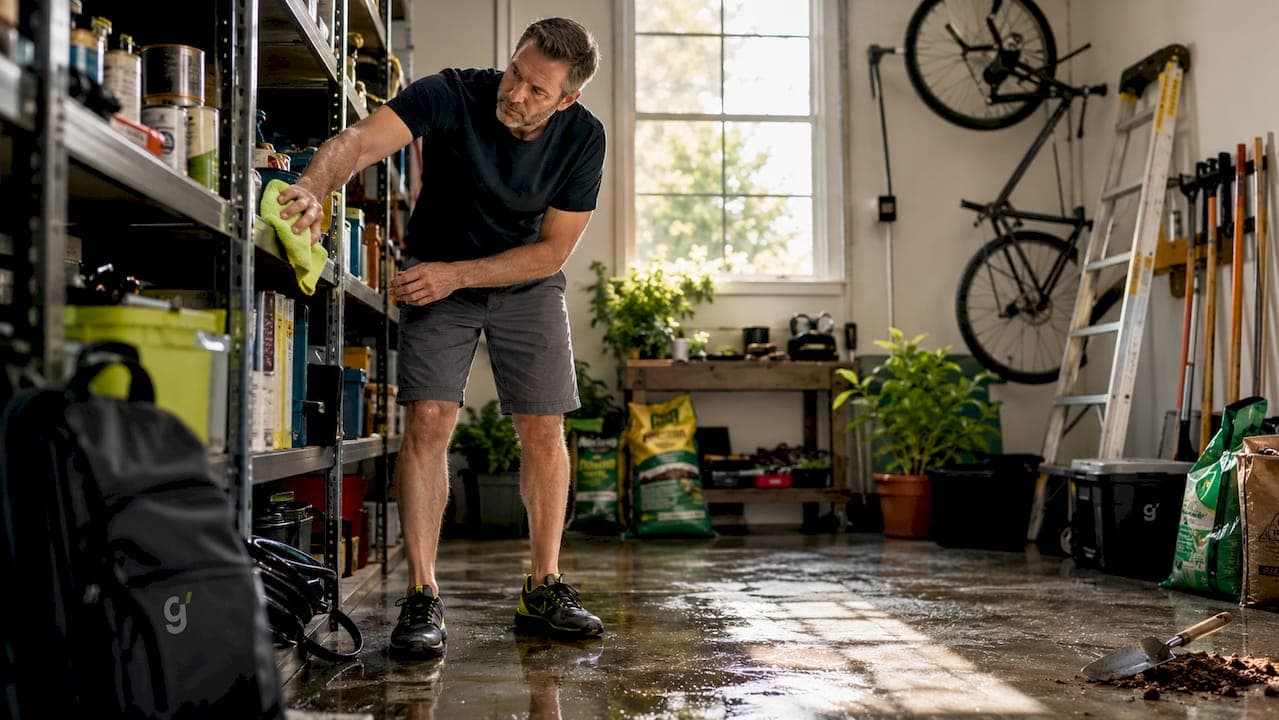
Garage cleaning improves air quality by removing the dust, chemical fumes, and moisture that migrate from your garage into your home's living spaces every single day. Most homeowners focus their cleaning efforts on kitchens and bathrooms, completely overlooking the garage as a source of indoor air contamination. Yet garage air migrates indoors through gaps, vents, and pressure differences, carrying particulates and fumes that worsen allergies and respiratory health. Understanding the mechanics behind this contamination is the first step toward doing something about it.
Why garage cleaning improves air quality in your home
Concrete garage floors shed microscopic dust particles continuously, regardless of how tidy the space looks. This is not surface-level grime you can see. It is fine particulate matter that becomes airborne with every footstep, car movement, or gust from an opening door. Once airborne, these particles travel through the same air pressure gradients that connect your garage to your living areas.
The problem compounds when you add clutter. Stored items act as dust reservoirs, trapping and releasing particles over time. Old appliances are a particularly overlooked source. Backup fridges and freezers stored in garages accumulate dust on their coils and can leak refrigerant, adding chemical pollutants to the air. Cleaning these items out, or at minimum cleaning around them regularly, removes a persistent contamination source.
The benefits of garage cleaning extend well beyond tidiness. When you reduce the volume of dust, chemicals, and biological matter in your garage, you directly reduce what enters your home. This is the core mechanism behind the connection between a clean garage and improved indoor air quality.

How does garage dust affect your home's air?
Dust in a garage is not the same as household dust. It contains concrete particles, tyre rubber, motor oil residue, and sometimes heavy metals from brake dust. These are materials you do not want circulating through your home's air supply.
Here is what makes garage dust particularly problematic:
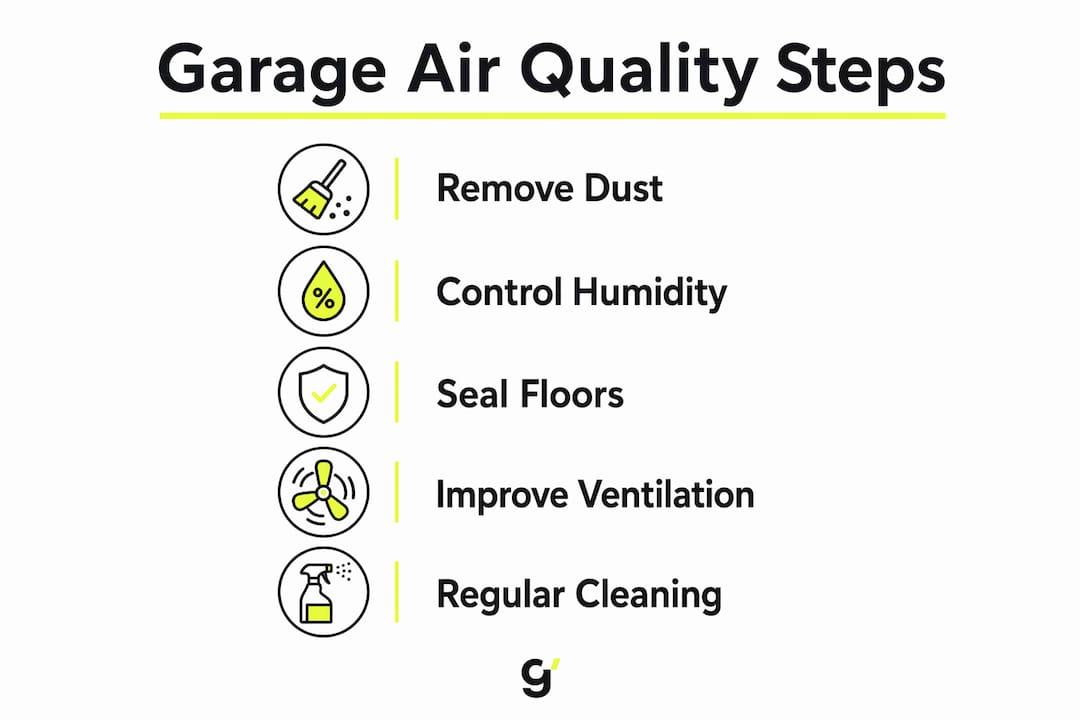
- Concrete floors shed continuously. Sealing floors is foundational to eliminating this persistent source, because no amount of sweeping fully compensates for an unsealed surface.
- Air pressure differences pull dust indoors. The stack effect, where warm air rises and exits through upper levels of a home, creates negative pressure at lower levels that draws garage air inward through any gap or unsealed penetration.
- Clutter multiplies the problem. Every box, tool rack, and stored item adds surface area for dust to settle and re-enter the air.
- Old appliances add chemical pollutants. Dust on refrigerator coils and potential refrigerant leaks make backup appliances a targeted cleaning priority.
Thorough floor cleaning reduces airborne dust by up to 80%, which means the single most impactful thing you can do for garage dust and air quality is clean the floor consistently and thoroughly. That 80% reduction translates directly to less particulate matter reaching your living areas.
Pro Tip: Use a microfibre dust mop rather than a stiff broom on garage floors. Stiff brooms launch fine particles back into the air, while microfibre traps them.
Does humidity in your garage affect indoor air quality?
Moisture is the second major driver of poor garage air quality, and it operates more slowly than dust, making it easier to ignore until the damage is done. Mould, mildew, and dust mites all thrive in humid conditions, and all three produce airborne particles that irritate airways and trigger allergies.
Maintaining garage humidity between 30 and 50% prevents the conditions that allow mould and mildew to establish. Below 30%, the air becomes dry enough to crack timber and cause static issues. Above 50%, biological growth accelerates on walls, stored items, and the underside of shelving.
Follow these steps to manage moisture as part of your cleaning routine:
- Inspect for water ingress. Check the base of walls, the garage door seal, and any floor drains after rain. Moisture entry points must be sealed before humidity control is possible.
- Clean and dry the floor after washing. Leaving standing water after a floor clean defeats the purpose. Use a squeegee and allow full drying before closing the door.
- Run a dehumidifier in humid months. A portable dehumidifier set to 45% relative humidity maintains the ideal range without overcorrecting.
- Ventilate during and after cleaning. Open the garage door and any windows while cleaning to expel moisture-laden air.
| Humidity level | Effect on garage air quality |
|---|---|
| Below 30% | Dry air, cracking of timber, static buildup |
| 30 to 50% | Optimal range, minimal mould and dust mite risk |
| Above 50% | Mould and mildew growth, dust mite proliferation |
| Above 70% | Rapid biological growth, structural moisture damage |
Pro Tip: A cheap digital hygrometer placed on a shelf gives you a real-time humidity reading. Check it monthly and act before levels climb above 55%.
Do floor coatings and sealing improve garage air quality?
Sealing or coating a garage floor is one of the highest-impact steps you can take for long-term air quality improvement. Porous concrete does two harmful things: it sheds dust constantly, and it absorbs spilled chemicals such as oil, petrol, and solvents, then slowly releases them as vapour into the air.
Floor coatings lock in dust and block chemical fumes, eliminating both problems at once. The practical result is a reduction in what is commonly called "garage smell," which is actually a mixture of concrete dust, chemical off-gassing, and moisture vapour. Homeowners who seal their floors consistently report that the odour disappears within days of application.
| Surface type | Dust shedding | Chemical absorption | Ease of cleaning |
|---|---|---|---|
| Bare concrete | High | High | Difficult |
| Sealed concrete | Low | Low | Moderate |
| Epoxy coated | Minimal | Minimal | Easy |
Beyond air quality, coated floors are significantly easier to clean. Spills sit on the surface rather than soaking in, and dust can be removed with a single pass of a mop rather than repeated sweeping. This makes the importance of a clean garage much easier to act on in practice.
How does ventilation prevent garage pollutants from entering your home?
Without adequate ventilation, fumes from car exhaust, stored chemicals, paints, and solvents accumulate in garage air. Poor ventilation allows these pollutants to build up, and the stack effect then pulls that contaminated air into your home through every unsealed gap around pipes, cables, and door frames.
The stack effect is the mechanism most homeowners underestimate. As warm air rises through a home and exits at the roofline, it creates a low-pressure zone at ground level. The garage, which sits at or below ground floor level in most homes, becomes a primary source of replacement air. This means your home is actively drawing in garage air, not just passively allowing it to drift in.
Key steps for managing garage ventilation:
- Install an exhaust fan. A wall-mounted exhaust fan rated for the garage's cubic metre volume removes fumes actively rather than relying on passive airflow.
- Seal penetrations between the garage and living areas. Every pipe, cable, and conduit that passes through the shared wall is a pathway for air. Expanding foam or fire-rated sealant closes these gaps.
- Never idle a vehicle inside the garage. Carbon monoxide from a running engine reaches dangerous concentrations within minutes in an enclosed space.
- Inspect seals and ventilation annually. Regular inspection of seals and ventilation maintains proper airflow and catches deterioration before it becomes a health issue.
Pro Tip: Run your exhaust fan for 15 minutes after parking a vehicle, even if you only drove a short distance. Engines continue to off-gas after shutdown.
What is the best garage cleaning routine for sustained air quality?
Consistency matters more than intensity. A monthly cleaning routine prevents the accumulation that makes deep cleans necessary and keeps contaminant levels low enough that migration into your home stays minimal. Cleaning at least once a month prevents dust and chemical buildup that would otherwise infiltrate connected living spaces.
Follow this sequence for maximum effectiveness:
- Start at the top. Clean storage racks, overhead shelving, and wall-mounted items before touching the floor. Top-down cleaning prevents dust from resettling on areas you have already cleaned.
- Declutter before you clean. Remove items that no longer belong in the garage. Less clutter means fewer dust reservoirs and a faster, more thorough clean each time.
- Sweep and mop the floor. Use a microfibre mop with a pH-neutral cleaner on sealed surfaces. On bare concrete, a damp mop traps particles rather than redistributing them.
- Check and clean appliances. Wipe down the coils of any fridges or freezers stored in the garage. Dust on coils reduces efficiency and adds particulates to the air.
- Inspect seals and vents. Check the door seal, wall penetrations, and any ventilation grilles. Replace worn seals and clear blocked vents.
For homeowners managing multiple properties, maintaining a consistent cleaning schedule between professional visits keeps air quality stable without requiring a full deep clean every month.
Pro Tip: Keep a small caddy of cleaning supplies inside the garage rather than in the house. The lower the barrier to starting, the more likely you are to clean on schedule.
Key takeaways
Garage cleaning improves air quality by eliminating the dust, moisture, and chemical fumes that migrate into your home through air pressure differences and unsealed gaps.
| Point | Details |
|---|---|
| Dust removal is the highest-impact step | Thorough floor cleaning reduces airborne dust by up to 80%, directly limiting particulate migration indoors. |
| Humidity control prevents biological growth | Keeping garage humidity between 30 and 50% stops mould, mildew, and dust mites from establishing. |
| Floor sealing eliminates two pollutant sources | Coatings stop concrete dust shedding and block chemical vapour from absorbed spills. |
| Ventilation breaks the stack effect | Exhaust fans and sealed penetrations prevent contaminated garage air from being drawn into living spaces. |
| Monthly cleaning sustains the gains | A consistent routine prevents the accumulation that makes garage air a persistent indoor health risk. |
The part most homeowners get wrong
Most people treat the garage as a storage problem, not an air quality problem. They declutter once, feel satisfied, and consider the job done. What they miss is that the floor itself is a continuous pollutant source, and no amount of tidying addresses that.
I have seen this pattern repeatedly. A homeowner invests hours sorting and organising, but the bare concrete floor keeps shedding dust, the humidity creeps up because the door seal is worn, and within three months the air quality is back where it started. The organising felt productive. The actual contamination sources were untouched.
The homeowners who see lasting improvement are the ones who treat the garage as part of the home's air system, not a separate space. They seal the floor, fix the ventilation, and clean on a schedule. The results are noticeable. Reduced dust on surfaces in adjacent rooms, fewer allergy flare-ups, and the disappearance of that persistent garage odour that was quietly entering the house.
The other common pitfall is using harsh chemical cleaners in a poorly ventilated garage, which temporarily worsens air quality and leaves residue that off-gasses for days. Eco-friendly, non-toxic cleaning agents do the job without adding to the chemical load in the air. That distinction matters more in a garage than anywhere else in the home, precisely because the garage is so directly connected to your indoor air supply.
— Lead
Professional garage cleaning that protects your home's air
If your garage has years of accumulated grime, chemical residue, or moisture damage, a single DIY session will not fully reset the space.

Grimescene's deep decontamination services are designed for exactly this situation. Using advanced non-toxic agents, Grimescene neutralises built-up grime, chemical residue, and biological matter without introducing harsh chemicals that would worsen the air quality you are trying to improve. The team handles floor cleaning, surface decontamination, and ventilation checks as part of a tailored service for both residential and commercial properties. For property managers overseeing multiple sites, Grimescene's professional cleaning solutions provide a consistent, documented standard that protects both occupant health and property value.
FAQ
How does a dirty garage affect indoor air quality?
Garage air carries dust, chemical fumes, and moisture into your home through gaps, vents, and air pressure differences. These contaminants worsen allergies, irritate airways, and contribute to persistent odours in connected living spaces.
How often should you clean your garage for better air quality?
Cleaning at least once a month prevents dust and chemical buildup from reaching levels that infiltrate your home. High-use garages or those in humid climates may benefit from fortnightly floor cleaning.
Does sealing a garage floor really reduce indoor air pollution?
Yes. Sealed and coated floors stop concrete dust shedding and block chemical vapours from absorbed spills, eliminating two of the primary sources of garage-related indoor air contamination.
What humidity level should a garage be kept at?
The recommended range is 30 to 50% relative humidity. Above 50%, mould, mildew, and dust mites begin to establish, producing airborne particles that degrade both garage and indoor air quality.
Can reducing allergens in the garage improve whole-home health?
Removing dust reservoirs, sealing floors, and controlling humidity directly reduces the allergen load that enters your home. Homeowners with asthma or hay fever typically notice the most immediate improvement after a thorough garage clean and seal.