

Third-party bio-cleaning is defined as specialised professional decontamination performed by certified external contractors to remove biological hazards from properties. This is distinct from routine cleaning. The role of third-party bio-cleaning explained properly covers trauma scenes, infectious disease outbreaks, bloodborne pathogen exposure, and post-mortem situations where standard janitorial services are both inadequate and legally insufficient. Property managers, homeowners, and businesses face real liability when biological hazards are not remediated correctly. This article covers the processes, standards, legal obligations, and practical steps for engaging qualified bio-cleaning providers in Australia.
What processes do third-party bio-cleaning services follow?
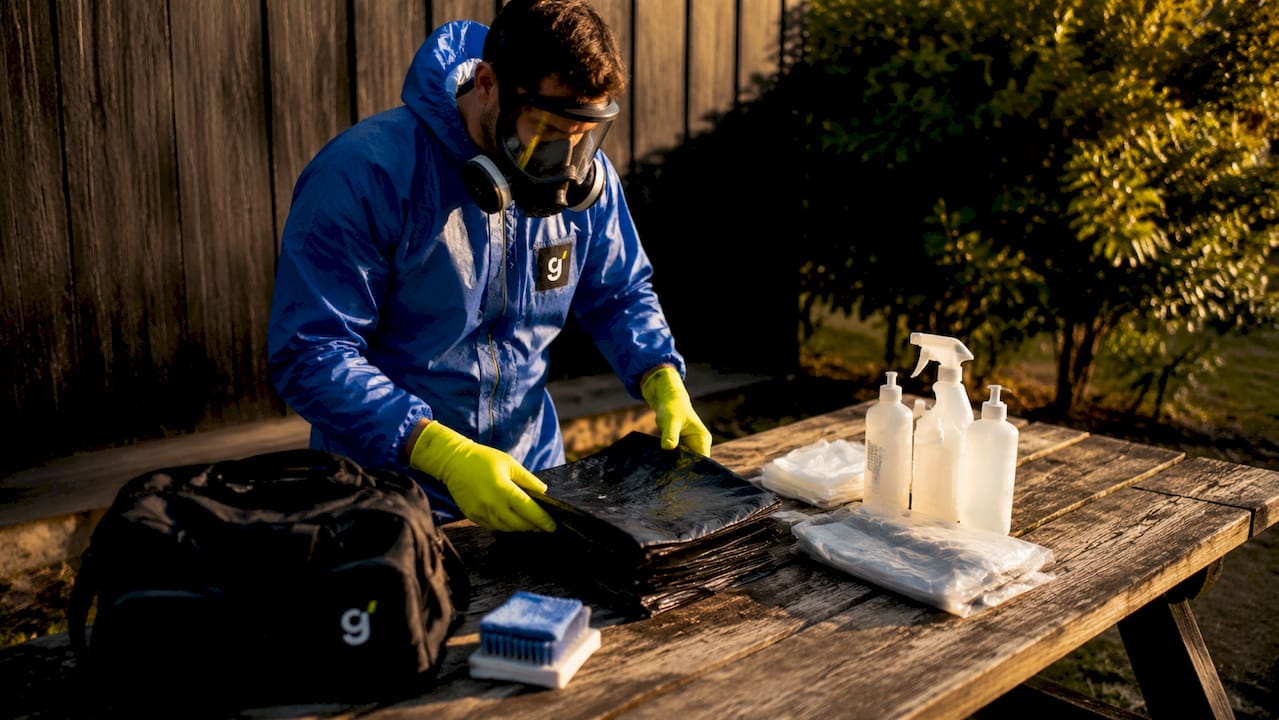
Professional biohazard remediation follows a strict, stepwise process. Each stage exists to protect technicians, occupants, and the broader environment. Skipping any step creates health risks and legal exposure.
The standard process runs as follows:
- Hazard assessment. Technicians identify the type and extent of biological contamination before any physical work begins. This determines the personal protective equipment (PPE) required and the appropriate cleaning agents.
- Containment. The affected area is sealed to prevent cross-contamination. Negative air pressure systems and physical barriers stop biological matter from spreading to clean zones.
- Removal of contaminated materials. Professional biohazard remediation includes removing contaminated materials, disinfecting affected surfaces, eliminating odours, and disposing of hazardous waste correctly. Any cleanup that skips these steps poses direct health risks.
- Cleaning and disinfection. Technicians apply bio-enzymatic agents and hospital-grade disinfectants. Professional infectious disease cleanup uses UV-C light, HEPA filtration, and electrostatic spraying to reach surfaces that manual cleaning misses. These methods are not available in standard cleaning kits.
- Verification. Environmental swabs and ATP bioluminescence testing confirm decontamination has been achieved. This is the step that produces documentation for insurance claims and regulatory compliance.
- Waste disposal. All biological waste is packaged and disposed of according to hazardous waste regulations. Improper disposal creates environmental liability for property owners.
Failing to use trained personnel with proper PPE for bloodborne pathogen exposure violates OSHA regulation 1910.1030. This is one of the most frequently issued OSHA violations across industry. In Australia, equivalent Work Health and Safety (WHS) obligations apply, and non-compliance carries significant penalties.
Pro Tip: Ask any prospective bio-cleaning provider for their exposure control plan before signing a contract. A legitimate operator will have this document ready without hesitation.
How does bio-cleaning differ from standard or eco-cleaning?
The difference between standard cleaning and professional biohazard decontamination is not a matter of degree. It is a matter of category. Understanding this distinction protects you from making a costly mistake.
| Feature | Standard Cleaning | Third-Party Bio-Cleaning |
|---|---|---|
| Scope | Surface dirt and general grime | Biological hazards, pathogens, bloodborne material |
| Agents used | General detergents, bleach | Bio-enzymatic agents, hospital-grade disinfectants |
| Equipment | Mops, cloths, spray bottles | HEPA filters, electrostatic sprayers, UV-C systems |
| Verification | Visual inspection | ATP bioluminescence testing, environmental swabs |
| Waste disposal | General waste | Regulated hazardous waste protocols |
| Legal compliance | Not applicable | OSHA 1910.1030, WHS regulations |
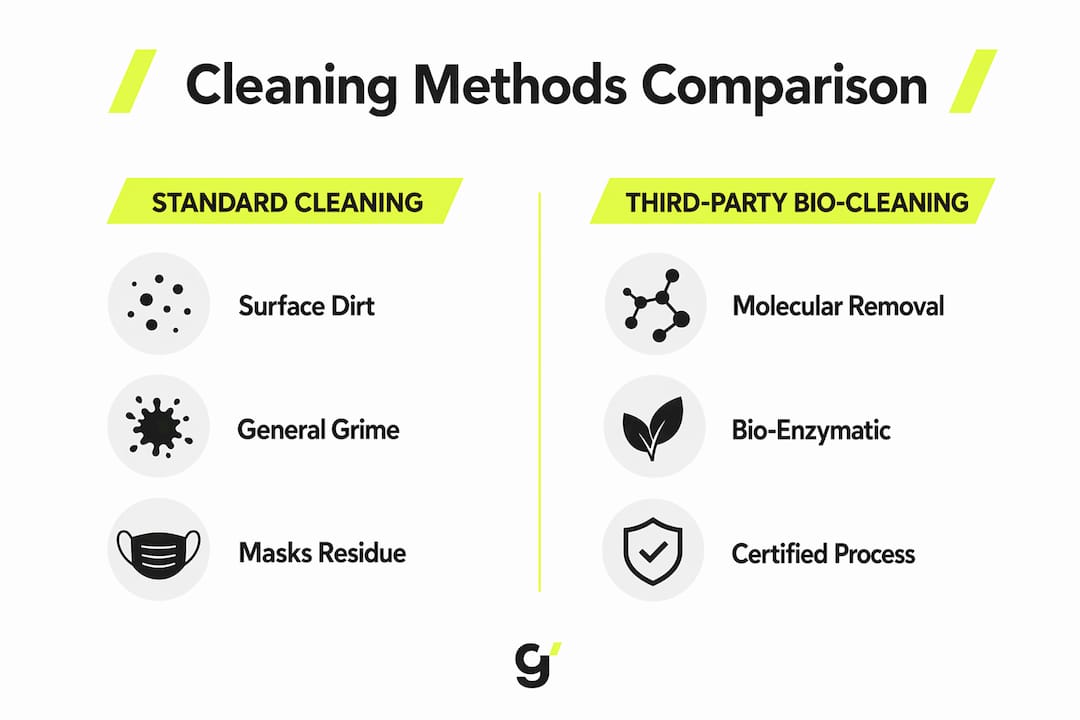
Standard cleaning masks surface grime. Bio-cleaning removes it at a molecular level. Bio-enzymatic products provide molecular-level remediation by digesting fats, oils, grease, and odour-causing compounds, preventing recurring issues. Traditional cleaners stop working once they dry. Bio-enzymatic agents keep working.
The shift away from harsh chemicals like bleach is also driven by asset protection. Bio-based disinfectants protect building infrastructure better than corrosive chemicals while providing hospital-grade efficacy. They extend the lifespan of flooring, stainless steel, and chrome fixtures. Bleach degrades these surfaces over time, creating replacement costs that dwarf the price of better cleaning products.
Key distinctions worth knowing:
- Eco-friendly cleaning uses plant-based or biodegradable agents for general maintenance. It reduces chemical load but does not address biological hazards.
- Janitorial services handle routine upkeep. They are not trained or equipped for biohazard remediation, and sending them into a contaminated space creates worker safety liability.
- Third-party bio-cleaning combines regulatory compliance, specialised equipment, and bio-enzymatic science to fully decontaminate a space.
Biotech cleaning solutions reduce environmental impact and operational costs through higher dilution ratios and natural ingredients. Some high-concentration formulations save up to 1.3kg CO2e per litre of product used. That is a meaningful reduction for commercial properties running regular cleaning programmes.
Pro Tip: If a cleaning company cannot name the specific bio-enzymatic agents they use or explain how they verify decontamination, they are not a specialist bio-cleaning provider regardless of what their marketing says.
What are the health, legal, and financial benefits?
The importance of bio-cleaning becomes clear when you map the consequences of getting it wrong. Property owners who attempt to manage biological contamination with standard cleaning face compounding risks across three areas.
Health risks are the most immediate. Bloodborne pathogens, infectious disease residue, and decomposition matter carry serious transmission risks. Occupants, staff, and even well-meaning property managers who enter a contaminated space without proper PPE face genuine exposure. Emergency services legally cannot perform remediation. The responsibility falls entirely on the property owner to engage trained, certified professionals.
Legal exposure is the second risk. OSHA regulation 1910.1030 and equivalent Australian WHS legislation require trained personnel with proper PPE for any work involving bloodborne pathogens. Non-compliance results in penalties, and in the event of a subsequent illness or injury, liability shifts heavily toward the property owner. Certified bio-cleaning providers produce documentation that demonstrates compliance. That documentation matters in insurance claims and legal proceedings.
Financial consequences are often underestimated. The benefits of bio-cleaning extend well beyond the immediate clean. Bio-enzymatic cleaners colonise surfaces to form biofilms, providing continuous cleaning and odour control that chemical cleaners cannot match. They take longer to show visible effects but reduce long-term labour costs significantly. A property that has been properly decontaminated requires less frequent intervention than one that has been surface-cleaned repeatedly.
The financial case is strongest for:
- Short-term rental operators who face rating damage from odour or contamination complaints
- Commercial property managers who carry liability for staff and visitor safety
- Homeowners dealing with trauma scenes, sewage events, or infectious disease exposure where insurance coverage depends on certified remediation
- Businesses in healthcare, hospitality, and food service where regulatory inspection is routine
Certified documentation from a qualified bio-cleaning provider also supports insurance claims directly. Insurers increasingly require evidence of professional remediation before processing property damage claims involving biological contamination.
How do you engage the right third-party bio-cleaning provider?
Selecting the wrong provider is as dangerous as attempting the cleanup yourself. The following steps give you a reliable framework for engaging a qualified operator.
- Verify certifications and training. Look for providers certified in biohazard remediation, with documented training in bloodborne pathogen handling. In Australia, relevant certifications include those aligned with Safe Work Australia guidelines and state-based WHS frameworks.
- Confirm they carry appropriate insurance. A legitimate bio-cleaning company carries public liability insurance and workers compensation cover. Ask for certificates of currency before any work begins.
- Ask about their exposure control plan. This document outlines how the company protects its workers and your property during remediation. Its absence is a serious red flag.
- Understand the verification process. Reputable providers use ATP bioluminescence testing or environmental swabs to confirm decontamination. If a company relies on visual inspection alone, their standard is insufficient.
- Request documentation on completion. Certification of decontamination, waste disposal records, and a written scope of work completed are standard outputs from a qualified provider. These documents protect you legally and support insurance claims.
- Prepare the site before arrival. Preparing your property for professional bio-cleaning means securing pets, removing personal items from the affected area, and ensuring technicians have unobstructed access. This reduces service time and cost.
- Clarify timing and re-entry. Ask the provider when the space will be safe for re-entry and what conditions must be met before occupants return. This is especially important for rental properties and commercial spaces with staff.
Coordination with emergency responders matters in trauma situations. Police and paramedics secure and document a scene, but they do not clean it. Once emergency services have cleared the property, the clock starts on your obligation to arrange professional remediation.
Key takeaways
Third-party bio-cleaning is the only legally compliant and scientifically effective method for removing biological hazards from properties, and property owners bear full responsibility for engaging certified providers.
| Point | Details |
|---|---|
| Bio-cleaning is not standard cleaning | Biohazard remediation uses specialised equipment, bio-enzymatic agents, and regulated waste disposal that janitorial services cannot provide. |
| Legal compliance is non-negotiable | OSHA 1910.1030 and Australian WHS laws require trained personnel with PPE for bloodborne pathogen work. |
| Bio-enzymatic agents outperform chemicals | They digest organic matter at a molecular level and provide continuous cleaning, reducing long-term labour and replacement costs. |
| Documentation protects property owners | Certified decontamination records support insurance claims and demonstrate regulatory compliance. |
| Provider selection requires due diligence | Verify certifications, insurance, exposure control plans, and verification methods before engaging any bio-cleaning company. |
Why the industry is changing faster than most owners realise
The conversation around bio-cleaning has shifted considerably in the past few years, and most property owners are still catching up. Regulatory scrutiny is increasing. Insurers are tightening their requirements. And the science behind bio-enzymatic cleaning has matured to the point where the gap between a properly decontaminated property and a surface-cleaned one is measurable, not just theoretical.
What I find most telling is how often property managers underestimate the role of documentation. They focus on the physical clean and treat the paperwork as an afterthought. That is the wrong priority. The certification of decontamination is what protects you when a tenant makes a health complaint six weeks after a trauma event. The waste disposal records are what your insurer asks for first. The exposure control plan is what a WHS inspector will request if a worker reports illness.
The other misconception I see regularly is the belief that eco-friendly cleaning and bio-cleaning are the same thing. They are not. Commercial-grade eco cleaning uses non-toxic agents for general maintenance. Bio-cleaning uses bio-enzymatic science to remediate hazards that would make a standard cleaner genuinely ill. Conflating the two leads property managers to deploy the wrong service for a serious situation.
The future of this industry sits at the intersection of biotechnology and regulatory compliance. Bio-enzymatic formulations are becoming more concentrated, more targeted, and more cost-effective. Providers who invest in ongoing training and updated equipment will separate themselves clearly from those offering basic services under a bio-cleaning label. For property owners, the practical implication is simple: ask harder questions, demand better documentation, and treat bio-cleaning as the specialised professional service it is.
— Lead
How Grimescene handles bio-cleaning the right way
Grimescene deploys certified technicians trained in biohazard remediation across residential and commercial properties. Every job follows a documented process from hazard assessment through to verified decontamination, producing the certification and waste disposal records your insurer and WHS obligations require.
Grimescene's non-toxic, bio-enzymatic approach protects your property's surfaces and infrastructure while meeting hospital-grade efficacy standards. For short-term rental operators, the Scene Reset protocol delivers a fully documented turnover clean that protects your ratings and your liability position. For trauma, infectious disease, and environmental contamination events, the rapid response team is available when you need them most. Book your rapid response now and have a certified team on site without delay.
FAQ
What is third-party bio-cleaning?
Third-party bio-cleaning is specialised decontamination performed by certified external contractors using bio-enzymatic agents, hospital-grade disinfectants, and regulated waste disposal protocols. It addresses biological hazards including bloodborne pathogens, infectious disease residue, and decomposition matter.
Why can't standard cleaners handle biohazard situations?
Standard janitorial services lack the training, PPE, and equipment required for biohazard remediation. Deploying them in a contaminated space creates worker safety liability and violates OSHA 1910.1030 and equivalent Australian WHS regulations.
How does bio-enzymatic cleaning work?
Bio-enzymatic cleaners digest organic matter at a molecular level, including fats, oils, and odour-causing compounds, and form biofilms that provide continuous cleaning after application. This differs fundamentally from chemical cleaners, which stop working once they dry.
What documentation should a bio-cleaning provider supply?
A qualified provider supplies a certification of decontamination, hazardous waste disposal records, and a written scope of completed work. These documents are required for insurance claims and regulatory compliance.
How do i prepare my property for bio-cleaning?
Secure pets, remove personal items from the affected area, and provide unobstructed access for technicians. Confirm re-entry conditions with the provider before the job begins, particularly for rental properties or commercial spaces with staff.