
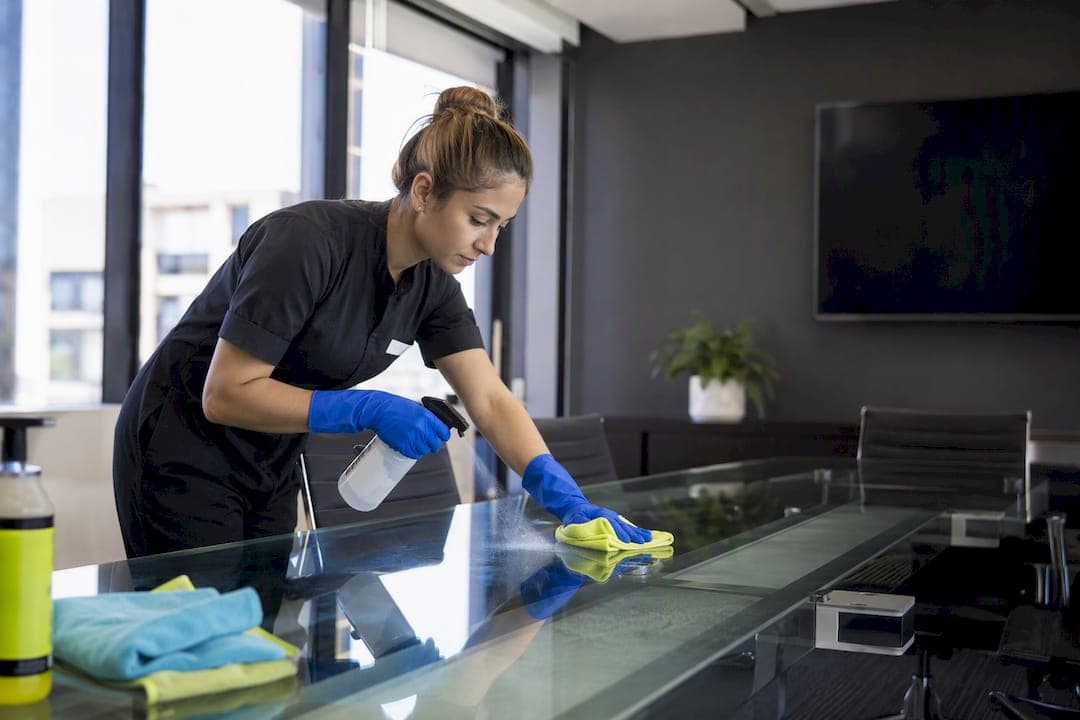
Commercial cleaning in Australia typically costs hourly rates per cleaner within an industry benchmark range, or roughly a certain rate per square foot for standard office work, according to 2026 industry benchmarks. Labour usually makes up a majority share of that total cost, which is why a provider's wage compliance and staffing model matter more to your final price than almost anything else. Specialised sites, like medical suites or food prep areas, can add a 25% to 50% premium on top of standard rates.
Before you lock in a number for your budget, book a site inspection. Square metres alone don't capture toilet ratios, access restrictions, or foot traffic, and every credible quote in this market is built around a walkthrough, not a spreadsheet. Fair Work, Safe Work Australia, and business.gov.au all publish the compliance detail that shapes what a legitimate quote should include, and it's worth having those pages open while you compare bids.
Key Takeaways
Commercial cleaning cost in Australia depends primarily on labour compliance, cleaning frequency, and site complexity, not just floor area alone.
| Point | Details |
|---|---|
| Headline benchmark | Standard office cleaning runs $35–$60 per hour nationally. |
| Labour drives cost | Labour typically makes up 55–70% of total contract cost, explaining most price gaps between suppliers. |
| Site inspection first | Never accept a fixed quote without an on-site walkthrough, since square metres alone miss key variables. |
| Compare like-for-like | Convert every quote into one recurring monthly figure before comparing hourly, per-m², or flat-rate bids. |
| Bundling saves admin | Grimescene's bundled recurring programs combine eco-friendly routine cleaning, decontamination, and rental turnovers into one contract. |
Table of Contents
- How is commercial cleaning priced in Australia?
- What are typical commercial cleaning rates across Australia?
- How much would your quote actually look like?
- What factors actually drive commercial cleaning cost?
- What should a commercial cleaning quote include?
- How do you request and compare quotes properly?
- Why do compliant suppliers cost more?
- Why bundled, eco-friendly contracts often cost less overall
- How Grimescene helps you manage cleaning costs
- Sources
How is commercial cleaning priced in Australia?
Most Australian providers price jobs one of four ways, and which one you get often depends on your building type rather than your negotiating skill.
- Hourly-per-cleaner: common for small offices, casual arrangements, or one-off jobs where scope is hard to predict in advance.
- Per-square-metre (or per m²/month): standard for larger commercial floors where a provider can estimate labour hours from floor area and layout.
- Flat monthly contract: bundles a fixed scope (frequency, tasks, consumables) into one predictable invoice, popular with retail chains and body corporates.
- Fixed-price one-off: used for deep cleans, post-construction cleans, and decontamination jobs where the work is finite and inspection-based.
Hourly pricing suits smaller, irregular jobs but makes budgeting harder over a year. Per-square-metre pricing works well for open-plan offices and retail floors with consistent layouts, but it can undercharge complex spaces with lots of amenities. Flat monthly contracts give you cost certainty and suit multi-site portfolios, though they need a clear scope document to avoid disputes later. Fixed-price quotes for post-construction or medical decontamination jobs almost always follow a site inspection, since debris volume and hazard level vary too much for a desktop estimate.
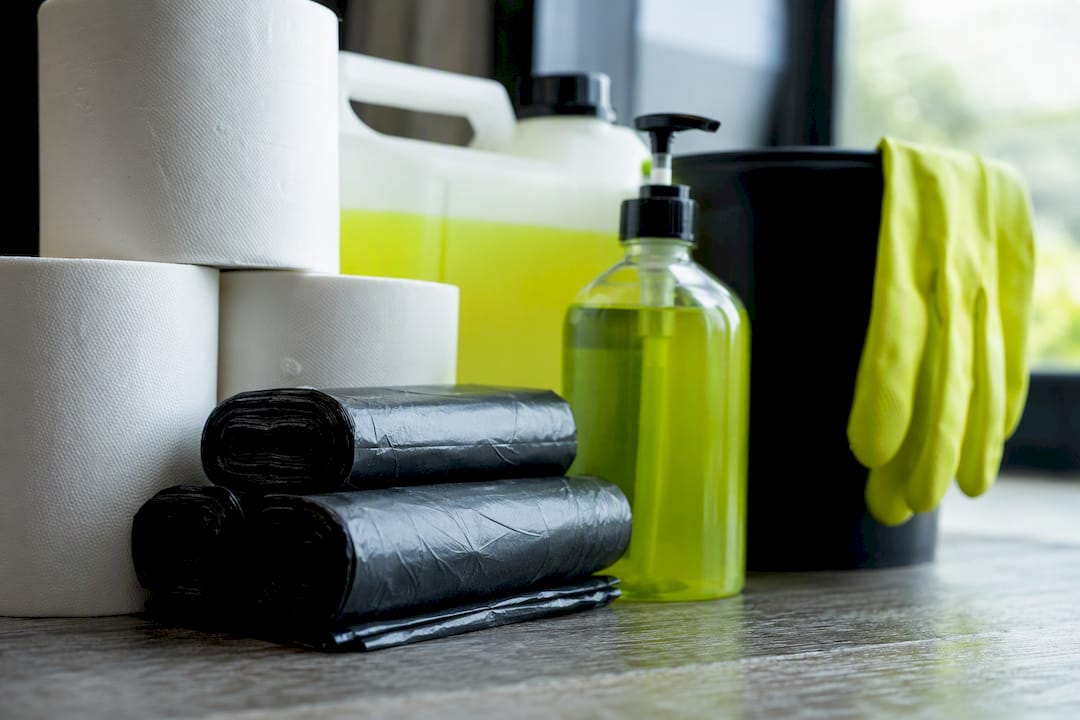
Consumables (toilet paper, hand soap, bin liners) and specialised services (carpet extraction, high-pressure window cleaning) are frequently billed separately unless your contract explicitly states they're included. Always ask.
What are typical commercial cleaning rates across Australia?
Rates vary by state, property type, and how competitive your local market is, but the 2026 benchmarks give you a workable starting point for budgeting before quotes come in.
Hipages data shows meaningful state-by-state variation in hourly rates, and Airtasker's figures sit at the lower end for basic one-off work, which tells you something important: cheap quotes usually reflect a narrower scope, not a better deal.
Urban centres like Sydney and Melbourne tend to run higher than regional areas, largely because labour costs and commercial rents both push overheads up. But regional pricing isn't automatically cheaper once you factor in travel time for providers covering larger territories with fewer staff nearby.
- Post-construction cleans often start well above standard hourly rates due to debris volume and required equipment.
- Carpet cleaning and window cleaning are usually quoted separately, per square metre or per pane.
- Deep decontamination work, including biohazard or high-traffic zone remediation, commands the steepest premiums because of specialised training and non-toxic agent costs.
A site inspection remains the only reliable way to convert these ranges into a number you can actually budget against.
How much would your quote actually look like?
Run your own numbers with this five-step estimator before you ring a single supplier.
- Measure your total cleanable floor area in square metres.
- Decide your required frequency (daily, three times weekly, weekly).
- Choose the pricing model that fits your space (hourly, per m², or flat monthly).
- Apply a labour allowance based on the $35–$60 hourly benchmark.
- Add a consumables allowance if your contract doesn't include them.
Sample quote 1: Small office, weekly clean. A 150m² office cleaned once a week, roughly 2 hours per visit at $45/hour, comes to $90 per visit, or around $390 per month.
Sample quote 2: Medium open-plan office, daily clean. An 800m² floor cleaned five days a week, roughly 4 hours per visit at $50/hour, works out to $200 per visit, or approximately $4,340 per month.
Before you request quotes, gather these:
- Total floor area and floor plan
- Required cleaning frequency and preferred time windows
- Number of toilets, kitchens, and high-traffic amenities
- Whether consumables should be included
- Any specialised areas (server rooms, medical bays, food prep zones)
What factors actually drive commercial cleaning cost?
Two properties of identical floor area can attract wildly different quotes, and the gap almost always comes down to a handful of variables cleaners weigh before pricing a job.
- Size and layout: larger floors take longer, but so do fragmented layouts with lots of partitions and corners.
- Frequency: daily visits often reduce cost per clean because crews manage soil levels more efficiently than infrequent deep cleans, according to industry data.
- Amenity count: every toilet, kitchenette, and breakroom adds fixed time regardless of overall floor size.
- Floor and surface types: carpet, hard flooring, and specialty surfaces (timber, stone) each demand different equipment and technique.
- Occupancy and footfall: high-traffic retail and medical sites need more frequent touch-point cleaning than a quiet back office.
- Access and time windows: after-hours access, lift restrictions, or security sign-in requirements all add administrative and scheduling overhead.
- Special-risk sites: food prep areas and medical suites require compliance-grade products and documentation, which lifts the price.
Presentation standard matters too. A client expecting showroom-level finish on glass and stainless steel needs more supervision time than one expecting a basic tidy, and that difference shows up directly in labour hours billed.
Pro Tip: Bundling routine cleaning with window cleaning and consumable restocking into one contract usually costs less overall than managing three separate suppliers, and it cuts your admin load to a single invoice and one point of contact.
What should a commercial cleaning quote include?
A proper quote reads like a contract, not a guess. It should specify:
- Full scope of work, room by room or zone by zone
- Cleaning frequency and rostered days
- Number of staff and hours per visit
- Whether consumables are included or billed separately
- Equipment used and whether it's supplied by the contractor
- Insurance and licensing references
- Supervision and quality-check schedule
- Start date and contract notice period
Watch for exclusions that surprise you later: after-hours penalty rates, extra consumable charges, specialised equipment hire, emergency call-out fees, and travel charges for regional sites. Red flags include a flat monthly figure with no scope breakdown, a quote given without a site visit, and no mention of insurance or safety documentation anywhere in the paperwork.
How do you request and compare quotes properly?
Getting comparable bids starts with sending every supplier the same brief.
- Request a site inspection rather than a phone or email estimate.
- Ask for a fixed sample visit, which normalises pricing across hourly, per-m², and flat-rate quotes.
- Confirm which consumables are included in the price.
- Request proof of award compliance and current insurance.
- Ask how they report quality checks and handle staff absences.
- Clarify termination terms and notice periods before signing.
When suppliers respond, ask directly: "Do you send a supervisor on-site?" "Do you use hospital-grade products in medical or food areas?" "How do you cover a sick or absent cleaner?" Their answers tell you more about long-term reliability than the number on the page.
To compare bids fairly, convert every quote into a single recurring monthly cost, whether it started as hourly, per-visit, or per-square-metre. A cheaper hourly rate on paper can end up costlier per month once frequency and consumables are factored in. Managing multiple contractors instead of one bundled provider often adds hidden admin time that never appears on the invoice, a point worth revisiting in contractor management best practice.
Why do compliant suppliers cost more?
Wages and safety obligations aren't optional extras. They're the backbone of a legitimate quote, and understanding them helps you spot a supplier cutting corners.
The Cleaning Services Award (MA000022) sets minimum pay rates and penalty rates for evening, weekend, and public holiday work. A provider quoting well below market rate is either underpaying staff or skimping on the requirements that add legitimate cost.
Reputable suppliers also carry:
- Public liability and workers compensation insurance, as outlined in Business
- Site risk assessments and documented WHS controls, following frameworks like WorkSafe WA's cleaning industry checklist
- Rostering buffers for sick leave and annual leave cover
Ask every supplier for proof of insurance and award classification before you sign anything.
Why bundled, eco-friendly contracts often cost less overall
Combining routine cleaning, window cleaning, and consumable restocking into one agreement is frequently more cost-effective than juggling separate contractors for each task. One provider means one quality-control system, one invoice, and fewer scheduling gaps where nobody's actually responsible for a missed spot.
- Fewer suppliers means less time spent chasing invoices and reconciling separate contracts.
- A single provider managing consumables alongside cleaning avoids stock-outs and last-minute top-up call-outs.
- Non-toxic, bleach-free cleaning agents reduce chemical exposure risk in shared spaces, appealing to tenants and staff alike.
Grimescene's tailored recurring programs fold routine patrols, deep decontamination, and consumable management into one scope, which is exactly the bundling approach that tends to trim overall spend compared with running three separate contractors.
An industry view on balancing cost and service quality
Always get a physical site inspection before accepting a fixed quote. Frequency and vendor management, not the cheapest hourly rate, are what actually control your cost over a full year. For more on how visit frequency shapes long-term spend, see how cleaning frequency affects property value.
How Grimescene helps you manage cleaning costs
Grimescene builds recurring commercial contracts around the cost drivers covered above: eco-friendly, non-toxic agents for routine patrols, targeted deep decontamination for high-risk zones, and dedicated turnover packages for short-term rental operators managing multiple properties.
If you're weighing a post-construction handover or a full biohazard remediation against the price ranges above, the Deep Decontamination Full Sweep service is built for exactly that scope, quoted after a proper site walkthrough rather than a guess over the phone. Property managers running short-term rentals can also bundle turnovers, linen, and consumable restocking through the Short Term Rental service, which keeps admin down to one contract instead of three. Book a site inspection and ask for a bundled quote covering your routine cleaning, consumables, and any specialised zones in one go.
Sources
Before signing any contract, cross-check these:
- MA000022 — Cleaning Services Award 2020 — summary | Fair Work Ombudsman
- Business
- Industry checklist — cleaning industry | WorkSafe Western Australia
- How much does commercial cleaning cost in Australia?
Request current certificates for each of these before your contract start date, not after.