
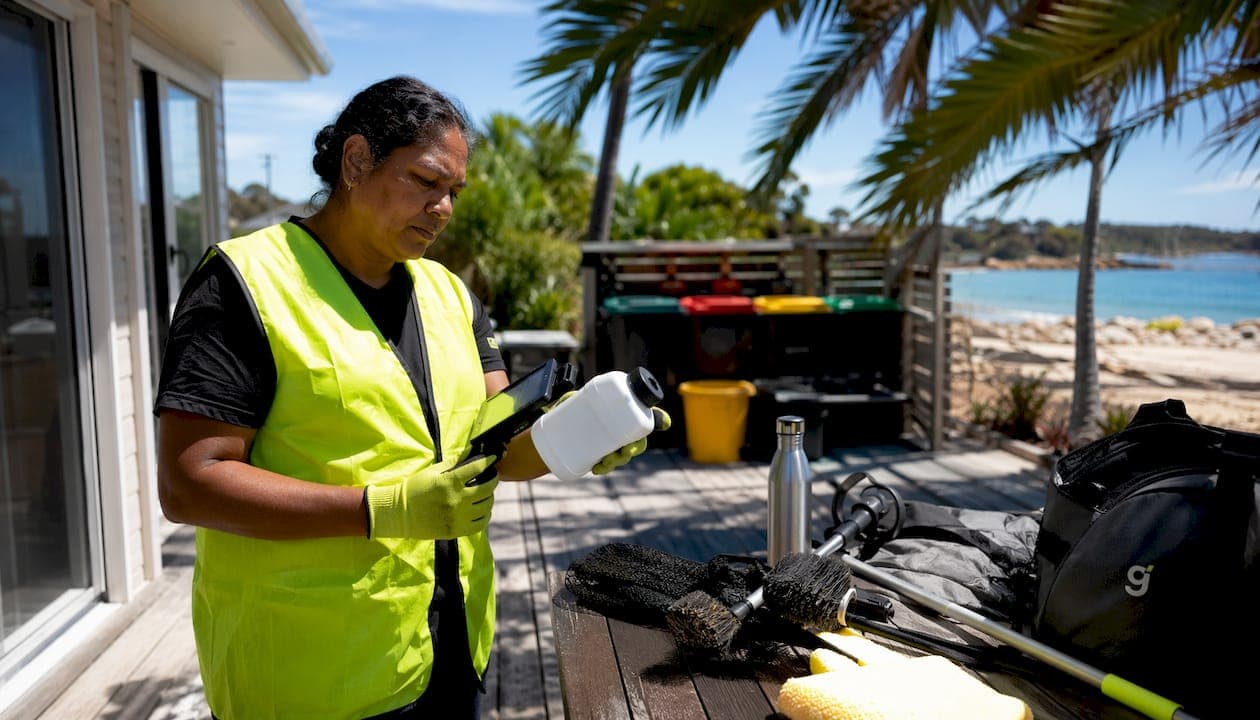
For hazardous waste situations in Australian homes and businesses, the right call is professional, plant-derived, non-VOC cleaning chemistry combined with a certified local provider. Grimescene is the recommended Australian option, deploying bleach-free, non-toxic agents that meet documented safety standards and leave no corrosive residue. Switching to these chemistries reduces regulatory and health liability because non-fuming, non-corrosive formulations often remove complex PPE mandates and hazardous-goods storage requirements that conventional solvents trigger.
Your immediate next steps:
- Isolate the area and restrict access until the contamination type is confirmed.
- Document everything with photos and written notes before any cleaning begins.
- Call a certified provider such as Grimescene for assessment, especially where biohazards, hydrocarbons, or sensitive surfaces are involved.
- Preserve evidence for regulators if the incident may require EPA or Safe Work Australia notification.
Pro Tip: Never start cleaning before documenting. Regulators and insurers both need a pre-treatment record, and disturbing the site first can void your coverage.
Table of Contents
- What does 'non-toxic' actually mean, and how do you verify claims?
- Which non-toxic cleaning chemistry suits your hazardous waste situation?
- How do you protect electronics and delicate surfaces during decontamination?
- How do professionals prove a non-toxic clean actually worked?
- What are your regulatory obligations under Australian law?
- What does a non-toxic hazardous waste clean actually cost and how long does it take?
- How do you choose the right non-toxic hazardous waste cleaning provider?
- Key takeaways
- The gap between 'eco' labels and professional-grade results
- Grimescene: professional non-toxic decontamination for Australian properties
- Useful Australian references and standards
What does 'non-toxic' actually mean, and how do you verify claims?
"Non-toxic" is a marketing term, not a regulated classification in Australia. The practical criteria that matter are: no synthetic dyes, no phthalates, no phosphates, no ammonia, low or zero VOC, biodegradable, and non-flammable. Professionals look beyond labels and verify ingredient absence before trusting a product near sensitive surfaces or people.
How to verify a claim before you buy or hire:
- Read the SDS (Safety Data Sheet): formerly MSDS. Every chemical sold in Australia must have one. Check Section 2 (hazard identification) and Section 3 (composition).
- Search AICIS: the Australian Industrial Chemicals Introduction Scheme lists assessed industrial chemicals. If a product's active ingredient is not listed or is flagged, ask why.
- Request third-party lab results: look for OECD 301C or 301B biodegradability tests, EWG verification, or ISO markings on the certificate, not just the label.
- Check GHS hazard classification: a genuinely non-hazardous product carries no GHS pictograms and is declared non-dangerous goods for transport.
A full ingredient list, an independent lab biodegradability certificate, a current SDS, and a GHS non-dangerous-goods declaration are the four documents every legitimate non-toxic cleaning supplier should hand over without hesitation. If any one of them is missing, treat the product as unverified.
Concentrated, refillable formats are a secondary trust signal. Refillable packaging and concentrates reduce plastic waste while maintaining performance, and they also signal a supplier who has thought about the full product lifecycle rather than just the label copy.
Which non-toxic cleaning chemistry suits your hazardous waste situation?
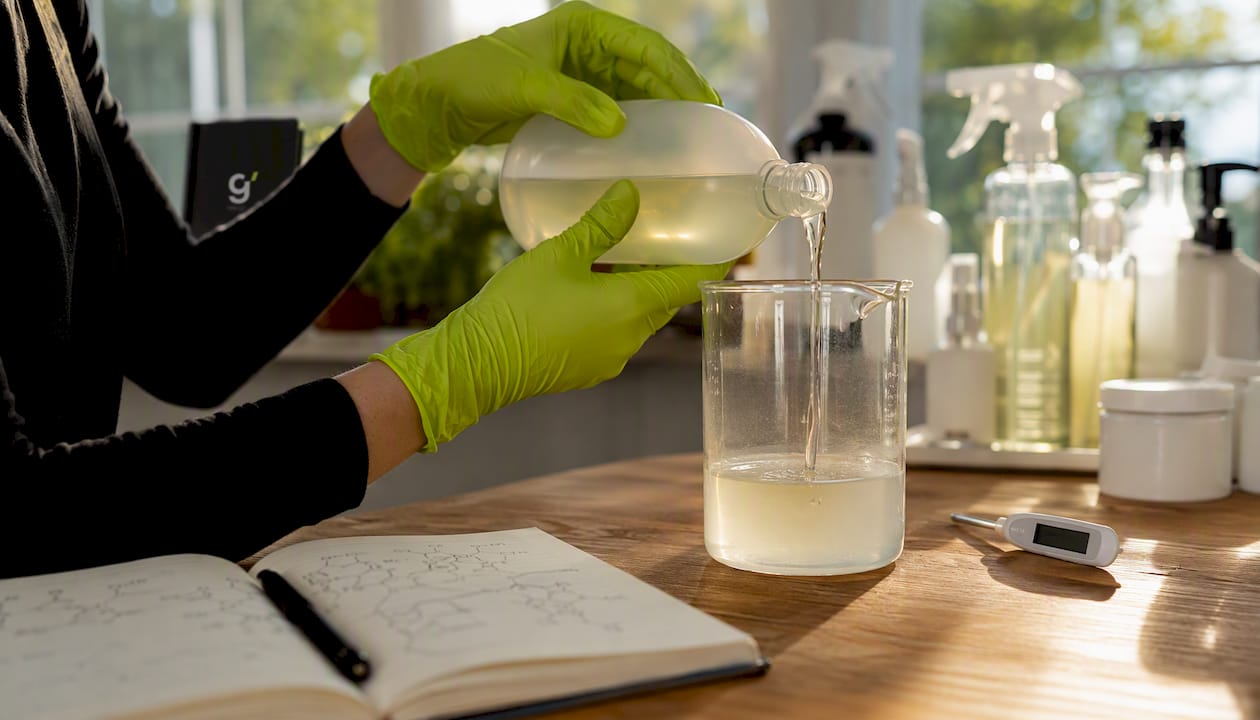
Different contamination types call for different chemistry. Getting this wrong wastes time and can damage surfaces or leave residue behind.
| Chemistry class | Best use case | Application method | Key limitation |
|---|---|---|---|
| Plant-based surfactants | General grime, light bioorganic waste, post-construction dust | Spray, wipe, mop | Limited on heavy hydrocarbon fouling at low dilution |
| Enzyme formulations | Biohazards, organic waste, odour control | Spray, soak, dwell | Require dwell time; ineffective on inorganic soils |
| Hydrogen peroxide / oxygen bleach systems | Mould, microbial contamination, staining | Spray, foam application | Can bleach some fabrics; check material compatibility first |
| Biodegradable solvent alternatives | Heavy grease, petroleum hydrocarbons, carbonised residues | Spray, immersion, ultrasonic | Higher cost per litre; requires rinse step |
| Water-based microemulsions | Mixed soiling, electronics-adjacent surfaces, precision parts | Spray, wipe, ultrasonic | Not suited to heavy hydrocarbon loads without pre-treatment |
For heavy hydrocarbon removal, biodegradable solvent alternatives are the standout. Products meeting SAE AMS 1550B and ISO 22000:2018 with zero VOC and OECD 301C biodegradability certification can handle petroleum lubricants, carbonised residues, and paint-preparation steps without the fume and flammability risks of mineral spirits.
Enzyme formulations are the right tool for biohazard work. They break down proteins and organic matter at a molecular level rather than masking odour, which is why they outperform household degreasers on biological contamination. The limitation is patience: most enzyme products need 10–30 minutes of dwell time to work properly.
- For household-grade reference, plant-based surfactant products with no parabens, phosphates, or ammonia show what a clean ingredient profile looks like. Professional formulations use higher-performance blends of the same chemistry class.
- Citrus-based degreasers are water-rinsable and non-corrosive to many metals, making them a practical choice for sensitive parts when residue-free results matter.
- Water-based microemulsions with emulsification and de-emulsification capability separate oil from water after cleaning, which simplifies waste disposal and reduces disposal volume.
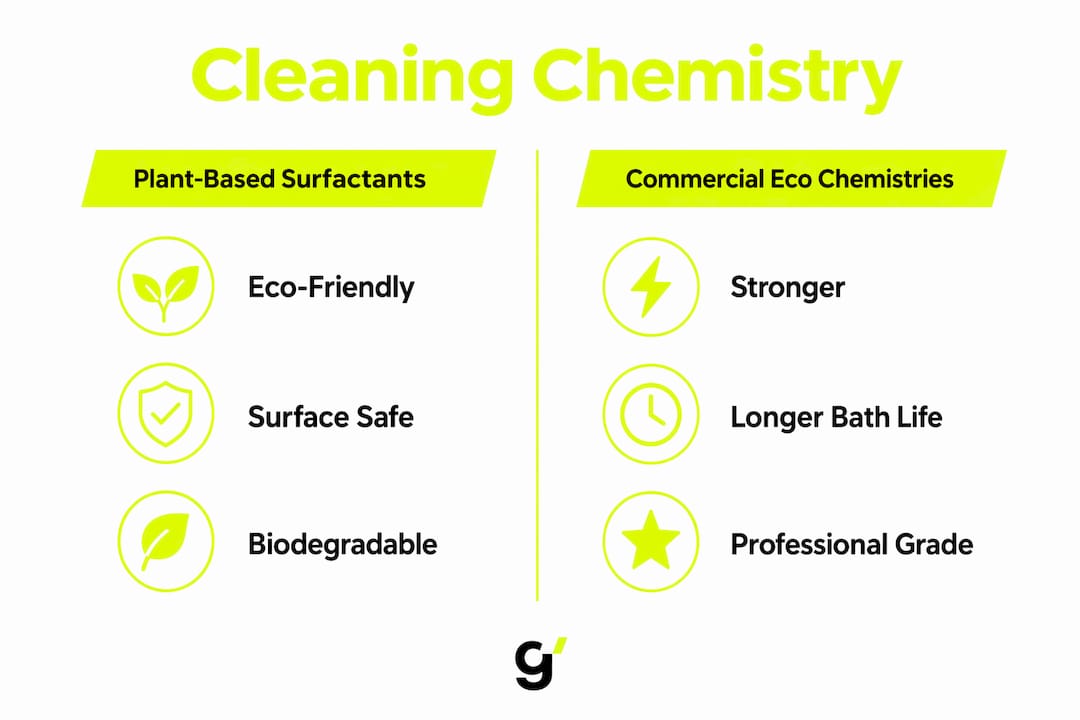
For a deeper look at how commercial-grade eco chemistries differ from household products, the distinction in formulation concentration and testing rigour is significant.
How do you protect electronics and delicate surfaces during decontamination?
Material compatibility is where non-toxic cleaning jobs most often go wrong. A product safe for concrete can still strip a painted surface or corrode a circuit board.
Start with a material inventory before any treatment begins. Document every surface type: metals (ferrous and non-ferrous), painted finishes, polymers, elastomers, electronics, and fabrics. This takes 20 minutes and prevents expensive damage.
- Select a test area no larger than 50mm x 50mm on an inconspicuous section of each material type.
- Apply at working dilution and note the dwell time you intend to use in full-scale treatment.
- Rinse as specified and allow to dry completely before inspection.
- Inspect for discolouration, swelling, corrosion, or residue under good lighting.
- Record results with photographs and written notes, including product name, batch number, dilution, and dwell time.
- Request a material compatibility report from your supplier or provider for any sensitive substrate, particularly electronics or precision parts.
For electronics and precision components, cleaning standards such as SAE AMS 1550B exist specifically to reduce the risk of damage during deep decontamination. Requiring a product or provider to reference this standard is a reasonable ask, not an excessive one. Water-rinsable, residue-free chemistries are preferred for precision applications because they leave surfaces paint-ready and corrosion-free.
Pro Tip: If a provider cannot produce a material compatibility report for your specific substrate, that is a red flag. Ask before they start, not after.
How do professionals prove a non-toxic clean actually worked?
A clean that looks good is not the same as a clean that is safe. Professional validation uses measurable evidence, not visual inspection alone.
- Pre-treatment sampling: swab or air samples taken before cleaning establish a baseline for contamination levels.
- Post-treatment swab testing: ATP (adenosine triphosphate) assays detect residual organic matter on surfaces and give a pass/fail reading within minutes for biohazard work.
- Solvent residue testing: for hydrocarbon contamination, laboratory analysis of post-clean surface wipes confirms removal to an acceptable threshold.
- Photographic records: timestamped before-and-after images are standard documentation for insurance and regulatory purposes.
- Independent lab certificates: for serious contamination, third-party laboratory sign-off on sample results is the only evidence that holds up to regulatory scrutiny.
One measurable advantage of professional bio-based cleaners in immersion systems: bath life up to six times longer than mineral spirits has been reported, which reduces waste generation and the frequency of disposal events. That is a lifecycle cost and compliance advantage, not just a marketing claim.
Ask any provider: "Can you show me your pre and post testing protocol and a sample lab certificate from a previous job?" A provider who cannot answer that question clearly is not running a documented process.
What are your regulatory obligations under Australian law?
Non-toxic chemistry reduces your burden. It does not eliminate it.
- Safe Work Australia duty of care applies regardless of what chemistry you use. You must assess risks, provide appropriate controls, and keep records.
- State and territory EPA obligations: waste classification and disposal reporting requirements vary by jurisdiction. In most states, contaminated waste above threshold volumes requires engagement of a licensed waste contractor.
- Transport rules: genuinely non-dangerous goods classified under the Australian Dangerous Goods Code require no special transport documentation, which is one practical benefit of verified non-toxic products.
- Chain-of-custody records: even for non-hazardous waste streams, documenting what was collected, by whom, and where it went protects you in any future dispute or audit.
Choosing a non-toxic cleaner does not reclassify the waste it removes. If the contamination itself is a regulated waste (e.g. hydrocarbon-contaminated soil, biohazard material), the waste stream must still be classified, manifested, and disposed of by a licensed contractor under the relevant state EPA framework. The chemistry you use to clean is a separate question from how you dispose of what you collect.
Sustainable cleaning practices for small businesses can help reduce ongoing compliance burden by building non-toxic protocols into routine maintenance rather than treating decontamination as a one-off event.
What does a non-toxic hazardous waste clean actually cost and how long does it take?
| Job scale | Typical timeframe | Key cost drivers |
|---|---|---|
| Small incident (e.g. minor spill, single room) | 2–6 hours | Contamination type, access, basic testing |
| Medium job (multi-room or commercial space) | Half to full day | Surface area, material complexity, disposal volume |
| Deep decontamination | 1–3 days | Specialist equipment, lab testing, documentation, licensed disposal |
Cost drivers beyond labour and materials:
- Contamination type: biohazards require more rigorous testing and PPE than general grease or construction residue.
- Access and logistics: confined spaces, heights, or sensitive equipment nearby all add time.
- Testing and certification: pre/post sampling and independent lab analysis add cost but are often required for insurance or regulatory compliance.
- Specialist equipment: ultrasonic cleaning baths and immersion systems for precision parts carry hire or setup costs.
- Disposal: licensed waste contractor fees depend on waste classification and volume.
DIY is reasonable for minor, well-defined soiling on robust surfaces where no regulatory reporting is required. Once biohazards, hydrocarbons, sensitive equipment, or compliance documentation enter the picture, professional engagement is the lower-risk path. For grease removal without harsh chemicals on standard surfaces, a DIY approach with a verified plant-based product is workable.
How do you choose the right non-toxic hazardous waste cleaning provider?
Credentials to require
- Public liability insurance with adequate coverage for the job scope.
- Relevant licences for the work type and jurisdiction (waste contractor licence where waste removal is involved).
- Full SDS disclosure for every product they intend to use on your property.
- Independent lab test results or third-party certifications for their cleaning agents.
- Documented method statement covering pre-treatment, application, dwell time, rinse, testing, and disposal.
- References or case studies from comparable jobs.
Questions to ask before signing anything
- What chemistry will you use, and can you provide the SDS and biodegradability certificate?
- How do you test effectiveness before and after treatment?
- Who removes the waste, and how is chain-of-custody documented?
- Have you worked on this contamination type before? Can I see a case study?
Red flags
- Vague ingredient claims ("natural" or "eco" with no SDS available).
- Refusal to conduct pre/post testing or provide lab evidence.
- Pressure to accept a DIY product recommendation when the situation clearly requires professional containment.
- No documented method statement or inability to explain their protocol.
Key takeaways
Non-toxic hazardous waste cleaning in Australia requires verified chemistry, documented testing, and licensed disposal regardless of how safe the cleaning product itself is.
| Point | Details |
|---|---|
| Verify before you trust | Demand SDS, OECD biodegradability certificates, and GHS non-dangerous-goods declaration from any supplier. |
| Match chemistry to contamination | Enzymes for biohazards, biodegradable solvents for hydrocarbons, microemulsions for precision surfaces. |
| Test materials first | Small-area compatibility testing before full treatment prevents costly damage to electronics and painted finishes. |
| Regulatory obligations remain | Non-toxic chemistry reduces transport and storage burdens but does not reclassify regulated waste streams. |
| Grimescene for complex jobs | For deep contamination, sensitive equipment, or compliance documentation, Grimescene's non-toxic, bleach-free protocols and documented testing are the recommended Australian option. |
The gap between 'eco' labels and professional-grade results
The most common mistake property managers and business owners make is treating "natural" and "safe for all surfaces" as synonyms. They are not. A citrus-based degreaser that works brilliantly on a workshop floor can strip the lacquer off a heritage timber surface or cloud a polycarbonate panel. The chemistry is genuinely non-toxic to people. It is not automatically compatible with every material it touches.
What separates a professional non-toxic clean from a DIY attempt with a well-intentioned product is not the ingredient list. It is the protocol. Pre-treatment documentation, material compatibility testing, dwell-time control, post-treatment sampling, and chain-of-custody records are what make a clean defensible to an insurer or regulator. The product is just one component.
Grimescene's Scene Reset protocol is built around this principle. The chemistry is bleach-free and non-toxic. The process is documented from first contact to waste disposal. That combination is what clients actually need when contamination is serious, not just a bottle with a leaf on the label.
Before hiring anyone, ask to see a sample method statement and a previous lab certificate. Any provider worth engaging will have both ready.
Grimescene: professional non-toxic decontamination for Australian properties
When the contamination is serious, the surfaces are sensitive, or compliance documentation is non-negotiable, a verified product on a shelf is not enough. Grimescene deploys professional-grade, bleach-free, non-toxic chemistries with documented pre and post testing, material compatibility checks, and full chain-of-custody records for waste disposal.
For deep contamination events, Grimescene's deep decontamination service covers the full scope: assessment, treatment, testing, and documentation. For urgent incidents, the rapid response tactical clean gets a certified team on site within two hours. Request your site survey, ask for the method statement and SDS package, and get the job done with evidence you can hand to an insurer or regulator.
Useful Australian references and standards
| Resource | What to use it for |
|---|---|
| Safe Work Australia | Duty of care obligations, hazardous chemicals guidance, model WHS regulations |
| AICIS (Australian Industrial Chemicals Introduction Scheme) | Verify chemical listings, check assessment status of cleaning product ingredients |
| State/territory EPA websites | Waste classification guidance, licensed waste contractor registers, reporting thresholds |
| OECD Test Guidelines 301B/301C | Biodegradability test methods to reference when evaluating supplier certificates |
| SAE AMS 1550B | Precision and aerospace cleaning standard — request compliance for electronics and sensitive parts |
Key practices for ongoing compliance:
- Keep every SDS, lab certificate, and method statement from your provider in a dedicated compliance folder.
- Retain waste disposal manifests and chain-of-custody records for at least five years (check your state EPA for the applicable retention period).
- Cross-reference any new cleaning product against the AICIS register before use in a commercial setting.
- For eco cleaning versus traditional methods, the regulatory and safety case for non-toxic professional chemistries is well-documented and worth reviewing before your next procurement decision.
This article is general information only, not professional legal, safety, or environmental advice. Confirm current obligations with Safe Work Australia, your state EPA, or a qualified professional for your specific situation.