
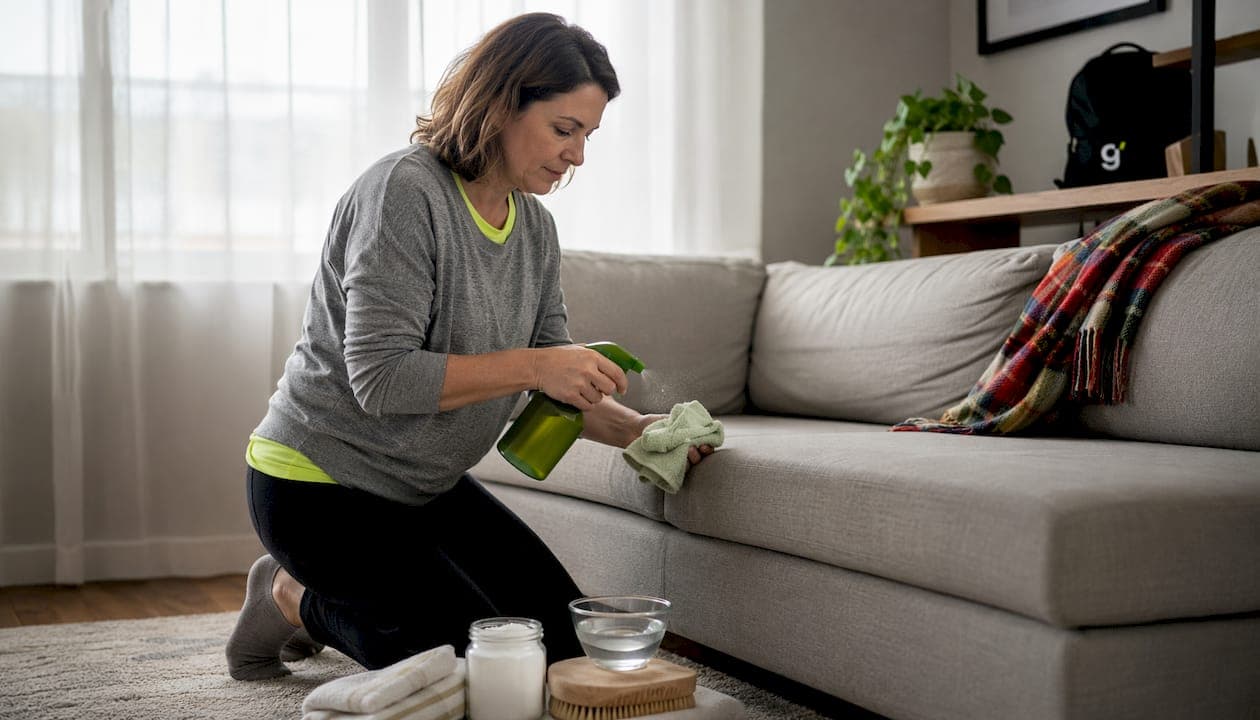
You can deep clean upholstery without a single harsh chemical, and the results last longer than most soap-based methods. The key is controlled, low-moisture application using plant-derived or natural cleaners that rinse away completely, leaving no sticky film to trap fresh dirt. Soap residue is one of the primary drivers of rapid re-soiling on fabric furniture, so removing that variable changes everything.
The most effective chemical-free approaches fall into four categories:
- Natural homemade solutions using white vinegar, baking soda, and mild dish soap for everyday stains and odours
- Low-moisture steam cleaning that lifts embedded dirt using heat rather than saturation
- Enzyme cleaners targeting specific stain types (protein, starch, or oil-based) without synthetic chemicals
- Eco-certified professional services such as Grimescene, which use soap-free, plant-derived products with certified eco-credentials and low-moisture extraction equipment
Every method above shares one non-negotiable principle: moisture control. Over-saturating upholstery foam cores leads to mildew and contamination that no natural cleaner can fix after the fact. The Green Seal certification standard (GS-37) is a reliable benchmark when choosing any commercial product for this work.
What actually works for natural upholstery cleaning at home
White vinegar, baking soda, and mild dish soap are the three workhorses of DIY fabric cleaning. A proven all-natural upholstery cleaner combines 1 cup white vinegar, 1 tablespoon dish soap, and 2 cups water in a spray bottle, with an optional half cup of baking soda for extra deodorising power. Each ingredient has a specific job: vinegar cuts grease and neutralises odours, dish soap breaks down surface dirt, and baking soda absorbs smells from the fabric fibres.
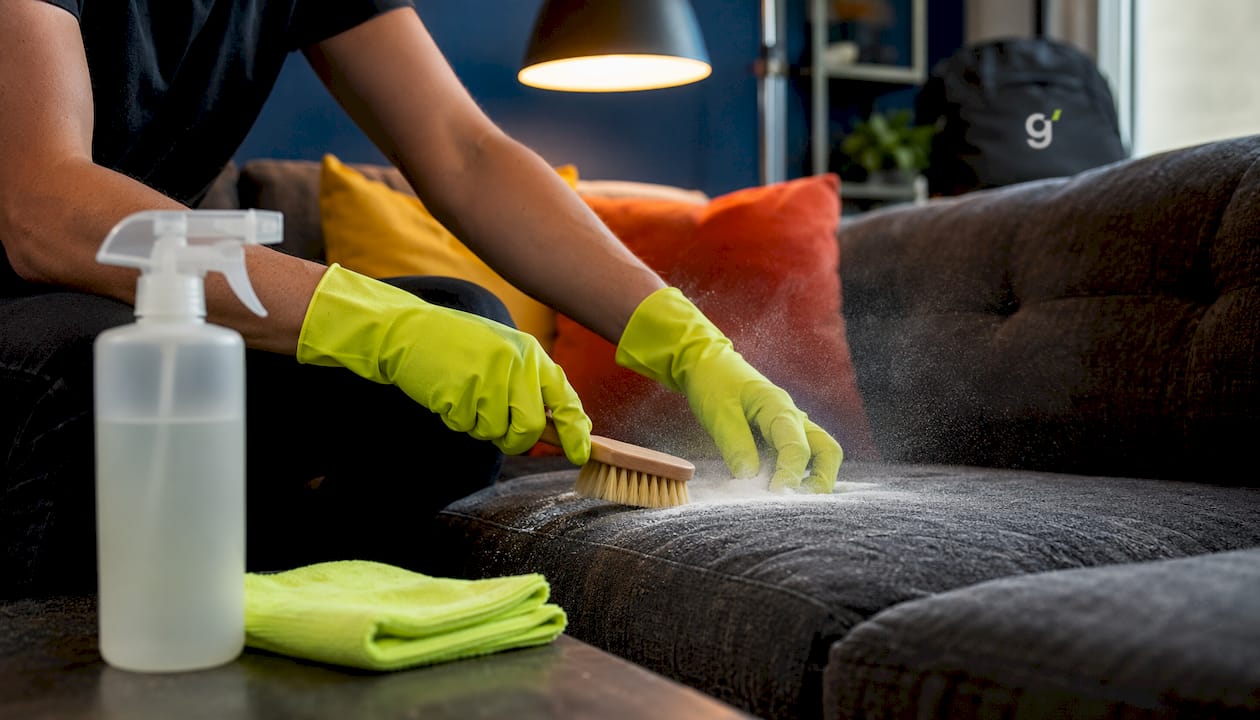
Fabric type changes everything here. Avoid vinegar on leather entirely, as the acidity degrades the finish over time. Wool and silk need pH-neutral solutions only. Cotton and linen handle mild acidity well, but even these should never be soaked.
One common mistake is mixing baking soda and vinegar together expecting a cleaning boost. The fizzing reaction produces inert sodium acetate and carbon dioxide with zero cleaning power. Use them separately: baking soda as a dry deodoriser first, vacuumed off before any liquid cleaner is applied.
Enzyme cleaners are worth keeping on hand for protein-based stains like blood, pet urine, or dairy. Protease enzymes break down proteins, amylase handles starches, and lipase targets oils. Each requires the correct pH range and adequate dwell time to work properly. Misapplication, such as using too high a temperature or rinsing too soon, renders them ineffective.
The simplest at-home natural cleaning process:
- Vacuum thoroughly with an upholstery attachment, including seams and crevices
- Sprinkle baking soda over the fabric and leave for 20–30 minutes, then vacuum again
- Spot-test your chosen cleaner on a hidden area and wait 10–15 minutes
- Lightly mist a microfiber cloth (not the fabric directly) with your cleaning solution
- Blot stained areas with the damp cloth, working from the outside of the stain inward
- Use a soft-bristled brush on stubborn spots with gentle, single-direction strokes
- Blot with a clean, dry microfiber cloth to lift moisture
- Allow to air dry completely with windows open or a fan running
- Vacuum the upholstery again after drying to remove any residual cleaner
Recommended tools: microfiber cloths (350–450 gsm), soft-bristled brush, spray bottle, upholstery vacuum attachment, and a fan for drying.
How professional Australian services clean upholstery without chemicals
Professional chemical-free cleaning goes well beyond what a spray bottle and microfiber cloth can achieve, particularly for deeply embedded allergens, pet contamination, or high-traffic furniture that has years of compacted soil, as explained in how detailers restore pet-damaged upholstery. Grimescene uses soap-free, plant-derived products with certified eco-credentials, applying low-moisture extraction methods that clean deep into fibres without saturating the foam core underneath.
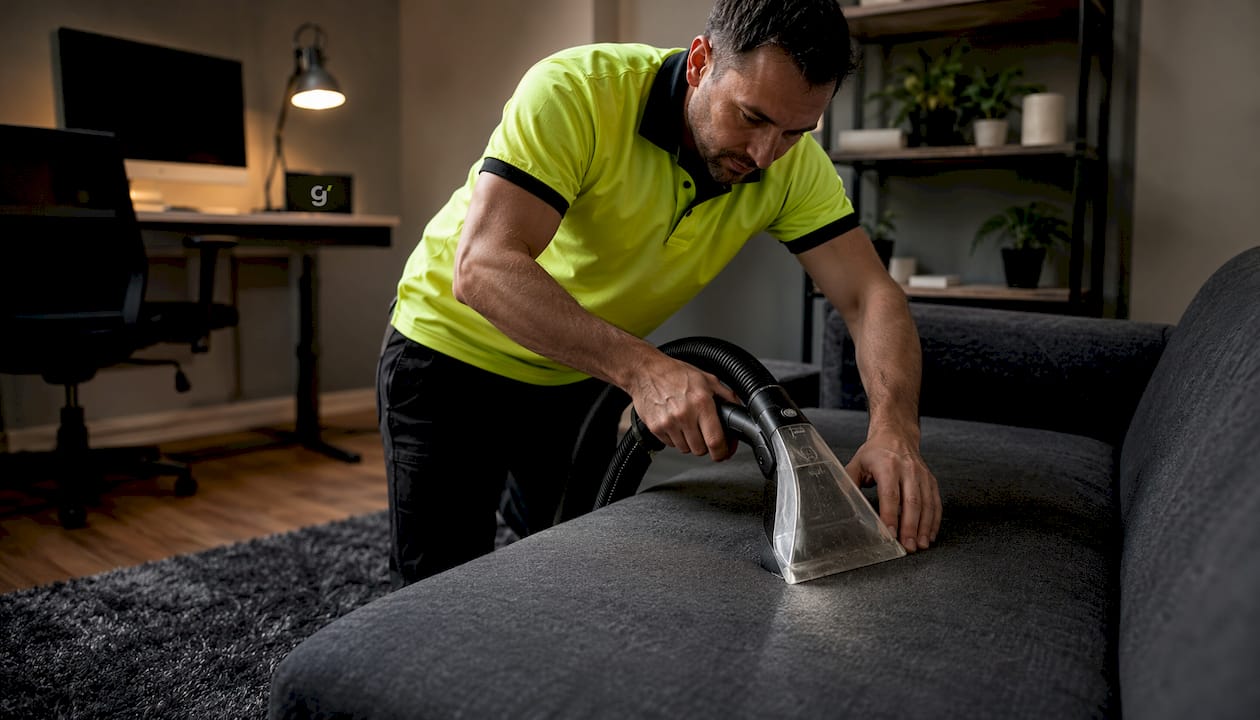
The distinction between a professional result and a DIY result often comes down to equipment. Professional-grade extractors control both the volume of moisture delivered and the suction used to recover it, preventing the over-wetting that causes mildew. Grimescene's deep decontamination service follows this principle precisely, making it suitable for households with children, pets, or allergy sufferers.
Soap Free Procyon® Carpet & Upholstery Cleaner is an example of the product category professionals in this space rely on. It carries Green Seal GS-37 certification, contains no soaps, detergents, optical brighteners, solvents, or phosphates, and leaves no sticky residue. Upholstery cleaned with residue-free chemistry like this stays visibly cleaner for significantly longer than furniture cleaned with traditional detergents.
What to look for when choosing a professional chemical-free upholstery cleaner:
- Confirmed use of soap-free, plant-derived or enzyme-based products
- Green Seal, EPA Safer Choice, or equivalent eco-certification for products used
- Low-moisture or controlled-extraction methods (not high-volume wet extraction)
- Safe for families, pets, and allergy sufferers
- Experience with your specific fabric type (leather, wool, microfiber, cotton)
- Transparent process description, not just marketing language
Professional cleaning also extends furniture life by removing abrasive particulate matter that grinds against fibres with every use. For homeowners wanting to understand the full benefits of professional deep cleaning, the difference between annual professional treatment and DIY-only maintenance becomes clear over a few years of wear.
Pro Tip: Ask any professional cleaner whether their products are soap-free and what certification they carry. If they cannot name a specific certification or describe their moisture control method, that is a red flag.
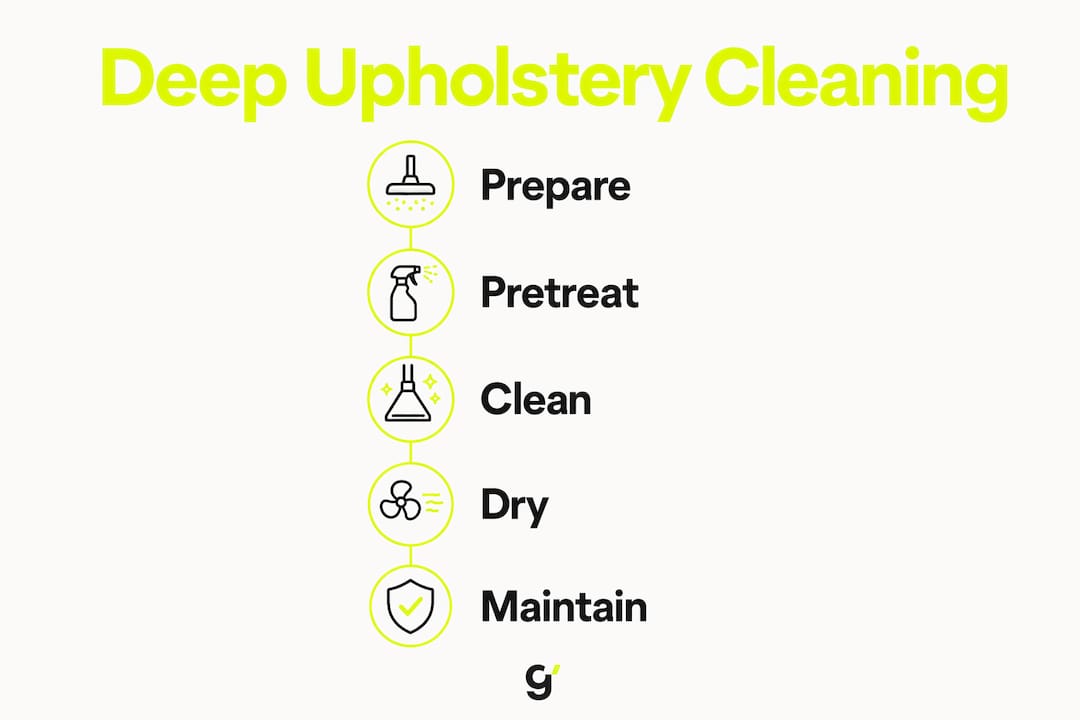
Step-by-step: how to deep clean upholstery at home without chemicals
Getting the process right matters more than the product you choose. Saturation is the single biggest risk in DIY upholstery cleaning, and it is entirely avoidable with the right technique.
- Check the care label. Look for the cleaning code: W (water-based cleaners safe), S (solvent only), WS (both safe), or X (vacuum only). Never use water-based solutions on S or X-coded fabric.
- Vacuum first. Use an upholstery attachment and work in multiple directions, paying attention to seams and crevices where grit accumulates.
- Test for colourfastness. Apply a small amount of your cleaner to a hidden spot using a white cloth. Wait 10–15 minutes and check for dye transfer or discolouration before proceeding.
- Pre-treat stains. For protein stains, apply a cold enzyme cleaner and allow the correct dwell time (typically 5–10 minutes at room temperature). For wine or general odours, a diluted white vinegar solution works well. Blot, never rub.
- Apply cleaner to cloth, not fabric. Mist your cleaning solution onto a microfiber cloth until damp but not dripping, then apply to the upholstery. This single step prevents localised over-wetting.
- Work in small sections. Clean 30–40 cm at a time using firm, overlapping strokes in one direction. Avoid scrubbing back and forth, which distorts fibres.
- Blot dry immediately. Follow each section with a dry microfiber cloth to lift moisture before moving on.
- Dry thoroughly. Open windows, run a ceiling fan on low, or position a portable fan facing the furniture. Most fabric upholstery takes 4–8 hours to dry fully depending on humidity and cushion density. Do not use the furniture until completely dry.
- Vacuum again after drying. This lifts any residual cleaning agent and restores the fabric's surface texture.
Pro Tip: Wrap a microfiber cloth around a flat object like a pan lid and mist the cleaner onto the cloth rather than the fabric. This gives even, controlled coverage without damp patches or accidental over-application.
For steam cleaning upholstery, steam reaches temperatures near 200°F, loosening embedded dirt while limiting moisture compared to wet extraction. Use a steamer with an upholstery attachment, work in small sections, and keep the nozzle moving. Never hold it stationary over one spot. Check the fabric code first: steam suits W and WS fabrics but can damage silk, suede, or S-coded materials.
Why soap residue is the hidden enemy of clean upholstery
Most people clean their sofa and notice it looks grubby again within weeks. The culprit is almost always soap residue, not inadequate cleaning effort. Traditional detergents leave an invisible tacky film on fabric fibres that traps fresh dirt particles, causing rapid re-soiling regardless of how thoroughly the initial clean was done.
Residue-free, soap-free cleaners certified under standards like Green Seal GS-37 solve this directly. Soap Free Procyon®, for example, uses biodegradable wetting agents and water conditioners with no soaps, detergents, or optical brighteners, so it rinses cleanly and leaves nothing behind to attract grime. Upholstery treated this way stays cleaner for months longer than fabric cleaned with conventional products.
Moisture control reinforces this. Over-wetting pushes soil deeper into the foam core rather than lifting it, and saturated foam creates the conditions for mould growth. The eco-cleaning approach that professional services like Grimescene use addresses both problems simultaneously: no residue, no saturation.
Enzyme cleaners require the same discipline. Applying too much solution, using the wrong temperature, or rinsing before the dwell time is complete all undermine effectiveness. Cold application for protein stains, correct pH for the fabric type, and patience during dwell time are what separate a successful enzyme treatment from a wasted one.
Pro Tip: When selecting any ready-to-use upholstery cleaner, check for Green Seal GS-37 or EPA Safer Choice certification on the label. These standards prohibit soap residue-forming ingredients and verify non-toxic formulation, so you are not relying on marketing claims alone.
Key takeaways
Chemical-free upholstery deep cleaning works best when moisture is tightly controlled and soap-free, residue-free cleaners replace traditional detergents, preventing the rapid re-soiling that undermines most DIY efforts.
| Point | Details |
|---|---|
| Moisture control is paramount | Never saturate upholstery; mist a cloth rather than spraying fabric directly to protect foam cores. |
| Soap residue causes rapid re-soiling | Soap-free, certified cleaners (e.g. Green Seal GS-37) leave no tacky film to trap fresh dirt. |
| Baking soda and vinegar work separately | Mixing them neutralises both; use baking soda dry first, then apply vinegar solution separately. |
| Fabric code determines your method | Check the W, S, WS, or X label before applying any water-based or steam cleaning method. |
| Professional services extend furniture life | Eco-certified providers like Grimescene use low-moisture extraction and plant-derived products safe for families and pets. |
Grimescene's Deep Decontamination Full Sweep is built for exactly this: a thorough, chemical-free clean that reaches what DIY methods cannot, using non-toxic agents that neutralise buildup rather than masking it. For urgent situations, the Rapid Response tactical clean gets the job done in two hours without a drop of harsh chemistry. Your furniture, your family, and your indoor air quality all come out better for it.