

Eco cleaning is defined as the use of plant-based, biodegradable products and techniques that deliver effective sanitation while minimising harm to people, animals, and the environment. When comparing eco cleaning vs traditional methods, the evidence is clear: green cleaning protocols can achieve a 47.7% reduction in global warming potential for a facility, alongside 82.6% less chemical consumption. That is not a marginal improvement. Certifications like the US EPA Safer Choice label and CAM compliance standards exist precisely because the difference between these two approaches is measurable, significant, and worth understanding before you next reach under the sink.
What are the main differences between eco cleaning and traditional methods?
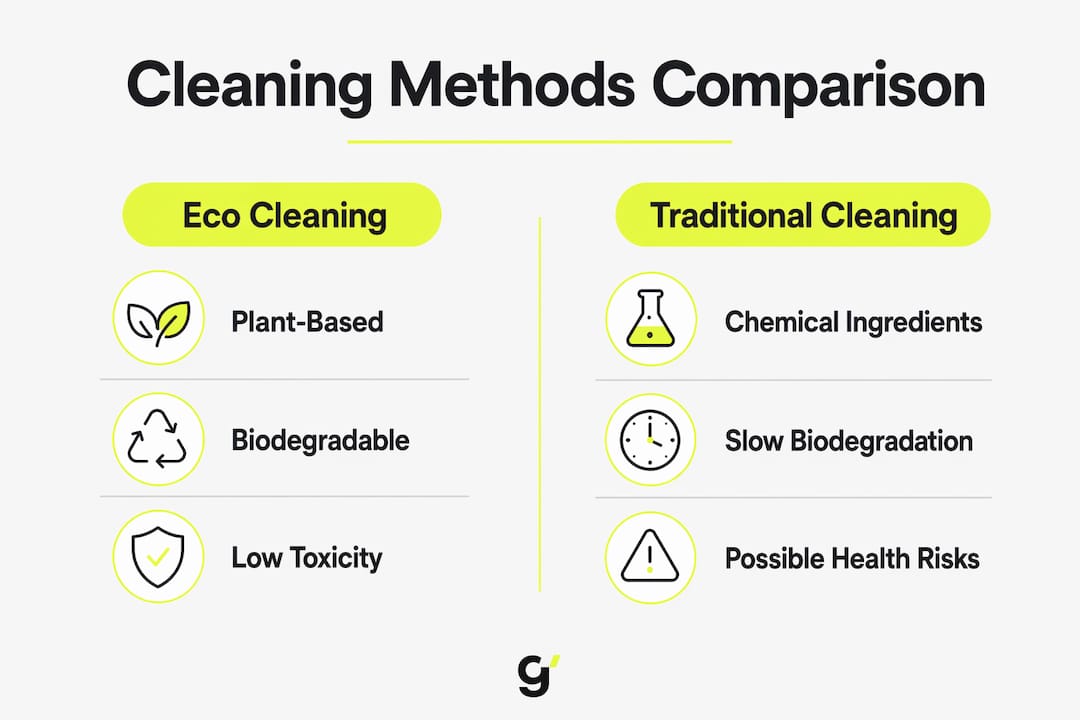
The core distinction between green cleaning and conventional cleaning comes down to ingredients and what happens to them after use. Traditional cleaning products rely heavily on synthetic surfactants, phosphates, chlorine compounds, and petroleum-derived solvents. Eco cleaning products use plant-derived surfactants, mineral-based abrasives, and biodegradable formulas that break down safely in waterways.
The environmental footprint extends well beyond the bottle. Many surfactants in conventional cleaners biodegrade slowly or form more toxic breakdown products that threaten aquatic life. This means the impact of a single spray bottle of bathroom cleaner does not end when you rinse the sink.
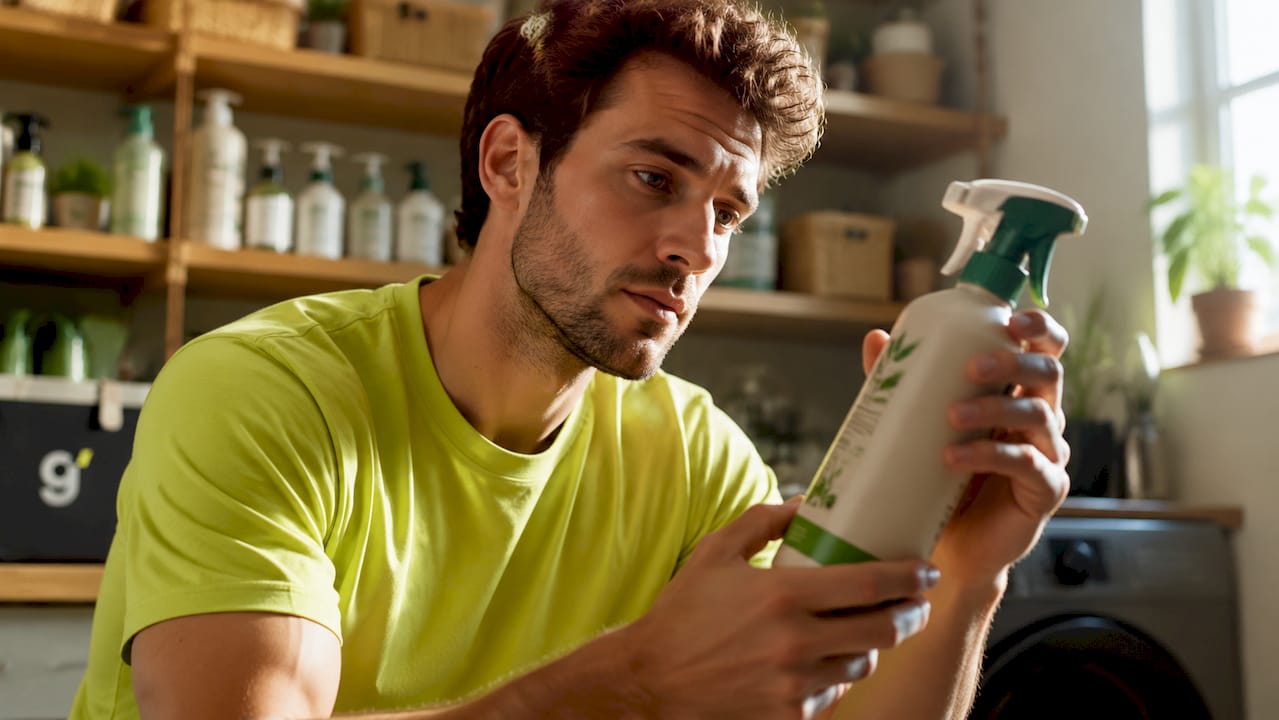
Packaging and concentration also separate the two approaches. Eco products increasingly come in concentrated tablets or refillable formats, which cut plastic waste significantly. Traditional products are often pre-diluted, meaning you are paying to ship and store mostly water.
The table below summarises the key differences at a glance.
| Feature | Eco Cleaning | Traditional Cleaning |
|---|---|---|
| Core ingredients | Plant-based, mineral, biodegradable | Synthetic chemicals, petroleum-derived |
| Environmental impact | Low global warming potential | Higher chemical and waste footprint |
| Packaging | Concentrated, refillable options common | Pre-diluted, single-use plastics common |
| Biodegradability | Rapid and non-toxic | Slow or toxic breakdown products |
| Certification options | US EPA Safer Choice, CAM, DfE | No equivalent green standard |
| Cost per use | Comparable when concentrated | Often cheaper upfront, higher long-term |
The differences are not cosmetic. They reflect fundamentally different philosophies about what cleaning is for and who bears the cost of it.
How effective are eco cleaning products compared to chemical cleaners?
Green cleaning products match traditional cleaners on the metric that matters most: microbial reduction. Microbiological analyses from a CAM-compliant green cleaning study demonstrate equivalent or better total mesophilic counts reduction compared to conventional protocols. This finding directly challenges the assumption that you need harsh chemicals to achieve genuine hygiene.
Natural ingredients carry real cleaning power on their own. Vinegar and baking soda have proven cleaning and disinfecting properties effective for everyday household tasks, removing stains, reducing germs, and neutralising odours without synthetic toxins. Essential oils like tea tree and eucalyptus add antimicrobial properties to many commercial eco formulas.
That said, eco products are not the right tool for every job. High-risk sanitation scenarios, such as post-illness disinfection, raw meat contamination, or mould remediation, may still require hospital-grade disinfectants. The evidence supports a risk-based hybrid approach where 70–95% of routine maintenance uses green cleaning, with traditional disinfectants reserved for genuinely high-risk situations.
Pro Tip: Pair your eco cleaning product with a high-quality microfiber cloth. Research shows that microfiber cloths reduce moisture use and enhance soil removal, meaning the cloth itself does much of the work the chemical would otherwise handle.
Key scenarios where eco cleaning performs strongly:
- Daily surface wiping on benchtops, tables, and bathroom vanities
- Glass and mirror cleaning using diluted white vinegar
- Odour removal in fridges, bins, and laundry using baking soda
- General floor mopping with plant-based concentrate and microfiber mop heads
- Fabric freshening using essential oil sprays
What are the health and environmental risks of each approach?
Traditional cleaning products carry documented health risks that are easy to underestimate when you are simply wiping down a kitchen bench. Harsh chemicals in conventional cleaners can irritate eyes, skin, and respiratory systems, and contribute to environmental pollution when used without care. Children and pets are particularly vulnerable because they spend more time on floors and surfaces where residue accumulates.
Eco cleaning products reduce these exposure risks significantly. The reduction in chemical consumption achieved by green protocols, up to 82.6% less in controlled studies, translates directly to less residue on surfaces and less volatile organic compound (VOC) off-gassing in your home.
However, the eco cleaning category has a greenwashing problem. Products labelled "natural" or "plant-based" are not automatically safe or effective. The US EPA warns consumers to look specifically for the Safer Choice label or the Design for the Environment (DfE) certification, both of which require stringent health and environmental testing before approval.
"Not all green claims are equal. The US EPA Safer Choice label and DfE certification are the credible benchmarks. Everything else is marketing until proven otherwise." — US EPA guidance on identifying greener cleaning products
Safe practices apply regardless of which products you choose:
- Store all cleaning products out of reach of children and pets
- Ventilate rooms during and after cleaning, even with eco products
- Never mix products, including natural ones like vinegar and hydrogen peroxide
- Read labels and follow dilution instructions on concentrated formulas
- Dispose of old chemical cleaners through your local council's hazardous waste programme
How can families add eco cleaning to their home routine?
Switching to sustainable cleaning methods does not require a complete overhaul on day one. The most practical approach is a gradual product swap, replacing items as they run out rather than discarding everything at once.
Concentrated formulas are the single biggest upgrade most families can make. Systemic optimisation through concentrated formulations and proper dose control reduces waste and improves cleaning performance beyond simply choosing a greener product. One concentrated tablet dissolved in a reusable spray bottle replaces dozens of single-use plastic bottles over a year.
Here is a practical four-step routine for families starting out:
- Audit your current products. List every cleaning product in your home and identify which ones you use daily versus occasionally. Daily-use products are your first swap priority.
- Replace daily-use products first. Swap your bench spray, bathroom cleaner, and floor cleaner for US EPA Safer Choice certified alternatives or concentrated eco formulas.
- Build a natural cleaning kit. Keep white vinegar, bicarbonate of soda, and castile soap on hand for DIY solutions. These three cover the majority of everyday cleaning tasks.
- Upgrade your tools. Invest in a set of quality microfiber cloths and a microfiber mop. Better tools mean you use less product and achieve better results.
For laundry, plant-based detergents from brands like Ecostore and Aware Environmental perform comparably to conventional options on everyday loads. Cold water washing amplifies the environmental benefit further.
Pro Tip: Pre-made natural cleaning products may cost slightly more upfront due to organic sourcing and eco-friendly packaging. Buy concentrated formats and calculate cost per use rather than cost per bottle to get an accurate comparison.
For families managing short-term rentals or post-renovation clean-ups, the role of eco cleaners in home maintenance extends beyond daily tidying into deep remediation scenarios where product choice genuinely affects guest safety and surface longevity.
Key takeaways
Eco cleaning matches traditional methods on hygiene performance while delivering measurable reductions in chemical use, environmental impact, and health risk for your household.
| Point | Details |
|---|---|
| Comparable cleaning performance | Green protocols achieve equivalent or better microbial reduction compared to traditional chemical cleaners. |
| Major environmental gains | CAM-compliant green cleaning cuts global warming potential by 47.7% and chemical use by 82.6%. |
| Health risk reduction | Eco products reduce VOC exposure and surface chemical residue, protecting children and pets. |
| Greenwashing is real | Only trust US EPA Safer Choice or DfE certified products. "Natural" labelling alone means nothing. |
| Hybrid approach works best | Use eco cleaning for 70–95% of routine tasks and reserve traditional disinfectants for high-risk situations only. |
Why i think the all-or-nothing debate misses the point
After years of working in and around professional cleaning environments, the eco versus chemical debate frustrates me because it is almost always framed as a binary choice. It is not. The research is unambiguous: green cleaning handles the vast majority of household tasks at equivalent or better hygiene levels. But the families I see struggle most are the ones who go fully eco overnight, hit one genuinely tough job, and conclude the whole approach does not work.
The smarter position is a risk-based one. Default to eco cleaning for everything routine. Keep one or two traditional disinfectants for the situations that genuinely warrant them, a norovirus outbreak, a mould-affected bathroom, a post-flood remediation. That is not a compromise. That is how professional facilities management actually operates.
The other thing worth saying plainly: certification labels matter more than ingredient lists. Most people cannot decode a surfactant name on a label, and they should not have to. The US EPA Safer Choice programme exists to do that work for you. If a product carries that label, the chemistry has been vetted. If it does not, the "plant-based" claim on the front is marketing, not a guarantee.
The green cleaning routine for busy parents is not about perfection. It is about making better default choices and knowing when the situation calls for something stronger.
— Lead
Professional eco cleaning when you need it done right
Sometimes the job is bigger than a spray bottle and a microfiber cloth can handle. Post-construction dust, end-of-lease deep cleans, and short-term rental turnovers all require a level of thoroughness that goes beyond routine maintenance. Grimescene delivers exactly that. Their non-toxic agents neutralise buildup rather than masking it, and their Scene Reset protocol for rental properties is built around protecting your guest ratings while keeping the space genuinely safe. Whether you need a one-off deep decontamination or a scheduled maintenance programme, book a service with Grimescene and get a clean that holds up to scrutiny.
FAQ
What is eco cleaning and how does it differ from traditional cleaning?
Eco cleaning uses plant-based, biodegradable products and techniques that clean effectively while minimising harm to people and the environment. Traditional cleaning relies on synthetic chemicals that can irritate skin and respiratory systems and leave toxic residues in waterways.
Are eco cleaning products as effective as chemical cleaners?
Yes, for the majority of household tasks. Research shows green cleaning protocols achieve equivalent or better microbial reduction compared to traditional methods, though heavy-duty disinfection may still require conventional products in high-risk scenarios.
How do i know if an eco cleaning product is genuinely green?
Look for the US EPA Safer Choice label or the Design for the Environment (DfE) certification. These programmes require rigorous health and environmental testing. Products labelled simply as "natural" or "plant-based" carry no such guarantee.
Is eco cleaning more expensive than traditional cleaning?
Pre-made eco products can cost more upfront due to organic sourcing and sustainable packaging. Concentrated formats reduce the cost per use significantly, often making them comparable to or cheaper than conventional alternatives over time.
Can i make effective natural cleaning solutions at home?
Yes. White vinegar, bicarbonate of soda, and castile soap cover the majority of everyday household cleaning tasks. These ingredients remove stains, reduce germs, and neutralise odours without synthetic chemicals.