
Most homes harbour hidden dirty spots that accumulate grime, bacteria, and allergens completely out of sight. These are the neglected areas that standard weekly cleaning routines miss entirely, from the grease-coated top of your kitchen cabinets to the mould growing silently behind your bathroom tiles. Addressing these common hidden dirt areas is not just about appearances. It directly affects the air quality, hygiene, and long-term condition of your home. This guide covers 12 concrete examples of dirty home spots, explains why they are so easy to overlook, and gives you practical methods to clean them properly.
1. Hidden dirty spots home examples: behind and under the stove
The space behind and beneath your stove is one of the most grime-dense zones in any kitchen. Grease splatters, food crumbs, and dust collect here for months or years without disturbance. Dust behind appliances and in pocket-door crevices often goes uncleaned entirely, making this a breeding ground for bacteria and even pests.
Pull the stove out from the wall at least twice a year. Use a crevice vacuum attachment to clear debris, then wipe down the floor and wall surfaces with a grease-cutting solution. A microfiber cloth works well for the sides of the appliance itself.
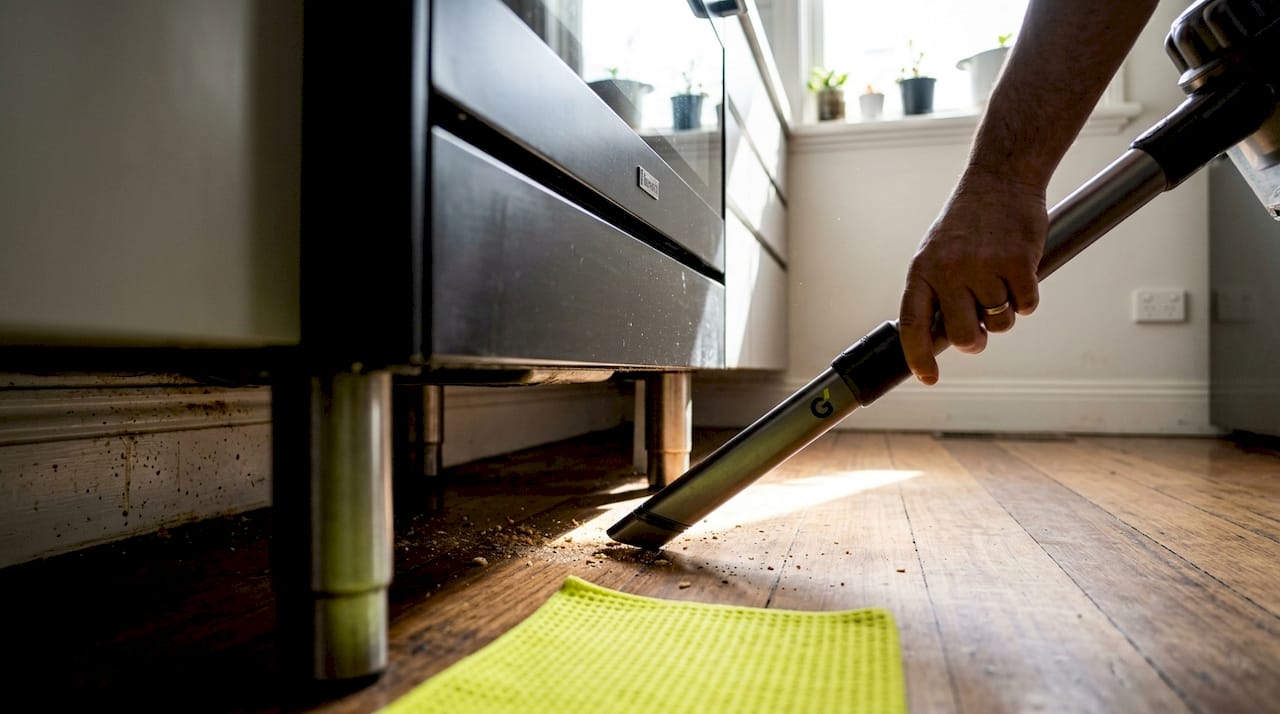
Pro Tip: Before moving your stove, photograph the gas or power connections so you can reconnect them confidently. Slide the appliance onto a flattened cardboard sheet to protect your floor.
2. Top and underside of kitchen cabinets
Cabinet tops collect a thick layer of grease-coated dust that most people never see because it sits above eye level. This layer traps moisture and can harbour mould over time. The underside of upper cabinets, particularly near the cooktop, collects airborne grease that becomes sticky and difficult to remove once it sets.
Clean cabinet tops monthly if you cook frequently. A long-handled duster removes loose debris, followed by a damp microfiber cloth with a diluted dish soap solution for the greasy residue. For the undersides, a degreaser spray and a firm cloth will cut through baked-on buildup. For a chemical-free approach, see removing grease without harsh chemicals for step-by-step methods.
3. Dishwasher filters and door seals
Your dishwasher cleans your dishes but rarely cleans itself. The filter at the base of the machine traps food particles, and if left unchecked, it becomes a source of foul odours and redeposited grime on your crockery. The rubber door seal collects mould, food residue, and standing water in its folds.
Remove and rinse the filter under hot running water every two to four weeks. Use an old toothbrush to scrub away stubborn debris. Wipe the door seal with a damp cloth and a small amount of white vinegar to kill mould spores and remove discolouration.
4. Shower curtain liners and grout lines
Shower curtain liners are a textbook example of an underappreciated cleaning zone. They sit in a warm, wet environment and develop soap scum, mildew, and pink bacterial growth within weeks of installation. Grout is porous and traps soap scum and mildew even when the surrounding tiles look clean.
Machine wash fabric liners monthly on a warm cycle with a cup of white vinegar. For plastic liners, wipe down with a diluted bleach solution and rinse thoroughly. Grout requires more than a surface wipe. Deep cleaning grout lines with a stiff brush and an alkaline cleaner removes embedded deposits that surface mopping cannot reach. For lasting results, read this grout cleaning guide before you start.
Pro Tip: Seal grout lines after deep cleaning to reduce porosity and slow the return of soap scum and mildew.
5. Exhaust fan covers and medicine cabinet tops
Exhaust fans control moisture in bathrooms but are forgotten despite daily use. Their covers accumulate a dense layer of dust and lint that reduces airflow and forces the motor to work harder. Medicine cabinet tops sit above eye level and collect dust and grime that nobody thinks to check.
Remove exhaust fan covers every three months and wash them in warm soapy water. Use a vacuum brush attachment to clear dust from the fan blades before replacing the cover. Wipe medicine cabinet tops with a damp cloth during your regular bathroom clean. These two spots take under five minutes combined and make a measurable difference to bathroom air quality.
6. Behind the toilet and around base bolts
The area behind the toilet and around the base bolts is one of the most germ-dense invisible dirt locations in any home. Urine and toilet water spray into these unseen areas during flushing, and the tight geometry makes standard mops useless. Long-handled microfiber mops and flexible dusting wands are the tools designed specifically for this job.
Clean behind the toilet weekly. Remove the toilet seat entirely every month to access the hinge bolts and the underside of the seat. Use a narrow brush or old toothbrush around the base bolts where urine residue causes persistent odour. A disinfectant spray applied and left to dwell for the correct contact time is far more effective than a quick wipe.
7. Mattresses and under-bed surfaces
62% of people neglect cleaning their mattresses, according to Dyson's 2026 survey. This is significant because mattresses accumulate dead skin cells, sweat, and dust mites at a rate that affects sleep quality and respiratory health. The floor directly under the bed is equally neglected, collecting dust and debris that circulates through the room.
Vacuum your mattress every one to two months using an upholstery attachment. Spot-clean stains with a mild enzyme cleaner and allow the mattress to air dry fully before remaking the bed. Wash your bed linen weekly in hot water to reduce dust mite populations. Pull the bed away from the wall quarterly to vacuum the floor underneath and wipe the skirting boards.
8. Windowsills, skirting boards, and curtains
Windowsills trap condensation, dead insects, and dust in their grooves. Skirting boards collect a horizontal layer of dust that becomes visible only when you crouch down to look. Curtains and blinds absorb airborne particles, cooking odours, and pet dander over months of use. Dyson's 2026 survey identifies these as among the most commonly neglected spots during a deep clean.
Wipe windowsills with a damp cloth weekly, paying attention to the grooves at the base of the frame. Run a damp microfiber cloth along skirting boards monthly. Wash curtains every three to six months according to the fabric care label. For blinds, a microfiber duster or a damp cloth drawn across each slat removes accumulated grime without damaging the material.
Useful tools for these surfaces include:
- Microfiber dusting gloves for blinds and skirting boards
- A slim crevice tool for vacuum cleaners to reach windowsill grooves
- A fabric refresher spray between curtain washes
- A long-handled flat mop for skirting boards in tight spaces
9. Lampshades, TV screens, and electronics
Lampshades act as dust collectors, and the heat from bulbs bakes the dust onto the fabric over time. TV screens and the backs of electronics attract static-charged dust that bonds to the surface. These are surprising dusty places that affect both air quality and the lifespan of your devices.
Dust lampshades monthly with a soft brush attachment on your vacuum or a lint roller for fabric shades. Clean TV screens with a dry microfiber cloth only. Moisture and screen cleaners can damage anti-reflective coatings. Vacuum the vents on the back of televisions and gaming consoles every two months to prevent overheating from dust blockage.
10. Air conditioning vents and ductwork
Air conditioning vents are a classic hard-to-reach cleaning spot that most homeowners address only when they notice visible dust buildup on the grille. By that point, the ductwork behind the vent has already accumulated significant debris. Dirty vents recirculate dust, allergens, and mould spores through every room in the house. For a thorough approach to this job, the guide on cleaning air conditioner vents covers the process in detail.
Remove vent covers and wash them in warm soapy water every three months. Vacuum the duct opening as far as your attachment reaches. If you notice a musty smell from the vents or visible mould growth inside the duct, contact a professional HVAC technician rather than attempting to clean deep ductwork yourself.
11. Hidden mould behind walls, carpets, and ductwork
Hidden mould is defined by the EPA as mould growing in concealed spaces including behind drywall, wallpaper, ceilings, carpets, and inside ductwork. Disturbing these materials can release large numbers of spores into the air, making amateur investigation genuinely risky. Moisture control is the single most effective prevention measure.
"The key to mould control is moisture control. Fix water problems immediately and dry wet materials within 24 to 48 hours to prevent mould growth." — US EPA
Signs of hidden mould to monitor in your home:
- A persistent musty odour with no visible source
- Discolouration or bubbling on walls or ceilings
- Warping or soft spots in flooring or skirting boards
- Unexplained respiratory symptoms that improve when you leave the house
- Water stains that reappear after painting over them
Fix any moisture source before attempting mould removal. For areas larger than half a square metre, the EPA recommends professional assessment rather than DIY remediation.
12. Cleaning routines for hard-to-reach spots
The most practical approach to tackling neglected spots is to address two per week rather than attempting a full deep clean all at once. This keeps the task manageable and builds a complete rotation over time. The right tools make the difference between a surface wipe and a genuine clean.
Disinfectant contact time ranges from 15 seconds to 10 minutes of wet surface time depending on the product. Wiping a surface dry before that time is up reduces the disinfectant's effectiveness significantly. Always pre-clean visible dirt before applying disinfectant, as organic matter neutralises the active ingredients.
Pro Tip: Set a phone reminder each week labelled with two specific hidden spots to clean. Rotate through your full list over six weeks and you will have covered the entire home without a single overwhelming session.
Weekly hidden spot cleaning checklist:
- Wipe exhaust fan cover or cabinet tops
- Clean behind the toilet with a flexible wand
- Vacuum mattress or under-bed floor
- Wipe windowsills and one section of skirting boards
- Dust lampshades or clean one set of blinds
- Check and wipe dishwasher filter and door seal
For a broader strategy on maintaining a clean home between professional visits, Grimescene's blog covers schedules and techniques used by professional cleaning teams.
Key takeaways
The most neglected hidden dirty spots in homes are consistently out of sight, not out of reach. Addressing them weekly with the right tools prevents grime from becoming a health risk.
| Point | Details |
|---|---|
| Out-of-sight drives neglect | Spots like cabinet tops, exhaust fans, and mattresses are missed because they are above eye level or behind furniture. |
| Grout and liners need deep cleaning | Surface wiping is ineffective for porous grout and shower liners; machine washing and chemical treatment are required. |
| Mould hides behind surfaces | Hidden mould behind drywall and carpets requires moisture control first and professional help for areas over half a square metre. |
| Disinfectant dwell time matters | Wiping a surface before the product's contact time is up reduces germ-killing effectiveness significantly. |
| Two spots per week works | Tackling two neglected areas weekly covers the whole home in a manageable six-week rotation. |
What years of cleaning have taught me about hidden grime
The spots that genuinely surprise people are never the ones they expect. Every homeowner I speak with assumes their kitchen is clean until they pull the stove out. The look on their face when they see what has accumulated behind it in two years tells you everything about why hidden dirty spots matter so much.
What I have found through experience is that the problem is rarely laziness. It is visibility. If you cannot see a surface from your normal standing position, your brain simply does not register it as something that needs cleaning. Cabinet tops, medicine cabinet lids, and the space behind the toilet all fall into this category. They are not hard to clean once you get there. Getting there is the entire challenge.
The health argument for addressing these spots is real and underappreciated. Dust mites in an uncleaned mattress, mould spores from a neglected exhaust fan, and bacteria around toilet base bolts all contribute to the air you breathe every day. Cleaning them is not about perfectionism. It is about reducing the invisible load your body deals with constantly.
My honest recommendation is to start with the bathroom. It has the highest concentration of moisture-driven grime and the most direct impact on daily hygiene. Once you have worked through the grout, the exhaust fan, and behind the toilet, the rest of the house feels more manageable. Combine that with a professional deep clean once or twice a year and you are genuinely ahead of where most households sit.
— Lead
How Grimescene tackles the spots you cannot reach

Some hidden dirty spots require more than a microfiber cloth and good intentions. Grimescene's professional deep cleaning teams are trained specifically to target the hard-to-reach and commonly overlooked areas that standard cleaning routines miss. Using advanced non-toxic agents, Grimescene neutralises built-up grime without harsh chemicals, making the process safe for families, pets, and the environment.
Whether you need a full residential deep clean or a thorough short-term rental reset between guests, Grimescene's tailored services cover every neglected zone from ductwork to grout lines. Book your deep clean and deploy the rapid response team to the spots your regular routine has been missing.
FAQ
What are the most common hidden dirty spots at home?
The most common hidden dirty spots include behind and under kitchen appliances, shower curtain liners, grout lines, exhaust fan covers, mattresses, and the area behind the toilet. These spots are missed because they sit outside normal lines of sight during routine cleaning.
How often should I clean hard-to-reach spots?
Cleaning two neglected spots per week is the most manageable approach, according to Dyson's 2026 deep clean research. This rotation covers the full home over approximately six weeks without requiring a single exhausting session.
Can hidden mould make you sick?
Yes. Hidden mould behind drywall, carpets, and inside ductwork releases spores that affect respiratory health. The EPA advises fixing moisture sources immediately and seeking professional assessment for mould patches larger than half a square metre.
Does disinfectant work if you wipe it off straight away?
No. Disinfectants require a specific contact time, ranging from 15 seconds to 10 minutes of wet surface time, to kill germs effectively. Wiping the surface dry before that time reduces efficacy significantly and leaves pathogens behind.
What tools work best for invisible dirt locations?
Long-handled microfiber mops, flexible dusting wands, crevice vacuum attachments, and old toothbrushes are the most effective tools for accessing invisible dirt locations. These are specifically designed to reach the tight angles and narrow gaps that standard cleaning equipment cannot address.