
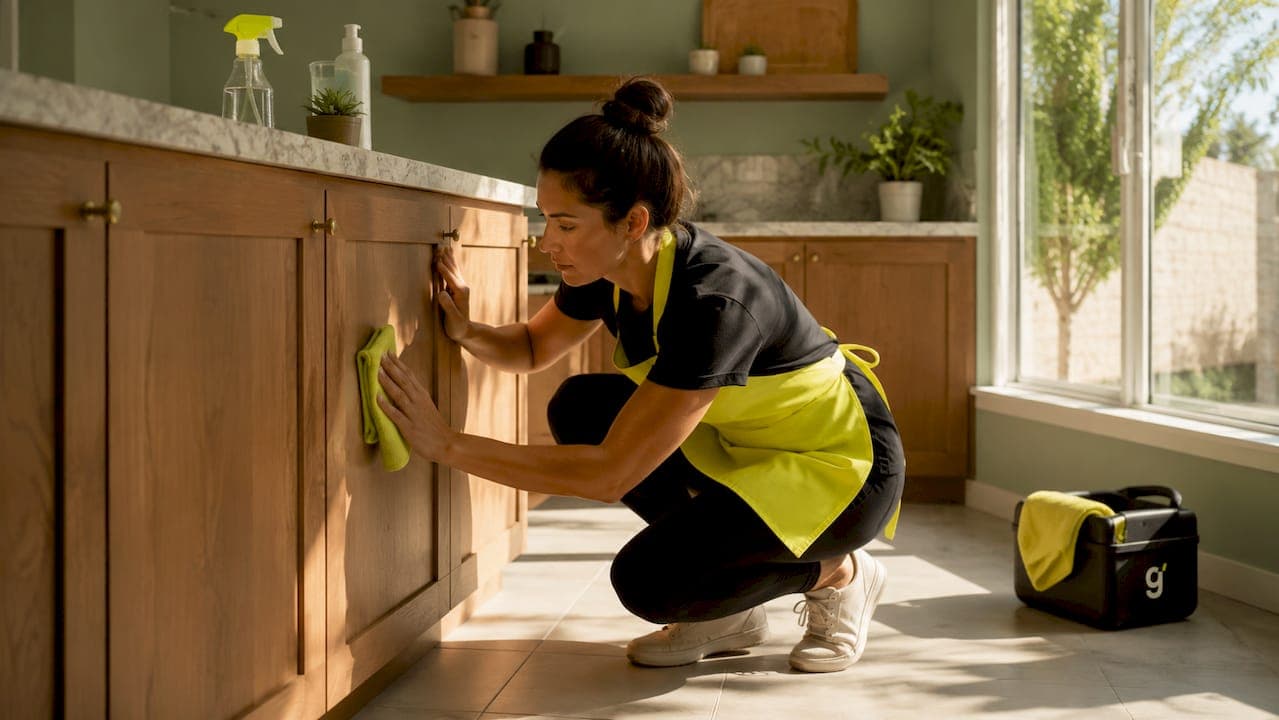
A routine deep cleaning schedule is a structured plan that takes your home beyond surface tidying, targeting the hidden grime, neglected corners, and hard-to-reach areas that regular upkeep misses. Most households treat cleaning as a reactive task, wiping down what they can see and moving on. A scheduled approach to deep home cleaning changes that entirely. It protects your health, extends the life of your appliances, and keeps your living space genuinely clean rather than just visually tidy. This guide covers what a routine deep cleaning schedule involves, how often to run one, and how to build a plan that fits your actual life.
What is a routine deep cleaning schedule?
A routine deep cleaning schedule is a planned timetable for thoroughly cleaning your home at regular intervals, covering areas that daily and weekly cleaning never reaches. The industry term for this practice is periodic deep cleaning, and it sits above regular maintenance cleaning in both scope and effort.
Deep cleaning targets areas not routinely addressed in upkeep cleaning, such as baseboards, grout lines, blinds, and ceiling fans, typically performed seasonally or every 3–6 months. That distinction matters because surface cleaning removes visible dirt, while deep cleaning removes the invisible buildup that affects air quality, appliance performance, and long-term hygiene. A scheduled approach means you never let that buildup reach a point where it causes real damage.
Regular cleaning handles the daily and weekly tasks: vacuuming floors, wiping benches, and washing dishes. A deep cleaning schedule handles everything underneath, behind, and within those surfaces. The two work together, but they serve different purposes.
How often should you deep clean your home?
Deep cleaning frequency depends on how your household actually lives, not on a fixed date in the calendar. Several factors push that frequency up or down, and understanding them helps you build a schedule that works rather than one you abandon after a month.
Household makeup is the biggest driver. Households with multiple pets, children, or allergy sufferers benefit from deep cleaning every 3 months, while smaller households without pets can extend to every 6–12 months. That gap is significant. A family with two dogs and a toddler accumulates grime at a fundamentally different rate than a single adult in a one-bedroom flat.
Environmental conditions also shift the equation. Pollen, dust, and humidity increase cleaning needs beyond what a standard calendar schedule would suggest. Invisible environmental grime accumulates regardless of how clean a home looks, which means homes in humid coastal areas or near high-pollen zones need more frequent attention.
Key factors to assess when setting your deep cleaning frequency:
- Pets: Fur, dander, and tracked-in dirt build up fast. Quarterly deep cleans are the minimum for pet owners.
- Children: High-touch surfaces, food spills, and floor contact increase grime accumulation significantly.
- Allergies or respiratory conditions: Dust mites, mould spores, and pet dander require more frequent removal to protect health.
- Room usage: Kitchens and bathrooms need more frequent deep cleaning than bedrooms or formal living areas.
- Climate: High humidity encourages mould and mildew growth, requiring more regular attention to grout, tiles, and ventilation areas.
Pro Tip: Set your deep cleaning frequency by observing your home, not by following a generic rule. If you notice grout darkening, dust collecting on ceiling fans, or a persistent smell in the kitchen, your schedule needs to move forward, not wait for the next calendar quarter.
Most households perform deep cleans two to four times a year depending on usage and household makeup. That range gives you a starting point, but your home's actual conditions should make the final call.
How to structure an effective deep cleaning routine
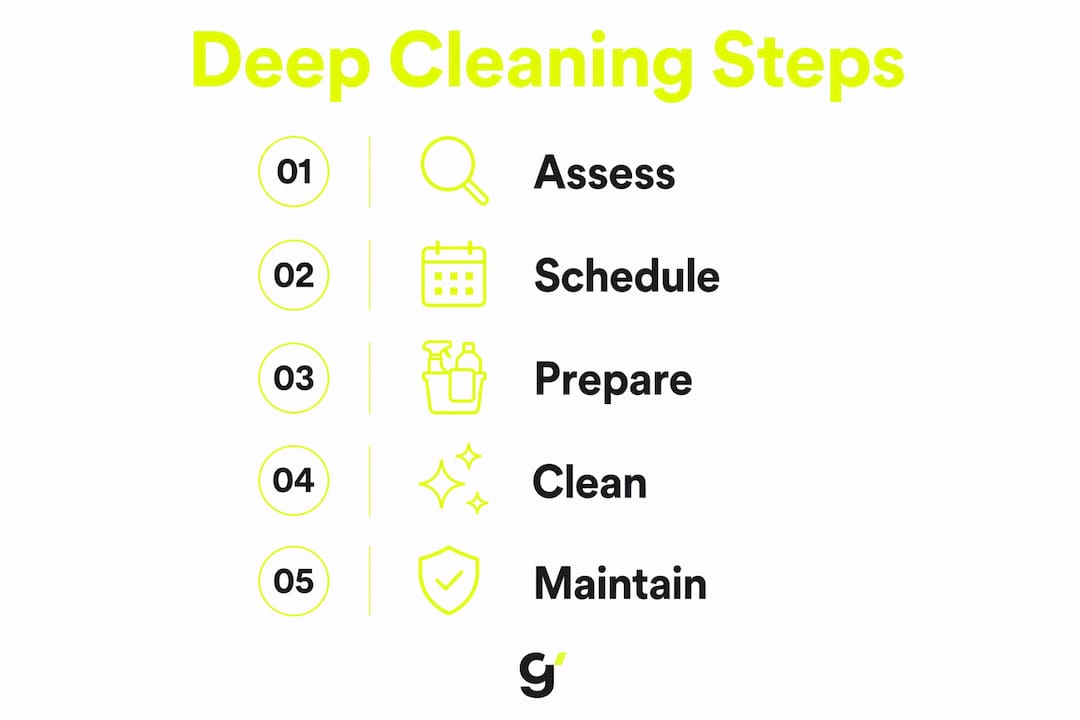
The most practical way to structure a deep cleaning routine is to break tasks into daily, weekly, monthly, and seasonal segments. Segmenting cleaning tasks this way puts maintenance on autopilot and prevents small messes from becoming major projects. It also extends the life of household items, which is a direct financial benefit most homeowners overlook.
A tiered structure looks like this:
- Daily tasks: Wipe down kitchen benches, wash dishes, sweep high-traffic floors, and clear clutter from surfaces. These take 10–15 minutes and prevent grime from setting.
- Weekly tasks: Vacuum all floors, mop hard surfaces, clean bathroom sinks and toilets, and wipe down appliance exteriors. These take 45–90 minutes depending on home size.
- Monthly tasks: Clean inside the microwave, wipe down cabinet fronts, scrub bathroom tiles, and dust ceiling fans and light fittings. These take 2–3 hours and catch what weekly cleaning misses.
- Seasonal tasks: Deep scrub grout, clean behind and beneath appliances, wash windows inside and out, descale the kettle and coffee maker, and vacuum refrigerator coils. These are your full deep cleaning sessions.
Tackling one room at a time is the most effective method for managing a full deep clean. Room-by-room cleaning maintains focus and prevents the common mistake of spreading effort across the whole house and finishing nothing properly.
For busy households, calendar reminders work better than good intentions. Set a recurring reminder in your phone or a shared family calendar for each seasonal deep clean. Treat it like a scheduled appointment. Shifting it by a week is fine. Skipping it entirely is how grime builds to the point where a single session cannot fix it.
Pro Tip: If a full seasonal deep clean feels too large to start, commit to one room only. Completing the kitchen thoroughly is more valuable than half-cleaning the entire house. Momentum builds from finished tasks, not from started ones.
Deep cleaning takes about twice as long as regular upkeep cleaning because it covers harder-to-reach areas and requires more labour. Planning for that time investment upfront prevents the frustration of starting a deep clean and running out of time before finishing.
What does a deep cleaning session actually cover?
A deep cleaning session covers the areas that regular cleaning skips entirely. Understanding what belongs on a deep cleaning checklist helps you set realistic expectations and avoid missing the spots that matter most.
Before starting any deep clean, tidy and clear all surfaces first. Clearing surfaces before cleaning improves efficiency and prevents hidden grime from being missed beneath clutter. A cluttered space lowers cleaning effectiveness significantly.
Key deep cleaning tasks by area:
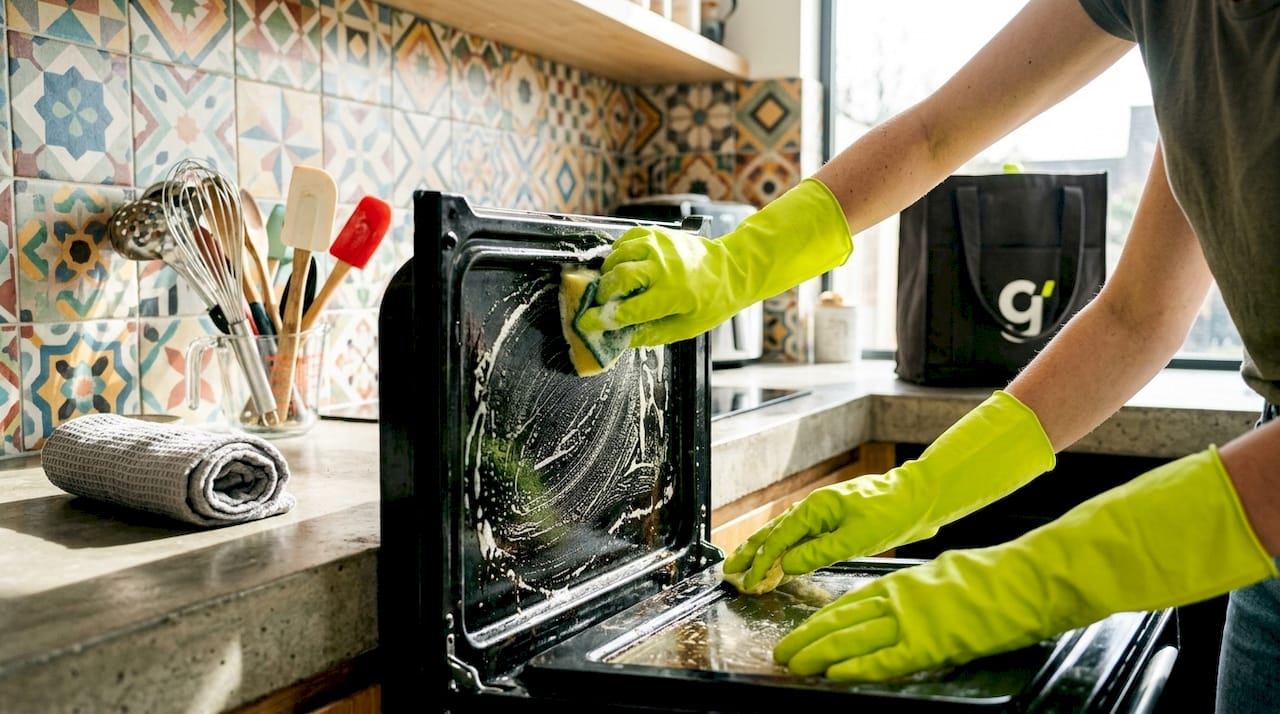
- Kitchen: Clean inside the oven and microwave, degrease range hood filters, wipe down cabinet fronts and interiors, descale the coffee maker, clean behind the fridge and beneath the dishwasher, and scrub the sink drain.
- Bathrooms: Scrub grout lines and tile, descale taps and showerheads, clean behind the toilet, wash shower curtains or tracks, and scrub the exhaust fan cover.
- Living areas: Dust ceiling fans, blinds, and light fittings, clean skirting boards and door frames, vacuum upholstery and under cushions, and wipe down window sills.
- Bedrooms: Wash pillows and duvets, vacuum under the bed and behind furniture, wipe down wardrobe interiors, and dust ceiling fixtures.
- Hidden appliance maintenance: Vacuum refrigerator coils, descale the kettle, clean the washing machine drum, and check dryer lint traps beyond the standard filter.
Neglecting hidden appliance areas like appliance coils and coffee machine internals can shorten the lifespan of those items and reduce household sanitation. This is the category most homeowners skip, and it is the one with the most direct financial consequence.
| Area | Deep cleaning task | Recommended frequency |
|---|---|---|
| Kitchen | Degrease range hood, clean oven interior, descale coffee maker | Every 3 months |
| Bathroom | Scrub grout, descale fittings, clean exhaust fan | Every 3 months |
| Living areas | Dust ceiling fans, clean blinds, vacuum upholstery | Every 6 months |
| Bedrooms | Wash pillows, vacuum under furniture, wipe wardrobes | Every 6 months |
| Appliances | Vacuum fridge coils, clean washing machine drum | Every 6 months |
How to maintain cleanliness between deep cleans
Maintaining cleanliness between deep cleans is what makes each deep cleaning session manageable rather than a full-day recovery operation. The goal is to slow grime accumulation, not eliminate the need for deep cleaning entirely.
Daily and weekly habits do most of the work. Maintaining a clean home between sessions prevents the kind of buildup that turns a 3-hour deep clean into a 6-hour one. Focus your between-session effort on high-touch and high-use areas: kitchen benches, bathroom sinks, door handles, and light switches.
Simple habits that extend the benefits of a deep clean:
- Wipe down the stovetop after every use to prevent grease from baking on.
- Squeegee shower screens after each shower to prevent soap scum and water marks.
- Empty and wipe the kitchen bin weekly to prevent odour and bacterial growth.
- Spot-clean spills on carpet and upholstery immediately rather than letting them set.
- Run a damp cloth over skirting boards monthly to prevent dust from compacting.
Pro Tip: Keep a small spray bottle of diluted all-purpose cleaner in each bathroom and the kitchen. A 30-second wipe-down after use prevents the kind of buildup that requires serious scrubbing during a deep clean.
The seasonal cleaning guide for rental hosts applies equally well to owner-occupied homes. Breaking tasks into daily, weekly, monthly, and seasonal segments keeps the home in a state where deep cleaning is a refresh rather than a rescue.
Key takeaways
A routine deep cleaning schedule works because it targets hidden grime on a planned cycle, prevents appliance damage, and keeps household hygiene at a level that surface cleaning cannot reach alone.
| Point | Details |
|---|---|
| Define your frequency | Base your deep cleaning cycle on household makeup, pets, allergies, and climate, not a generic rule. |
| Segment your tasks | Break cleaning into daily, weekly, monthly, and seasonal tiers to prevent burnout and maintain consistency. |
| Start with tidying | Clear all surfaces before deep cleaning to improve efficiency and avoid missing hidden grime. |
| Cover hidden areas | Include appliance maintenance, grout, baseboards, and vents in every deep cleaning session. |
| Maintain between sessions | Daily and weekly habits slow grime accumulation and keep each deep clean manageable. |
Why I think most people are approaching deep cleaning backwards
Most homeowners wait until their home looks dirty before scheduling a deep clean. That is the wrong trigger. By the time grout is visibly dark or the range hood smells of old grease, you have already lost weeks of easy maintenance. The grime you can see is never the whole picture.
The shift that actually works is treating deep cleaning as preventive maintenance, not reactive cleaning. You service your car before it breaks down. Your home deserves the same logic. I have found that households who schedule deep cleans on a fixed cycle, regardless of how the home looks, spend far less total time cleaning over a year than those who clean reactively.
The one-room-at-a-time approach is also underrated. Most people try to deep clean the whole house in a single weekend and burn out halfway through. Finishing one room completely, to a genuinely deep standard, is more satisfying and more effective than a shallow pass across the entire home. That sense of completion is what builds the habit.
Flexible scheduling beats rigid rules every time. If your quarterly deep clean falls during a busy work period, shift it by two weeks. What matters is that it happens, not that it happens on a specific date. The homeowners and renters who maintain the cleanest homes are not the most disciplined. They are the most adaptable.
— Lead
When professional help makes sense for your cleaning schedule
A well-planned deep cleaning schedule handles most of what your home needs. Some tasks, though, are genuinely better handled by professionals, particularly when time is short or the job requires specialist equipment.

Grimescene's Rapid Response Tactical Clean is built for exactly those moments. Whether you need a thorough reset after a renovation, a fast turnaround between rental guests, or a seasonal deep clean that goes beyond what a standard session covers, Grimescene uses non-toxic agents that neutralise buildup rather than masking it. That matters for households with children, pets, or anyone sensitive to harsh chemicals. Professional cleaning complements your home schedule rather than replacing it, handling the heavy work so your regular routine stays manageable.
FAQ
What is a routine deep cleaning schedule?
A routine deep cleaning schedule is a planned timetable for thoroughly cleaning your home at regular intervals, covering areas that daily and weekly cleaning skips, such as grout, baseboards, appliance interiors, and ceiling fans.
How often should you deep clean your home?
Most households deep clean every 3–6 months. Homes with pets, children, or allergy sufferers benefit from quarterly deep cleans, while smaller households without pets can extend to every 6–12 months.
How is deep cleaning different from regular cleaning?
Regular cleaning handles visible surfaces on a daily or weekly basis. Deep cleaning targets hidden and hard-to-reach areas, takes roughly twice as long, and is performed seasonally rather than routinely.
What should a deep cleaning checklist include?
A deep cleaning checklist covers grout scrubbing, cleaning behind and beneath appliances, dusting ceiling fans and blinds, descaling kitchen appliances, washing soft furnishings, and cleaning exhaust fans and vents.
Can you maintain cleanliness between deep cleans?
Daily habits like wiping down the stovetop, squeegeeing shower screens, and spot-cleaning spills significantly slow grime accumulation and keep each deep cleaning session manageable rather than a full recovery effort.