
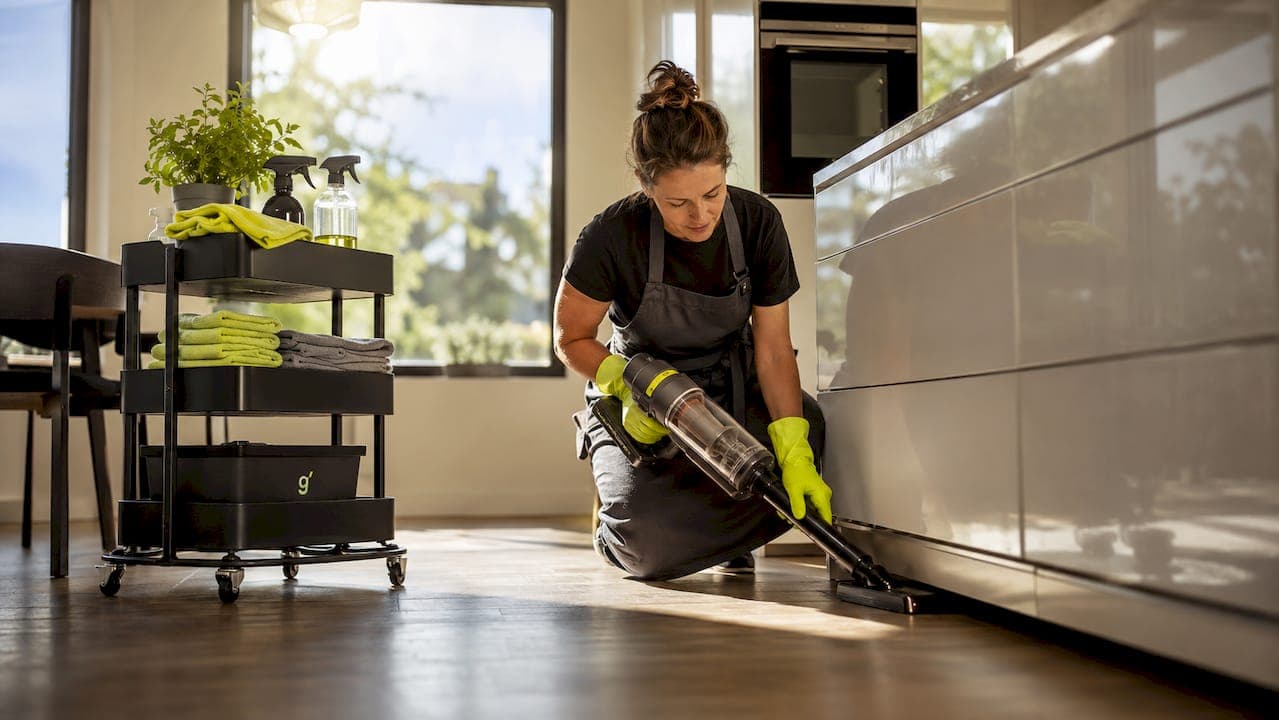
Deep home cleaning is defined as a thorough, room-by-room process that removes hidden grime, allergens, and bacteria that routine cleaning never reaches. Unlike a weekly tidy, a proper deep clean targets grout lines, the backs of appliances, window tracks, and wall surfaces. Industry standards recommend deep cleaning every 3–6 months for measurable health and home preservation benefits. Grimescene's non-toxic approach to this process shows that you do not need harsh chemicals to achieve a genuinely clean home. Understanding what is deep home cleaning explained properly gives you the knowledge to protect your family, your surfaces, and your investment.
What does the deep cleaning process actually involve?
Deep cleaning restores a home to a near-spotless baseline by tackling hidden grime in hard-to-reach areas that routine cleaning skips entirely. That distinction matters because surface-level cleaning simply moves dust around. A genuine deep clean addresses the buildup underneath, behind, and inside things.
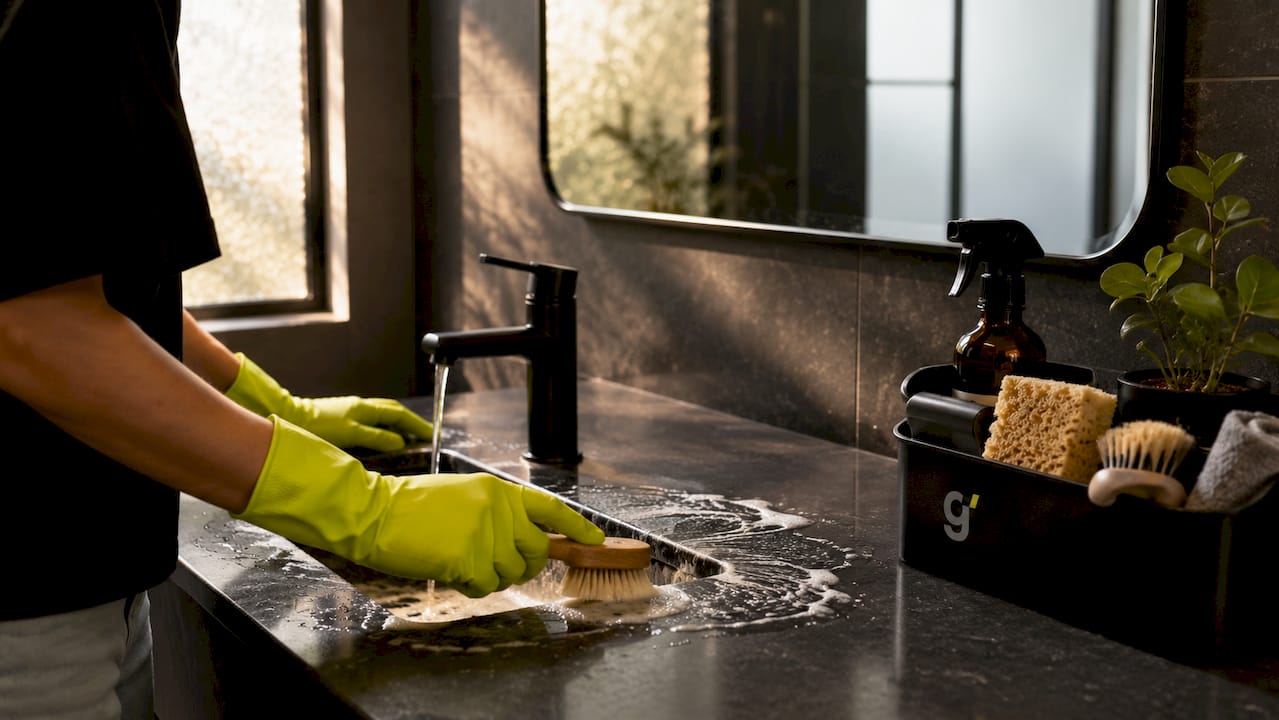
The deep cleaning process covers four main zones: kitchen, bathroom, living spaces, and bedrooms. Each zone has its own priority tasks.
Kitchen
- Pull the fridge and oven away from the wall and clean behind them.
- Degrease rangehood filters and wipe down the inside of the oven.
- Scrub tile grout and sanitise the sink, including the drain.
- Wipe cabinet fronts, handles, and the tops of cupboards.
- Clean the inside of the microwave and all small appliances.
Bathroom
- Scrub grout between tiles with a stiff brush and appropriate cleaner.
- Descale taps, showerheads, and toilet fittings.
- Clean behind the toilet and underneath the vanity.
- Wash shower curtains or scrub shower screens thoroughly.
Living spaces and bedrooms
- Vacuum under furniture and along skirting boards.
- Wipe down light switches, power points, and door handles.
- Wash or vacuum curtains and blinds.
- Clean hidden dirty spots like ceiling fan blades and air vent covers.
- Flip and vacuum mattresses; wash all bedding including pillowcases and mattress protectors.
Preparation matters as much as the cleaning itself
Professional cleaners emphasise decluttering before cleaning to avoid distraction and improve efficiency. Removing items from benchtops, floors, and shelves before you start means you clean surfaces rather than shuffle objects. Gather your supplies first: microfibre cloths, a stiff grout brush, a mop, a vacuum with attachments, and surface-appropriate cleaners. Having everything ready before you begin prevents the mid-clean scramble that derails most attempts.
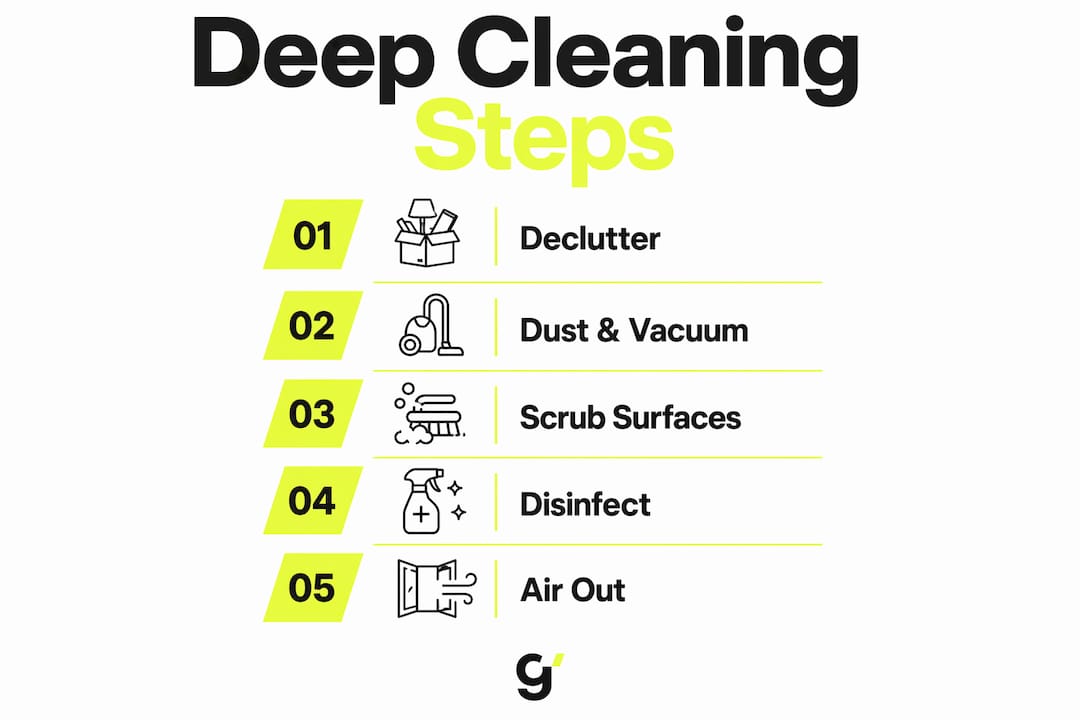
Pro Tip: Prepare a caddy with all your cleaning products and tools the night before. Carrying everything room to room saves time and keeps you focused.
How does deep cleaning benefit your home and health?
Deep cleaning removes deep-seated allergens like dust mites and pet dander that trigger respiratory issues. Regular cleaning maintains appearance but does not eliminate these irritants. The health benefits of a thorough clean are real and measurable.
The key benefits include:
- Allergen reduction. Dust mites accumulate in mattresses, carpets, and upholstery. Deep cleaning removes the buildup that causes sneezing, itchy eyes, and asthma flare-ups.
- Surface and finish protection. Deep cleaning removes grime that wears down tile grout and hardwood finishes over time. Preventing that damage protects your home's value and reduces repair costs.
- Pest prevention. Deep cleaning reduces household pests by eliminating crumbs and sticky spills that attract ants and cockroaches. Food sources behind appliances and in hidden spots are the primary targets.
- Better indoor air quality. Dust, mould spores, and chemical residues from cleaning products accumulate in poorly ventilated spaces. Removing them improves the air you breathe every day.
- Mental clarity. A genuinely clean home reduces background stress. Research consistently links cluttered, dirty environments to elevated cortisol levels and reduced focus.
The benefits of deep cleaning extend well beyond aesthetics. Homeowners who deep clean regularly report fewer pest problems, lower maintenance costs, and a noticeably fresher living environment year-round.
How often should you deep clean your home?
Most professional cleaners recommend deep cleaning two to four times per year, with kitchens and bathrooms receiving the most frequent attention. That frequency is a baseline, not a ceiling. Your actual schedule depends on how you use your home.
| Situation | Recommended frequency |
|---|---|
| Standard household, 2–4 people | Twice per year (spring and autumn) |
| Household with pets or allergy sufferers | Every 2–3 months |
| High-traffic rental property | After every guest turnover |
| Post-renovation or construction | Immediately after works complete |
| Single occupant, low traffic | Once per year minimum |
Spring and autumn are the most practical times for a whole-home deep clean. Spring cleaning clears the dust and mould that accumulates during winter. An autumn clean prepares the home before you close windows and spend more time indoors. For high-use areas like kitchens and bathrooms, a monthly targeted deep clean prevents the kind of buildup that becomes genuinely difficult to remove.
Integrating deep cleaning into a manageable routine is the key to consistency. Break the home into zones and tackle one zone per weekend rather than attempting the whole house in a single day. That approach is sustainable and produces better results than an annual panic clean.
What mistakes do people make when deep cleaning?
The most common mistake is starting to clean before decluttering. Cleaning around objects wastes time and leaves surfaces partially cleaned. Removing unneeded items and organising the space before you begin is the single step that most improves efficiency.
The second most common mistake is applying wet cleaning products before removing dust. Dry dusting before wet cleaning prevents pushing dust and debris around when you apply liquid cleaners. Wet dust becomes a paste that smears across surfaces and is harder to remove than dry dust. Always dry dust first.
Expert tips for an effective deep clean:
- Work from top to bottom. Starting from top surfaces and working downwards ensures dust falls onto floors last, preventing re-soiling of areas you have already cleaned.
- Match the cleaner to the surface. Acidic cleaners work on mineral deposits and limescale. Alkaline cleaners cut grease. Using the wrong product either damages the surface or simply does not work.
- Do not rush the contact time. Disinfectants and grout cleaners need dwell time to work. Spray, wait, then scrub. Wiping immediately after spraying wastes the product.
- Ventilate as you go. Open windows when cleaning bathrooms and kitchens. Fumes from even non-toxic cleaners concentrate in small spaces.
- Clean appliances inside and out. The inside of a dishwasher, washing machine, and fridge accumulates mould and bacteria. These are commonly neglected areas that undermine the rest of your clean.
Pro Tip: Fill a spray bottle with a mixture of white vinegar and water for a non-toxic, effective cleaner for glass, tiles, and bench surfaces. It cuts grease and leaves no residue.
For homeowners preparing for professional cleaning, completing the declutter step yourself before the team arrives saves time and reduces cost.
Key takeaways
Deep home cleaning is the most effective way to remove allergens, protect surfaces, and prevent pests that routine cleaning cannot address.
| Point | Details |
|---|---|
| Definition is distinct | Deep cleaning targets hidden grime and allergens; regular cleaning only maintains surface appearance. |
| Frequency matters | Clean the whole home two to four times per year; high-use areas benefit from monthly attention. |
| Preparation is non-negotiable | Declutter and dry dust before applying any wet cleaning products. |
| Work top to bottom | Always clean from ceiling level down to floors to avoid re-soiling cleaned surfaces. |
| Health and home value | Regular deep cleans reduce allergens, prevent pest infestations, and protect finishes from damage. |
The part most people skip that makes everything else work
After years of observing homes before and after professional cleans, the single biggest difference between a good deep clean and a mediocre one is not the products used. It is the order of operations.
Most homeowners grab a cloth and start wiping the nearest surface. That approach feels productive but produces poor results. Dust from higher surfaces falls onto areas you have already cleaned. Wet products applied over dry dust create smears. The whole session ends with a home that looks cleaner but is not genuinely cleaner.
The top-to-bottom, dry-before-wet method is not complicated. It just requires discipline. I have seen homes where the occupants cleaned regularly but never applied this sequence, and the grime on skirting boards and behind appliances was years deep. Switching the order of operations produced a visibly better result in the same amount of time.
The other thing I would push back on is the idea that deep cleaning needs to happen all at once. The whole-house-in-a-day approach works for some people, but it burns most homeowners out and leads to corners being cut. A zone-based approach, where you tackle the kitchen one weekend and the bathrooms the next, produces a cleaner home with far less effort per session. Consistency beats intensity every time.
— Lead
When Grimescene makes more sense than doing it yourself
Some deep cleans are genuinely beyond the scope of a weekend DIY session. Post-renovation dust, years of accumulated grime behind appliances, or a short-term rental property that needs a fast, thorough turnaround all call for professional help.

Grimescene uses non-toxic agents that neutralise buildup rather than masking it, making their approach safe for families, pets, and the environment. Their Scene Reset protocol is built specifically for rental properties, delivering a thorough turnover clean that protects host ratings and keeps guests satisfied. For property owners managing short-term rental cleaning between guests, Grimescene's tailored service removes the stress and guarantees a consistent result every time.
FAQ
What is the difference between deep cleaning and regular cleaning?
Regular cleaning maintains surface appearance through tasks like vacuuming, mopping, and wiping benches. Deep cleaning targets hidden grime, allergens, and bacteria in areas that routine cleaning never reaches, such as grout lines, behind appliances, and inside vents.
How long does a deep clean take?
A whole-home deep clean typically takes a full day for an average-sized home when done by one person. Professional teams complete the same job faster due to specialised equipment and a structured process.
How often should you deep clean your home?
Industry standards recommend deep cleaning every 3–6 months for most households. Homes with pets, allergy sufferers, or high foot traffic benefit from cleaning every 2–3 months.
Do you need special products to deep clean?
You do not need expensive products. White vinegar, bicarbonate of soda, and a quality microfibre cloth handle most tasks. For grout and heavy grease, a purpose-made alkaline cleaner produces better results than general-purpose sprays.
Can you deep clean one room at a time?
Yes, and for most homeowners this is the most practical approach. Tackling one zone per session, such as the kitchen one weekend and bathrooms the next, produces consistent results without the fatigue of a full-day clean.