
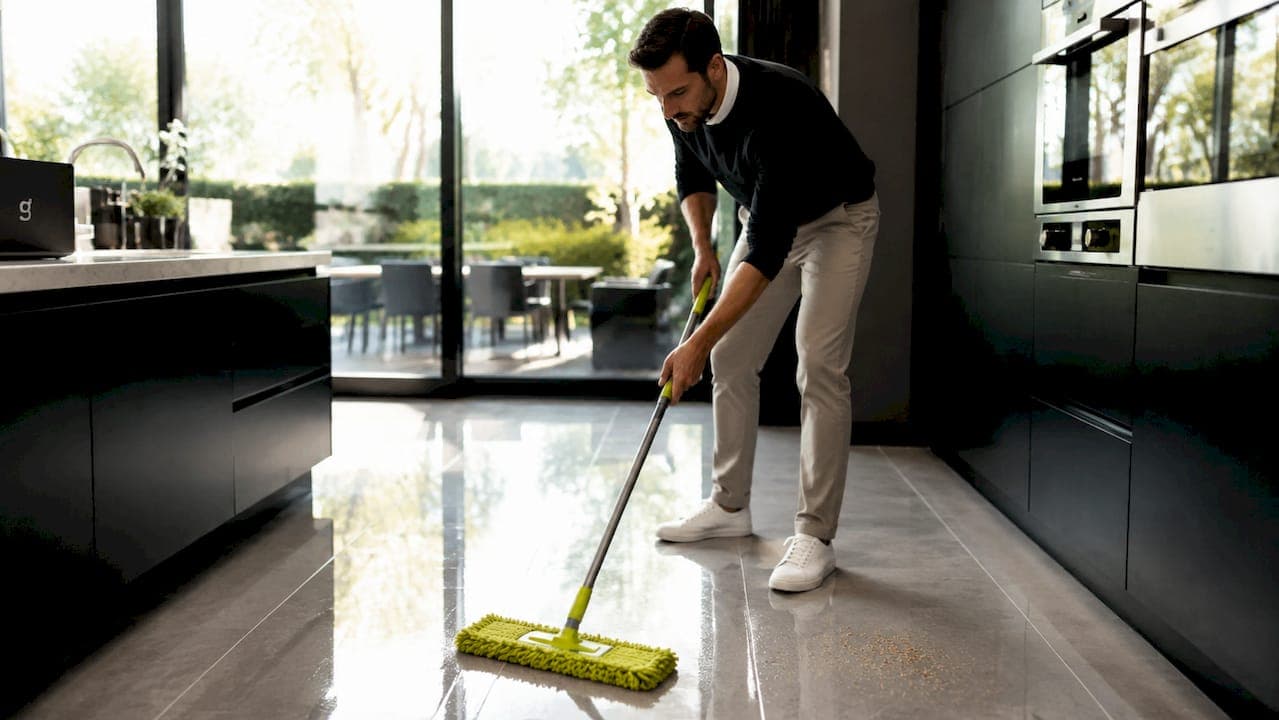
Professional cleaning extends home life by reducing surface wear, controlling biological pollutants, and preventing the kind of gradual deterioration that costs homeowners thousands in avoidable repairs. This is not simply about appearances. Preventive maintenance cleaning, the industry term for scheduled professional cleaning as a property preservation strategy, targets the invisible damage accumulating behind skirting boards, inside carpet fibres, and across stone benchtops long before you notice it. When you understand how cleaning preserves home materials at a structural level, the decision to hire professional services stops being a luxury and starts being straightforward property management.
How professional cleaning extends home life through surface preservation
Routine cleaning prevents abrasive buildup that damages surfaces, prolonging their condition and saving costly repairs over time. Most homeowners underestimate how destructive ordinary dust and grit actually are. Fine particulates act like sandpaper on timber floors, stone benchtops, and grout lines every time someone walks across them or wipes them with a cloth. Professional cleaners remove this abrasive layer before it embeds and scores the surface.
Consider what happens to unsealed grout in a bathroom that is wiped down weekly but never professionally cleaned. Soap scum and mineral deposits accumulate in the porous surface, and within two to three years the grout darkens permanently and begins to crack. A professional clean using the correct pH-balanced, non-toxic agents neutralises that mineral buildup without stripping the grout's integrity. The same principle applies to timber floors, stainless steel fixtures, and powder-coated surfaces.
Professional-grade equipment also makes a measurable difference. Commercial vacuums with true HEPA filtration, rotary scrubbers calibrated for specific floor types, and microfibre systems that lift rather than redistribute grime all protect surfaces in ways that standard household tools cannot replicate. The impact of cleaning on home longevity is most visible in kitchens and bathrooms, where grease, moisture, and mineral deposits combine to accelerate material degradation.
- Timber floors: Fine grit embedded in fibres scratches the finish coating with every footstep. Professional extraction removes it before scoring occurs.
- Stone benchtops: Acidic residues from food and cleaning sprays etch polished surfaces. Correct pH-neutral agents preserve the seal.
- Grout and tiles: Soap scum and mould spores penetrate porous grout. Professional treatment removes them before permanent staining sets in.
- Stainless steel: Chlorine-based sprays corrode the passive layer. Non-toxic alternatives clean without causing surface pitting.
- Painted walls: Greasy residue near light switches and door frames degrades paint adhesion. Regular professional attention prevents peeling and discolouration.
Pro Tip: Before booking a professional service, identify the specific surface materials in your home, particularly floors and benchtops, and confirm the service uses products rated for those materials. A single wrong product on a natural stone surface can cause irreversible etching.
How does professional cleaning improve indoor air quality?
Indoor pollutant levels are often two to five times higher inside homes than outdoors, making indoor air quality one of the most underappreciated factors in home health. That figure is striking because most people associate air pollution with traffic and industry, not their own living room. The reality is that biological pollutants including mould, dust mites, pet dander, bacteria, and pollen accumulate rapidly in soft furnishings, carpets, and ventilation systems.
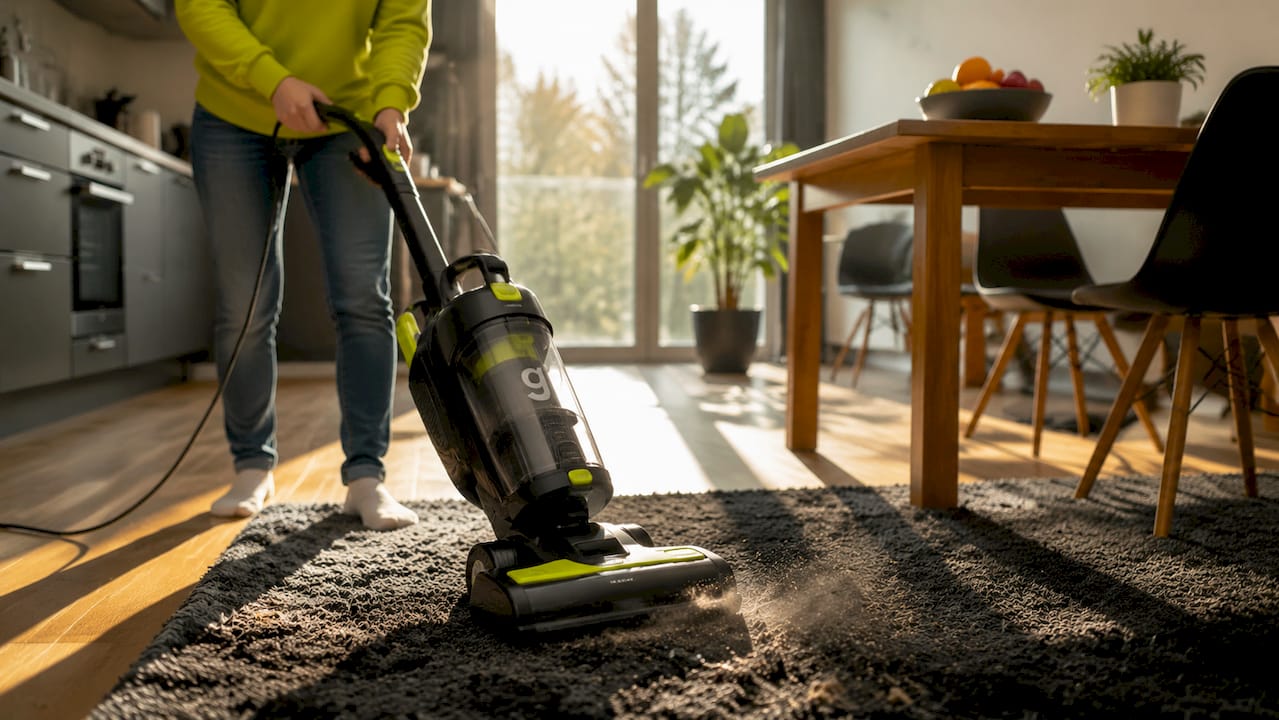
Biological indoor pollutants such as mould, bacteria, pet dander, and dust mites are the primary drivers of poor indoor air quality in residential properties. These are not removed by surface wiping. Dust mite colonies live deep inside mattresses and upholstered furniture. Mould spores travel through air currents and settle in wall cavities and ceiling corners. Pet dander binds to carpet fibres and remains airborne for hours after disturbance. Standard household vacuums without proper filtration simply redistribute these particles rather than capturing them.
HEPA filtration captures at least 99.97% of particles at 0.3 microns, the size range that includes the most harmful airborne allergens and fine particulates. This is the technical standard that separates professional-grade cleaning equipment from consumer products labelled "HEPA-type," which have no regulated performance standard. When a professional cleaner uses a true HEPA vacuum, they are genuinely removing allergens from the environment rather than suspending them temporarily.
| Pollutant | Where it accumulates | Professional method to remove |
|---|---|---|
| Dust mites | Mattresses, upholstery, carpets | Deep extraction vacuuming with HEPA filtration |
| Mould spores | Grout, ceiling corners, wall cavities | Targeted non-toxic biocide treatment and containment |
| Pet dander | Carpet fibres, soft furnishings | High-powered extraction and microfibre capture |
| Bacteria | Kitchen surfaces, bathrooms, door handles | Commercial-grade non-toxic disinfectants |
| Pollen | Entryways, window sills, floor surfaces | Systematic wet-wipe and HEPA vacuum sequence |
Improper cleaning methods can re-suspend allergens and dust into the air when contaminants are not properly removed and contained. This is the critical distinction between professional technique and DIY effort. A professional cleaner follows a systematic sequence: contain, capture, and remove. Wiping a dusty surface without first vacuuming it simply launches particles into the breathing zone.
Pro Tip: Ask your cleaning service whether their vacuum equipment carries a certified true HEPA rating, not just a HEPA-type label. The difference in particle capture between the two is significant, particularly for households with asthma or allergy sufferers.
What are the advantages of eco-friendly professional cleaning methods?
Eco cleaning must be combined with proper filtration and mechanical cleaning to genuinely protect home finishes and air quality. A green label on a product bottle does not automatically mean effective allergen removal or surface protection. The real advantage of eco-friendly professional cleaning comes from what it avoids: chlorine bleach, ammonia, and volatile organic compounds that damage surface finishes and linger in indoor air long after the cleaner has left.
Conventional cleaning products introduce their own pollutants. Bleach-based sprays corrode stainless steel and grout sealant over time. Ammonia-based glass cleaners strip the protective coating from some window tints and treated surfaces. Aerosol disinfectants deposit chemical residues on benchtops where food is prepared. Eco-friendly alternatives using plant-derived surfactants and non-toxic biocides clean effectively without these trade-offs, and they do not compromise the finishes that protect your surfaces from moisture and wear.
The comparison below illustrates the practical difference for home preservation:
| Factor | Conventional products | Eco-friendly professional products |
|---|---|---|
| Surface impact | Can corrode sealants and strip finishes over time | pH-balanced formulas preserve surface integrity |
| Indoor air residue | VOCs linger for hours after application | Non-toxic agents dissipate without harmful residue |
| Allergen removal | Masks odours without removing biological matter | Combined with HEPA tools, removes allergens at source |
| Material compatibility | Risk of damage to natural stone, timber, and coatings | Formulated for compatibility with delicate materials |
Choosing a service that uses commercial-grade eco cleaning methods gives you both the mechanical power of professional equipment and the material safety of non-toxic chemistry. The benefits of professional cleaning are amplified when the products themselves do not introduce new damage in the process of removing old grime. For homeowners with children, pets, or allergy sensitivities, this combination is particularly relevant.
- Verify that the service uses products free from chlorine, ammonia, and synthetic fragrance compounds.
- Confirm that mechanical action, not just chemical application, is part of the cleaning process.
- Ask whether the service uses containment protocols to prevent cross-contamination between rooms.
How can professional cleaning support property value and daily comfort?
A clean home reduces stress and mental load, with research showing cleanliness as a stronger predictor of physical health than even neighbourhood walkability. That finding from an Indiana University study reframes how you should think about cleaning budgets. Professional cleaning is not a discretionary expense. It is a direct investment in the conditions that determine how you feel and function in your own home every day.
The link between regular professional cleaning and property value is equally direct. Visible surface decline, stained grout, worn floor finishes, and grimy fixtures all signal deferred maintenance to prospective buyers and rental inspectors. Consistent professional cleaning supports early detection of maintenance issues and preserves home investment by preventing surface corrosion, staining, and material degradation. A professional cleaner working systematically through your home will notice a developing mould patch behind the toilet or a water stain forming under a window seal long before it becomes a structural problem.
Here is how a scheduled professional cleaning programme supports both comfort and property value over time:
- Prevents visible decline. Regular removal of grime, soap scum, and grease keeps surfaces looking maintained, which directly affects how your home presents to visitors, inspectors, and future buyers.
- Catches early damage. Professionals working in consistent areas notice changes. A new stain, a developing crack in grout, or a musty smell in a cupboard are all early warnings that save significant repair costs when addressed promptly.
- Reduces time and mental overhead. Survey data shows 60% stress reduction from clean homes, with families reporting more time for meaningful activities when cleaning is professionally managed.
- Maintains material warranties. Some flooring and surface warranties require documented regular maintenance. Professional cleaning provides that record and keeps warranty conditions intact.
- Supports rental compliance. For tenants, a professionally maintained property reduces bond dispute risk and demonstrates care for the premises, which matters at inspection time.
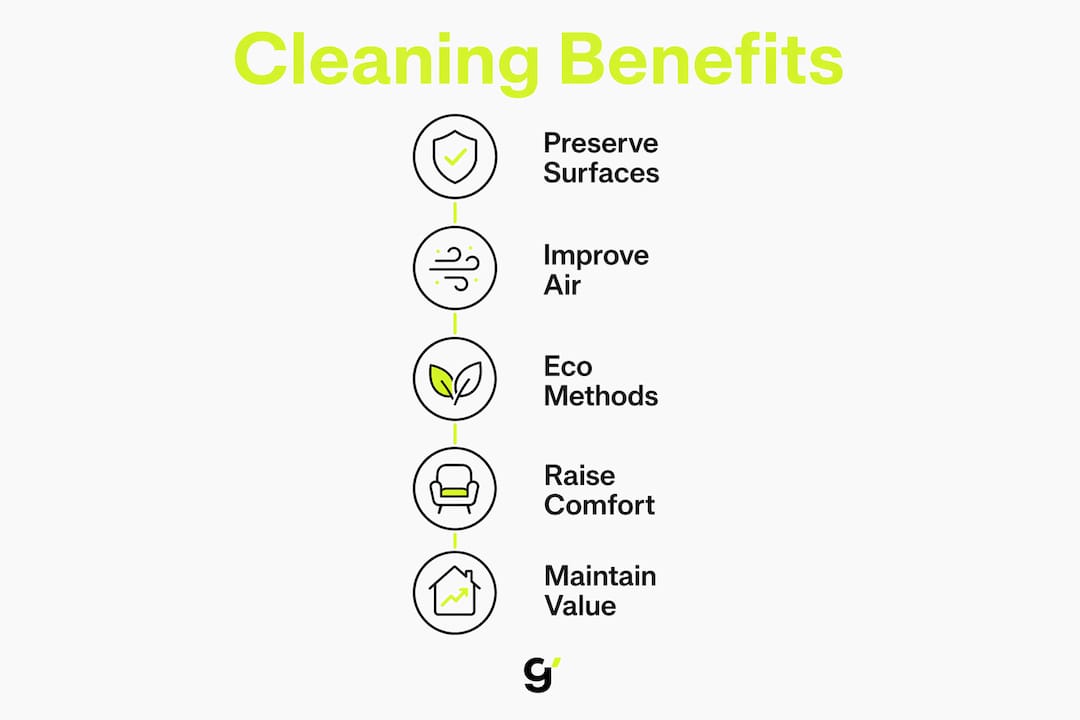
Scheduling regular professional services through a sustainable cleaning routine ensures that maintenance does not slip between visits. The compounding effect of consistent care is what separates homes that hold their condition for decades from those that require expensive renovation every five to seven years.
Key takeaways
Professional cleaning extends home life most effectively when it combines true HEPA filtration, eco-friendly non-toxic products, and systematic mechanical action applied on a consistent schedule.
| Point | Details |
|---|---|
| Surface preservation | Routine professional cleaning removes abrasive grit before it scores floors, grout, and finishes. |
| Indoor air quality | True HEPA filtration captures 99.97% of particles, removing allergens rather than redistributing them. |
| Eco-friendly methods | Non-toxic products protect surface integrity while avoiding the chemical residues that degrade finishes over time. |
| Property value | Consistent cleaning prevents visible decline and enables early detection of maintenance issues before they escalate. |
| Mental wellbeing | Research links home cleanliness to measurable stress reduction and improved daily quality of life. |
Why I stopped thinking of professional cleaning as a service and started treating it as maintenance
Most homeowners I speak with frame professional cleaning as something you do when the house gets out of hand. That framing is the core mistake. It treats cleaning as a reactive response to visible dirt rather than what it actually is: scheduled preventive maintenance for one of your most significant financial assets.
The homeowners who get the most from professional cleaning are the ones who treat it the way they treat a car service. You do not wait for the engine to fail before you change the oil. You schedule it at regular intervals because you understand that the cost of prevention is a fraction of the cost of repair. The same logic applies directly to grout, timber floors, stone benchtops, and indoor air quality.
I have also seen the consequences of relying on DIY cleaning for surfaces that require professional technique. Timber floors stripped by the wrong product. Grout permanently stained because soap scum was wiped rather than extracted. Mould returning within weeks because the surface was treated but the spore source in the wall cavity was not addressed. These are not edge cases. They are the predictable outcome of using the wrong tools and methods on materials that require precision.
The other mistake is choosing a service based on price alone without verifying whether they use true HEPA equipment and non-toxic products. A cheap clean that re-suspends allergens and leaves chemical residues on your benchtops has not extended your home's life. It has added to the problem. Selecting a service that uses eco-friendly home maintenance practices is not a premium option. It is the baseline standard for anyone serious about home preservation.
— Lead
Protect your home with Grimescene's eco-friendly cleaning services
Grimescene delivers professional cleaning that goes beyond surface appearances. Their non-toxic agents neutralise biological buildup at the source, and their systematic process covers the hidden areas that standard cleaning misses entirely. Whether you need a scheduled maintenance programme to preserve your home's surfaces and air quality, or a deep decontamination after renovation or a tenancy change, Grimescene's trained team applies commercial-grade eco methods that protect your property without harsh chemicals. Book your professional clean today and establish the kind of consistent care that keeps your home in peak condition for years to come. Visit Grimescene to explore the full range of services.
FAQ
How often should you schedule professional cleaning to protect your home?
Most homes benefit from professional cleaning every four to six weeks for general maintenance, with a deeper decontamination service every three to six months. High-traffic areas, homes with pets, and rental properties typically require more frequent visits to prevent surface wear and allergen accumulation.
Does professional cleaning genuinely improve home value?
Consistent professional cleaning preserves surface condition, prevents material degradation, and supports early detection of maintenance issues, all of which directly protect property value. Visible decline from neglected cleaning signals deferred maintenance to buyers and inspectors, which affects both sale price and rental assessments.
What makes eco-friendly cleaning better for home longevity?
Eco-friendly professional products avoid chlorine, ammonia, and volatile organic compounds that corrode surface sealants and degrade finishes over time. When combined with mechanical action and true HEPA filtration, non-toxic methods remove biological pollutants without introducing new chemical damage to your home's materials.
Can professional cleaning reduce allergens in my home?
Professional cleaning using true HEPA filtration removes at least 99.97% of airborne particles at 0.3 microns, including dust mite matter, pet dander, mould spores, and pollen. Standard household vacuums without certified HEPA filtration redistribute these particles rather than capturing them.
What surfaces benefit most from professional cleaning?
Timber floors, natural stone benchtops, grout lines, stainless steel fixtures, and soft furnishings such as carpets and upholstery show the greatest benefit from professional care. These materials are most vulnerable to abrasive grit, chemical damage, and biological buildup that accumulates faster than DIY cleaning can address.