
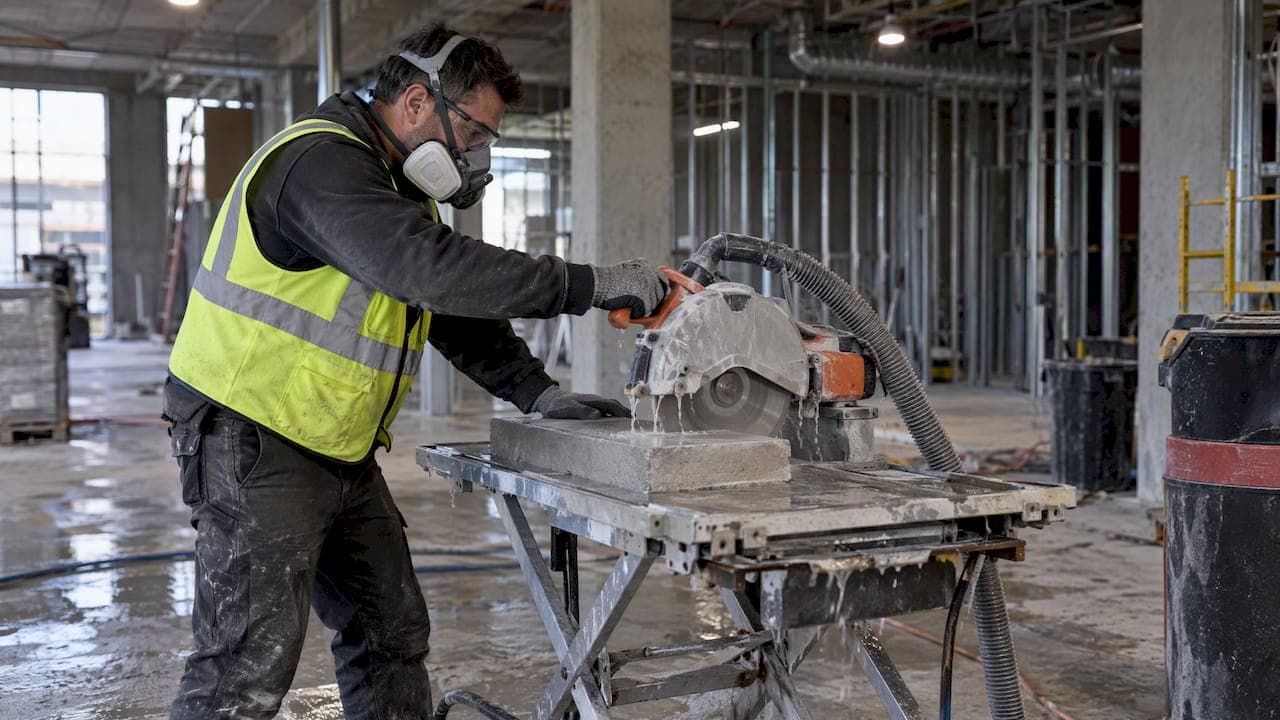
Construction dust, especially respirable crystalline silica, is a genuine and preventable health risk that can cause irreversible lung disease, chronic illness, and higher cancer risk. The workplace exposure standard for respirable crystalline silica is 0.05 mg/m3 as an eight-hour time-weighted average. If you are unsure whether a task generates hazardous dust, treat it as a risk: prioritise elimination or engineering controls first, and keep respiratory protective equipment as a last resort, properly fit-tested.
TL;DR:
- Air monitoring is essential when controls are uncertain or high-risk tasks are performed, to ensure silica levels stay below the standard of 0.05 mg/m3.
- Cutting, grinding, and demolition of silica-containing materials produce the highest airborne dust, especially when performed dry or in enclosed spaces.
- Engineering controls like local exhaust ventilation and water suppression must be maintained regularly to be effective and are prioritized over PPE.
- Long-term health risks include silicosis, COPD, and lung cancer, with symptoms often developing decades after exposure.
- After suspected over-exposure, immediate actions include stopping dust-generating activities, cleaning with wet methods, and seeking medical assessment.
Table of Contents
- What construction dust and respirable crystalline silica are
- Health effects: immediate symptoms and irreversible long-term disease
- Workplace exposure standard and air monitoring basics
- High-risk tasks that commonly generate hazardous dust
- Hierarchy of controls that actually reduce dust exposure
- Respiratory protective equipment: selection, fit and limits
- Health monitoring: triggers, components and recordkeeping
- Immediate actions after suspected over-exposure
- Post-construction cleaning: when to bring in a specialist
- A safety lead's take on dust risk
- How we help after the dust settles
- FAQ
- Sources
What construction dust and respirable crystalline silica are
Visible dust clouds are only part of the problem. The real danger comes from respirable particles, generally under 10 microns, small enough to bypass the body's natural filters and lodge deep in the lungs. Crystalline silica is one of the most hazardous components because it is present in so many everyday building materials.
Materials commonly containing silica include:
- Concrete and concrete products, used in slabs, footings and precast panels.
- Engineered stone, often with very high silica content, used in benchtops.
- Bricks, mortar and sand, found on almost every job site.
Workers most at risk include cutters and fabricators, installers, demolition crews, and even cleaners or supervisors who spend time near dust-generating tasks without direct involvement.
Health effects: immediate symptoms and irreversible long-term disease
Short-term exposure to construction dust typically causes eye, nose and throat irritation, coughing and breathlessness. These symptoms often fade once exposure stops, which can create a false sense of safety.
The long-term picture is far more serious. Repeated exposure to respirable crystalline silica is linked to silicosis, a scarring lung disease with several forms, including a rapidly progressing variant seen in workers cutting engineered stone. Silicosis can advance to progressive massive fibrosis, a severe and disabling stage. Systematic reviews of construction workers link dust exposure to COPD and a greater risk of lung cancer, with longer exposure associated with greater risk. Some evidence also points to links with renal impairment and autoimmune disease, though these associations are less firmly established than the respiratory outcomes.
The latency problem makes this hazard easy to underestimate. Symptoms can take years, sometimes decades, to appear, and lung damage can keep progressing even after a worker leaves a dusty role. That lag is precisely why waiting for symptoms before acting on dust control fails workers.

Workplace exposure standard and air monitoring basics
The workplace exposure standard for respirable crystalline silica is 0.05 mg/m3 as an eight-hour time-weighted average. This figure sets the ceiling, not a target to approach.
Air monitoring becomes necessary when you cannot be confident your controls are working, when a task is inherently high-risk, or when you need to demonstrate compliance to a regulator or client. Monitoring has to produce statistically valid exposure data showing that controls keep levels below the standard; where it does not, codes of practice require changing the controls and may require respiratory protective equipment as an interim measure while better engineering solutions are put in place.
High-risk tasks that commonly generate hazardous dust
Some tasks create far more airborne dust than others, and these deserve the first attention when you are prioritising controls.
- Cutting, grinding, drilling and polishing silica-containing materials, particularly dry cutting of engineered stone and concrete.
- Jackhammering and demolition, which disturb large volumes of material at once.
- Poor housekeeping practices, including dry sweeping, compressed-air cleaning, and vacuums not rated for hazardous dust, all of which resuspend fine particles rather than removing them.
Enclosed spaces and multiple concurrent dust-generating tasks compound exposure quickly, even when each individual activity seems manageable.
Hierarchy of controls that actually reduce dust exposure
The hierarchy of controls sets the order of priority for managing dust, and it matters because the most effective options come first, not last.
- Eliminate or substitute the hazardous material where practical, such as choosing a lower-silica product.
- Isolate the dust-generating task from other workers where elimination isn't possible.
- Apply engineering controls: on-tool extraction, local exhaust ventilation, correctly sized water suppression, and enclosed cabs fitted with HEPA filtration.
- Use administrative controls, such as job rotation and scheduling dusty tasks when fewer people are present.
- Fall back on PPE, including respiratory protective equipment, only once the above measures are exhausted.
Engineering controls only work if they're maintained. Codes of practice emphasise that higher-order controls must be verified, not just installed. Routine inspection and documented records matter, because wetting materials beforehand with no ongoing suppression, or local exhaust ventilation that nobody services, gives a false sense of control while exposure stays high.
Pro Tip: Treat water suppression and on-tool extraction as equipment that needs a maintenance schedule, not a one-off purchase.
Respiratory protective equipment: selection, fit and limits
Respiratory protective equipment sits at the bottom of the hierarchy for good reason. It protects the individual wearer but does nothing to reduce the dust in the air, and it should only be relied on when engineering and administrative controls cannot keep exposure below the workplace exposure standard.
Fit-testing is essential: an unfitted or poorly maintained respirator can leak and leave a worker exposed despite appearing protected. RPE must be used alongside engineering controls, maintained, and recorded. Recording matters for another reason too: wearing RPE on 30 or more days in a 12-month period is a common trigger for mandatory health monitoring, which ties RPE use directly to broader surveillance obligations.
Health monitoring: triggers, components and recordkeeping
Health monitoring becomes necessary where workers face significant ongoing risk from respirable crystalline silica, and the 30-day RPE trigger mentioned above is one of the clearest practical markers for when it kicks in.
A typical monitoring program includes a standardised respiratory questionnaire, spirometry and a chest X-ray, with high-resolution CT scans reserved for higher-risk cases. Baseline testing before exposure begins gives a reference point for detecting change over time.

Records need to be retained for the long term given how slowly dust-related disease can develop, and workers are entitled to understand their own results. Our workplace hygiene checklist covers recordkeeping examples that pair well with a health monitoring program.
Immediate actions after suspected over-exposure
If you suspect a dust over-exposure event, act quickly and methodically rather than waiting to see if symptoms appear.
- Stop the task generating dust and isolate the area immediately.
- Avoid dry sweeping or compressed air, both of which resuspend fine particles.
- Use M or H-class vacuuming or wet cleaning methods, ventilate the space, and commission air monitoring if exposure levels are unclear.
- Advise exposed workers to seek medical assessment and log the incident for follow-up and future health monitoring.
A clear handover standard afterwards matters too. Our post-renovation cleaning scope guide outlines what a thorough clean should cover before anyone reoccupies the space.
Post-construction cleaning: when to bring in a specialist
Residual silica dust can linger in fittings, ducts and soft furnishings long after visible mess is gone, particularly before tenant handovers or in sensitive interiors. That's where a specialist decontamination earns its place alongside engineering controls, not instead of them.
Our Scene Reset and Deep Decontamination services use targeted extraction, M and H-class vacuums, and non-toxic cleaning agents rather than harsh chemicals, finishing with a documented before-and-after report. Reducing exposed soil and sediment around a site also limits dust generation outdoors, which sediment control measures can help manage during the build itself.
A safety lead's take on dust risk
Dust disease is almost entirely preventable, yet it keeps appearing because controls get installed and then forgotten. Prioritise engineering measures, verify them with monitoring, and document every risk assessment and training session. Follow up any suspected over-exposure immediately rather than waiting for symptoms that may take years to surface.
— Lead
How we help after the dust settles
When controls have done their job and the build is wrapping up, residual dust still needs a proper clean before anyone moves back in. We use non-toxic, bleach-free agents that neutralise buildup rather than mask it, which matters in spaces where families, tenants or sensitive equipment will return.

Our Deep Decontamination and Rapid Response (2-Hour Tactical Clean) services are built for exactly these moments, whether you need a full post-construction sweep or an urgent clean after a suspected over-exposure event. Every job finishes with a documented report, useful for handovers and compliance records alike. Book a Deep Decontamination clean or check Rapid Response availability for your site.
This article is general information, not a substitute for advice from a qualified doctor. Consult a qualified healthcare professional about your own circumstances before acting on anything here.
FAQ
Can you get sick from construction dust?
Yes. Construction dust, particularly respirable crystalline silica, is linked to respiratory conditions including cough, breathlessness and increased risk of COPD and lung cancer. Long-term exposure can also cause silicosis, an irreversible scarring disease of the lungs.
Is builder's dust bad for you?
It depends on the type and amount. Fine respirable particles from materials like concrete, bricks and engineered stone can lodge deep in the lungs and cause lasting damage, while larger visible dust is more of an irritant than a serious hazard.
What are the risks of living next to construction site dust?
Nearby residents are generally exposed to far lower concentrations than workers performing the dust-generating tasks, but ongoing exposure to fine particles can still cause irritation and respiratory symptoms. Sediment and dust control measures on-site help limit how much escapes beyond the work area.
Is concrete dust as bad as asbestos?
No, they are different hazards with different mechanisms. Concrete dust's main risk comes from respirable crystalline silica causing silicosis and other lung disease over repeated exposure, while asbestos fibres cause distinct diseases including mesothelioma; both require strict control but are governed by separate regulatory frameworks.
Sources
- Safe Work Australia — Dangers of silica dust / hazards information
- Managing respirable crystalline silica dust exposure in construction and manufacturing of construction elements — WorkSafe Qld (Code of Practice 2022)
- Systematic review: respiratory health effects among construction workers — PMC