
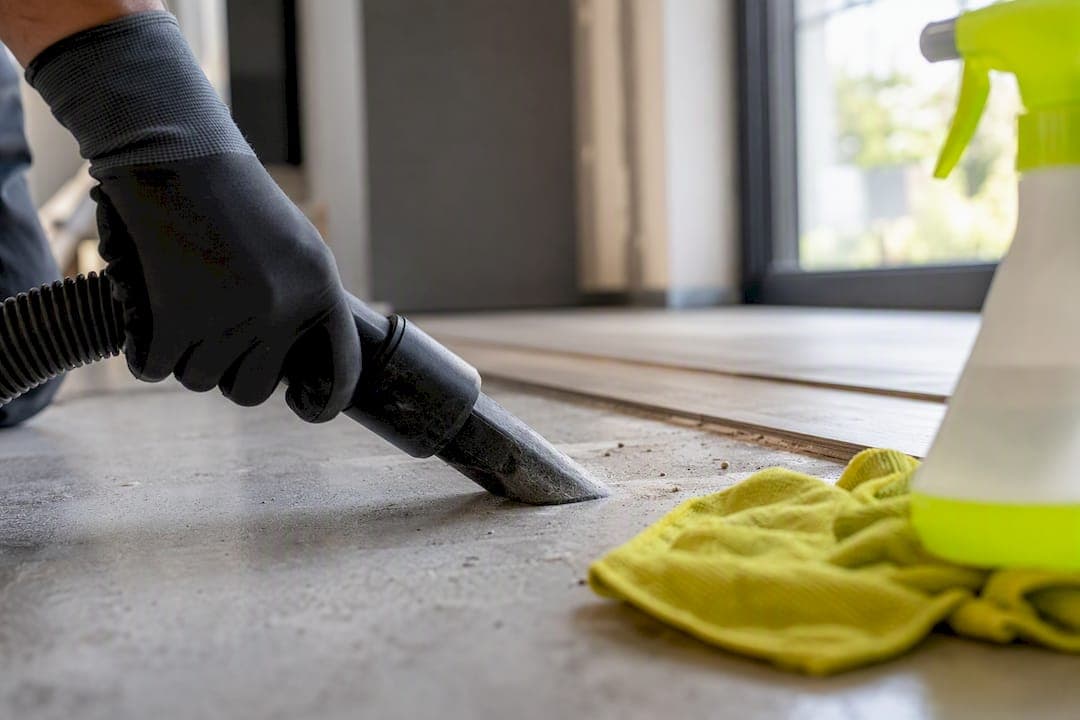
For post-construction silica dust, hire a specialist who uses sealed HEPA equipment and wet cleaning methods, never a household vacuum or a broom. Dry sweeping and compressed air are prohibited under SafeWork NSW's guidance because both push fine particles straight back into the air. A provider such as Grime Scene Services works to that standard, running HEPA-filtered vacuums and wet-wipe passes designed for rental turnovers and post-renovation handovers.
Two facts decide whether a clean is actually safe:
- HEPA filtration must capture nearly all particles down to 0.3 microns, the size that matters most for airborne silica.
- Wet methods (mopping, wiping, low-pressure rinsing) stop dust re-entering the air during cleanup.
If you've got haze on surfaces or grit returning after a wipe-down, book an inspection or request a Scene Reset quote before guests or tenants arrive.
Key Takeaways
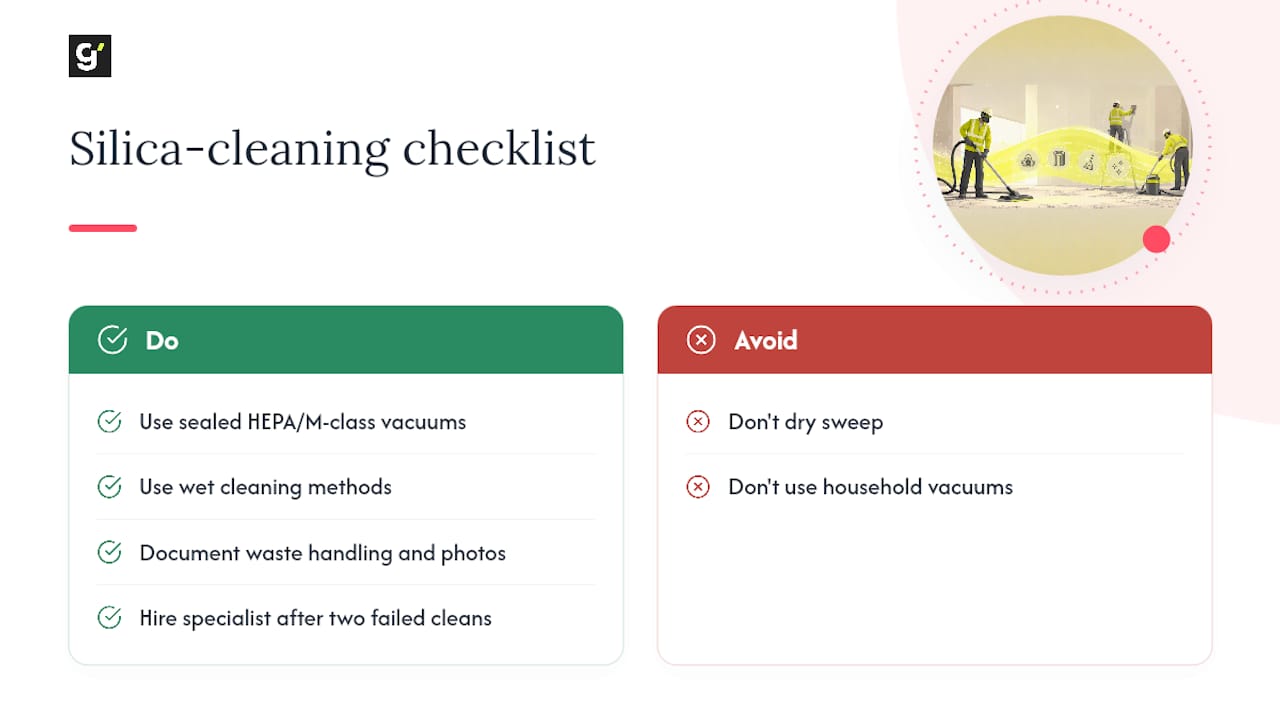
Effective silica dust cleaning relies on sealed HEPA equipment and wet methods, because dry sweeping and compressed air push hazardous particles straight back into the air.
| Point | Details |
|---|---|
| Never dry sweep or use compressed air | Both re-aerosolise silica dust; regulators prohibit them for this exact reason. |
| Insist on HEPA-rated equipment | Look for M or H class vacuums that capture 99.97% of 0.3-micron particles. |
| Keep slurry and waste wet | Dried slurry releases the same particles you already removed; bag and label it instead. |
| Know your escalation point | Two dry vacuum passes plus one wet clean with no result means it's time to call a specialist. |
| Grime Scene Services covers the full scope | Deep Decontamination and Scene Reset packages use HEPA equipment and non-toxic agents for rental-ready results. |
Table of Contents
- What a professional silica dust cleaning service actually does
- Why household cleaning tools fail against silica dust
- When should you book a specialist silica dust clean?
- What to expect from a reputable provider and what to ask before booking
- Why the finish matters as much as the safety compliance
- Book a Deep Decontamination clean or a Scene Reset before your next turnover
- Where to check the rules and techniques yourself
- Frequently asked questions
- Sources
What a professional silica dust cleaning service actually does
A rushed wipe-over does nothing for silica dust embedded in grout lines, vents and soft furnishings. A proper job runs through a set sequence, and knowing that sequence helps you tell a thorough quote from a cheap one.
- Assessment and scope-setting. The crew checks which rooms were affected, what trades caused the dust, and whether HVAC systems recirculated it through the property.
- HEPA high-dusting and sealed-vacuum passes. Ceilings, light fittings, shelving and skirting get vacuumed first with sealed HEPA units, working top to bottom so settled dust doesn't fall onto already-cleaned surfaces.
- Wet wiping and mopping. Hard surfaces get a damp wipe or mop pass once loose dust is gone, following the same logic WorkSafe Victoria sets out for on-tool water suppression: wet the dust before it can lift off the surface.
- HVAC and vent checks. Filters get inspected or replaced, and vents are checked for dust that's settled inside ductwork.
- Final inspection. A flashlight sweep or white-cloth swipe test confirms nothing's been missed.
Two things happen behind the scenes that separate a real remediation job from a quick tidy:
- Slurry and waste get bagged or contained wet, never left to dry, because dried slurry re-aerosolises the same particles you just removed.
- PPE and contaminated clothing go through commercial laundering or safe disposal, not a household wash.
Why household cleaning tools fail against silica dust
HEPA stands for high-efficiency particulate air, referring to filters that trap nearly all particles down to around 0.3 microns, roughly the size of the fine silica dust generated by cutting concrete, drywall or engineered stone. A filter without that rating, or a vacuum with an unsealed housing, lets the smallest and most hazardous particles straight back out the exhaust.
This is why the tools matter as much as the technique:
- Air scrubbers pull ambient dust out of a room's air, not just off its surfaces.
- M or H class vacuums (the dust classifications used in professional cleaning) have sealed intake-to-exhaust paths that prevent leakage.
- Low-pressure rinsing and wet-mop systems handle hard flooring and tiled areas without dry friction kicking dust back up.
Dry sweeping, compressed air and a standard household vacuum all do the opposite of what you want. A broom lifts dust off the floor and straight into the air you're standing in. Compressed air does the same thing, faster and further. A domestic vacuum, lacking a sealed HEPA path, can pass fine particles straight through and pump them back into the room.
SafeWork NSW prohibits both dry sweeping and compressed air for exactly this reason, and WorkSafe Victoria's guidance reinforces it, recommending HEPA-filtered dust-class M or H vacuums alongside wet suppression as the baseline, not the premium option.
Pro Tip: Ask any prospective cleaner what class their vacuum is rated. If they don't know what "M or H class" means, that's your answer.
When should you book a specialist silica dust clean?
A handful of signs tell you it's time to stop attempting a DIY clean and call in a specialist:
- Visible haze sits on surfaces even after wiping them down.
- Grit or dust keeps reappearing within a day of cleaning.
- Recent concrete cutting, drywall sanding or stone fabrication happened on site.
- A guest check-in or tenant move-in is approaching and there's no time to gamble on a partial fix.
One practical rule of thumb: if two thorough vacuum passes plus one wet clean haven't resolved the visible dust, a professional job is the sensible next move rather than a third attempt.
Before you call for a quote, gather:
- Approximate square metres affected.
- Which trades worked on site and what materials they cut or sanded.
- Whether HVAC has been running and when it was last serviced.
- Photos of textured surfaces, grout lines or finishes that concern you.
- Any access constraints (locked units, shared entries, limited parking).
On timing, schedule the final clean after all trades finish, following the typical house renovation process, and plan a touch-up pass once HVAC has run for a settling period. That second pass catches dust the system stirred up after the first clean.
What to expect from a reputable provider and what to ask before booking
A competent silica dust cleaning provider will have consistent answers on equipment, waste handling and proof of work. Expect sealed HEPA vacuums, air scrubbers where the job warrants them, clearly labelled waste bags, and laundering procedures for any PPE used on site. Before-and-after photos and a final verification step, such as a flashlight inspection, should be standard, not an upsell.
Questions worth asking before you book:
- "What class is your vacuum equipment rated?" (M or H class is the acceptable answer.)
- "How do you handle wet slurry and contaminated waste?" (Look for containment and labelling, not "we hose it down the drain.")
- "Do you provide before-and-after photos?"
- "What's your process for HVAC vents and filters?"
Walk away from any provider who suggests dry sweeping, mentions a household vacuum, gives a vague answer on disposal, or refuses to provide photo evidence. Those are the exact practices regulators warn against, not shortcuts a good operator takes to save time.
Pro Tip: A provider that can't describe their slurry containment process in one sentence probably doesn't have one.
Why the finish matters as much as the safety compliance
Getting the dust out safely is only half the job. What separates a good silica dust clean from an adequate one is whether the property's finishes and guest experience survive the process intact.
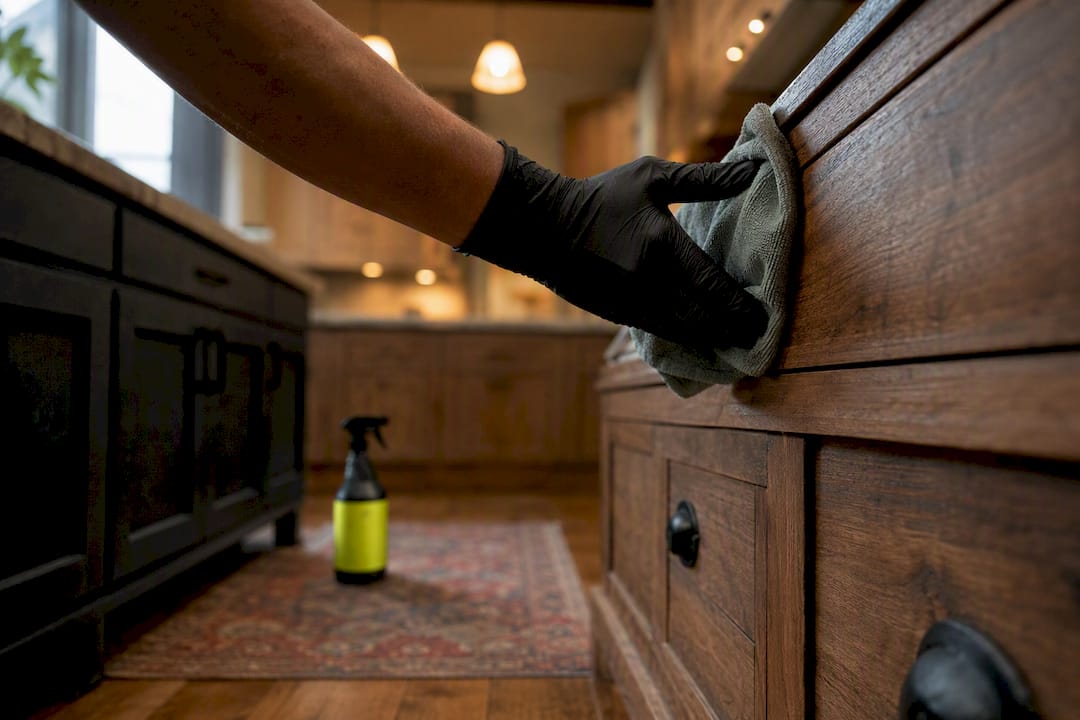
Hosts lose ratings over things guests can see and feel: grout haze, a film on hardwood, dust resettling on surfaces within a day of check-in. Grime Scene Services built its Scene Reset protocol around that reality, pairing HEPA-standard dust removal with non-toxic, bleach-free agents so surfaces come out clean without chemical residue that irritates guests or damages finishes over repeated turnovers. Getting this right consistently protects both the property and the booking calendar.
Book a Deep Decontamination clean or a Scene Reset before your next turnover
If you're weighing up whether to attempt a DIY clean or call in help, Grime Scene Services runs both jobs on the same standard: sealed HEPA equipment, wet methods, and non-toxic agents that won't leave residue behind for the next guest.

The Deep Decontamination service covers the exact scope outlined above: HEPA high-dusting, wet wiping, vent checks, slurry containment and PPE handling, mapped against the checklist you'd use to compare any quote. For hosts working against a check-in date, the Short Term Rental Scene Reset package is built specifically for fast turnarounds, pairing the same decontamination standard with linen and consumable restocking so the property is guest-ready, not just dust-free.
Booking starts with an inspection, either in person or from the photos in your pre-booking checklist. You'll get a scoped quote based on square metres and finish types, then a scheduling window that accounts for HVAC settling time if a touch-up pass is needed. Get in touch to arrange an inspection or request a Scene Reset quote for your next turnover.
Where to check the rules and techniques yourself
For the regulatory detail behind these practices, go to the source documents rather than a summary:
- SafeWork NSW's clean-up and disposal guidance covers prohibited methods and waste labelling.
- WorkSafe Victoria's silica dust prevention guidance details equipment classes and slurry management.
- For stepwise DIY technique on smaller jobs, see this post-renovation cleaning guide.
Frequently asked questions
Is silica dust cleaning something I can do myself? For light dust after minor work, HEPA vacuuming and damp wiping can manage it. Once you're past two vacuum passes and a wet clean with dust still visible, or the job followed concrete cutting or stone fabrication, hand it to a specialist.
What makes a cleaning service qualified for silica dust removal? Look for sealed HEPA or M/H-class vacuum equipment, wet cleaning methods, documented slurry and waste handling, and before-and-after photo verification. A provider who suggests dry sweeping or a household vacuum isn't qualified for the job.
How long does a professional silica dust cleanup take? It depends on the square metreage affected and the finishes involved, but expect a final clean scheduled after trades finish, plus a touch-up pass once HVAC has run for a settling period.
Does silica dust cleaning cost more than a standard clean? Pricing typically reflects the extra time HEPA equipment, wet methods and waste handling add compared with a standard clean, and it scales with the area affected and the number of surfaces needing detailed attention. Request a scoped quote based on your specific job rather than comparing flat rates.
Can silica dust damage flooring or grout if it's not cleaned properly? Yes. Left untreated or cleaned with the wrong method, embedded dust can dull hardwood finishes and settle permanently into grout lines and textured surfaces, which is why surface-specific technique matters as much as the equipment used.
Sources
- Clean-up and disposal of silica dust | SafeWork NSW
- Preventing exposure to crystalline silica dust | WorkSafe Victoria
- How to Clean Construction Dust and Debris After Home Renovation - The Clean Tips