
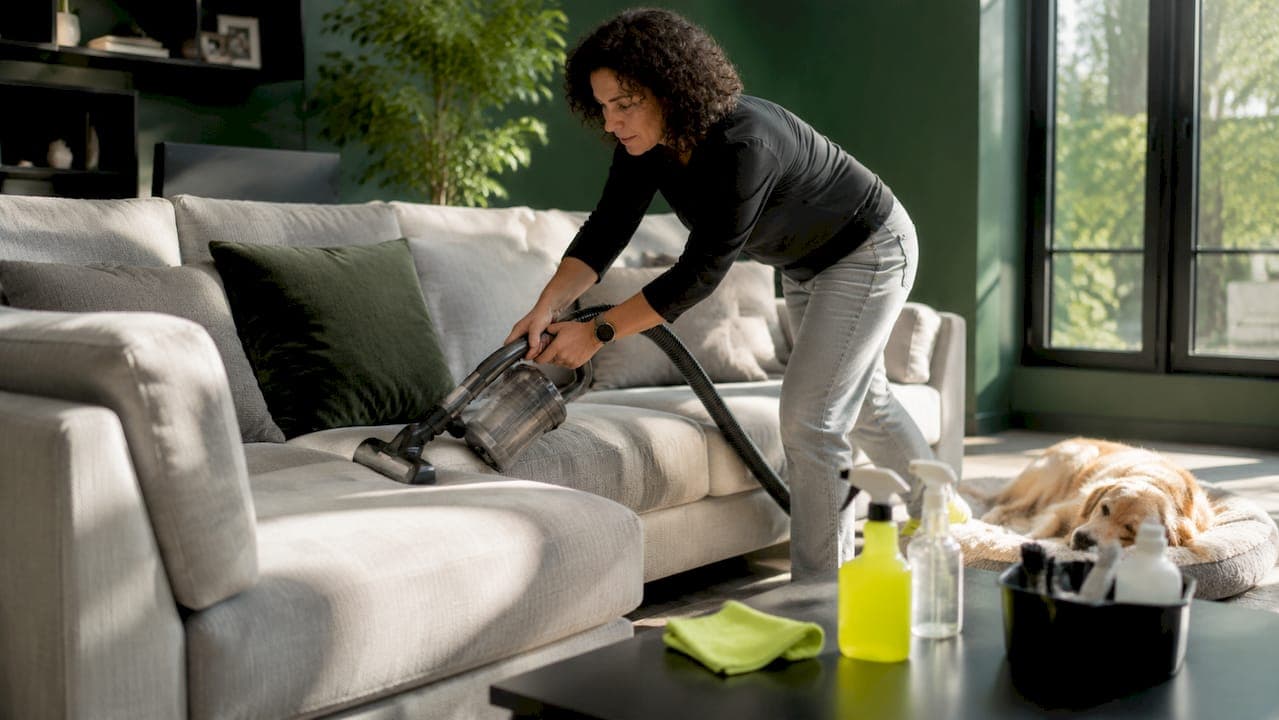
Pet dander is defined as microscopic skin flakes shed by cats, dogs, and other animals, and it carries protein-based allergens that cling to surfaces and remain airborne for hours. Standard cleaning methods fail to remove these particles because dander behaves nothing like ordinary dust. It sticks, it floats, and it hides in places a regular vacuum or duster never reaches. Understanding why pet dander requires special cleaning is the first step toward protecting your health and keeping your home genuinely clean.
Why pet dander is different from ordinary dust
Pet dander is not simply loose fur or visible debris. The main allergen source is microscopic protein particles found in dander, saliva, and urine, not the fur itself. That distinction matters enormously for how you clean.
Dander particles range from 1–20 micrometres in size. That is smaller than a human hair, which sits around 70 micrometres wide. The particles you cannot see are the ones causing the most damage.

The electrostatic problem
Dander carries an electrostatic charge. That charge causes particles to bond to upholstery fibres, curtain fabric, carpet pile, and even painted walls. A dry cloth or a standard vacuum head does not break that bond. It simply pushes the particles around or launches them back into the air.
Pet hair compounds the problem. Hair acts as a transport vehicle, carrying dander deep into soft furnishings where it becomes embedded. This is why pet hair needs special cleaning beyond a quick lint roll.
The airborne fraction
About 25% of pet dander particles are smaller than 5 micrometres and remain suspended in the air indefinitely. Normal human movement, opening a door, or running a ceiling fan resuspends settled dander continuously. Visual cleanliness is genuinely deceptive. A room can look spotless and still carry a significant allergen load.
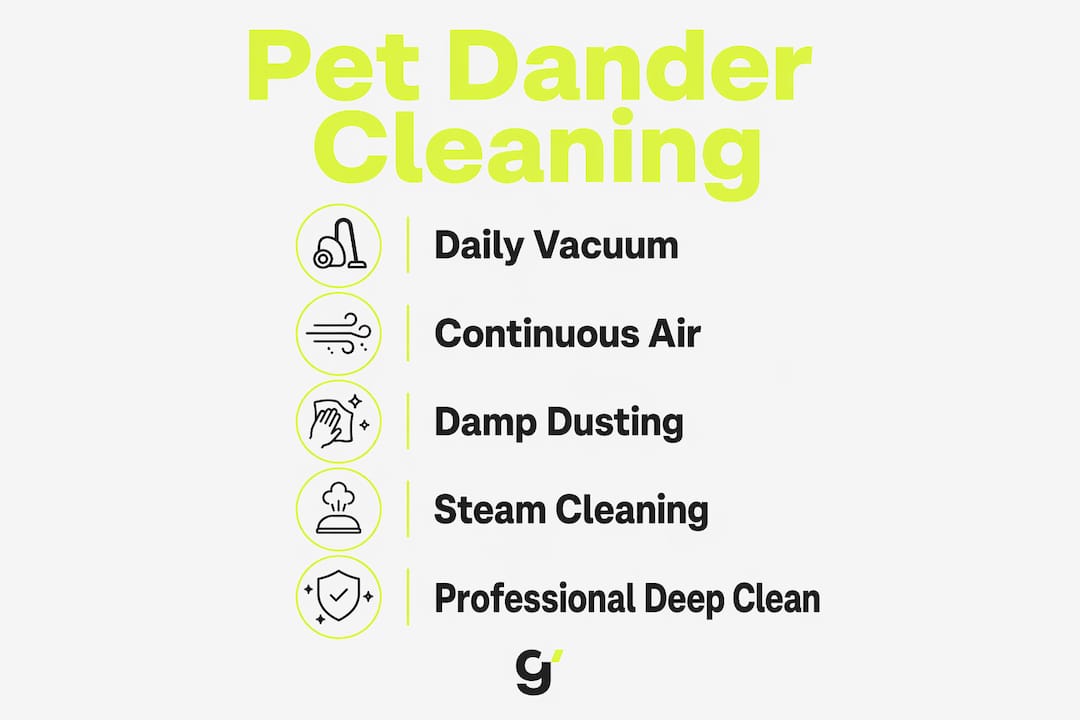
Dander also settles into what researchers call "soft reservoirs": upholstery, bedding, and curtains. These surfaces trap particles deep within their fibres, well beyond the reach of surface-level cleaning.
Why standard cleaning techniques fall short
Most pet owners underestimate how badly ordinary cleaning methods perform against dander. The problem is not effort. The problem is physics and chemistry.
Four ways standard cleaning fails
-
Vacuuming without HEPA filtration pulls dander into the machine and exhausts it back into the room. Vacuuming can spike airborne allergen concentration by 10–100 times the baseline level. A standard vacuum makes the air quality worse before it gets better.
-
Dry dusting moves allergens off surfaces and into the air. The particles settle again within 4–6 hours, often in a different room. You have redistributed the problem, not solved it.
-
Cold water washing does not break down protein allergens. The proteins in dander denature only under heat. Washing bedding in cold or warm water leaves the allergenic proteins structurally intact.
-
Air purifiers used intermittently provide limited benefit. Continuous low-speed HEPA operation in pet and bedroom areas is what delivers meaningful allergen reduction. Switching a purifier on for an hour and then off again cannot keep pace with steady dander generation throughout the day.
Pro Tip: Run your HEPA air purifier continuously at low speed rather than on a timer. Continuous operation provides 4–6 air exchanges per hour, which prevents allergen accumulation between cleaning sessions.
A common misconception is that removing visible pet hair solves the problem. It does not. Pet fur is not the primary allergen. The microscopic protein particles in dander remain long after every visible hair has been collected.
How to clean pet dander effectively
Effective pet dander management requires a multi-modal approach. No single method eliminates dander. Combining grooming, surface cleaning, laundering, and air filtration delivers the best results.
Daily and weekly cleaning routine
- Daily HEPA vacuuming of high-traffic areas, pet sleeping spots, and upholstered furniture. Use a vacuum with a sealed HEPA filter to prevent exhaust contamination.
- Twice-weekly damp microfiber dusting on all hard surfaces. Microfiber cloths for pet dander work because the fibres trap particles electrostatically rather than pushing them around. Dampen the cloth lightly before use.
- Weekly bedding laundering in water at 130°F (54°C) or above. Heat denatures the protein allergens and breaks their bond with fabric fibres. This applies to both human and pet bedding.
- Continuous HEPA air purifier operation in the bedroom and main living areas. Position the unit away from walls to maximise air circulation.
- Regular pet grooming and bathing to reduce the volume of dander shed indoors. Grooming outdoors or in a well-ventilated bathroom limits the spread of fresh dander through the home.
Pro Tip: After vacuuming, leave your HEPA air purifier running on its highest setting for 30–60 minutes. This captures the dander particles disturbed during cleaning before they resettle on surfaces.
Targeting soft reservoirs and HVAC systems
Upholstery, curtains, and mattresses are the hardest surfaces to clean and the most important. Steam cleaning breaks the electrostatic and protein bonds that hold dander in fabric fibres. Steam cleaning and hot water laundering at above 130°F are necessary for deep allergen removal from these surfaces. Enzymatic cleaners work well on upholstery because they break down the protein structure of allergens chemically.
HVAC systems and air ducts are hidden dirty spots that most pet owners overlook entirely. Dander circulates through ductwork and resettles throughout the home every time the system runs. Fitting HVAC filters with a MERV 11 or higher rating captures dander before it recirculates. Replace filters every 60–90 days in pet households.
| Cleaning method | Frequency | Key requirement |
|---|---|---|
| HEPA vacuuming | Daily | Sealed HEPA filter |
| Damp microfiber dusting | Twice weekly | Lightly dampened cloth |
| Bedding laundering | Weekly | Water at 130°F+ |
| Steam cleaning upholstery | Monthly | Professional-grade steam |
| HVAC filter replacement | Every 60–90 days | MERV 11 or higher |
| Professional deep clean | Every 3–6 months | Enzymatic cleaners, HEPA extraction |
Professional deep cleaning is necessary every 3–6 months for households with allergy sufferers. Specialists use enzymatic cleaners and HEPA-filtered extractors that reach allergen deposits well beyond what home equipment can access.
How cleaning pet dander improves health and air quality
The health case for rigorous dander cleaning is clear. HEPA purifiers reduce airborne pet allergens by 70–90% within 30–60 minutes of operation. That reduction translates directly to fewer allergy symptoms for sensitive people in the home.
"Combining continuous HEPA air filtration with regular surface cleaning and hot water laundering is the only protocol that addresses both the airborne and settled fractions of pet allergen. Treating one without the other leaves a significant allergen reservoir intact."
The benefit extends beyond allergy sufferers. Reduced allergen load improves indoor air quality for everyone in the household. Children, elderly people, and those with asthma all benefit from lower airborne particle concentrations, even when they show no specific pet allergy.
Settled dander is the hidden driver of ongoing symptoms. Every time someone walks across a carpet or sits on a sofa, settled dander resuspends and re-enters the breathing zone. Addressing soft reservoirs with steam cleaning and enzymatic treatments reduces these resuspension events significantly. The importance of cleaning pet dander from surfaces is equal to the importance of filtering the air.
Dander cannot be fully eliminated from a home with pets. The goal is to reduce the allergen load to below the symptom threshold for sensitive people. A multi-modal approach combining grooming, filtration, and cleaning delivers a 50–70% total exposure reduction. That reduction is enough to make a meaningful difference to daily comfort and respiratory health.
Key takeaways
Pet dander requires special cleaning because its microscopic, protein-based particles cling electrostatically to surfaces, remain airborne indefinitely, and resist removal by standard vacuuming, dry dusting, and cold water washing.
| Point | Details |
|---|---|
| Dander is not fur | The protein allergens in dander, saliva, and urine cause reactions, not the visible hair. |
| Standard vacuums worsen air quality | Non-HEPA vacuums spike airborne allergen levels by up to 100 times during use. |
| Heat is required for laundering | Washing bedding at 130°F+ denatures protein allergens that cold water leaves intact. |
| Soft reservoirs need targeted treatment | Steam cleaning and enzymatic cleaners are needed to remove dander from upholstery and curtains. |
| No single method is enough | A combined approach of grooming, HEPA filtration, and surface cleaning achieves 50–70% exposure reduction. |
The cleaning habit most pet owners get wrong
Most pet owners I speak with focus almost entirely on visible pet hair. They lint-roll the sofa, sweep the floor, and consider the job done. The microscopic allergen problem is invisible, so it stays invisible in their cleaning routine too.
The shift that makes the biggest difference is treating dander cleaning as an air quality problem, not just a surface problem. Once you accept that a visually clean room can still carry a heavy allergen load, the logic of continuous HEPA filtration and damp microfiber dusting becomes obvious rather than excessive.
The other mistake I see constantly is inconsistency. People deep-clean once a month and do nothing in between. Dander is generated continuously. Your pet sheds allergens every hour of every day. A cleaning routine that does not match that frequency will always fall behind. Daily light maintenance combined with weekly thorough cleaning outperforms a single monthly deep clean every time.
Integrating cleaning into existing habits makes it sustainable. Vacuum while the kettle boils. Wipe surfaces with a damp microfiber cloth as part of the morning routine. Run the air purifier overnight. Small, consistent actions compound into a genuinely lower allergen environment over weeks and months. That consistency is what allergy sufferers actually feel in their daily symptoms.
— Lead
Grimescene's approach to pet dander cleaning
Pet dander cleaning at home has real limits. Professional equipment reaches allergen deposits that household tools simply cannot access.

Grimescene uses non-toxic enzymatic cleaners and HEPA-filtered extraction equipment to remove dander from soft furnishings, carpets, and HVAC-adjacent surfaces. The service suits both one-off deep cleans and ongoing maintenance schedules for pet households. Allergy sufferers in particular benefit from the depth of clean that professional-grade equipment delivers. Book an appointment with Grimescene's team to schedule a pet dander deep clean and bring your home's allergen load down to a manageable level.
FAQ
What is pet dander and why does it cause allergies?
Pet dander is microscopic skin flakes shed by animals, carrying protein-based allergens from skin, saliva, and urine. These proteins trigger immune reactions in sensitive people, causing sneezing, itchy eyes, and respiratory symptoms.
Do HEPA vacuums actually make a difference for pet dander?
Yes. Standard vacuums exhaust dander back into the air, spiking allergen levels by up to 100 times. A sealed HEPA vacuum captures particles at 0.3 micrometres and prevents that redistribution.
How often should pet owners wash bedding to control dander?
Wash all bedding weekly in water at 130°F or above. Heat denatures the protein allergens that cold water leaves structurally intact and active.
Can I reduce pet dander without getting rid of my pet?
A combined approach of daily HEPA vacuuming, continuous air filtration, damp microfiber dusting, and regular pet grooming reduces total allergen exposure by 50–70%, which is enough to manage symptoms for most allergy sufferers.
When should I call a professional cleaner for pet dander?
Professional cleaning is recommended every 3–6 months for households with allergy sufferers. Specialists use enzymatic cleaners and HEPA-filtered extractors to remove allergens from soft reservoirs that home equipment cannot reach.