
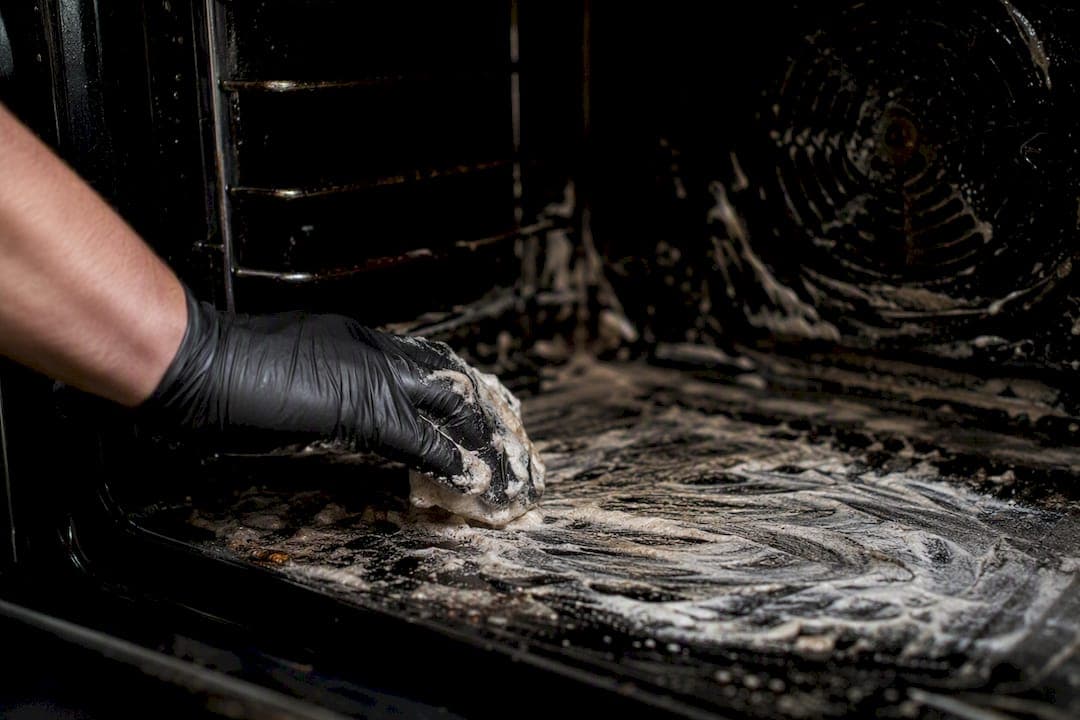
The most effective eco friendly oven cleaning method is also the simplest: a baking soda paste left to work overnight, softened with steam if the grime is stubborn, then reactivated with white vinegar and wiped clean. No fumes, no gloves fogging up your kitchen, no evacuating the kids and the dog for an hour.
Two rules matter more than any recipe. Never let paste or liquid touch heating elements or gas vents, and always ventilate the kitchen and rinse surfaces thoroughly once you're done. If your oven has years of carbonised grease, a cracked seal, or you're racing a same-day rental turnover, a professional non-toxic clean is the smarter call.
- Baking soda paste plus vinegar handles most household grime without harsh chemicals.
- Steam softens baked-on carbon before you scrub, cutting elbow grease significantly.
- Skip DIY entirely if there's heavy carbon, damaged seals, or a tight deadline.
Pro Tip: Do a small test patch on an inconspicuous corner of your oven's interior before covering the whole surface. Enamel finishes vary, and it takes thirty seconds to confirm the paste won't dull or discolour the coating.
Key Takeaways
Eco friendly oven cleaning works best as a baking soda paste with overnight dwell time, steam pre-softening for stubborn grime, and a vinegar rinse to finish, with heating elements and gas vents kept strictly off limits.
| Point | Details |
|---|---|
| Core method | Baking soda paste overnight, reactivated with vinegar, remains the most reliable non-toxic option. |
| Steam saves effort | Thirty to sixty minutes of steam softens baked-on grease before you scrub. |
| Two hard safety rules | Never touch heating elements or gas vents, and always ventilate and rinse thoroughly. |
| Maintain weekly, deep clean seasonally | Wipe spills weekly and do a full paste treatment every 3 to 6 months to avoid heavy build-up. |
| Call a professional for heavy jobs | Grimescene's Scene Reset and deep decontamination services handle carbon build-up, damaged seals, or tight rental turnarounds with non-toxic agents. |
Table of Contents
- What eco friendly oven cleaning methods actually work
- How do you clean an oven naturally at home?
- How do you clean oven racks and the door safely?
- When should you hire a professional eco-friendly oven clean?
- Why avoid caustic oven cleaners? Health and environmental risks
- A simple maintenance routine that keeps chemicals out of your kitchen
- What I've learned about balancing effort and safety in the kitchen
- Book a non-toxic oven clean when DIY won't cut it
- Sources
What eco friendly oven cleaning methods actually work
Baking soda is a mild alkali and a gentle abrasive at once, which is why it's the backbone of nearly every non-toxic oven cleaning method. It breaks down grease chemically while its fine grit lifts carbon physically, without scratching enamel or stainless surfaces the way steel wool does.
Vinegar's job comes second. Once the baking soda paste has done its work, a vinegar spray reacts with the leftover residue, fizzing it loose so it wipes away instead of smearing. It's the same acid-base reaction you'd use to unclog a drain, just applied at kitchen scale.
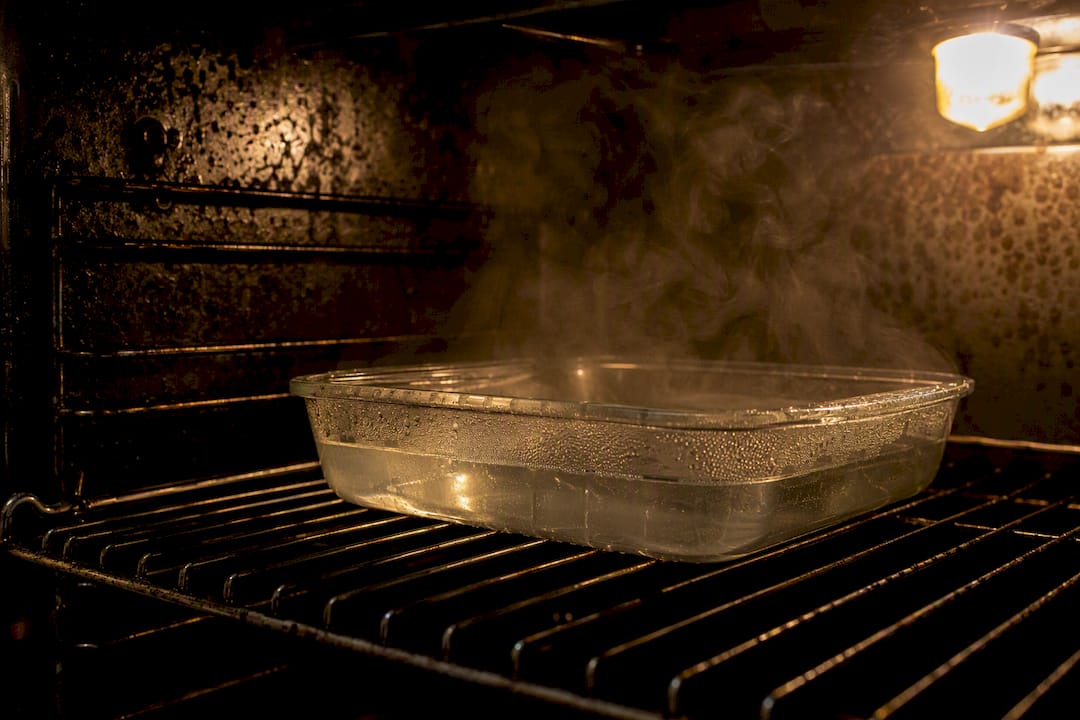
Heat helps too. A shallow dish of water left in a warm oven for half an hour turns to steam that softens baked-on grease before you even pick up a scrubbing pad. It's the single easiest step people skip, and it often halves the scrubbing time.
Store-bought eco cleaners fill a real gap for people short on patience. Biodegradable, lower-toxicity formulas like Ecover's oven and hob cleaner work faster than a paste because they're already at working strength, though they still need proper ventilation and rinsing.
- Baking soda: chemical breakdown plus gentle abrasion, works on enamel, glass and metal.
- Vinegar: reactivates residue after the paste sits, making removal easier.
- Steam: softens carbon before scrubbing starts, reducing the physical effort needed.
- Commercial eco cleaners: faster contact time, but rely on you handling and rinsing them properly.
The trade-off is time versus effort. Natural methods need hours of dwell time rather than minutes, but you get zero toxic fumes and no chemical residue sitting where you cook your next meal.
How do you clean an oven naturally at home?
You don't need anything from under the sink that isn't already there. This is the method Grimescene technicians use as a baseline before deciding whether a job needs a stronger deep decontamination pass.
What you'll need:
- Baking soda (roughly half a cup for a standard oven cavity)
- Water, enough to form a spreadable paste
- White vinegar in a spray bottle
- A non-scratch scrubbing pad
- An oven-safe dish for steaming
- Microfibre cloths for wiping and rinsing
The overnight method (best for heavy build-up):
- Remove racks and trays first, so you're working on a bare cavity.
- Mix baking soda with water until it forms a spreadable paste, roughly the consistency of toothpaste.
- Coat the interior surfaces generously, avoiding the heating element and any gas vents completely.
- Leave it for 8 to 12 hours, or overnight while the kitchen isn't in use.
- Spray the dried paste with white vinegar. It will foam as it reacts.
- Wipe everything down with a damp cloth, rinsing repeatedly until no residue or grit remains.
The quick method (light, everyday grime):
If you're dealing with recent spills rather than months of carbon, skip the overnight wait. Apply the same paste, leave it for 30 to 60 minutes, then scrub the softened patches with a non-scratch pad and wipe clean.
Steam pre-soften option:
For grime that's dried hard, place a heatproof dish with about two centimetres of water on the middle rack and run the oven at a moderate temperature (around 120°C) for 30 to 60 minutes. Turn it off, let it cool completely, then apply the paste as normal. The overnight baking soda and vinegar combination reliably lifts heavy baked-on grime without toxic fumes when you give it enough contact time, and steam just gets you there faster.
Pro Tip: If the paste has dried rock hard and vinegar alone isn't cutting through it, mist the surface with warm water first, wait five minutes, then spray vinegar. Rehydrating the paste makes the reaction far more effective.
Whatever method you use, the same safety line applies every time: nothing goes near the heating element or a gas vent, and always test an unseen patch first before committing to the whole interior.
How do you clean oven racks and the door safely?
Racks and trays need a different approach because they're solid metal, not enamel, and can handle a longer soak. Fill a bathtub or a large sealed bag with hot water and a generous amount of baking soda, submerge the racks, and leave them for 4 to 12 hours depending on how caked they are. Scrub with a non-scratch pad afterwards and dry thoroughly before sliding them back in.
The door glass is trickier. Paste works fine on the inside face, but avoid anything abrasive on the glass itself, a soft cloth is enough once the paste has loosened the grime. Getting between double or triple-glazed panes is a different job entirely: some ovens require you to check the manual before attempting it, since forcing sealed panes apart risks cracking them or voiding your warranty.
- Soak removable racks in baking soda and hot water for 4 to 12 hours.
- Never use abrasive pads on oven door glass.
- Check your manual before attempting to open sealed door panes.
- Dry every part fully before reassembly to prevent streaking and rust spots on racks.
If you're not certain how a panel comes apart, don't force it. A stuck screw or an unfamiliar clip is a sign to leave that part to a professional rather than risk cracking glass or damaging a seal.
When should you hire a professional eco-friendly oven clean?
DIY has limits, and knowing where they are saves you time and a potential appliance repair bill. Persistent smoke on startup, a seal that's gone brittle and cracked, or carbon build-up so thick it's affecting how evenly your oven cooks are all signs the job has moved past a weekend paste treatment.
Rental turnovers are the other common trigger. If you're a host with a same-day changeover and a review score riding on presentation, you don't have 12 hours to spare for an overnight soak.
A genuine eco-friendly professional service should deliver:
- Non-caustic, non-toxic cleaning agents used throughout, not just marketed as such.
- A check of heating elements and vents before and after cleaning.
- Proper disposal of residue and cleaning by-products.
- Documentation or guarantees covering damage to elements or seals.
When you're booking one, ask what agents they use, how they ventilate the space during the job, and whether they carry insurance. Grime Scene Services runs its Scene Reset protocol specifically for rental turnovers, alongside deep decontamination packages for properties with heavier build-up, both built around non-toxic agents from the outset.
Why avoid caustic oven cleaners? Health and environmental risks
Most aerosol oven cleaners rely on sodium hydroxide, a caustic chemical that can cause skin burns, eye damage, and respiratory irritation on contact or inhalation. It's effective at dissolving carbon fast, which is exactly why it's also dangerous to handle without gloves and ventilation.
The bigger issue in family homes is what's left behind. Residue can linger on surfaces that later touch food, and fumes settle into a kitchen far more than most people realise, particularly in the smaller, less-ventilated kitchens common in apartments and rentals.
Because running a self-cleaning cycle involves extremely high heat that can strain elements and release its own fumes, plenty of manufacturers and cleaning guides now steer households toward manual, low-toxicity methods instead for routine upkeep.
If you do reach for a stronger commercial cleaner, follow these rules without exception:
- Ventilate the room fully, windows open, exhaust fan running.
- Wear gloves and eye protection, every time.
- Never mix cleaning products, especially anything containing bleach or ammonia.
- Keep all products away from heating elements and gas vents.
- Rinse surfaces thoroughly before the oven's next use.
A simple maintenance routine that keeps chemicals out of your kitchen
Consistency beats intensity here. A regular, light cleaning routine prevents the heavy carbon build-up that eventually forces you into a caustic product or a professional callout, and it takes minutes rather than hours.
- Weekly: once the oven's cooled, wipe fresh spills with a damp cloth and a touch of mild detergent before they bake on with the next use.
- Monthly: spot-treat any stubborn patches with a small baking soda paste application, and run a short steam cycle if grease has built up on the base.
- Every 3 to 6 months (depending on how often you cook): do the full paste and vinegar clean described earlier, covering the whole cavity.
- Ongoing prevention: cook with lids or covers where possible, avoid overfilling trays that might bubble over, and use an oven-safe liner or tray under dishes prone to dripping.
None of this demands much extra time. It's the difference between a five-minute wipe-down each week and a gruelling weekend scrub twice a year, and it means you rarely need anything stronger than what's already in your pantry.
What I've learned about balancing effort and safety in the kitchen
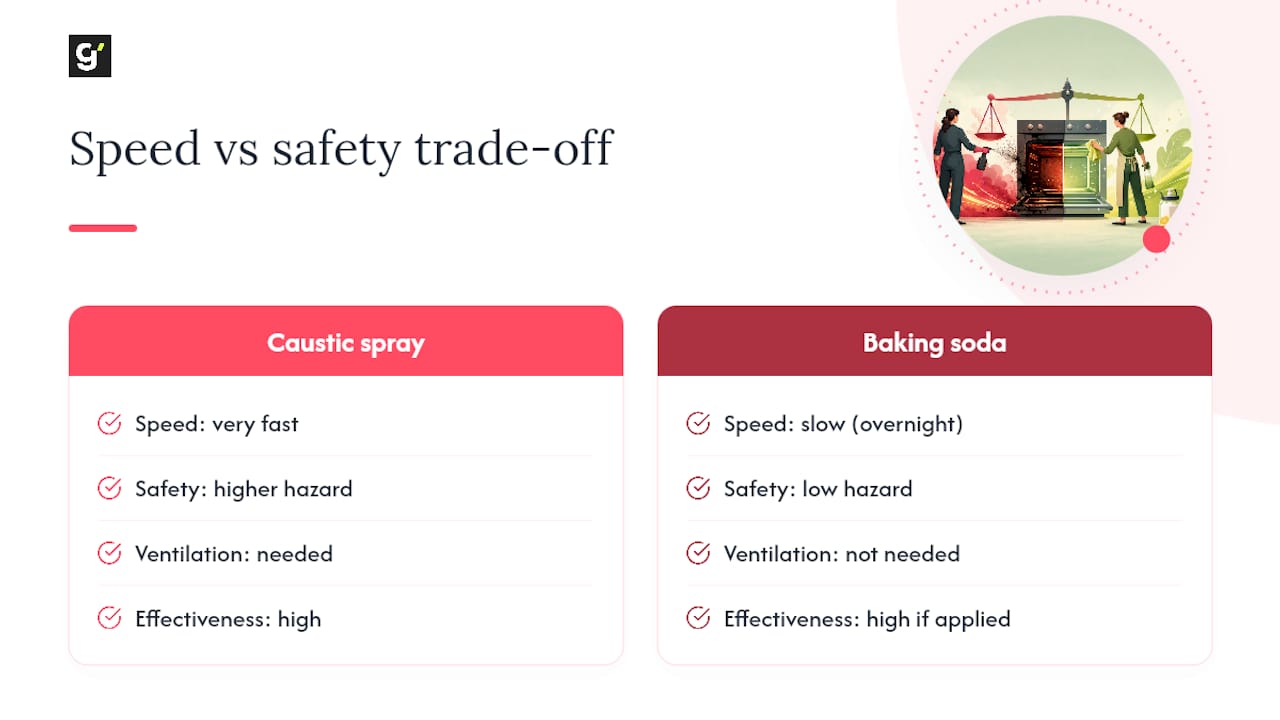
Caustic sprays work fast, there's no getting around that. But fast isn't the same as smart when you've got kids leaning on the oven door or a dog that likes to lie on the kitchen tiles while you cook. The extra hour or two that a baking soda paste takes to work is a trade I'd make every time, because the payoff isn't just a clean oven, it's not having to think about what's off-gassing while dinner's in the pan.
What surprises people most is how little difference in outcome there actually is. A well-applied overnight paste gets carbon off just as reliably as an aerosol spray, it just asks for patience instead of ventilation masks. Grimescene's own field teams see this daily: the jobs that come in looking impossible are almost always ovens that missed months of light maintenance, not ovens that needed something stronger than baking soda.
— Lead
Book a non-toxic oven clean when DIY won't cut it
Sometimes the paste-and-vinegar method just isn't practical, not because it doesn't work, but because you don't have 12 spare hours, or the carbon's gone past what a scrubbing pad can shift. That's the gap Grimescene fills: a fully non-toxic clean handled by someone else, done properly the first time.

The service covers a genuine non-toxic clean of the oven cavity, racks, door glass and surrounding zone, with element safety checks built into the process so nothing gets damaged along the way. For hosts, the Scene Reset protocol is designed around fast, thorough turnovers that protect your rating without leaving any chemical smell behind for the next guest. Property managers dealing with post-tenancy carbon build-up, or anyone facing an oven that's simply outgrown DIY, get the same non-caustic approach.
If your oven needs more than a weekend paste treatment, book a deep decontamination clean or, for a same-day rental changeover, check availability for a rapid response tactical clean.
Sources
- How to clean an oven: cleaning lessons from The Kitchn
- Homemade oven cleaner: a natural method that actually works
- How to deep clean an oven (Southern Living)