
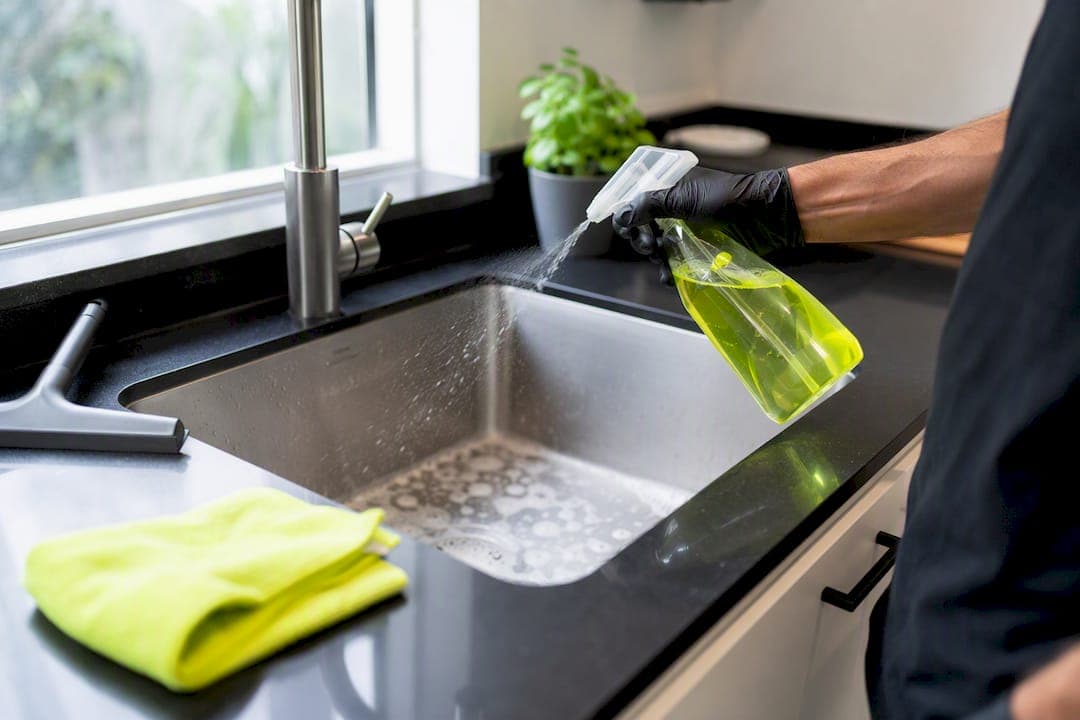
The fastest way to get your full bond back is to return the property in the same condition it was in on your entry condition report, allowing for fair wear and tear, then back it up with photographic proof. That's the entire legal test property managers and tenancy authorities apply. Everything else on this end of lease cleaning checklist exists to help you clear that bar.
Before anything else, tick off these high-impact jobs first:
- Deep clean the kitchen (oven, rangehood filters, splashbacks, inside cupboards)
- Scrub bathroom grout, shower screens, and taps
- Wipe down skirting boards and window tracks throughout
- Clear every room of rubbish and personal items
- Vacuum and mop all floors, including under furniture
Pro Tip: Photograph every room with your phone's date stamp turned on, and keep every professional cleaning receipt, especially for the oven and carpets. Those two items cause more bond disputes than everything else on the list combined.
Key Takeaways
Getting your full bond back comes down to matching the entry condition report, covering every commonly checked micro-task, and documenting the result with time-stamped photos and receipts.
| Point | Details |
|---|---|
| Match the entry report | Compare every room against your original condition report, since fair wear and tear can't be deducted. |
| Cover the hidden spots | Clean extractor filters, window tracks, and behind toilets, since these are commonly inspected but often skipped. |
| Confirm oven and carpet scope | Get written quotes and keep receipts, since these two items cause the most bond disputes. |
| Document everything | Take time-stamped photos and video of every room before handing back keys. |
| Use professional deep cleaning where needed | Grimescene's Scene Reset protocol targets baked-on grease and mineral buildup that DIY cleaning often misses. |
Table of Contents
- Planning your end of lease cleaning checklist timeline
- What goes into a room-by-room bond clean checklist?
- Which cleaning tasks cost extra and cause disputes?
- How do you handle the final walkthrough and evidence?
- Where professional deep cleaning fits into your bond clean
- Where to check the rules for your state
- What actually gets your bond back, according to the evidence
- Get your bond clean handled without the guesswork
- Frequently asked questions
- Sources
Planning your end of lease cleaning checklist timeline
Start planning two to three weeks before your vacate date, not the weekend before. That window gives you time to book a professional cleaner if you need one, source specialty products, and redo anything that doesn't pass your own inspection.
- Week three out: Re-read your lease clauses on cleaning and pull your entry condition report from your email or the agent portal.
- Week two out: Book any professional cleaners, oven specialists, or carpet steamers in writing, confirming exactly what's included.
- Final week: Do the room-by-room clean yourself or supervise the professional service, then photograph everything the same day.
- Moving day: Do a final walkthrough with your entry report in hand before handing back the keys.
Collect your documents early: the entry condition report, your lease agreement, proof of rent payment, and any professional cleaning receipts. Photo-stamp everything as you go, not in a rush at the end.
When booking a professional clean, get the scope in writing. Ask specifically whether the oven and carpets are included or charged separately, and check the re-clean policy. Reputable operators typically offer a 72-hour re-clean window if the agent flags a specific item, but only if you've confirmed that in writing beforehand.
Pro Tip: Ask your cleaner for an itemised invoice, not just a total. If a dispute arises later, "oven cleaned, degreased, and racks soaked" holds up far better than "end of lease clean, $380."
What goes into a room-by-room bond clean checklist?
Property managers don't inspect rooms the way you live in them. They inspect against the entry condition report, room by room, surface by surface. This is where most bond deductions happen, usually on the small stuff tenants assume doesn't matter.
Kitchen
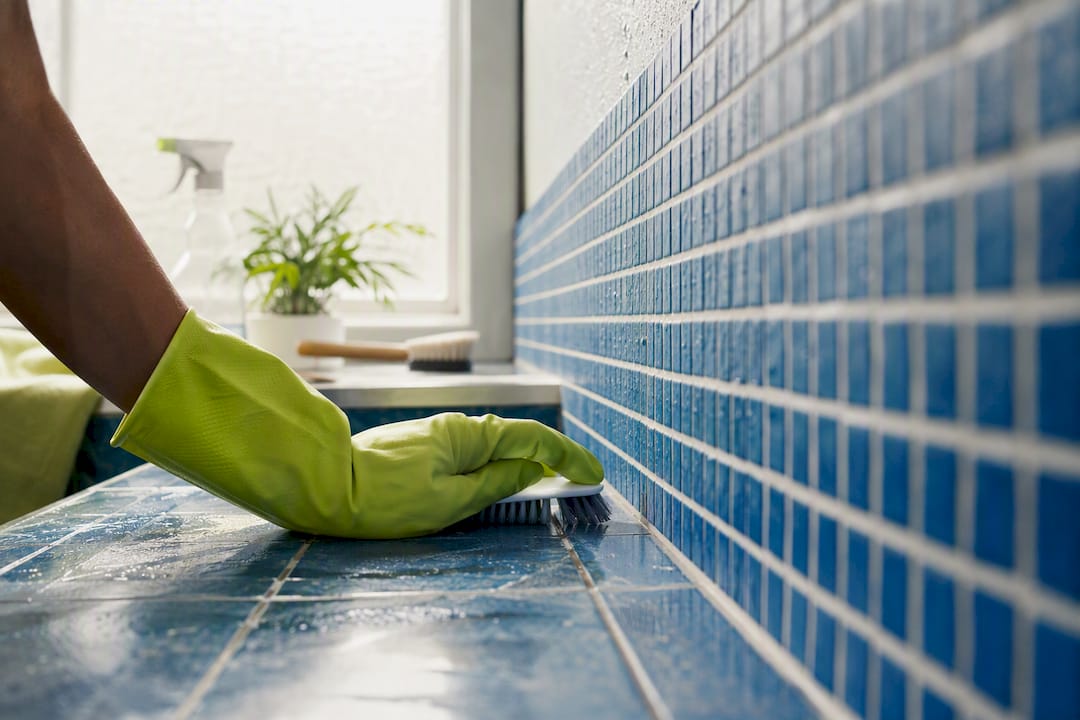
The kitchen carries the highest dispute rate of any room, largely because grease travels further than people expect. A standard bond-clean scope covers:
- Benchtops and splashbacks degreased, not just wiped
- Stovetop, including under removable elements or grates
- Rangehood and its filter, which trap grease invisibly for months
- Oven interior, racks, and glass door (often quoted as an add-on, more on that shortly)
- Fridge interior wiped out and left with the door propped open
- Dishwasher filter and seal cleaned, not just the visible interior
- Cupboards inside and out, including handles and hinges
- Sink, taps, and drain area descaled
- Floors and skirting boards, particularly behind the bin and under the sink
Bathroom and laundry
Mould and mineral build-up are the two things agents photograph first in a bathroom, because they're the two things tenants most often miss.
- Shower screens and tracks, where soap scum builds fastest
- Grout lines scrubbed, not just the tile surface
- Vanity, taps, and mirror descaled and streak-free
- Toilet detailed inside, outside, and around the base and hinges
- Exhaust fan cover dusted or wiped
- Laundry tub, taps, and any lint filters on the dryer
- Floors mopped, with attention to corners and behind the door
Bedrooms and living areas
These rooms look clean at a glance, which is exactly why agents check the details more closely.
- Floors vacuumed and mopped, including under beds and furniture where possible
- Skirting boards wiped along every wall, not just the visible ones
- Light switches and power points cleaned, including the surrounding wall paint
- Wardrobes cleaned inside, including shelves and rails
- Window tracks and blinds dusted, blinds wiped slat by slat if venetian
- Walls spot-cleaned for scuffs and marks, without scrubbing off paint
Windows and external areas
- Internal window glass cleaned on both sides where accessible
- Flyscreens removed and washed or vacuumed
- Balconies and courtyards swept and cobweb-free
- External windows on multi-storey properties are typically excluded from a standard scope, and lawn mowing usually falls outside a cleaning checklist unless your lease says otherwise
The micro-tasks that trigger deductions
Agents inspect a handful of spots that tenants routinely skip, and these are disproportionately responsible for failed inspections:
- Extractor fan filters in the kitchen and bathroom
- The space behind and around the toilet, including the cistern
- Sliding door and window tracks, packed with dust and grit
- Top of door frames and picture rails
- Light fittings, both the glass and the fitting itself
- Power-point surrounds, where finger grease accumulates
A structured post-construction cleaning checklist approach, working methodically through every surface rather than eyeballing a room, catches these spots that a quick tidy-up misses. If your bathroom needs a proper reset before the final inspection, our bathroom staging checklist walks through the standard agents actually look for.
Which cleaning tasks cost extra and cause disputes?
Ovens and carpets are the two items most often quoted separately from a standard bond clean, and they're also the two biggest sources of post-clean disputes. Both need baked-on grease or embedded stains removed, which takes longer and often needs different equipment than a general clean.
Before you book, sort out:
- A written quote specifically covering oven degreasing and carpet steam cleaning
- Receipts kept as evidence, since agents can and do ask for them
- A clear re-clean policy in case the agent flags either item after inspection
- Confirmation of whether carpet steaming is even required under your lease (not every tenancy mandates it)
Other common disputes include wall scuffs beyond a light spot-clean, pet-related odour or hair treatments, external windows on upper floors, and garden or lawn maintenance. Get the scope confirmed in writing before the clean starts, not after the agent raises a concern.
The line that matters legally is fair wear and tear versus damage or dirt. A worn patch of carpet from years of foot traffic is wear and tear. A wine stain from last month is not. Tenancy authorities draw this distinction specifically so agents can't deduct for ageing that would've happened regardless of who lived there.
How do you handle the final walkthrough and evidence?
Walk the property with your entry condition report open on your phone, room by room, checking each item against what was originally noted. If something was already marked "worn" or "marked" at move-in, it can't reasonably be held against you now.
- Compare every room to the entry report before the agent does their own inspection.
- Take time-stamped photos and a short video sweep of each room, including inside cupboards and the oven.
- Ask the agent to itemise, in writing, any item they consider unsatisfactory rather than accepting a vague "not clean enough."
- If a re-clean is requested, get the specific list in writing, complete it within the agreed window, then photograph the result immediately after.
- Lodge your bond claim through your state's tenancy portal, such as Service NSW's bond claim process, if the dispute isn't resolved directly with the agent.
Pro Tip: Send your forwarding address to the agent in writing on moving day. Bond refunds can stall for weeks simply because nobody has a current address to send the paperwork to.
Keep your signed exit condition report alongside every receipt and photo. If it goes to a tenancy tribunal, this bundle is your entire case.
Where professional deep cleaning fits into your bond clean
Some grime doesn't respond to a Sunday afternoon and a spray bottle. Baked-on oven fat, months of mineral scale in grout, and rangehood filters clogged since you moved in need targeted treatment, not elbow grease alone. Grimescene's Scene Reset protocol was built for exactly this handover moment, using non-toxic agents to strip deep-set buildup without the harsh chemical residue that some agents flag during inspection.
A shower screen can look clean and still fail an inspection if the grout underneath is holding mineral deposits from years of hard water. The same goes for an extractor filter nobody's removed since the last tenant. These are the spots that separate a passed bond clean from a re-clean notice.
Our piece on post-tenancy grime buildup covers why these hidden zones accumulate the way they do and what actually shifts them.
Where to check the rules for your state
Tenancy rules and bond claim processes differ by state, so check your local authority before you rely on general advice. The Residential Tenancies Authority covers Queensland's cleaning obligations and entry/exit report standards. Service NSW handles bond claims and lodgement for New South Wales tenancies. For a practical industry-standard scope to check your own clean against, the OneBookPlus bond clean checklist breaks down inclusions by state.
What actually gets your bond back, according to the evidence
Most bond disputes don't come from tenants who didn't clean. They come from tenants who cleaned what they could see and missed what the agent was trained to check. That gap between visible tidiness and full restoration to the ingoing condition is where nearly every disagreement starts.
The conventional advice, "give it a good clean before you leave," undersells how specific this process actually is. An oven with a wiped-down door but greasy racks fails. A bathroom with sparkling tiles but mouldy grout fails. Agents aren't being pedantic. They're checking against a document you both signed, and the document doesn't care how tired you are on moving day.
If there's one thing to prioritise first, it's photographic evidence before anything else, not last. Photograph the property as you finish each room, not as an afterthought once you've already handed back the keys. Evidence taken after the fact carries far less weight than evidence taken in the moment, and it costs you nothing but a few extra minutes with your phone.
Get your bond clean handled without the guesswork
You've now got the full checklist. If you'd rather not spend your last weekend in the property scrubbing rangehood filters and grout lines, Grimescene's Deep Decontamination Full Sweep is built specifically for this handover moment, covering the kitchen, bathroom, and hidden zones agents actually inspect, using non-toxic agents instead of harsh chemical residue that can leave its own inspection flags.

It suits tenants who want the oven, carpets, and every skirting board handled to a documented standard, with the kind of scope you can hand straight to your agent if a dispute comes up. If you're managing a short-term rental rather than a personal lease, our Short Term Rental turnover service covers the same reset between guests. Get a quote for your property today and lock in your clean before your final inspection date.
Frequently asked questions
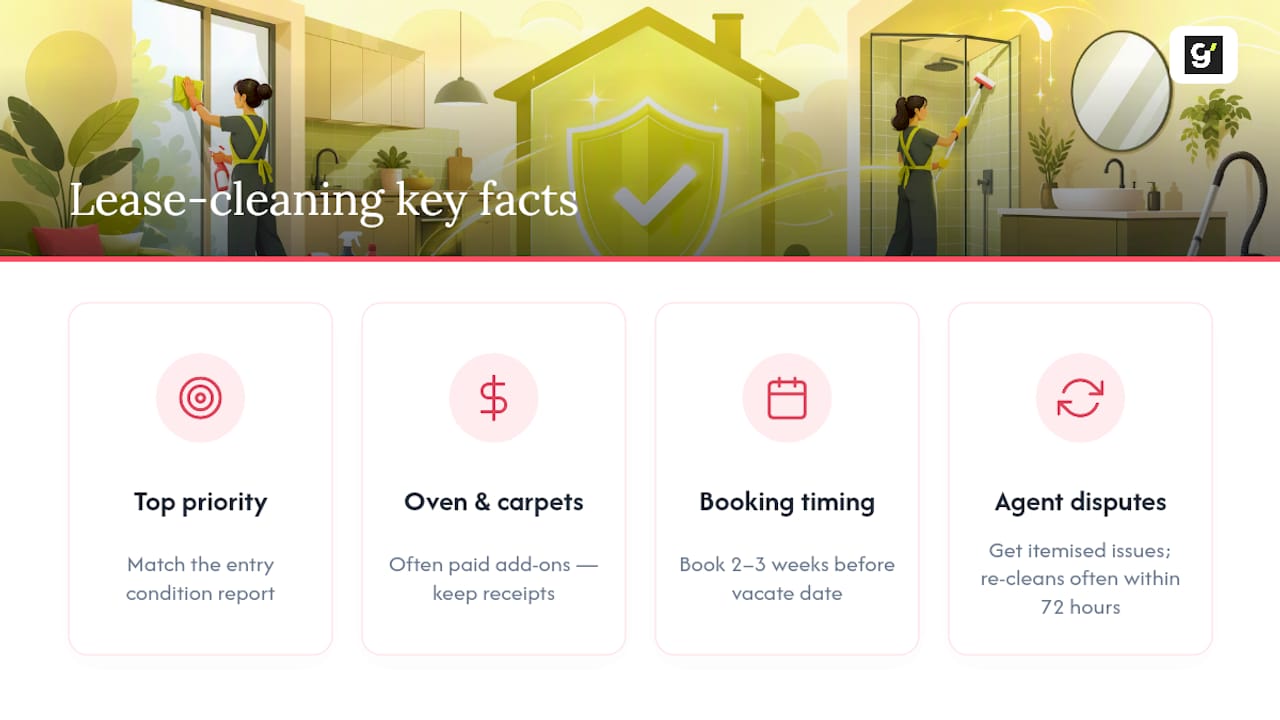
What is the single most important item on an end of lease cleaning checklist? Matching the property to your entry condition report matters more than any individual task. Everything else, oven, carpets, skirting boards, exists to support that one standard.
Do I have to clean the oven and carpets myself? No. Ovens and carpets are commonly quoted as add-ons separate from a standard clean, and you can arrange these with a professional as long as you keep the receipts.
How far in advance should I book an end of lease clean? Two to three weeks before your vacate date gives you time to book professionals, get quotes in writing, and redo anything that doesn't pass your own check.
What happens if the agent isn't satisfied with the clean? Ask for a written, itemised list of the specific issues. Most reputable cleaners offer a re-clean window, commonly 72 hours, to fix flagged items before it becomes a bond dispute.
Can I be charged for normal wear and tear? No. Tenancy authorities are clear that fair wear and tear isn't the tenant's responsibility. Only dirt, damage, or neglect caused during the tenancy can affect your bond.
Sources
- Cleaning | Residential Tenancies Authority
- Bond Clean Checklist by State (2026), End of Lease Cleaning Inclusions | OneBookPlus
- Free post construction cleaning checklist | SafetyCulture