
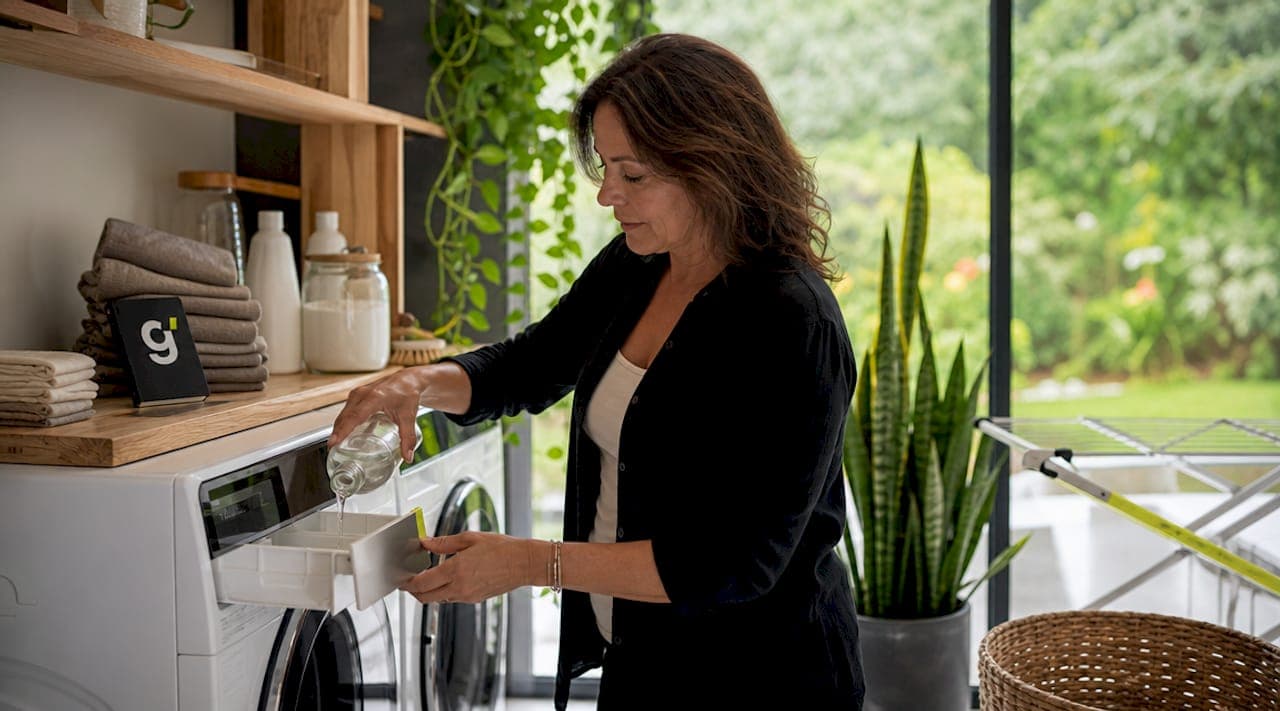
Green cleaning your laundry room is the practice of using natural, chemical-free products and methods to clean and maintain the space while protecting your health, your family, and the environment. Most commercial laundry cleaners contain synthetic fragrances, chlorine bleach, and phosphates that linger on fabrics and degrade indoor air quality. The good news is that white vinegar, baking soda, castile soap, and wool dryer balls replace every one of those products without sacrificing results. This guide covers the green cleaning laundry room steps you need, from assembling your natural supplies to building habits that keep the space genuinely clean between deep cleans.
What tools and natural supplies do you need for green cleaning your laundry room?
Natural cleaning agents are the foundation of any eco-friendly laundry routine, and the list is shorter than most people expect. The core ingredients are baking soda, washing soda, and grated castile soap. Combined, these three form a DIY laundry detergent that costs as little as 2 to 6 cents per load, well below the cost of most commercial alternatives. That saving adds up fast for a household running four or five loads a week.
White vinegar is the other non-negotiable. It cuts through detergent residue, softens fabric, and disinfects surfaces without leaving a chemical film. A 2-litre bottle from any supermarket costs under three dollars and replaces your fabric softener, your rinse aid, and your general surface spray. You can explore the full range of natural cleaning agents to understand how each ingredient works and where it performs best.
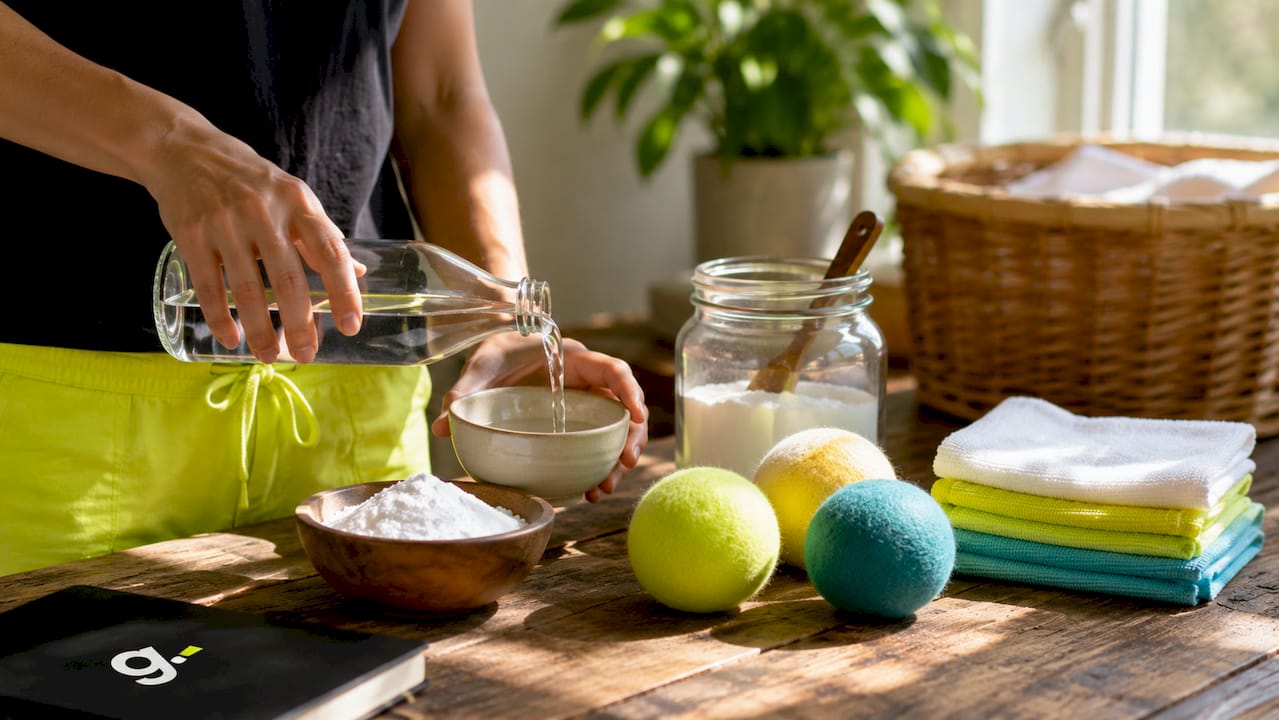
For tools, you need microfibre cloths rather than paper towels. Microfibre lifts grime without scratching surfaces and can be washed and reused hundreds of times. A non-toxic multipurpose spray, either a commercial plant-based option like Koala Eco or a DIY mix of water, white vinegar, and a few drops of tea tree oil, handles daily surface wiping. A vacuum with a narrow attachment clears lint from the dryer vent slot and surrounding surfaces.
The table below summarises the key supplies and their primary uses.
| Supply | Primary use |
|---|---|
| Baking soda | Deodorises drum, boosts detergent, scrubs surfaces |
| Washing soda | Cuts grease and heavy soil in DIY detergent |
| Castile soap (e.g. Dr. Bronner's) | Gentle surfactant for DIY detergent and surface cleaning |
| White vinegar | Fabric softener, rinse aid, surface disinfectant |
| Wool dryer balls | Replaces dryer sheets, reduces drying time and static |
| Microfibre cloths | Surface wiping, appliance cleaning |
| Essential oils (tea tree, lavender) | Fragrance and antimicrobial boost for DIY sprays |
| Non-toxic multipurpose spray | Weekly surface maintenance |
Pro Tip: When adding essential oils to wool dryer balls, let the balls absorb the oil for 5 to 10 minutes before putting them in the dryer. Skipping this wait causes oil spotting on fabrics in the drum.
How to green clean your laundry appliances step by step
Appliance cleaning is where most eco-friendly laundry routines fall short. People swap to natural detergents but never clean the machine itself, which means mould, biofilm, and detergent residue keep building up inside the drum and gasket. A monthly deep clean using vinegar and baking soda removes that buildup without bleach or commercial descalers.
Follow these steps once a month for both front-loader and top-loader washing machines.
- Empty the machine completely. Remove any clothing and check the drum for forgotten items.
- Clean the detergent drawer. Pull it out fully and soak it in hot water with a splash of white vinegar for 15 minutes. Scrub with an old toothbrush to remove residue, then rinse and replace.
- Wipe the door seal or gasket. Use a microfibre cloth dampened with a 50/50 mix of white vinegar and water. Pull back the rubber gasket folds and wipe inside them. This is where mould colonies form first.
- Run a hot vinegar cycle. Pour two cups of white vinegar directly into the drum (not the drawer) and run the longest, hottest cycle available. This loosens mineral deposits and kills odour-causing bacteria.
- Follow with a baking soda cycle. Sprinkle half a cup of baking soda into the drum and run a second hot cycle. Baking soda neutralises any remaining vinegar and deodorises the drum lining.
- Wipe down the exterior. Use your non-toxic multipurpose spray and a microfibre cloth on the top, sides, and control panel.
For the dryer, the process is simpler but the safety stakes are higher. Vacuuming the dryer vent hose every few months reduces fire risk and keeps the appliance running efficiently. Clean the lint trap after every single load without exception. Use a narrow vacuum attachment to clear the vent slot beneath the trap once a month.
Pro Tip: Leave the machine door open after every wash cycle. Air circulation prevents moisture from sitting in the drum, which is the primary cause of that musty front-loader smell.
What green cleaning habits improve laundry sustainability and fabric care?
Sustainable laundry methods depend more on behaviour than on products. Swapping to a natural detergent while still running half-empty loads on hot wash does very little for your environmental footprint or your energy bill. The habits below have a measurable impact.
- Wash in cold water. Heating water accounts for 90% of the energy a washing machine uses. Switching to cold cycles reduces laundry energy consumption by 60 to 90 percent. Modern cold-water detergents, including DIY versions with washing soda, perform just as well at 20°C as hot-water formulas do at 60°C.
- Always wash full loads. A half-full machine uses nearly the same water and energy as a full one. Waiting until you have a complete load is one of the simplest ways to cut resource use without changing anything else.
- Use white vinegar as your fabric softener. Add half a cup to the fabric softener compartment before each wash. Vinegar removes detergent residue and softens fibres without leaving a scent on dry fabric. It also restores towel absorbency that commercial softeners destroy over time.
- Switch to wool dryer balls. A set of six wool dryer balls lasts over 1,000 loads and costs roughly 0.03 cents per load compared to 4 cents for a single-use dryer sheet. They separate fabrics in the drum, which speeds up drying and eliminates static without synthetic chemicals.
- Air dry whenever possible. Machine drying accounts for 75% of laundry's total carbon footprint. A drying rack or clothesline has near-zero energy cost and extends the life of your clothing by reducing heat exposure to fibres.
- Reduce wash frequency. Most clothing does not need washing after a single wear. Airing garments between wears, spot-treating stains immediately, and reserving full washes for genuinely soiled items extends fabric life and cuts your overall resource use. Green laundry success relies more on these behavioural shifts than on any product swap alone.
How to keep your laundry room tidy and non-toxic between deep cleans
A clean laundry room between monthly deep cleans requires a short weekly routine and some deliberate organisation. The goal is to remove the conditions that allow grime, mould, and chemical residue to accumulate in the first place.
Weekly maintenance does not need to take more than ten minutes. Wipe down the top of the washing machine, the dryer exterior, and any shelving with your non-toxic multipurpose spray and a microfibre cloth. Mop or sweep the floor with a solution of warm water, a quarter cup of white vinegar, and five drops of tea tree oil. This handles bacteria on hard floors without any commercial floor cleaner. For tips on keeping the rest of your home just as clean with minimal effort, the Grimescene guide on maintaining a clean home between deep cleans is worth reading.
Organisation plays a bigger role in a non-toxic laundry room than most people realise. Decant your natural cleaning supplies into glass jars or recycled containers with clear labels. This removes the visual clutter of multiple plastic bottles and makes it obvious when you are running low on an ingredient. Store white vinegar, baking soda, and washing soda together in one spot so the routine stays simple.
- Clean the lint trap after every load. This is non-negotiable for both safety and dryer efficiency. A clogged lint trap is the leading cause of household dryer fires.
- Vacuum the vent slot monthly. Use a narrow attachment to clear lint from the slot beneath the trap and from the vent hose connection at the back of the dryer.
- Declutter chemical products. If you still have old commercial cleaners in the laundry room, dispose of them through your local council's chemical waste programme. Keeping them alongside natural products creates confusion and temptation.
- Add an indoor plant. Peace lilies and spider plants tolerate low light and humidity, and both are recognised for filtering airborne toxins. A single plant on a shelf above the machines adds a measurable improvement to indoor air quality in a small, enclosed space.
Pro Tip: Decant your DIY multipurpose spray into a glass spray bottle rather than plastic. Vinegar and essential oils degrade certain plastics over time, which can leach compounds back into your cleaning solution.
Key takeaways
Green cleaning your laundry room works because the combination of natural agents, appliance maintenance, and behavioural habits eliminates chemical exposure at every point in the process.
| Point | Details |
|---|---|
| Natural supplies cover everything | Baking soda, washing soda, castile soap, and white vinegar replace all commercial laundry cleaners. |
| Monthly appliance cleaning is non-negotiable | Vinegar and baking soda cycles remove mould and biofilm that natural detergents alone cannot address. |
| Cold water is the biggest energy win | Switching from hot to cold wash cycles cuts laundry energy use by up to 90 percent. |
| Behaviour matters more than products | Washing full loads, air drying, and reducing wash frequency have greater impact than product swaps alone. |
| Weekly maintenance prevents buildup | Ten minutes of surface wiping and lint trap cleaning each week keeps the room non-toxic between deep cleans. |
Why I stopped overthinking green laundry and just started
The most common mistake I see people make when switching to eco-friendly laundry methods is treating it as an all-or-nothing overhaul. They research every product, agonise over which castile soap brand to buy, and then do nothing because the whole thing feels too complicated. The reality is that the first step is just swapping your fabric softener for white vinegar. That single change costs nothing, takes ten seconds, and immediately removes one synthetic chemical from your routine.
What surprised me most after making the switch was the air quality difference in the laundry room itself. Commercial detergents and dryer sheets release volatile organic compounds that accumulate in a small, often poorly ventilated space. Once those products were gone, the room smelled genuinely clean rather than artificially fragranced. That shift was more noticeable than I expected, and it made the habit stick.
The appliance cleaning routine felt like the biggest adjustment at first. Running two machine cycles just to clean the machine seemed counterintuitive. But once I understood that mould and biofilm inside the drum were transferring to clean laundry, the monthly routine became obvious rather than optional. A sustainable cleaning routine is not about perfection. It is about removing the worst offenders first and building from there.
— Lead
How Grimescene supports your green cleaning goals

Grimescene specialises in eco-friendly deep cleaning that eliminates chemical residue rather than masking it. If your laundry room needs a professional reset before you start your own green routine, or if you manage a short-term rental property that requires a thorough, non-toxic turnover between guests, Grimescene's team uses advanced non-toxic agents that neutralise buildup at the source. Visit Grimescene's cleaning services to see the full range of residential and commercial options, or explore the short-term rental cleaning service for a Scene Reset that protects your property and your guest ratings.
FAQ
What are the basic green cleaning laundry room steps?
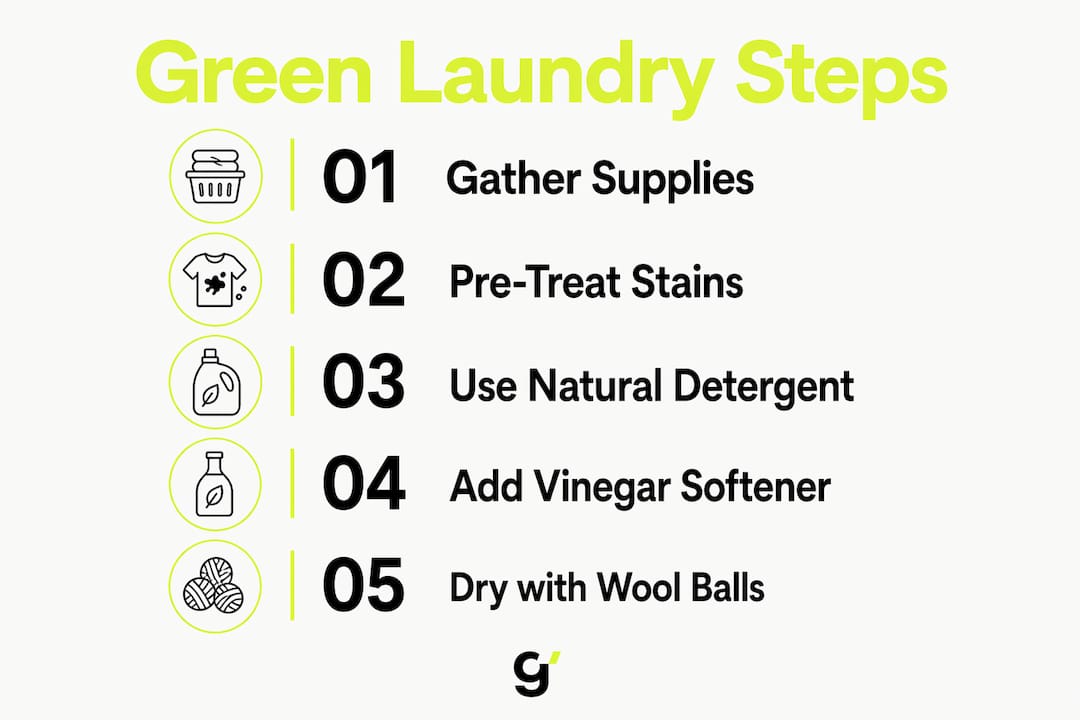
The core steps are: assemble natural supplies (baking soda, washing soda, castile soap, white vinegar, wool dryer balls), run a monthly vinegar and baking soda machine cycle, wipe seals and the detergent drawer manually, and maintain a weekly surface and lint trap routine. Behavioural changes like cold washing and full loads complete the process.
Does white vinegar really work as a fabric softener?
White vinegar added to the fabric softener compartment removes detergent residue, softens fibres, and restores towel absorbency without leaving any scent on dry fabric. It is professionally recommended as a direct replacement for commercial fabric softeners.
How often should I deep clean my washing machine naturally?
A monthly deep clean using two cups of white vinegar followed by half a cup of baking soda, each run on a full hot cycle, is sufficient for most households. Manual wiping of the gasket and detergent drawer should accompany each cycle to remove mould and residue.
Are wool dryer balls worth the upfront cost?
Wool dryer balls last over 1,000 loads at approximately 0.03 cents per load, compared to 4 cents per load for single-use dryer sheets. The upfront cost is recovered within the first few months of regular use, and they contain no synthetic chemicals or fragrances.
How do I improve air quality in my laundry room naturally?
Stop using synthetic fragrance products including dryer sheets and scented detergents, ventilate the room after every wash cycle, leave the machine door open between uses, and add a peace lily or spider plant to filter airborne compounds. Weekly cleaning with vinegar-based solutions removes bacteria without introducing new chemical vapours.