

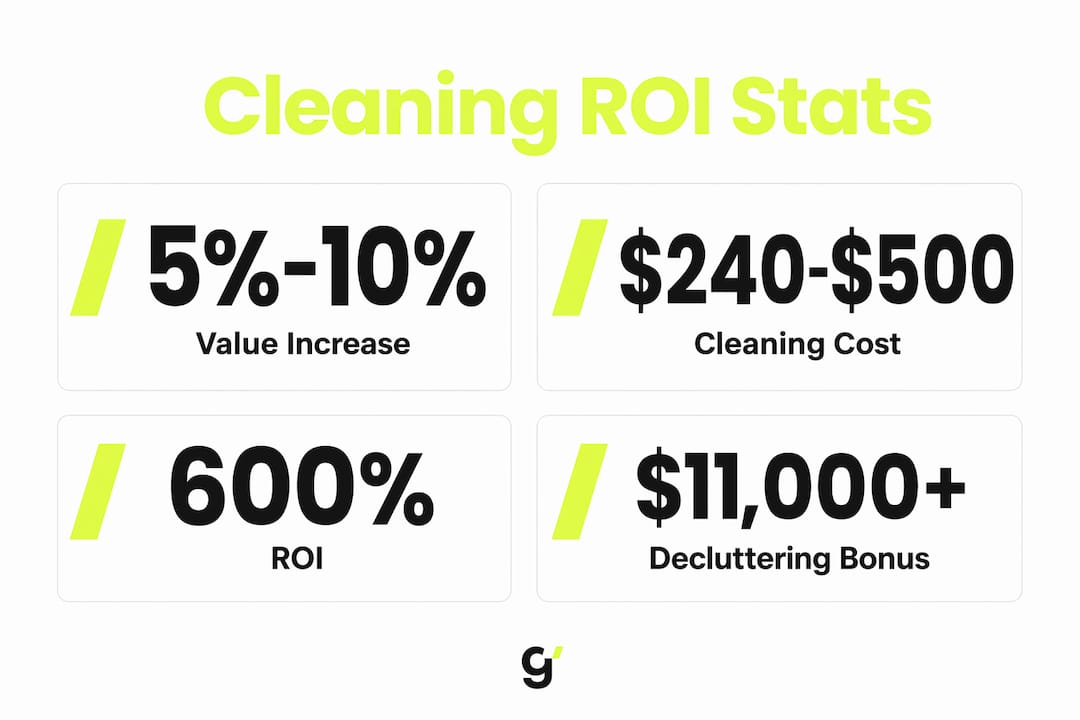
Cleaning a home before listing it directly raises its resale value. Homes that undergo thorough pre-listing deep cleaning can sell for 5%–10% more and spend 20%–30% less time on the market. On a $650,000 property, that uplift translates to an additional $32,500–$65,000 in sale price. Understanding how cleaning affects home resale value is not a minor detail for sellers. It is one of the highest-return actions available before a listing goes live, outperforming many renovation projects on a cost-per-dollar basis.
How cleaning affects home resale value: what buyers actually respond to
Buyers make emotional decisions first and rational ones second. A clean home signals that the owner has cared for the property, which reduces buyer anxiety about hidden defects. Cleanliness acts as an emotional proxy for overall maintenance, and that perception directly influences whether a buyer meets the asking price or negotiates hard.
Surface cleaning is not enough. Wiping benchtops and vacuuming floors creates a tidy appearance, but buyers and their inspectors look deeper. A genuine deep clean targets the areas that reveal decades of neglect: baseboards, grout lines, cabinet interiors, and air vents. Neglected hidden areas like these are the first things a suspicious buyer notices, and they become the basis for lowball offers.
Odour removal is equally critical. Persistent smells from pets, cooking, or dampness are invisible to owners who have lived with them for years, but buyers notice within seconds of walking through the front door. No amount of fresh flowers or candles overcomes a deep-seated odour. Neutralising the source, not masking it, is the only approach that works.
Listing photography is the first showing for most buyers, and a professionally cleaned home produces significantly better photographs. Grime on windows, streaks on benchtops, and dust on light fittings all show up under a camera flash. Buyers who dismiss a listing based on poor photos never walk through the door.
- Kitchens and bathrooms: Grout, taps, and appliance interiors receive the most scrutiny.
- Windows and glass: Clean glass makes rooms appear larger and brighter in photos.
- Floors and skirting boards: Scuffed or dusty floors signal deferred maintenance.
- Odour sources: Carpets, soft furnishings, and drains need treatment, not just surface cleaning.
- Outdoor areas: Dirty paths, mouldy fences, and grimy gutters undermine kerb appeal before a buyer even enters.
Pro Tip: Book a listing photography session within 48 hours of completing a deep clean, while surfaces are at their best and before dust resettles.
Does cleaning influence property appraisals and condition ratings?
Cleaning does not add square footage, but it directly affects the condition rating an appraiser assigns. Appraisers in Australia and the United States use structured condition scales to assess a property's state of upkeep. In the US Fannie Mae framework, appraisers use a C1–C6 condition rating scale, where improving from a C3 to a C2 rating can raise assessed value by 2%–5%. That shift is achievable through cleaning and minor repairs alone, without a single structural change.
Cleaning prevents negative condition adjustments for visible deferred maintenance. An appraiser who sees grimy grout, stained ceilings, or dirty appliances records those observations as maintenance issues. Those observations pull the condition rating down, which pulls the assessed value down with it.
The practical steps to protect your appraisal outcome are straightforward:
- Deep clean all wet areas before the appraisal appointment. Bathrooms and laundries receive close attention.
- Clear access to all rooms and storage areas. Appraisers need to inspect every space, and clutter blocks their view.
- Clean appliances inside and out. Ovens, range hoods, and dishwashers are checked for condition.
- Address visible mould or mildew immediately. Even minor surface mould triggers a condition downgrade.
- Clean windows, light fittings, and exhaust fans. These signal whether routine maintenance has been kept up.
Cleaning does not change the bones of a house, but it changes how an appraiser reads those bones. A home that presents as well-maintained earns a higher condition rating, and a higher condition rating means a higher appraised value. The appraiser's job is to assess what they can see. Give them the best version of what is there.
What is the ROI on professional cleaning before selling?
Professional deep cleaning typically costs between $240 and $500 for a 2,000-square-foot home. The return on that investment can exceed 600% when measured against the sale price uplift it generates. No renovation project comes close to that ratio.
To put it in context, compare the cost of a professional deep clean against other common pre-sale investments:
| Preparation task | Typical cost | Estimated value added |
|---|---|---|
| Professional deep clean | $240–$500 | 5%–10% of sale price |
| Interior repaint | $3,000–$8,000 | 2%–5% of sale price |
| Professional staging | $1,500–$5,000 | 1%–3% of sale price |
| Landscaping tidy-up | $500–$2,000 | 1%–2% of sale price |
Decluttering compounds the return from cleaning. Decluttering can add approximately $11,000 or more to a home's sale price and cut days on market by weeks. The two tasks work together: a decluttered space is easier to clean thoroughly, and a thoroughly cleaned space shows the full benefit of decluttering.
Sellers with fewer than two weeks before listing should prioritise deep cleaning, decluttering, and kerb appeal above all other tasks. These three actions deliver the greatest return for the least time and money. Repainting, landscaping, and staging are valuable but secondary when time is short.
Pro Tip: Get a deep cleaning quote at least two weeks before your listing date. This gives time to address any areas that need a second pass before photography.
Practical cleaning tips to maximise your home's resale value
A pre-listing deep clean is the baseline. Cleaning during the listing period cannot overcome deep grime or embedded household odours. The deep clean must happen first, and maintenance cleaning keeps it that way through the showing period.
Pre-listing deep clean checklist
Focus on the areas buyers and appraisers scrutinise most:
- Kitchen: Clean oven interior, range hood filters, dishwasher seals, cabinet faces, and splashback grout.
- Bathrooms: Regrout or bleach tile grout, descale taps and showerheads, clean exhaust fans, and remove soap scum from screens.
- Floors: Steam clean carpets, mop hard floors, and scrub grout lines.
- Walls and ceilings: Wipe down skirting boards, clean light switches, and remove cobwebs from cornices.
- Windows: Clean glass inside and out, wipe frames and tracks.
- Laundry: Clean behind and under the washing machine and dryer, descale the tub.
- Outdoors: Pressure wash paths and driveways, clean gutters, and scrub the front door.
Odour neutralising and maintenance during showings
Odour control requires a systematic approach. Wash all soft furnishings, including curtains, cushion covers, and rugs. Clean inside wardrobes and drawers, as buyers open them. Place bicarbonate of soda in bins and inside the refrigerator. Run the dishwasher and washing machine with a cleaning cycle to eliminate internal odours.
During the showing period, maintain the deep clean with a daily 20-minute routine. Wipe down kitchen surfaces after every use, keep bathrooms dry, and vacuum high-traffic areas every two days. This prevents the gradual build-up that undoes a deep clean within a week.
Minor repairs that complement cleaning
Cleaning reveals what paint and clutter previously hid. Once a space is clean, small defects become visible: scuffed walls, loose door handles, dripping taps, and cracked grout. Address these immediately. A freshly painted wall next to a clean skirting board reads as a well-maintained home. The same wall with scuff marks reads as neglect, even if everything else is spotless.
Pro Tip: Walk through your home as a buyer would, starting from the kerb. Note every detail that catches your eye. That list is your pre-listing repair and cleaning priority order.
Key takeaways
Cleaning is the single highest-return pre-sale action available to homeowners, capable of adding 5%–10% to sale price for an investment of under $500.
| Point | Details |
|---|---|
| Deep clean before listing | A thorough pre-listing clean can add 5%–10% to sale price and cut time on market by 20%–30%. |
| Appraisal condition ratings matter | Cleaning can shift a home from a C3 to a C2 condition rating, raising appraised value by 2%–5%. |
| ROI exceeds 600% | Professional deep cleaning costs $240–$500 and delivers returns that outperform repainting and staging. |
| Decluttering multiplies the effect | Decluttering alongside cleaning can add approximately $11,000 or more to the final sale price. |
| Maintain cleanliness through showings | A daily maintenance routine preserves the deep clean and keeps buyer impressions consistent. |
What I have learned from watching sellers get this wrong
Most sellers underestimate how much a buyer's nose and eyes do before their brain catches up. I have seen beautifully renovated homes sit on the market for weeks because the owner surface-cleaned instead of deep-cleaned. The kitchen looked fine in photos, but the oven smelled like last year's roast and the grout was grey instead of white. Buyers walked in, felt something was off, and walked out.
The mistake I see most often is treating cleaning as the last item on the pre-sale list rather than the first. Sellers spend money on staging and landscaping, then rush a clean the day before photos. That order is backwards. A deep clean should happen before anything else, because it reveals what actually needs fixing. You cannot stage your way past a smell, and you cannot photograph your way past grime.
Appraisers are trained to be objective, but they are also human. A home that presents as cared-for creates a different starting impression than one that looks tired. That impression influences how an appraiser interprets borderline evidence. A clean, well-presented home gets the benefit of the doubt. A dirty one does not.
My strongest advice: do not attempt a pre-sale deep clean yourself if you are time-poor or if the property has been tenanted. The deep cleaning process for a sale-ready home is not the same as a regular tidy. It requires systematic attention to areas most people never clean, and getting it wrong costs far more than getting it right.
— Lead
Grimescene's pre-sale cleaning services
Selling a property is time-sensitive, and the preparation window is short. Grimescene offers a Rapid Response 2-Hour Tactical Clean designed for exactly this situation: sellers who need a thorough, professional result without a lengthy booking process.

Grimescene's non-toxic agents neutralise built-up grime rather than masking it, which matters for odour removal and for the condition your home presents to appraisers and buyers. The service covers the high-scrutiny areas that affect buyer perception most: kitchens, bathrooms, floors, and windows. For homeowners preparing to list, a Grimescene clean is the practical first step before photography, staging, or open homes.
FAQ
Does cleaning really increase home sale price?
Thorough pre-listing deep cleaning can raise a home's sale price by 5%–10%. On a $650,000 property, that represents up to $65,000 in additional return.
How does cleanliness affect a property appraisal?
Appraisers assign condition ratings that directly affect assessed value. Cleaning can shift a home's condition rating from C3 to C2, raising appraised value by 2%–5% without any structural changes.
Is professional cleaning worth the cost before selling?
Professional deep cleaning costs $240–$500 for a standard home and delivers ROI exceeding 600% when measured against the sale price uplift it generates. It is one of the most cost-effective pre-sale actions available.
What areas should I prioritise in a pre-listing clean?
Kitchens, bathrooms, floors, windows, and outdoor entry areas receive the most scrutiny from buyers and appraisers. Hidden areas like grout, vents, and cabinet interiors signal maintenance history and should not be skipped.
Can decluttering alone improve my sale price?
Decluttering can add approximately $11,000 or more to a home's sale price. Combined with a deep clean, it is one of the most effective and lowest-cost ways to improve buyer perception and final sale outcome.