
A practical fume-free option is a spray of warm water, white vinegar and dish soap, or a labelled plant-based degreaser, used with windows open. Leave it to sit briefly, wipe, then rinse anything that touches food. Keep the Poisons Information Centre number, 13 11 26, handy, and never mix cleaning products.
TL;DR:
- For light to moderate grease, let the cleaner sit for 1 to 10 minutes before wiping, then rinse surfaces that touch food.
- For baked grease, spread baking soda paste, leave it for 10 to 30 minutes, scrub gently, and rinse; heavy oven carbon needs an overnight dwell.
- Test citrus products on a hidden patch first, because they can damage finishes; keep acids away from stone and sealed timber.
- Ventilate with open windows or an extraction fan, follow label directions for dilution and contact time, and never combine cleaners with bleach or disinfectants.
- Choose a professional deep clean for thick oven carbon, recurring grease that returns within days, rental turnovers on tight schedules, or post construction cleanup.
Table of Contents
- Why fume-free cleaning matters for your kitchen
- DIY fume-free degreaser recipes and how to use them
- What to expect from fume-free commercial degreasers and safe use rules
- Step-by-step degreasing for each kitchen surface
- Safety, ventilation and first aid when you clean
- Quick checklist for choosing and using a fume-free degreaser
- What kinds of grease build up in a kitchen
- How to stop grease building up again after a deep clean
- When a professional fume-free clean makes sense
- Book a fume-free deep clean for your kitchen
- FAQ
- Sources
Why fume-free cleaning matters for your kitchen
Strong fumes sting your eyes, irritate your throat and airways, and linger in a kitchen where you also prepare food. The worst risk comes from mixing products. Combining bleach with ammonia, for example, can create dangerous toxic gases, which is why cleaning products should never be blended.
"Non-toxic" is a helpful label, but it is not a free pass. Even natural degreasers can strip varnish, mark stone or dull some metals, so a spot test on a hidden patch is part of using them properly. A product that is gentle on lungs can still be rough on a timber benchtop.
Two habits do most of the protective work: ventilate the room and follow the label for dilution and contact time. Fume-free methods reduce the problem, but they work best when you treat them with the same care as any other cleaner. Set your expectations accordingly: gentle products often need a little more dwell time, not more scrubbing.
DIY fume-free degreaser recipes and how to use them
Two household recipes handle most light to moderate kitchen grease. Both use pantry staples and are intended to avoid sharp vapours.

Vinegar spray. Mix white vinegar and warm water with a few drops of dish soap in a spray bottle. Spray the greasy surface, wait anywhere from 1 to 10 minutes depending on how stubborn the soil is, then wipe with a microfibre cloth. Rinse food-contact surfaces with clean water afterwards.
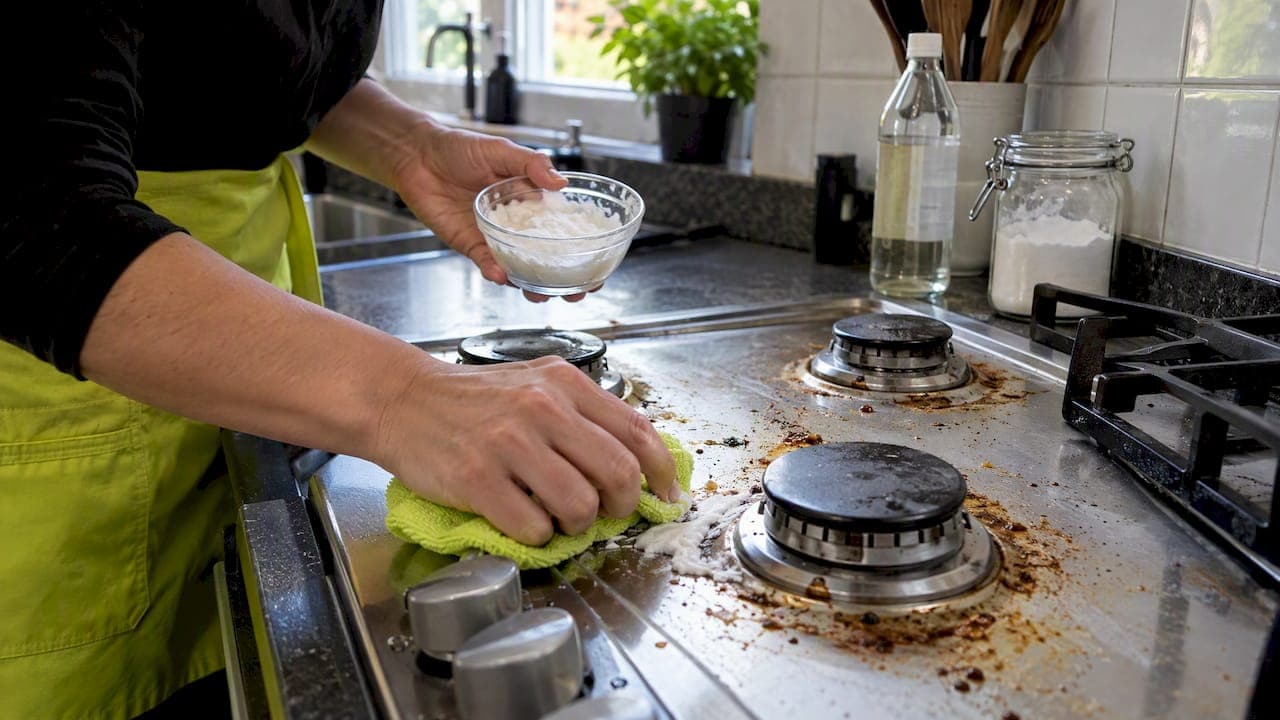
Baking soda paste. Stir baking soda with a little water until it holds together like thick custard. Spread it over baked-on grease, leave it for 10 to 30 minutes, then scrub gently and rinse. A baking soda paste is a practical way to loosen cooked-on residue without harsh chemicals.
- Letting the spray sit for 10 to 15 minutes improves results on cabinets, stainless steel and tiles.
- Citrus-based d-limonene lifts grease well, but test it first because it can affect some finishes.
- Skip essential oils where children or pets are exposed.
- Never mix vinegar with bleach, and spot-test sensitive surfaces before spraying.
Pro Tip: Warm the water before mixing. Warm liquid can soften fat, which may shorten the wait and reduce scrubbing.
What to expect from fume-free commercial degreasers and safe use rules
Off-the-shelf products fall into three broad camps. Plant-based formulas use ingredients derived from citrus, coconut or similar sources. Water-based formulas rely on mild detergents. Solvent formulas lean on petroleum-style compounds and are the ones most likely to produce strong fumes, so avoid them if fumes are your concern.
Independent testing finds that plant-based sprays can liquify tough grease and that foaming cleaners can shine on baked-on spots. Nozzle choice matters here. Foam can cling to the surface, while a fine mist may disperse more widely, so use good ventilation.
The core rules are consistent across reliable guidance: always read the label, then follow its directions on dilution, dwell time, rinsing and protective gear. Ventilate, and never combine degreasers with bleach or disinfectants.
- Dilute exactly as the label states.
- Respect the dwell time, then wipe.
- Rinse every food-contact surface thoroughly.
- Wear gloves if the label suggests them.
Step-by-step degreasing for each kitchen surface
Gather microfibre cloths, a non-scratch pad, a soft brush and your spray or paste. Work from the top of the kitchen down so drips land on areas you have not cleaned yet.
- Stovetop. Remove the grates and scrape off loose debris. Apply spray or paste, wait 1 to 10 minutes, scrub with a non-scratch pad, then rinse and dry.
- Oven interior. Let it cool completely and scrape out loose crumbs. Spread baking soda paste over the carbon, leave it for a long dwell (overnight for heavy build-up), then wipe and rinse. For more detail, see our guide to eco friendly oven cleaning.
- Rangehood and filters. Soak filters in hot soapy water or an enzyme solution, since these respond well to soaking. Scrub, rinse and dry fully. Wipe the outer surfaces with a diluted degreaser.
- Cabinets and wood finishes. Use a diluted dish soap solution, test a hidden spot first, and keep acids away from stone and sealed timber.
- Splashback and appliances. Spray, wait, wipe with a damp microfibre cloth and buff dry. On stainless steel, always wipe with the grain.
Pro Tip: For stubborn marks on stainless steel, rub a tiny amount of cooking oil onto a cloth and buff along the grain. Oil lifts oily residue, and a final dry wipe removes the film.
Appliance-specific advice is covered in our appliance degreasing guide for families.
Safety, ventilation and first aid when you clean
Ventilation is not optional. Open windows and use fans so vapour does not build up and irritate eyes and airways. If you manage a shared or commercial kitchen, this office kitchen cleaning plan covers safety and ventilation in a workplace setting.
- Open windows, run the extraction fan and set a portable fan to push air outwards.
- Wear gloves, keep products in their original labelled containers, and store them out of children's reach.
- Never decant cleaner into a drink bottle.
- If you breathe something in, get fresh air straight away, loosen tight clothing and seek urgent care if symptoms worsen.
- For skin contact, wash with cool running water for at least 20 minutes and remove contaminated clothing.
- Take leftover concentrated products to local hazardous waste services rather than the drain.
In Australia, the Poisons Information Centre is on 13 11 26. It gives advice on chemical exposures, and you should call 000 for severe symptoms such as trouble breathing.
Quick checklist for choosing and using a fume-free degreaser
Run through these points before you buy or spray:
- Surface compatibility: does the label list your benchtop, cooktop or cabinet finish?
- Nozzle type: foam for fewer airborne droplets, mist only with good airflow.
- Dilution and dwell guidance: clearly stated and realistic for your mess.
- Rinse requirements: food-contact surfaces need a clean water rinse.
- Environmental claims: look for specific statements rather than vague "green" wording.
- Spot test: try a hidden corner, then check for dulling or colour change.
- Storage and disposal: original container, out of reach, hazardous waste for leftovers.
Pro Tip: If grease returns within days of a thorough clean, or you are facing thick carbon, that is the signal to book a professional deep clean rather than repeating the same scrub.
What kinds of grease build up in a kitchen
Grease is not one substance, and knowing which type you face helps you pick the right method. Fresh cooking splatter is thin and sticky, and a warm vinegar spray usually lifts it in a single pass. Left for weeks, that film gathers dust and lint, thickens, and turns tacky.
Baked-on grease is a different job. Repeated heat polymerises fat into a hard, amber layer on stovetops, oven walls and the area around burners. This carbon-like crust resists sprays, so it rewards a paste and a long dwell rather than force.
Airborne grease travels. It settles as a fine, invisible film on rangehood filters, the tops of cabinets, light fittings and the splashback behind the cooktop. Because you cannot see it building, these spots are often the grimiest and the most overlooked.
Then there is handled grease: fingerprints and oily residue on cupboard doors, fridge handles and appliance fronts. It is light, so a diluted dish soap solution and a microfibre cloth will do.
Match the tool to the type. Thin film calls for spray, hard crust calls for paste and patience, and airborne build-up calls for soaking filters and wiping upper surfaces. For a broader look at your options, our kitchen degreasing methods comparison sets them side by side.

How to stop grease building up again after a deep clean
A deep clean is far easier to keep than to repeat. Regular wipe-downs stop grease hardening into the thick layers that need heavy intervention, so small, frequent effort beats occasional marathons.
Build a few habits into your routine:
- Wipe the stovetop and the splashback behind it after cooking once the surface has cooled. A damp microfibre cloth with a drop of dish soap is enough.
- Use a splatter guard over frying pans to keep droplets off your walls and benchtops.
- Run the rangehood fan while you cook.
- Wash or soak rangehood filters regularly so they keep capturing grease rather than releasing it.
- Wipe cabinet handles and doors regularly, since hands transfer oil constantly.
- Clean up spills in the oven while it is still lightly warm, but never hot, so they do not bake into carbon.
Keep a small spray bottle of your vinegar mix under the sink so the habit costs you almost nothing. A quick spray and wipe at the end of the evening helps keep thick, tacky layers from forming. If you want more everyday ideas, we cover them in removing grease without harsh chemicals at home.
When a professional fume-free clean makes sense
Some jobs outgrow a spray bottle: thick carbon in an oven, rental turnovers on a tight schedule, post-construction dust and grease, or sensitive sites where harsh chemicals are off the table. Our team works with non-toxic, bleach-free protocols, and our Scene Reset service is built for rental turnovers. If you are unsure whether a job is beyond DIY, contact us to discuss your cleaning needs.
— Lead
Book a fume-free deep clean for your kitchen

When grease has beaten the home methods, we offer a deep clean for homeowners and hosts that skips the harsh chemical residue. Our Deep Decontamination, Premium Clean and Rapid Response services match heavy, recurring and urgent kitchen jobs. See our services and book your clean.
FAQ
What is a really good degreaser for the kitchen?
A good option is a plant-based or water-based degreaser matched to your surface and used exactly as the label directs. Independent testing finds plant-based sprays can liquify tough grease. A homemade vinegar and dish soap spray also handles everyday films.
What happens if you breathe in degreaser?
Mild exposure can irritate your eyes, nose and throat. Move to fresh air, loosen tight clothing and seek urgent care if symptoms worsen, as healthdirect advises. You can also call the Poisons Information Centre on 13 11 26, or 000 for severe symptoms.
What is the best way to degrease a kitchen?
Work top to bottom, matching the method to the grease type. Use a spray for thin films, a baking soda paste for baked-on crust, and a hot soapy soak for filters. Ventilate throughout and rinse food-contact surfaces.
What is a good natural degreaser for the kitchen?
Warm water, white vinegar and a few drops of dish soap make a dependable natural spray, with baking soda paste for stubborn spots. Citrus-based d-limonene also lifts grease, though you should test it on a hidden area first.
Sources
- Health
- Inhaled substance or object | healthdirect
- Ask ACI: Cleaning with Degreasers | The American Cleaning Institute (ACI)