
Routine cleaning is generally safe during pregnancy if you open windows, skip aerosol sprays and hand off the higher-risk chores to someone else. The main danger isn't the vacuum or the dishcloth, it's fumes, mists and a few specific chemicals in enclosed spaces. Ventilate first, glove up, and get help with cat litter or anything that comes in a spray can. The sections below cover exactly which tasks are fine, which to avoid, and when hiring a non-toxic cleaning service makes more sense than doing it yourself.
TL;DR:
- Use ventilated rooms, gloves, and cloth-based cleaning methods for routine tasks like dusting and wiping surfaces to minimize chemical exposure during pregnancy.
- Avoid aerosol sprays, air fresheners, and solvent-based cleaners with fragrances, as they deliver chemicals as inhalable mists that pose higher risks.
- Delegate tasks involving concentrated chemicals or physical strain, such as pest control, mold cleanup, or cat litter changing, to professional, non-toxic cleaning services.
- Never mix bleach and ammonia, and limit the use of bleach to diluted laundry applications in well-ventilated spaces for safe cleaning.
- Prioritize hiring a cleaning service that uses bleach-free, low-tox protocols, especially for deep decontamination or routine maintenance during pregnancy.
Table of Contents
- Which everyday cleaning tasks and products are safe
- Chemicals and chores that deserve extra caution
- Ventilation, protective gear and safer technique
- When to hire a professional non-toxic cleaner
- A cleaner's-eye view on pregnancy and cleaning habits
- How Grime Scene Services can help with a pregnancy-safe clean
- Sources
- FAQ
Which everyday cleaning tasks and products are safe
Most day-to-day cleaning poses little risk when you use the right products the right way. Light dusting, laundry, washing dishes and wiping down benches and bathroom surfaces are all fine throughout pregnancy, including in the first trimester when many people feel most cautious.
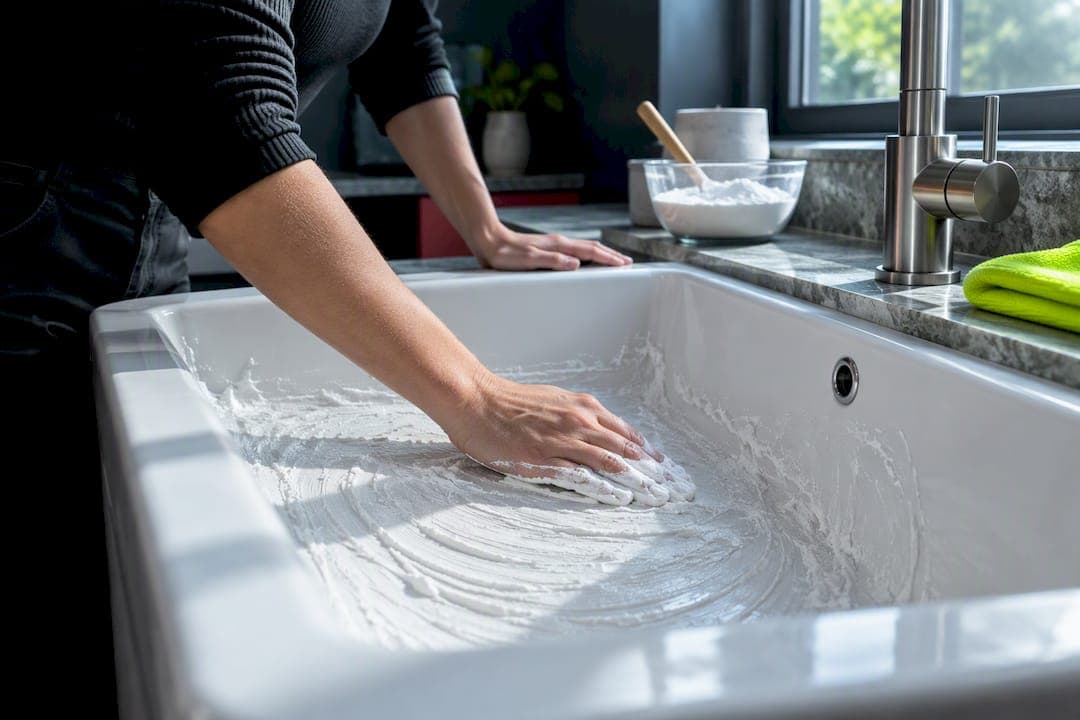
Simple ingredients do a surprising amount of the work. A paste of baking soda and water lifts grime from sinks, tubs and stovetops without fumes. Diluted white vinegar cuts through soap scum and streaks on glass and tiles, and works well for descaling taps and kettles. Castile soap, diluted in warm water, handles most bench and floor cleaning jobs.

Bleach has a narrower safe use case. KidsHealth (Nemours) guidance points out that some household cleaners are fine while others carry more risk, and recommends reading labels, ventilating and gloving up regardless of what you're using. If you do use bleach, keep it to diluted laundry applications in a well-aired room, never combine it with other products, and skip it entirely in small bathrooms with the door shut and the fan off.
A few habits make any of this safer:
- Wipe benches and bathroom surfaces with a diluted solution and a cloth rather than a spray bottle.
- Rinse dishes and cutting boards with hot water and a mild dish soap instead of a heavy-duty degreaser.
- Do laundry as normal. Detergent exposure through washing is low risk compared with airborne fumes.
- Save stronger jobs, like oven cleaning, for a day someone else is home to help or take over.
If you want a step-by-step routine for bathrooms specifically, our chemical-free bathroom scrubbing guide walks through the same low-tox approach in more detail.
Chemicals and chores that deserve extra caution
Some ingredients and formats carry more risk than others, and it's worth knowing what to look for on a label before you reach for a product.
- Glycol ethers, phthalates hidden under "fragrance," and strong solvents turn up in a range of household cleaners and air fresheners, and are worth avoiding where a fragrance-free or simpler alternative exists.
- Aerosols and sprays deliver chemicals as a fine mist you inhale directly, which makes them riskier than the same ingredient applied by hand with a cloth.
- Air fresheners and solvent-based carpet cleaners rely on strong fragrance and solvent loads that linger in the air of enclosed rooms.
- Changing cat litter carries a toxoplasmosis risk. Red Nose advises pregnant people avoid the job altogether and have someone else take it over.
- Paint stripping and pesticide or fumigation work involve concentrated chemicals that need proper ventilation and protective gear most households don't have on hand, so these are best delegated or deferred.
One rule has no exceptions: never mix bleach and ammonia. The combination produces toxic gas, and it's one of the clearest, most actionable safety lines in any pregnancy cleaning guidance. If a room already smells strongly of chemicals or fumes, leave and air it out before going back in.
Ventilation, protective gear and safer technique
Reducing exposure comes down to airflow, the right gear and how you apply a product, not which brand you choose.
Start with the room itself. Open windows, run a fan if you have one, and if you're using anything stronger than water and a cloth, leave the space for 10 to 30 minutes after cleaning before spending time in it again. Pregnancy, Birth and Baby recommends keeping the home well ventilated, wearing gloves and a face mask, and avoiding inhaling fumes generally, along with calling the Poisons Information Hotline on 13 11 26 if you're ever unsure about a product or an exposure.
A few habits cover most of the practical ground:
- Wear non-porous gloves for anything beyond dusting, and add a fitted mask if you're using a product with strong fumes.
- Wash your hands and forearms after cleaning, even when you've worn gloves the whole time.
- Pour a diluted solution onto a cloth rather than spraying it, and wipe rather than mop with anything concentrated.
- Skip oven cleaners in small, poorly ventilated kitchens, and avoid ladders, heavy lifting and awkward bending, using a long-handled tool or asking for help instead.
Our guide to reducing VOC exposure at home goes further into ventilation strategy if airflow is a particular concern in your place.
Pro Tip: Keep a spray bottle of diluted white vinegar and a stack of cloths on the bench. It handles most daily wiping jobs without you ever reaching for an aerosol can.
When to hire a professional non-toxic cleaner
Some jobs are better handed to someone else entirely, particularly ones that combine chemical exposure with physical strain. Deep decontamination after a leak or mould event, dust clearance after construction or renovation work, end-of-lease bond cleans, cleanup after pest treatment and any biohazard situation all fall into this category.
If you're engaging a cleaning service during pregnancy, it's worth asking directly:
- Do they use non-toxic, bleach-free agents as standard, not just on request?
- Will they avoid aerosols and sprays in favour of wipe-and-rinse methods?
- What protective equipment do staff wear on the job?
- Do they ventilate the space during and after cleaning?
- Do they provide before-and-after reporting so you know what was actually done?
Some cleaning services run PREMIUM CLEAN and DEEP DECONTAMINATION jobs on this basis. Certain turnover clean protocols follow the same non-toxic standard. Handing off a job like this removes both the chemical exposure and the bending, lifting and scrubbing that come with it, which matters more as pregnancy progresses. For a broader look at what non-toxic services typically cover, see our rundown of the best non-toxic home cleaning services.
A cleaner's-eye view on pregnancy and cleaning habits
Working in eco-friendly remediation, the most common mistake is reaching for a spray can out of habit rather than a diluted solution and a cloth, and cleaning with the windows shut. Neither habit is dramatic on its own, but both are easy to fix, and the fix costs nothing.
— Lead
How Grime Scene Services can help with a pregnancy-safe clean
If you'd rather skip the ladder work, the oven cleaner and the litter tray altogether, that's exactly what a non-toxic cleaning service is for. Grime Scene Services runs on 100% non-toxic, bleach-free protocols across residential jobs, so there's no harsh chemical residue left behind for you or anyone else in the house to breathe in.

For pregnant households, a few services do most of the heavy lifting:
- Routine cleaning services cover regular upkeep to reduce your weekly scrubbing.
- Deep decontamination jobs handle bigger tasks like mould, post-renovation dust, or deep seasonal cleans.
- Specific protocols suit short-term rental turnovers where a fast, thorough, low-tox cleaning matters between guests.
Bookings can be scheduled around a time you're comfortable leaving the house, and every clean comes with before-and-after reporting so you can see exactly what was done. Check our full scope of services or head straight to appointments to lock in a time.
Sources
For urgent chemical exposure concerns, call the Poisons Information Hotline on 13 11 26. The PMC study on product use in pregnancy is worth a read if you want the underlying evidence, and the EWG database is a useful tool for checking specific product ratings before you buy.
This article is general information, not a substitute for advice from a qualified doctor. Consult a qualified healthcare professional about your own circumstances before acting on anything here.
- Toxic household products to avoid during pregnancy | Pregnancy, Birth and Baby
- Using household chemicals during pregnancy | KidsHealth (Nemours)
FAQ
What household activities should I avoid during pregnancy?
Avoid changing cat litter due to toxoplasmosis risk, along with paint stripping, heavy pesticide or fumigation exposure, and any job that mixes bleach and ammonia — these are examples of property management tasks to delegate to professionals. Red Nose and Pregnancy, Birth and Baby both recommend delegating these tasks where possible.
Is it safe to be a house cleaner while pregnant?
Working as a house cleaner during pregnancy is generally manageable if you ventilate spaces, wear gloves and a mask where needed, and avoid aerosols, strong solvents and cat litter duties. A peer-reviewed study on product use in pregnancy found many pregnant people use multiple cleaning products regularly with little clinical guidance, so it's worth raising specific exposures with your own doctor or midwife given your job's frequency and chemical load.
Is it safe to get a house cleaned while pregnant?
Yes, and hiring help for deep or physically demanding jobs, such as decontamination after mould or renovation dust, can reduce your own exposure and physical strain. Confirming the service uses non-toxic, bleach-free products and avoids aerosols makes it safer still.
What should I avoid during the first trimester of my pregnancy?
The same chemical exposure rules apply throughout pregnancy, including the first trimester: avoid aerosols, strong solvents, mixing bleach and ammonia, and cat litter changes. Pregnancy, Birth and Baby recommends ventilating well and wearing protective gear for any stronger cleaning task at any stage.