
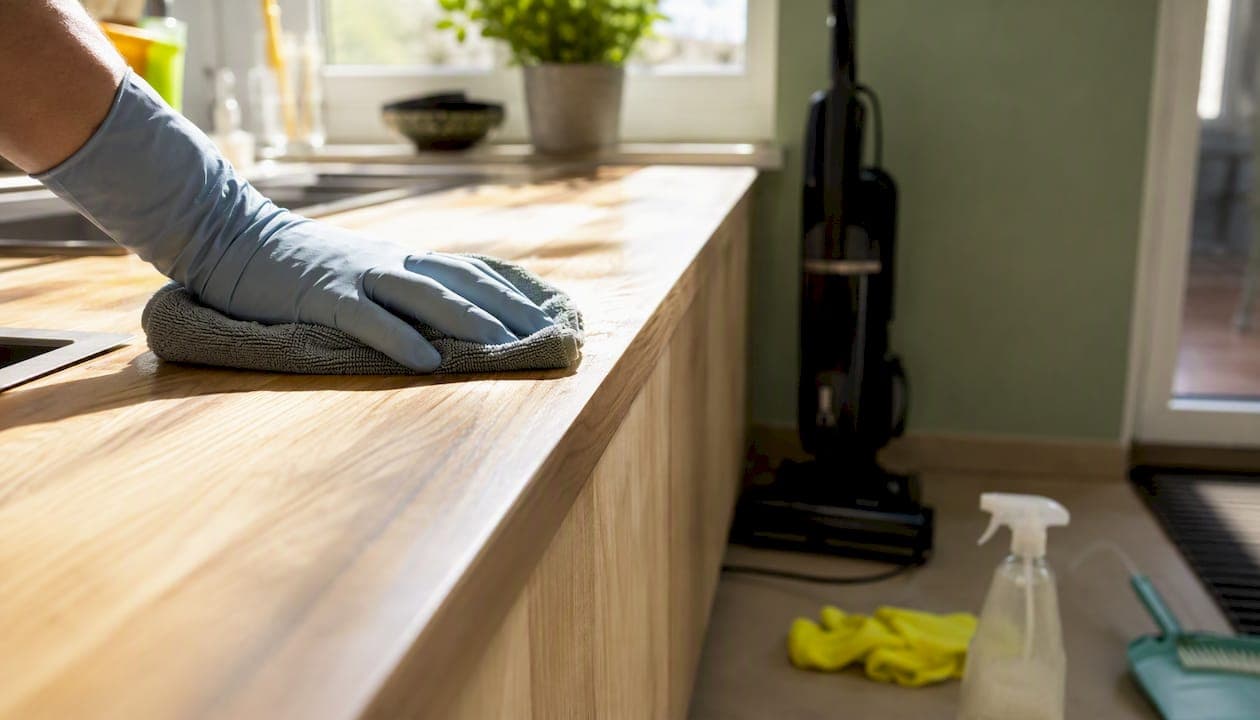
Focus on removing and trapping allergens rather than routine disinfection. The most effective combined approach is to eliminate dust reservoirs where practical, use HEPA filtration, wash textiles at ≥54°C, and switch to fragrance-free, quat-free cleaners.
Start here — your immediate action checklist:
- Encase your mattress and pillows in allergen-proof covers
- Vacuum with a sealed HEPA system at least weekly
- Wash bedding weekly at ≥54°C (130°F)
- Switch to fragrance-free, soap-based cleaners
- Wear a P2/N95 respirator whenever you're stirring dust or treating mould
- Run a true HEPA air purifier continuously in bedrooms and living areas
The tools that matter most: a sealed HEPA vacuum, a true HEPA air purifier, P2/N95 respirator masks, microfiber cloths, and allergen-proof mattress and pillow encasements. Get these right before worrying about anything else.
Key takeaways
Allergy-safe cleaning works by physically removing allergen reservoirs through HEPA filtration, hot washing, and damp methods — not by routine disinfection or fragranced products.
| Point | Details |
|---|---|
| HEPA filtration is non-negotiable | Use a sealed HEPA vacuum and a true HEPA air purifier sized to the room; run the purifier continuously. |
| Wash bedding at ≥54°C weekly | That temperature kills dust mites; below it, mites survive the wash cycle. |
| Encase mattresses and pillows | Allergen-proof zip covers cut direct exposure to the highest-density dust-mite reservoir in the home. |
| Avoid fragrances and quats | Choose fragrance-free, soap-based cleaners; quats and fragranced products add irritant load without removing allergens. |
| Wear a P2/N95 mask when cleaning | Vacuuming and dusting stir particles into the air; a respirator reduces direct inhalation during the task. |
| Call Grimescene for serious problems | Persistent mould, post-flood remediation, or pre-tenancy deep cleans need professional non-toxic protocols. |
Table of Contents
- What are the most effective allergy-safe home cleaning methods?
- Room-by-room checklist: what to do and how often
- Which cleaning products and ingredients are actually allergy-safe?
- Laundry, bedding and soft furnishings: temperatures and frequency
- Carpets, rugs and upholstery: keep, remove or manage?
- How do HEPA purifiers and ventilation reduce airborne allergens?
- Mould and damp: safe removal and when to call a professional
- What tools and PPE do you actually need for safe cleaning?
- When is it time to hire an eco-friendly professional?
- Grimescene: professional low-irritant cleaning for serious allergen problems
- Sources
What are the most effective allergy-safe home cleaning methods?
The sequence matters as much as the products. Start at ceiling height and work downward so dislodged particles fall onto surfaces you haven't cleaned yet. Damp dusting with a microfiber cloth captures particulates rather than flicking them back into the air. Dry dusting and sweeping do the opposite — they re-aerosolise fine particles that then settle elsewhere or get inhaled. Microfiber cloths and damp-mopping physically remove particulates rather than redistributing them, which is why a damp cloth beats a feather duster every time.
Vacuuming is non-negotiable, but the machine matters. A vacuum without a sealed system can exhaust fine particles straight back into the room even with a HEPA filter fitted. A sealed HEPA system keeps those particles contained from intake to bin. Vacuum high-traffic areas and pet zones regularly; at least once a week is recommended for lower-use rooms.
Cleaning vs disinfection — a distinction worth making. For most households, routine disinfection adds little benefit over mechanical cleaning with soap and water; reserve strong disinfectants for specific, high-risk needs like bathroom surfaces after illness. Cleaning removes allergens physically. Disinfection kills microorganisms but does nothing to the dust-mite proteins or pet dander already embedded in your soft furnishings. When you do need bleach, dilute it properly, ventilate the room, and never mix it with vinegar or ammonia.
Pro Tip: During pollen season, keep windows closed while cleaning and for an hour afterward. Outdoor air brings fresh pollen in, which defeats the purpose. Use exhaust fans or filtered air conditioning instead, and ventilate only when local pollen counts are low — typically after rain or in the evening.
Room-by-room checklist: what to do and how often
Bedroom
The bedroom is where most people spend a third of their lives, which makes it the highest-priority room for allergen control. Encasing mattresses and pillows in allergen-proof covers, choosing washable curtains, and controlling humidity are among the most effective steps recommended by clinical authorities. Wash all bedding weekly at ≥54°C. Keep pets out of the bedroom entirely — a pet that sleeps on the bed deposits dander directly onto the surface where you breathe for eight hours.
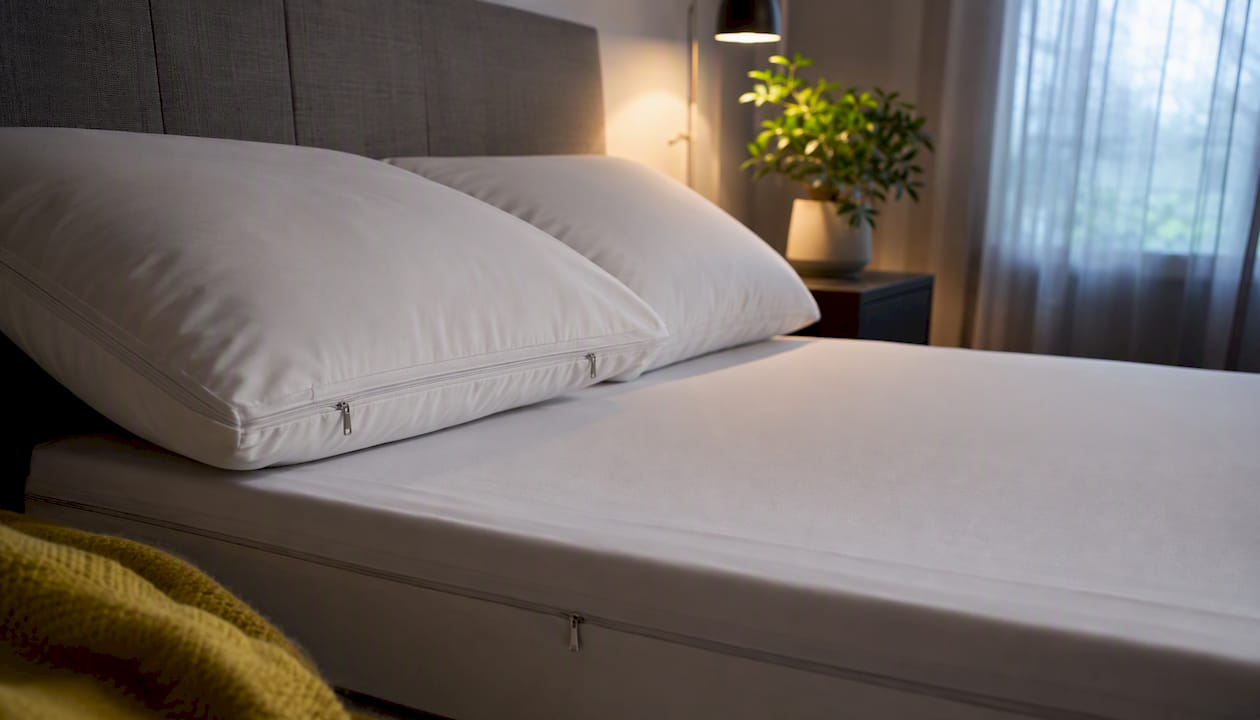
Heavy curtains are dust traps. Replace them with washable blinds or lightweight washable curtains, and launder them monthly.
Living room
Prefer hard flooring over carpet. If you have rugs, choose low-pile and washable options, and launder them weekly in high-use areas. Throws and cushion covers collect dander and dust quickly; wash them every one to two weeks. Reduce surfaces that collect dust — bookshelves, ornaments, and open storage all need regular attention. Storing items in closed bins or cupboards cuts the cleaning load significantly.
Kitchen
Moisture is the main concern here. Ventilate when cooking to prevent steam and grease buildup, which can harbour mould. Replace sponges weekly — they're among the most contaminated surfaces in a home. Avoid fragranced sprays to mask odours; they add airborne irritants without removing the source. A dilute solution of white vinegar handles most surface odours and light grease without triggering respiratory symptoms.
Bathroom
Keep humidity at or below 50% using an exhaust fan during and after showers. Dry surfaces thoroughly after cleaning. Visible mould on grout or tiles can be cleaned with detergent and water; use a dilute bleach solution only when disinfection is genuinely needed, with the window open and gloves on.
Recommended cleaning frequency
| Area / Item | Frequency |
|---|---|
| Bedding (sheets, pillowcases) | Weekly at ≥54°C |
| Mattress and pillow encasements | Monthly wipe-down; wash every 2–3 months |
| Bathroom surfaces | Weekly; mould spots as they appear |
| Kitchen benches and sink | Daily wipe; deep clean weekly |
| Hard floors (vacuum/mop) | Weekly minimum; high-traffic areas twice weekly |
| Carpets and rugs | Weekly HEPA vacuum; launder washable rugs weekly |
| Throws and cushion covers | Every 1–2 weeks |
| Curtains and blinds | Monthly |
Which cleaning products and ingredients are actually allergy-safe?
What to use
Plain soap and water handles the vast majority of routine cleaning tasks. For targeted surface sanitising, 3% hydrogen peroxide is effective and breaks down to water and oxygen. Dilute white vinegar works well for limescale and odour control — avoid it on natural stone surfaces, which it can etch. Castile soap, baking soda, and concentrated plant-based cleaners cover most other needs without the irritant load of conventional products.
Avoid fragranced products and quaternary ammonium compounds (quats) where possible; prefer plain soap and water for routine cleaning and reserve disinfectants for specific needs. Quats appear on ingredient lists as "benzalkonium chloride," "alkyl dimethyl benzyl ammonium chloride," and similar long chemical names. They're common in antibacterial sprays and disinfectant wipes.
What to avoid
- Products listing "fragrance" or "parfum" as an ingredient — these are catch-all terms that can cover hundreds of undisclosed chemicals
- Quaternary ammonium compounds (quats) in antibacterial and disinfectant products
- Aerosol sprays that mist fine droplets into the air
- Mixing bleach with any acid (vinegar, citric acid) or ammonia — the resulting fumes are genuinely hazardous
Reading labels and trusting certifications
"Natural" and "eco-friendly" are unregulated marketing terms. A product can carry both labels and still contain respiratory irritants. Look for independent certifications such as the EPA Safer Choice programme, which evaluates ingredient safety rather than accepting a manufacturer's self-description. Peer-reviewed literature links some household cleaning exposures to respiratory irritation, which is why ingredient scrutiny matters more than marketing language. For a deeper look at how to evaluate product labels, the eco cleaning myths guide is worth reading alongside this.
| Safe alternatives | Ingredients to avoid |
|---|---|
| Plain soap and water | Fragranced products ("fragrance"/"parfum") |
| 3% hydrogen peroxide | Quaternary ammonium compounds (quats) |
| Dilute white vinegar | Aerosol sprays in enclosed spaces |
| Castile soap, baking soda | Bleach mixed with acids or ammonia |
| EPA Safer Choice certified products | Antibacterial products for routine use |
Laundry, bedding and soft furnishings: temperatures and frequency
Textiles are the primary reservoir for dust mites and pet dander in most homes. Dust mites don't survive washing at high temperatures. Washing bedding and washable soft furnishings at around 54°C (130°F) and using vacuums with certified HEPA filters helps reduce dust-mite and particulate allergen reservoirs. That temperature threshold is the one to remember: below it, mites survive the wash cycle.
The 54°C rule: wash sheets, pillowcases, and duvet covers weekly at ≥54°C (130°F). Tumble-dry on a hot setting or sun-dry thoroughly. Items that can't tolerate that heat — some wool or delicate fabrics — can be placed in a sealed bag and frozen for 48 hours, which also kills mites, though it doesn't remove the allergen proteins the way hot washing does.
Key steps for soft furnishings:
- Use allergen-proof encasements on all mattresses and pillows; wipe them down monthly and wash every 2–3 months
- Wash throws and cushion covers every one to two weeks
- For non-washable items (some duvets, decorative cushions), steam cleaning can reduce mite populations; sealed storage is the alternative
- Dry everything completely before returning it to use — damp textiles encourage mould growth
- For guidance on managing pet dander specifically through laundering and zoning, the pet dander cleaning guide covers the detail
Carpets, rugs and upholstery: keep, remove or manage?
Hard flooring is the straightforward answer for allergy sufferers. Carpet holds allergens at a depth a vacuum can't always reach, and even a good HEPA vacuum only removes what it can access. If removing carpet isn't feasible, choose low-pile over high-pile — it holds less debris and is easier to vacuum thoroughly. Vacuum at least weekly with a sealed HEPA system; twice weekly in rooms where pets spend time.
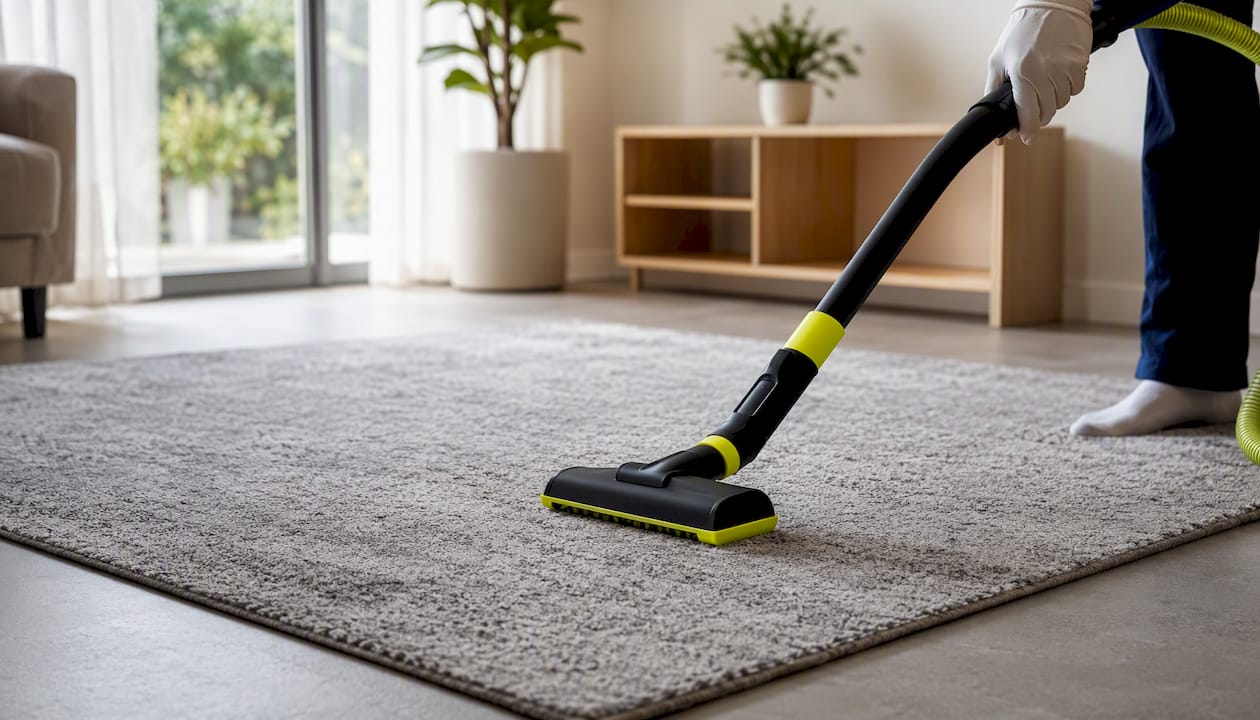
Area rugs are more manageable. Washable rugs in bedrooms and high-use areas should be laundered weekly. For larger rugs that can't go in a home machine, professional laundering every few months is worth the cost.
Upholstery follows similar logic. Washable slipcovers are the most practical solution — remove and launder them regularly. For fixed upholstery, use the upholstery attachment on a sealed HEPA vacuum weekly, and consider steam cleaning every few months. Steam doesn't aerosolise allergens the way dry brushing does, which matters for anyone with asthma.
Pro Tip: Short, regular maintenance beats an occasional deep clean for allergy control. A five-minute HEPA vacuum of the sofa twice a week removes more cumulative allergen load than a single thorough clean once a month. Consistency is the mechanism — not intensity.
How do HEPA purifiers and ventilation reduce airborne allergens?
A true HEPA air purifier — one that meets the standard of capturing 99.97% of particles at 0.3 microns — makes a measurable difference in rooms where it runs continuously. Size it to the room: check the Clean Air Delivery Rate (CADR) against the room's square metreage, and run it on a medium-to-high setting during peak allergen periods. Change filters on the manufacturer's schedule; a clogged filter loses effectiveness quickly.
The vacuum matters just as much. A HEPA filter alone in a non-sealed vacuum is less effective because air can bypass the filter through gaps in the casing. A sealed system forces all air through the filter. When buying, look for "sealed system" explicitly stated, not just "HEPA filter fitted."
Ventilation strategy depends on what's outside. Allergy specialists recommend keeping windows closed during high pollen counts and using air conditioning or filtration instead. Use exhaust fans in bathrooms and kitchens to control humidity without importing outdoor allergens. When outdoor air quality is good and pollen counts are low, cross-ventilation for 15–20 minutes after cleaning helps clear any residual airborne particles. For a more detailed look at how HVAC maintenance fits into this, the HVAC and indoor air quality guide covers filter choices and duct cleaning.
Mould and damp: safe removal and when to call a professional
Control moisture first. Fix leaks promptly, use a dehumidifier in damp rooms, and aim to keep indoor humidity at or below 50%. Mould cannot establish itself on dry surfaces — humidity control is prevention.
For small patches of surface mould (bathroom grout, window sills, tile edges), clean with detergent and water, scrub thoroughly, and dry the surface completely. Use a dilute bleach solution (approximately 5%) only when disinfection is needed after cleaning, not as a substitute for it. Always ventilate the room, wear gloves, and never mix bleach with other cleaners.
Wear a P2/N95 mask, gloves, and eye protection whenever you're scraping or treating mould. Disturbing mould releases spores into the air, and inhaling them is a direct trigger for asthma and allergic reactions. The AAAAI recommends cautious product choice and PPE when cleaning for exactly this reason.
Signs you need a professional remediation, not a DIY clean:
- Mould covering an area larger than roughly 1 square metre
- Mould that keeps returning within weeks of cleaning
- Visible damp patches on walls, ceilings, or under flooring
- A persistent musty smell with no visible source
- Mould behind walls, under flooring, or in the roof cavity
- Anyone in the household has a respiratory condition that worsens at home
What tools and PPE do you actually need for safe cleaning?
The non-negotiable kit for allergy-safe cleaning is short:
- Sealed HEPA vacuum — look for "sealed system" on the spec sheet, not just "HEPA filter"
- True HEPA air purifier — check the CADR rating against your room size; run it continuously
- P2/N95 respirators — wear one whenever you're vacuuming, dusting, or treating mould
- Microfiber cloths — use damp for dusting; launder after each use at ≥54°C
- Allergen-proof mattress and pillow encasements — fitted covers with a zip closure rated for dust-mite protection
- Dehumidifier — for bathrooms, laundries, or any room prone to damp
Maintenance matters as much as the initial purchase. Replace vacuum filters on schedule — most sealed HEPA vacuums need a filter change every 6–12 months depending on use. Launder microfiber cloths separately from other washing (they shed fibres that can clog other fabrics) and replace them when they stop picking up dust effectively. Respirators are single-use or limited-reuse; check the manufacturer's guidance and replace when the seal degrades or breathing resistance increases.
Pro Tip: Dedicate separate microfiber cloths to different areas — bathroom, kitchen, general surfaces — and use a different colour for each. It prevents cross-contamination and makes it obvious when a cloth needs laundering. A bathroom cloth should never touch a kitchen bench.
For a full breakdown of hypoallergenic cleaning supplies used by professionals, including formulation rationale, that guide covers what's actually in the products and why it matters.
When is it time to hire an eco-friendly professional?
DIY cleaning handles most allergen management well. There are situations where it genuinely isn't enough.
Call a professional when:
- Mould covers a large area or is hidden inside walls, under flooring, or in roof cavities
- Allergen symptoms persist despite consistent, correct cleaning technique
- The property has had water damage, flooding, or a long period of neglect
- A household member has severe asthma, immunosuppression, or a documented sensitivity that makes DIY exposure risky
- You're preparing a property for a guest or tenant with known allergies and need documented, verifiable results
Questions to ask any cleaning or remediation service:
- Do you use non-toxic, bleach-free protocols as standard?
- What PPE and containment practices do you use during treatment?
- Can you provide before-and-after evidence or references for similar jobs?
- Are your products certified by an independent body (EPA Safer Choice or equivalent)?
- How do you prevent cross-contamination between areas during the clean?
Grimescene's deep decontamination service uses non-toxic, bleach-free agents and follows containment protocols designed to avoid aerosolising allergens during treatment — the approach that professional remediation requires. For short-term rental hosts managing guest sensitivities, the Scene Reset turnover service covers rapid, low-irritant turnovers with linen and consumable restocking. For a broader look at when chemical-free home remediation is the right call, that guide covers the decision criteria in detail.
The case for prioritising removal over disinfection
The conventional instinct when allergies flare is to reach for the strongest disinfectant available. It's understandable, but it's usually the wrong move. Disinfectants kill microorganisms; they do nothing to the protein fragments from dust mites, pet dander, or pollen that are actually driving most allergic reactions. Scrubbing a surface with bleach and leaving the dust-mite reservoir in the mattress untouched is cleaning theatre.
The evidence points consistently toward mechanical removal — HEPA vacuuming, damp wiping, hot washing — as the primary intervention. Disinfection has a role in specific, high-risk situations: a bathroom after a gastrointestinal illness, a surface with confirmed mould contamination. Routine use of strong disinfectants adds chemical load to the indoor environment without reducing allergen burden.
There's also a real tension between "natural" and "safe." Essential oils, citrus extracts, and botanical fragrances are common in products marketed to health-conscious buyers. For people with asthma or chemical sensitivities, these ingredients can be just as problematic as synthetic fragrances. Fragrance-free is the safer default, regardless of whether the fragrance source is synthetic or plant-derived. The eco cleaning vs traditional methods guide unpacks this trade-off in more depth.
Grimescene: professional low-irritant cleaning for serious allergen problems
When consistent DIY cleaning isn't shifting the problem — recurring mould, persistent symptoms, or a property that needs a verified deep clean before a sensitive guest or tenant moves in — a professional service using genuinely non-toxic protocols is the practical next step.
Grimescene's deep decontamination service uses bleach-free, non-toxic agents and containment practices that avoid stirring allergens into the air during treatment. No masking with fragranced products. No harsh chemical residue. For short-term rental hosts, the Scene Reset protocol delivers a thorough, low-irritant turnover with linen and consumable restocking — the kind of clean that protects guest health and host ratings at the same time. Get in touch with Grimescene to book a deep decontamination or request a quote for your property.
Sources
The following sources informed the guidance in this article:
- Mayo Clinic — Allergy‑proof your home
- Toxic‑Free Future — Tips for safer cleaning
- PMC article — occupational and household cleaning exposures
- AAAAI — Allergy and asthma safe cleaning solutions
This article is general information, not a substitute for advice from a qualified doctor. Consult a qualified healthcare professional about your own circumstances before acting on anything here.