
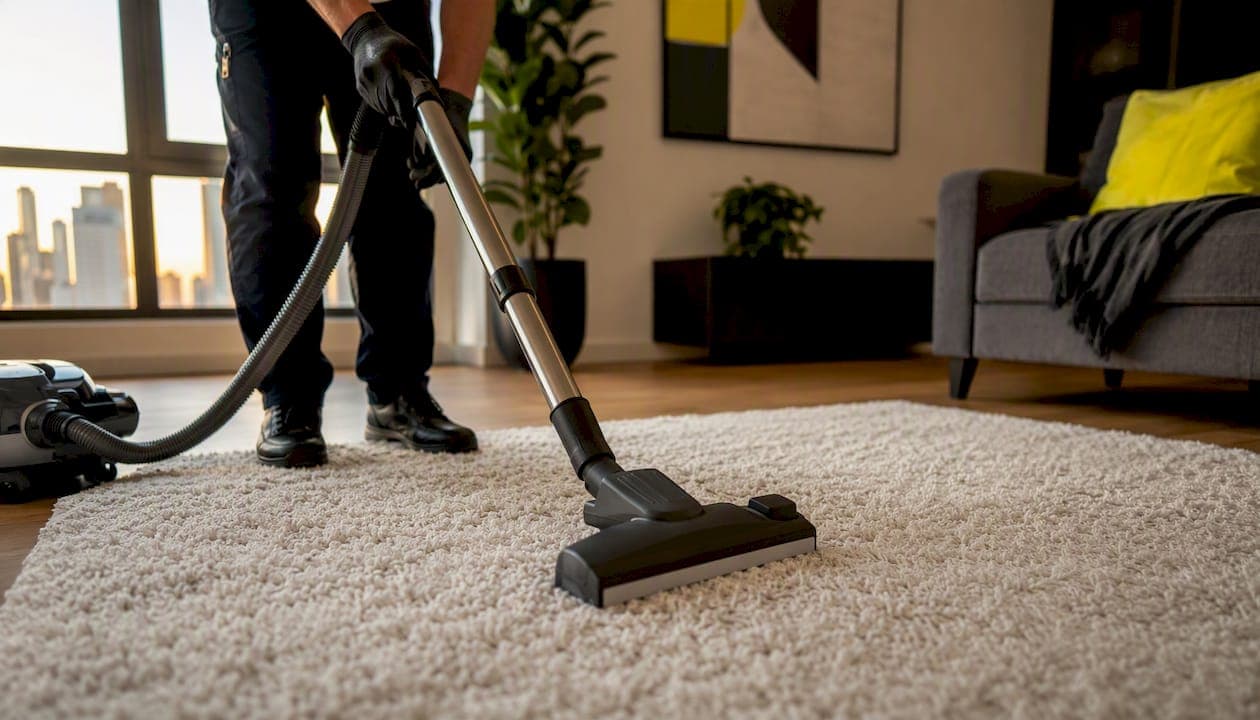
Yes, targeted deep cleaning reduces indoor allergen load and can ease allergy symptoms when paired with humidity control and air filtration. Clinical guidance from the AAAAI, AAFA, and Mayo Clinic consistently supports removing allergen sources, not just masking them, as the most effective approach. The role of deep cleaning in allergy relief is not about scrubbing harder — it is about reaching the places routine cleaning misses: mattresses, carpet fibres, upholstery, HVAC vents, and damp bathroom corners where dust mites and mould thrive.
Three things to know before you start:
- Tackle bedding and mattresses first. They hold the highest concentration of dust mite allergens and respond well to hot washing and encasings.
- Hire a professional for mould, post-construction dust, or severe pet allergen loads. DIY methods rarely achieve the extraction depth needed in those cases.
- Cleaning can temporarily worsen symptoms by aerosolising settled allergens. Wear a P2 respirator and leave the space to ventilate for several hours after a heavy clean.
Pro Tip: If you or someone in your household is highly sensitive, arrange to be out of the property during and for at least two hours after a deep clean. The allergen spike during cleaning is real and measurable.
Table of Contents
- How deep cleaning reduces indoor allergens
- Where allergens hide in your home
- The most effective cleaning methods for allergen reduction
- DIY deep cleaning versus hiring a professional
- How often to deep clean and when symptoms may improve
- How to choose an allergy-aware deep-cleaning service
- What research and Australian health guidance say
- How Grimescene approaches deep cleaning for allergy relief
- Key takeaways
- The part most guides skip
- Grimescene's allergy-aware deep decontamination
- Key sources and further reading
How deep cleaning reduces indoor allergens
The mechanisms behind allergy relief cleaning methods fall into four categories: removal, containment, neutralisation, and prevention.
Removal is the most direct. HEPA-grade vacuuming physically extracts dust mite faeces, pet dander, and pollen from carpet fibres and upholstery. Hot-water extraction goes further, pulling embedded particles that a standard vacuum cannot reach. Washing bedding at 60°C or above kills dust mites and removes their allergen-laden faecal matter.
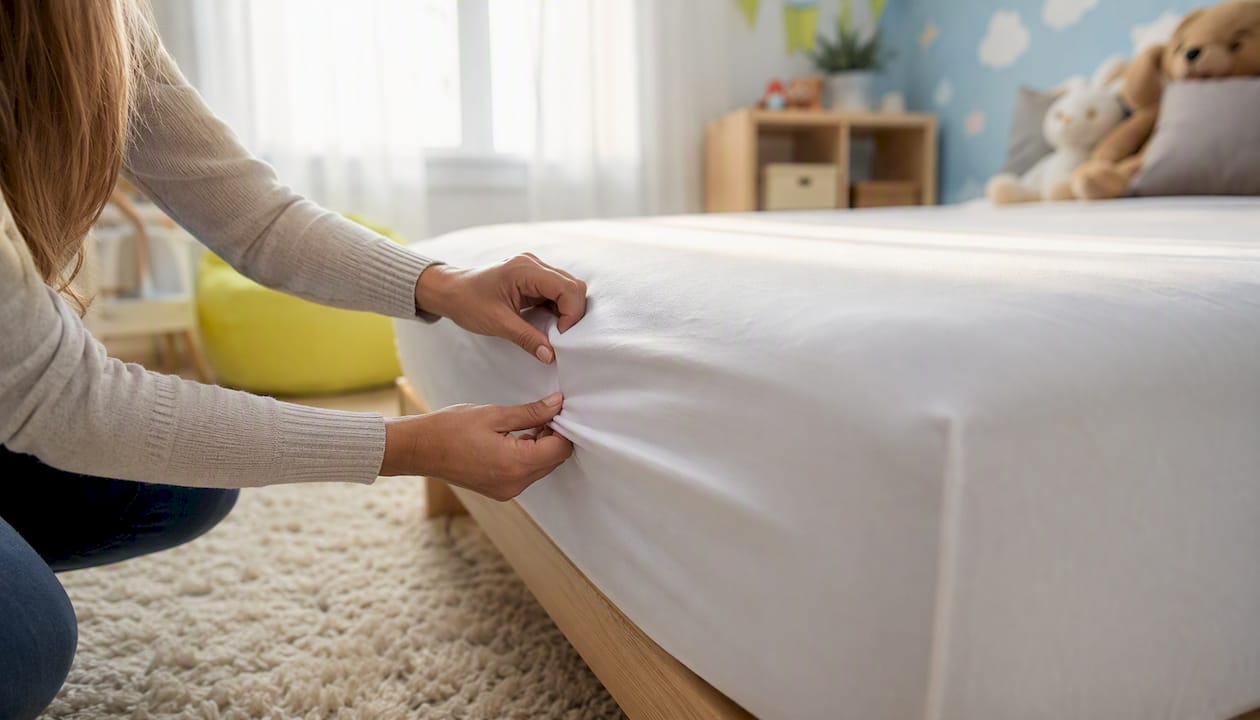
Containment stops allergens from re-entering the air. Encasing mattresses and pillows in allergen-proof covers traps existing mite populations and prevents new colonisation. The AAFA notes that source removal and encasings are more effective than relying on air cleaners alone — a point worth holding onto when weighing up whether to buy another air purifier or actually clean the mattress.
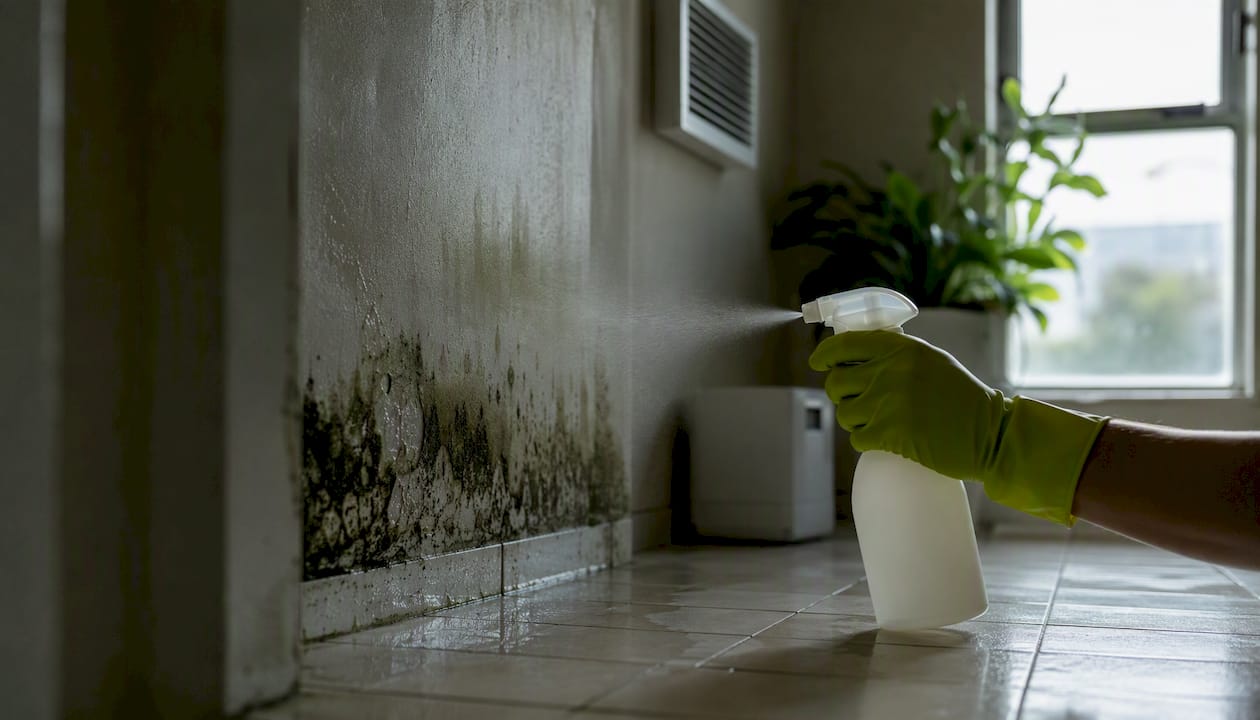
Neutralisation applies primarily to mould. Mould spores are a potent allergen trigger, and surface cleaning alone does not address the underlying moisture source. Effective mould treatment requires both removing visible growth and addressing the humidity or ventilation problem driving it.
Prevention is where humidity control and ventilation come in. Mayo Clinic recommends keeping indoor relative humidity at or below 50% to limit dust mite populations and slow mould growth. In Australian homes, particularly in humid coastal cities like Sydney and Brisbane, this often means running a dehumidifier alongside your cleaning schedule.
One critical caveat: cleaning activities can temporarily increase inhalation exposure by aerosolising settled allergens. Damp-dusting rather than dry dusting, and leaving rooms to ventilate after cleaning, significantly reduces this short-term spike.
Key mechanism: Dust mite allergens are carried on particles heavy enough to settle quickly, which means they are most dangerous when disturbed. Damp methods keep them from becoming airborne in the first place.
Where allergens hide in your home
Not all rooms carry equal allergen risk. Targeting the highest-impact zones first gives you the fastest symptom gains.
HealthyWA's guidance on dust health effects confirms that household dust is a complex mix of mite faeces, skin cells, pet dander, pollen, and mould spores — and that it accumulates fastest in soft, undisturbed surfaces. Here is where to focus, in order of impact:
- Upholstery and curtains. Sofas and fabric chairs accumulate dander and dust mite matter at rates comparable to carpets. Curtains are often overlooked entirely. See Grimescene's guide to upholstery deep cleaning without chemicals for practical method options.
Pro Tip: Check your hidden dirty spots at home — under appliances, behind furniture, and inside exhaust fan covers are common allergen accumulation points that most cleaning schedules never reach.
The most effective cleaning methods for allergen reduction
Different allergens respond to different methods. Using the right tool for the job matters more than cleaning frequency alone.
| Method | Target allergens | Pros | Best use case |
|---|---|---|---|
| HEPA vacuuming | Dust mites, pet dander, pollen | Removes surface and near-surface particles; safe for most surfaces | Weekly maintenance on carpets, upholstery, mattresses |
| Hot-water extraction | Dust mites, pet dander, embedded debris | Reaches deep fibres; kills mites with heat | Carpets and upholstery deep cleans every 6–12 months |
| Hot washing (60°C+) | Dust mites, mould spores | Kills mites and removes allergen proteins | Bedding, soft toys, pet bedding weekly or fortnightly |
| Steam cleaning | Mould, bacteria, dust mites | Chemical-free; high heat neutralises biologicals | Hard surfaces, grout, bathroom tiles |
| Mould remediation | Mould spores | Addresses source, not just surface | Bathrooms, basements, post-water-damage areas |
| Damp dusting | Pollen, fine dust, pet dander | Traps particles rather than aerosolising them | Surfaces, skirting boards, window tracks |
For eco-friendly options, non-toxic agents based on plant-derived surfactants and enzyme formulations handle most allergen-laden surfaces without the respiratory irritation that bleach and ammonia-based products cause. The ACAAI recommends simpler, less irritating solutions for allergy sufferers — baking soda and white vinegar handle many bathroom and surface tasks without triggering additional symptoms.
Pro Tip: Always use a HEPA-filter vacuum, not a standard bag or bagless model. Standard vacuums exhaust fine particles back into the air. A HEPA filter captures particles down to 0.3 microns, which covers the size range of most dust mite allergens and pet dander.
DIY deep cleaning versus hiring a professional
DIY deep cleaning works well for maintenance tasks: hot washing bedding, damp dusting, HEPA vacuuming carpets, and wiping down bathroom surfaces. The advantages are cost and immediacy — you can act the same day symptoms worsen.
The limits show up fast in three situations. First, standard consumer vacuums, even HEPA models, lack the suction power of industrial equipment. Embedded allergens in carpet pile and upholstery foam require hot-water extraction machines that most households do not own. Second, mould remediation done incorrectly spreads spores rather than removing them. Third, if someone in the household is immunocompromised or has severe asthma, the aerosolisation risk during a DIY clean is a genuine health concern.
When DIY is appropriate:
- Routine maintenance between professional cleans
- Hot washing bedding and soft furnishings
- Damp dusting hard surfaces and skirting boards
- HEPA vacuuming carpets and upholstery weekly
When to book a professional:
- Visible mould growth, especially in wall cavities or behind cabinetry
- Post-construction or renovation dust (fine silica and particulates require industrial extraction — see Grimescene's post-renovation deep clean guide)
- Severe pet allergen loads, particularly in carpets and upholstery
- Rental turnovers where allergen reset between guests matters
- Households with immunocompromised members or severe asthma
Pro Tip: If you are doing a heavy DIY clean, wear a P2 respirator (not a basic dust mask), use damp methods wherever possible, and leave the property for at least two hours afterwards. Open windows on opposite sides of the room to create cross-ventilation while you clean.
For urgent situations where allergen exposure needs addressing quickly, Grimescene's Rapid Response tactical clean covers high-impact zones within a two-hour window.
How often to deep clean and when symptoms may improve
Cleaning frequency depends on your household's specific risk profile.
- Households with pets: deep clean every 6–8 weeks for carpets and upholstery; weekly vacuuming is non-negotiable. Pet dander embeds quickly and builds up faster than most people expect. Grimescene's guide on why pet dander requires special cleaning covers the specifics.
- Short-term rental properties: — a Scene Reset-style deep clean between every guest turnover, with a full decontamination sweep at least quarterly.
On symptom timelines: most people notice some improvement within one to two weeks of a well-executed deep clean, provided humidity is controlled and filtration is running. Dust mite allergen levels in bedding drop measurably after a single hot wash and encasing. Mould-related symptoms may take longer to resolve, particularly if the mould source was not fully addressed.
Mayo Clinic's guidance sets the target at relative humidity ≤50% to limit both dust mite populations and mould growth. Pairing your deep clean with a dehumidifier and an air purifier with a HEPA filter gives the best sustained result. For practical steps on improving room air quality between cleans, Pure & Co's room air quality guide covers dehumidification and filtration options available in Australia.
How to choose an allergy-aware deep-cleaning service
Not every cleaning company understands allergen control. The questions you ask before booking will tell you quickly whether a provider is genuinely equipped or just using the word "deep clean" as a marketing label.
Questions to ask:
- Do you use HEPA-filter vacuums? What grade?
- Do you offer hot-water extraction for carpets and upholstery?
- How do you handle mould — surface treatment only, or full remediation?
- What cleaning agents do you use? Can you provide safety data sheets?
- Are you insured? Do you hold any industry certifications (IICRC or equivalent)?
- Can you provide references or before-and-after documentation from similar jobs?
- How do you manage ventilation during and after the clean?
Red flags:
- Vague answers about methods ("we use professional products" with no specifics)
- Defaulting to bleach for all mould and bathroom work
- No public liability insurance or unwillingness to confirm it
- No mention of ventilation or post-clean aerosolisation risk
- Inability to provide an eco-product list or MSDS on request
Documents worth requesting:
- Certificate of currency for public liability insurance
- Product safety data sheets for any chemical agents used
- IICRC certification or equivalent industry credential
- Before-and-after photos from comparable jobs
A cleaner who cannot answer these questions confidently is not equipped for allergy-aware work, regardless of price.
What research and Australian health guidance say
The evidence base for deep cleaning as an allergy relief strategy is solid, with some important caveats about what cleaning alone can and cannot achieve.
Healthdirect provides Australian-specific guidance on reducing domestic health risks from dust and mould, including referrals to local health services for people whose symptoms require medical management. HealthyWA documents the health effects of household dust and recommends practical control measures for Australian homes.
Peer-reviewed evidence supports several specific interventions. A PubMed study (PMID 22316179) provides evidence on allergen exposure patterns and the effect of environmental interventions, supporting the case for targeted cleaning as part of a broader allergen management strategy. Research on dust mite ecology (PMID 12532114) confirms that hot washing bedding and encasing mattresses reduces dust mite exposure more reliably than surface cleaning alone.
"Eliminating sources of allergens is the best way to improve indoor air quality. While air cleaners can help, they are not a substitute for removing the source — encasing mattresses and washing bedding in hot water are more effective for dust mites than air purifiers alone." — AAFA
The AAAAI's clinical cleaning tips reinforce damp-dusting, exhaust ventilation, and wearing a protective mask when cleaning mould. The ACAAI notes that seasonal deep cleans reduce accumulated allergens and can help people breathe better, but cautions that chemical cleaners can themselves irritate airways — a strong argument for non-toxic alternatives.
The honest caveat: cleaning reduces allergen exposure; it does not cure allergies. For people with diagnosed allergic rhinitis, asthma, or eczema, cleaning is one component of management alongside medical treatment. Severe or persistent symptoms warrant a conversation with a GP or allergist.
This article provides general information, not medical advice. Confirm your specific situation with a qualified health professional or refer to Healthdirect for Australian guidance.
How Grimescene approaches deep cleaning for allergy relief
Grimescene's Deep Decontamination Full Sweep is built around the principle that allergen control requires reaching what routine cleaning never touches: embedded carpet fibres, mattress interiors, upholstery foam, HVAC vents, and damp bathroom corners.
The service uses non-toxic, bleach-free cleaning agents throughout, which matters for allergy households. Harsh chemical residues left on surfaces can trigger respiratory symptoms independently of allergens — using plant-derived, low-VOC formulations removes that risk. The eco-friendly whole-house Scene Reset guide outlines the protocols used.
What a typical Deep Decontamination job covers for allergen control:
- HEPA-grade vacuuming of all carpets, upholstery, and mattresses
- Hot-water extraction for carpets and fabric upholstery
- Targeted mould treatment in bathrooms, laundries, and any identified damp zones
- Damp-dusting of all hard surfaces, skirting boards, window tracks, and vents
- HVAC filter inspection and cleaning
- Post-clean ventilation steps to clear aerosolised particles
A standard residential deep decontamination typically takes 3–6 hours depending on property size and allergen load. Pricing is not publicly listed as a flat rate — Grimescene provides quotes based on property size and specific requirements. For short-term rental hosts, the Scene Reset protocol handles turnover cleans with the same allergen-aware approach, preserving guest experience and host ratings.
Pro Tip: Book your deep decontamination before peak allergy season in your area — spring in most of Australia, when pollen counts rise and windows open more frequently, bringing outdoor allergens inside. Getting ahead of the season means you are not cleaning reactively while symptoms are already active.
Trust signals: Grimescene carries public liability insurance, uses certified non-toxic products, and provides before-and-after documentation on request. For further reading on the long-term benefits of professional cleaning, the deep cleaning benefits guide covers maintenance value in detail.
Key takeaways
Deep cleaning reduces indoor allergen load most effectively when it targets high-impact zones, uses the right methods for each allergen type, and is paired with humidity control kept at or below 50% relative humidity.
| Point | Details |
|---|---|
| Prioritise bedding and carpets | Mattresses and carpet fibres hold the highest dust mite and pet dander concentrations — tackle these first. |
| Match method to allergen | Hot-water extraction for carpets, hot washing for bedding, steam for mould; HEPA vacuuming alone is not enough for embedded allergens. |
| Control humidity at ≤50% | Keeping relative humidity at or below 50% limits dust mite populations and slows mould growth between cleans. |
| Hire a pro for mould and heavy loads | DIY methods are insufficient for mould remediation, post-construction dust, or severe pet allergen buildup. |
| Grimescene's Deep Decontamination | Grimescene's Full Sweep uses HEPA vacuuming, hot-water extraction, and non-toxic agents to address allergen-heavy zones in Australian homes. |
The part most guides skip
The conversation around allergy-aware cleaning tends to focus on what to clean and how often. What gets less attention is the gap between a clean-looking home and a low-allergen home. They are not the same thing.
A property can look spotless and still have mattresses loaded with dust mite matter, carpet fibres holding years of embedded dander, and HVAC vents recirculating fine particles every time the system runs. Routine cleaning maintains appearances. Deep cleaning actually changes the allergen load.
The other thing worth saying plainly: the eco-friendly framing is not just a marketing position. Bleach and ammonia-based products leave chemical residues that irritate airways independently of allergens. For someone already managing asthma or allergic rhinitis, swapping to non-toxic, low-VOC formulations removes one more trigger from the environment. The cleaning method and the cleaning product both matter.
For hosts managing short-term rentals, the allergen question is also a guest experience question. A guest with undiagnosed dust mite sensitivity who has a bad night in your property will not leave a five-star review. The Scene Reset protocol addresses that directly.
Grimescene's allergy-aware deep decontamination
If your household is managing allergy symptoms and routine cleaning is not shifting them, the difference is usually what the clean does not reach. Grimescene's Deep Decontamination Full Sweep is designed specifically for that gap: HEPA vacuuming, hot-water extraction, targeted mould treatment, and non-toxic agents throughout, with no bleach and no harsh chemical residues.
For urgent situations, the Rapid Response tactical clean covers high-impact allergen zones within two hours. For short-term rental hosts, the Scene Reset turnover keeps guest environments genuinely clean between stays, not just visually tidy.
To get a quote or book a Deep Decontamination Full Sweep for your property, visit grimescene.services.
Key sources and further reading
Australian public health guidance:
- Allergy and Asthma Cleaning Tips | AAAAI
- Control Indoor Allergens to Improve Indoor Air Quality | AAFA
- Allergy-proof your home - Mayo Clinic
- Spring Cleaning: Spruce up Your House While Toning Down Allergies - ACAAI Patient
- Healthdirect (Australia)
- Health effects of dust | HealthyWA
- PubMed: 22316179
- PubMed: 12532114
Clinical and international guidance:
- AAAAI: Cleaning tips for allergy and asthma sufferers — practical clinical tips on damp-dusting, mask use, hot washing, and ventilation.
- AAFA: Control indoor allergens — source removal, encasings, and the limits of air cleaners.
- Mayo Clinic: Allergy-proof your home — humidity targets, HEPA vacuum guidance, and maintenance frequency.
- ACAAI: Spring cleaning and allergies — seasonal timing, non-toxic product options, and safe cleaning practices.
Peer-reviewed evidence:
| Study | Focus | Why it is useful |
|---|---|---|
| PubMed PMID 22316179 | Allergen exposure and environmental interventions | Supports intervention effectiveness and expected timelines |
| PubMed PMID 12532114 | Dust mite control: hot washing and encasings | Evidence base for bedding and mattress recommendations |
Grimescene blog resources:
- Deep cleaning benefits for homeowners
- Why pet dander requires special cleaning
- Upholstery deep cleaning without chemicals
- Eco-friendly whole-house Scene Reset guide