
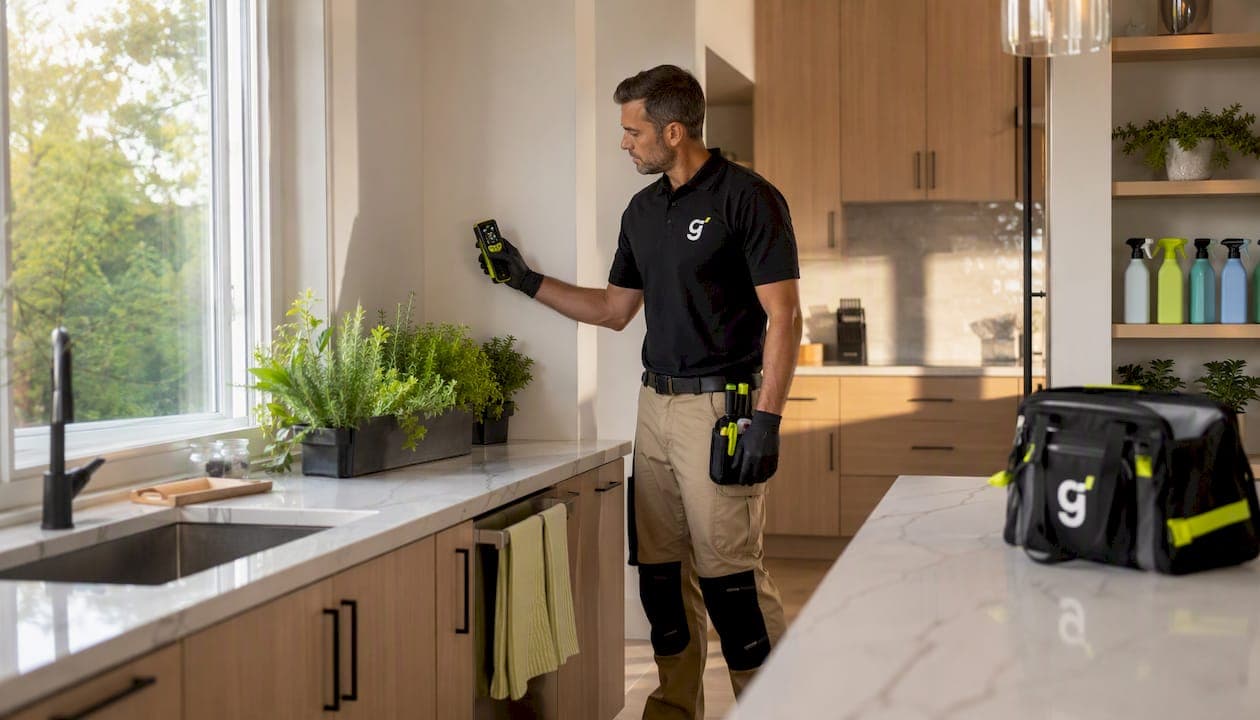
For the safest chemical-free home remediation services in Australia, Grimescene is the specialist to call. Their non-toxic, bleach-free protocols cover everything from mould removal and deep decontamination to post-water-damage restoration, all without hazardous biocides or harsh solvents.
What to have ready when you contact Grimescene:
- Property type (house, unit, rental, commercial)
- A brief description of the problem (visible mould, odour, water damage, post-construction residue)
- Approximate affected area in square metres
- Any known health sensitivities in the household (asthma, allergies, pets)
Book a survey or get a quote directly at grimescene.services.
Table of Contents
- What does 'chemical-free' actually mean in home remediation?
- When do you need a professional rather than a DIY fix?
- What a professional non-toxic remediation job actually involves
- How to choose a safe chemical-free remediation provider
- How Grimescene delivers chemical-free remediation
- Key takeaways
- Why family- and pet-safe remediation is the only standard worth accepting
- Book a chemical-free remediation with Grimescene
- Useful resources to verify provider claims
What does 'chemical-free' actually mean in home remediation?
"Chemical-free" is a marketing phrase, not a scientific one. Every cleaning process involves chemistry at some level. What the term genuinely signals, when used by a reputable provider, is the absence of hazardous active ingredients: no chlorine bleach, no harsh biocides, no high-VOC solvents, and no synthetic fragrances linked to respiratory irritation.
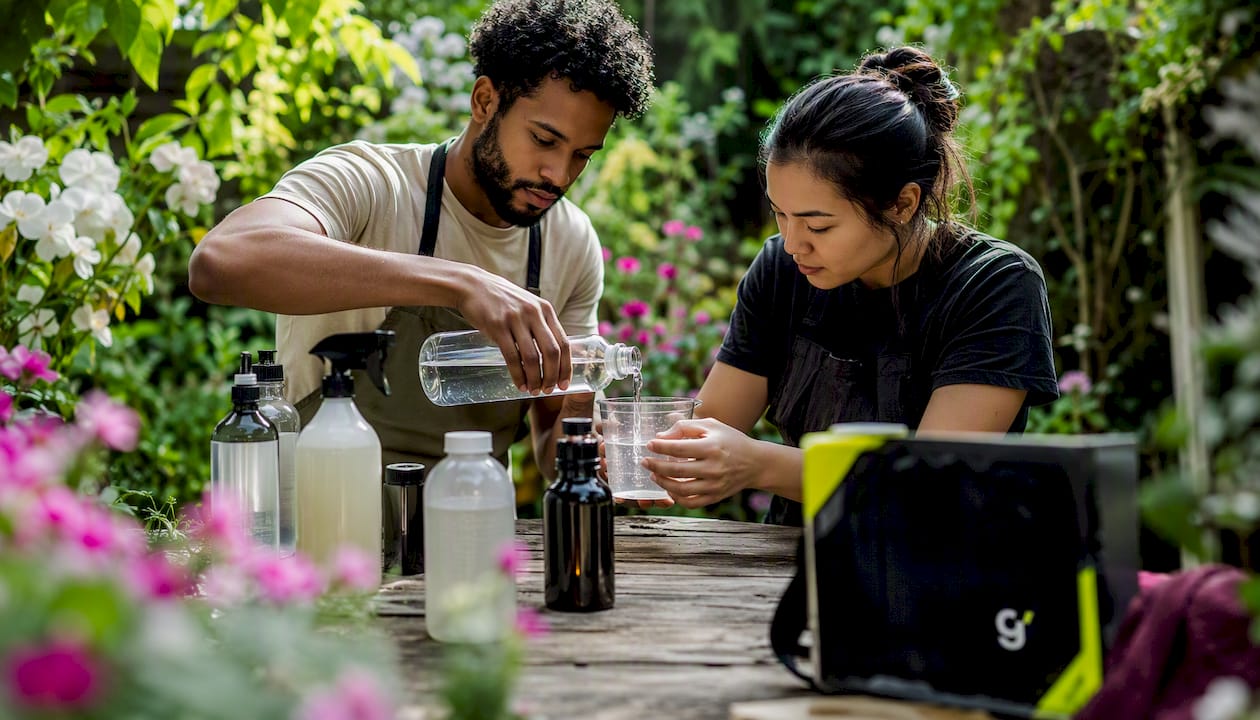
In practice, a credible non-toxic remediation service uses low-VOC, non-hazardous agents alongside physical methods such as HEPA vacuuming, steam treatment, enzyme-based cleaners, and mechanical removal. The distinction matters because some providers slap "eco" on a label while still using concentrated disinfectants that require full PPE to handle safely.
Common myths worth clearing up:
- "No chemicals" means zero substances. It means no hazardous active ingredients. Steam is water vapour; enzyme cleaners are biological catalysts. Both are still chemical processes.
- "Green" on a label is enough. It is not. Vague green claims carry no regulatory weight in Australia without third-party verification.
- Natural always means safe. Some natural compounds (certain essential oils, for example) are irritants at high concentrations.
The reliable way to verify a product's safety is to look for recognised ecolabels and certifications. In Australia, the GECA (Good Environmental Choice Australia) mark is the most relevant. Internationally, the US EPA Safer Choice label and the EWG VERIFIED® mark both indicate that a product's ingredients have been reviewed against human health and environmental criteria. The EPA's Safer Choice programme also evaluates antimicrobial claims, which is directly relevant to mould remediation products.
Pro Tip: Ask any provider to supply the Safety Data Sheet (SDS) for every product they plan to use. If they hesitate or cannot produce one, that is a red flag. A legitimate non-toxic product has nothing to hide on its SDS.
For households with children, asthma sufferers, or pets, fragrance-free products that meet Safer Choice fragrance criteria are preferable. Fragrance-free formulations reduce sensitivity risks that even some "natural" scented products can trigger.
When do you need a professional rather than a DIY fix?
Small surface mould spots on a bathroom tile grout line? A non-toxic DIY cleaner and better ventilation may be all you need. But there are clear thresholds where professional remediation is the only sensible call.
Hire a professional chemical-free remediation service when:
- Visible mould covers more than a small area
- Mould returns within weeks of cleaning
- There is a persistent musty odour even after the visible mould is gone
- Anyone in the household has developed respiratory symptoms, skin irritation, or worsening allergies
- The property has experienced water damage, flooding, or a plumbing leak in the past 48–72 hours
- Mould is growing inside wall cavities, under flooring, or in the ceiling
- The property is a rental with occupants who cannot safely vacate during DIY treatment
Green cleaning practices can maintain healthy indoor air quality for routine upkeep, but they are not a substitute for professional containment and removal when contamination is widespread or structural.
On timing: water damage is the most time-sensitive scenario. Mould can begin colonising within a day or two of a moisture event. Waiting a week to "see if it dries out" often turns a manageable remediation into a structural problem.
Pre-remediation air sampling or surface swabs are worth requesting when symptoms are present but the source is not visible, or when you want an independent baseline before work begins. Post-remediation testing confirms the job is actually done.
What a professional non-toxic remediation job actually involves
A properly scoped job follows a consistent sequence regardless of the provider you choose.
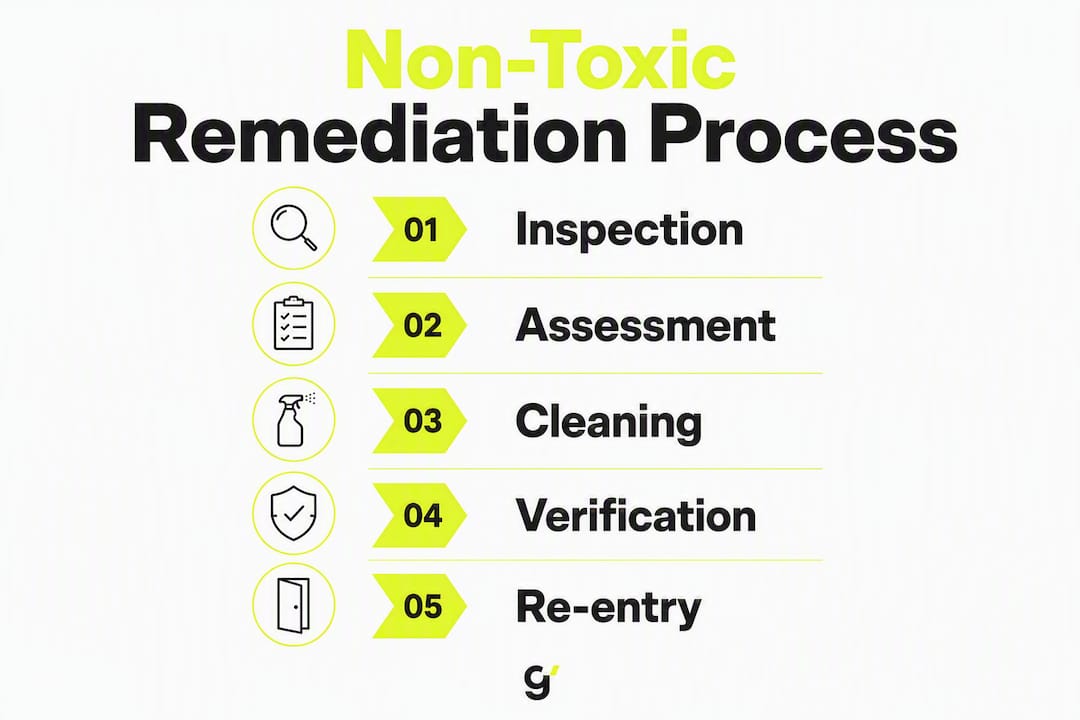
Typical stages:
- Inspection and scoping — visual assessment, moisture readings, identification of contamination extent
- Containment — sealing affected areas to prevent cross-contamination during removal
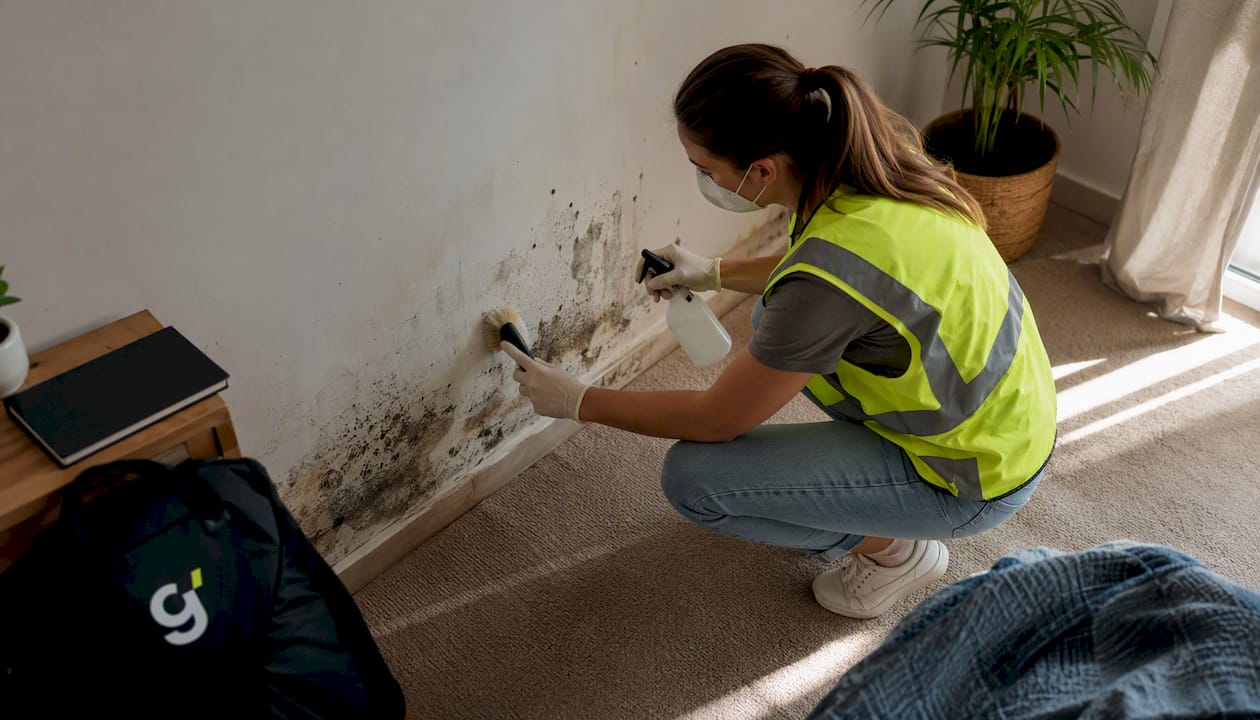
- Removal and cleaning — HEPA vacuuming, mechanical removal of porous materials where necessary, steam treatment, and enzyme-based cleaning agents
- Drying and repair coordination — controlled drying with dehumidifiers, HEPA air filtration running throughout
- Clearance testing — air sampling and surface swabs, with results documented and ideally verified by an independent lab
| Stage | Typical timeframe | Key cost drivers |
|---|---|---|
| Inspection | A short time | Property size, access difficulty |
| Small remediation (small area) | Under a day | Material porosity, location |
| Large remediation (larger area) | Several days | Structural involvement, containment complexity |
| Clearance testing | A few days for lab results | Number of samples, independent vs in-house lab |
Clearance verification should specify the sample type (air versus surface), the sampling method, and the lab procedures used. Request copies of chain-of-custody documentation and lab reports when independent testing is performed. Relying solely on a provider's in-house pass/fail check is a weaker standard than independent lab confirmation.
What adds to your quote:
- Poor access (roof cavities, under-floor spaces)
- Highly porous materials (plasterboard, insulation, timber framing) that cannot be cleaned and must be removed
- Structural repairs required after material removal
- Mould species that require more intensive treatment
- Post-remediation air quality monitoring with HEPA filtration running for extended periods
Residue-free cleaning techniques also matter here.
Non-toxic methods that leave no chemical residue mean children and pets can re-enter the space sooner after treatment.
How to choose a safe chemical-free remediation provider
The checklist below works on a phone call or when comparing written quotes.
Selection criteria (numbered for priority):
- Licence and insurance — public liability insurance and any state-required contractor licences are non-negotiable
- Documented protocols — ask for a written scope of work before any money changes hands
- Trained technicians — staff should be trained in safe chemical handling; commercial concentrated products require a documented chemical management system even when classed as "green"
- Third-party ecolabels or SDS — GECA, Safer Choice, or EWG VERIFIED on the products they use
- Post-remediation testing — air sampling and surface swabs, with independent lab results available
- Customer reviews and referrals — look for consistent mentions of thoroughness and follow-up, not just speed
- Written guarantee — a rework or satisfaction guarantee in writing, not just a verbal promise
Questions to ask on the call:
- "Which products will you use, and can you supply the SDS for each?"
- "Do you perform post-remediation air sampling, and is that done by an independent lab?"
- "What ecolabels or certifications do your cleaning agents carry?"
- "Is your work covered by public liability insurance?"
- "What does your written guarantee cover?"
Red flags to walk away from:
- Vague "eco" or "green" claims with no supporting documentation
- Refusal to supply an SDS
- Suggesting bleach as a quick fix for mould (it does not address the root cause and leaves toxic residue)
- No clearance testing offered or included
- No written guarantee or scope of work
How Grimescene delivers chemical-free remediation
Grimescene uses non-toxic, bleach-free agents combined with mechanical and thermal methods across every job. Their Deep Decontamination and Scene Reset protocols are documented, not improvised, which means the scope of work is consistent whether the property is a family home, a rental, or a post-construction site.
Core services:
- Full property inspections and contamination scoping
- Deep Decontamination Full Sweep for widespread mould, biohazard, or post-water-damage scenarios
- Rapid response cleans for urgent situations
- Short-term rental turnovers with the Scene Reset protocol, including linen and consumable restocking
- Post-construction cleaning using non-toxic agents
- Clearance testing coordination
Every technician works to documented procedures, and the product selection excludes bleach and high-VOC solvents by design. For households with pets or young children, that consistency matters more than a one-off promise.
Pro Tip: When booking, mention any known sensitivities upfront. Grimescene can adjust product selection and ventilation protocols accordingly, which is something a generic cleaning company rarely offers.
For a broader look at how eco cleaning compares to traditional methods, the Grimescene blog covers the trade-offs in practical detail.
Key takeaways
The safest outcome in non-toxic home remediation comes from choosing a provider who can show you the SDS, the ecolabels, the clearance test results, and the written guarantee before work begins.
| Point | Details |
|---|---|
| Know your threshold | Hire a professional when mould exceeds 1 m², recurs, or follows water damage. |
| Verify product claims | Ask for SDS and look for GECA, Safer Choice, or EWG VERIFIED labels, not just "green" marketing. |
| Demand clearance testing | Post-remediation air sampling and surface swabs confirm the job is done; request independent lab results. |
| Watch for red flags | No SDS, bleach suggestions, or missing written guarantees are reasons to keep looking. |
| Book with Grimescene | Grimescene's bleach-free Deep Decontamination and Scene Reset protocols cover residential and rental properties across Australia. |
Why family- and pet-safe remediation is the only standard worth accepting
The conventional argument against non-toxic remediation is that it takes longer or costs more than a bleach-based treatment. That framing misses the point entirely.
Bleach applied to mould on a porous surface kills surface growth but does not penetrate the substrate. The mould returns. The family gets a second round of exposure, a second invoice, and the same unresolved moisture problem underneath. The "quick fix" is neither quick nor a fix.
Non-toxic methods, done properly, address the contamination mechanically and biologically, then verify the result with testing. That sequence costs more upfront than a spray-and-wipe job, but it does not leave chlorine off-gassing in a child's bedroom or a pet's living space. The role of eco cleaners in long-term home maintenance is precisely this: prevention and verification, not repeated chemical intervention.
Grimescene's position on this is straightforward. Bleach-free, low-VOC agents are not a premium add-on. They are the baseline. Clearance testing is not optional. And a written guarantee is not a marketing gesture; it is the only honest way to stand behind the work.
Book a chemical-free remediation with Grimescene
Grimescene's Deep Decontamination Full Sweep is the most thorough option for mould, biohazard, or post-water-damage scenarios. The service uses bleach-free, non-toxic agents throughout, follows a documented protocol, and includes clearance testing coordination so you have written proof the property is safe.
For urgent situations, the Rapid Response clean deploys within hours using the same non-toxic standards. Both services come with a written satisfaction guarantee and are available for residential and rental properties across Australia.
To book or get a quote, visit grimescene.services with your property type, affected area, and any household sensitivities noted. Grimescene's team will scope the job and confirm availability, typically within one business day.
Useful resources to verify provider claims
Before you sign off on any remediation quote, these sources help you cross-check product safety claims and testing standards:
- GECA (Good Environmental Choice Australia) — Australia's leading ecolabel for cleaning products; look for the GECA mark on any product a provider uses
- US EPA Safer Choice — reviews ingredients and antimicrobial claims against human health and environmental criteria; widely referenced by professional cleaning services
- EWG VERIFIED® — indicates ingredient transparency and health-friendly formulation; useful for checking products used in sensitive households
- Clean Water Action Green Cleaning Guide — practical guidance on green cleaning practices and indoor air quality
- Grimescene blog — debunks common eco-cleaning myths and explains what to look for when selecting a non-toxic provider in Australia
When reviewing a quote, ask for the SDS for each product, the name of the certifying body for any ecolabel claimed, and the lab name and sample type for any clearance testing included. Independent testing labs in Australia can be located through the National Association of Testing Authorities (NATA) directory.