
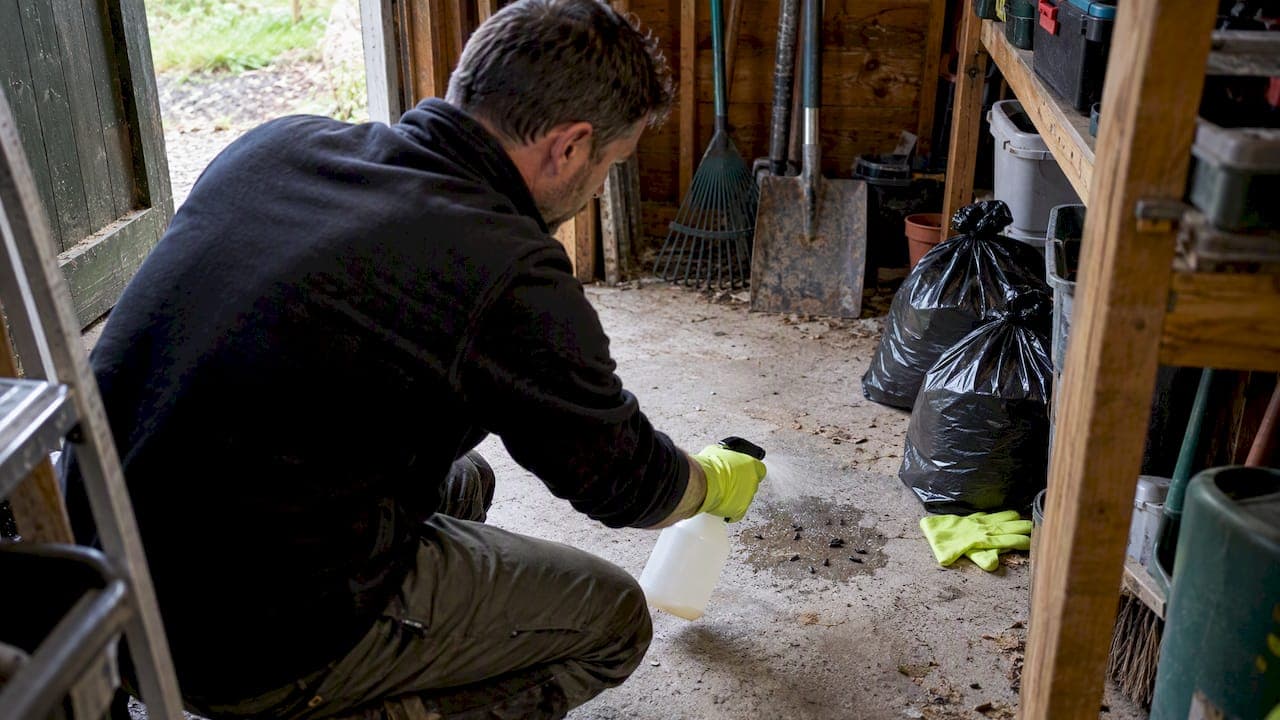
The safest way to handle rodent droppings is to ventilate the room, avoid sweeping or vacuuming, soak the droppings thoroughly with disinfectant, wait at least five minutes, then wipe them up and double-bag the waste. Dry contact or disturbance can send contaminated dust into the air, so the wet-first approach stays the same whether you're dealing with a few droppings or a heavy infestation. Once the waste is bagged, a detergent clean followed by disinfection finishes the job.
TL;DR:
- Proper rodent droppings cleanup requires saturating waste first, waiting for at least five minutes, and then carefully wiping it up without sweeping or vacuuming.
- Ventilation and protective gear must be prepared beforehand, including gloves, goggles, and respirators, to minimize the risk of inhaling contaminated dust.
- Disinfectants should be diluted correctly and applied after cleaning with detergent, with a focus on avoiding mixing products like bleach and ammonia.
- Small, contained infestations can usually be handled DIY, but widespread or long-term problems in difficult-to-access areas need professional decontamination with specialized equipment.
- Soft items exposed to droppings require hot washing or disposal, and waste must be double-bagged and disposed of in outdoor bins to prevent recontamination.
Table of Contents
- Getting ready to clean: ventilation, PPE and supplies
- [The step-by-step wet-first clean for droppings, nests and stains can be complemented by practical advice on how to keep rats out of your shed to prevent future infestations by following practical steps for homeowners.](#the-step-by-step-wet-first-clean-for-droppings-nests-and-stains-can-be-complemented-by-practical-advice-on-how-to-keep-rats-out-of-your-shed-to-prevent-future-infestations-by-following-practical-steps-for-homeownershttpsketergroupcomaublogsnewskeep-rats-out-of-shed)
- Cleaning different surfaces: floors, carpets, kitchens and cars
- Disposing of waste and decontaminating your tools
- When it's time to call in a professional
- A cleaner's take: why the method matters more than the product
- Book a professional, non-toxic clean when you need one
- FAQ
- Sources
Getting ready to clean: ventilation, PPE and supplies
Before you touch anything, open windows and doors and leave the space for 15 to 30 minutes. This lets contaminated dust settle and gives you fresher air to work in.
Gather protective gear and supplies first, since stopping mid-clean to find gloves increases the risk of spreading contamination on door handles and taps.
- Nitrile or heavy-duty gloves, sealed safety goggles, and a P2 or N95 respirator at minimum (step up to a P100 for heavy contamination).
- A disposable coverall if droppings are widespread or you're working in a confined space like an attic.
- Detergent and warm water, paper towels, heavy-duty rubbish bags, and a labelled disinfectant or household bleach you can dilute accurately.
- A bucket, mop and spare cloths kept separate from household cleaning equipment until they've been decontaminated.
Never mix bleach with ammonia or other household cleaners: the combination produces toxic fumes. Whatever disinfectant you choose, check the label for its required contact time and stick to it.
Pro Tip: Keep a dedicated "rodent cleanup" bucket and cloths stored away from your regular kitchen supplies so there's no chance of cross-contamination later.

The step-by-step wet-first clean for droppings, nests and stains can be complemented by practical advice on how to keep rats out of your shed to prevent future infestations by following practical steps for homeowners.
Once you're ventilated, gloved and masked, work through the contaminated area in this order.
- Prepare your disinfectant. If using household bleach, mix it at a 1:9 or 1:10 dilution with water in a clearly labelled spray bottle or bucket.
- Soak everything first. Spray droppings, nesting material and urine stains until thoroughly wet, and leave them to sit for at least five minutes, or longer if your disinfectant's label specifies a longer contact time.
- Pick up wet material. Use paper towels or damp cloths, never a broom or vacuum, and place the waste directly into a sealed bag.
- Double-bag and bin it. Tie the first bag, place it inside a second heavy-duty bag, tie that one too, and put it straight into an outdoor bin with a lid.
- Clean before you disinfect. Wash the area with detergent and warm water to lift organic matter, then reapply disinfectant and let it sit for its full contact time. Australian infection-prevention guidance is clear that cleaning with detergent before disinfecting is important because dirt and grime can shield pathogens from the disinfectant and reduce how well it works.
- Launder or discard soft items. Bedding, clothing and soft toys exposed to droppings or urine need a hot wash; heavily soiled porous items, and any food that may have been contaminated, should go straight in the bin.
If you've caught a rodent in a trap or found a carcass, spray it thoroughly, wait, then pick it up with gloved hands straight into a double bag. Reusable traps need a full soak and wipe-down with disinfectant before they go back into use.
Getting the order right matters more than most people realise. Hantavirus is rare in Australia, but healthdirect notes it can be contracted by inhaling dust contaminated with infected rodent droppings, urine or saliva, and symptoms can progress to breathing difficulties that need prompt medical attention. That risk is exactly why the wet-first rule exists: wetting droppings before they're disturbed stops contaminated particles becoming airborne in the first place.
Cleaning different surfaces: floors, carpets, kitchens and cars
The wet-first principle holds everywhere, but how you finish the job changes depending on what you're cleaning.
- Hard floors: wet the area, wipe up the waste, clean with detergent, then disinfect. Damp mop rather than dry-sweeping, even once droppings are gone.
- Carpets and upholstery: after removing visible contamination the wet-first way, steam clean or arrange a professional shampoo for the fabric. Heavily soiled porous items like rugs or cushions are often better discarded than salvaged.
- Food-contact areas: throw out any exposed food, wash dishes and utensils before reuse, disinfect benchtops thoroughly, and launder cleaning cloths in a hot wash rather than reusing them.
- Vehicles and enclosed spaces: air out for at least 30 minutes before you start, then follow the same soak, wipe and disinfect sequence. Deep contamination in a vehicle's ventilation system is a job for a professional cleaner rather than a DIY fix.
Disposing of waste and decontaminating your tools
Double-bagging is the safest way to move contaminated material out of the house. A heavy-duty bag inside a second bag, sealed and tied, gives you a redundant barrier against leaks or tears on the way to an outdoor, lidded bin.
- Disinfect your gloves before you peel them off, then bag disposable PPE with the rest of the waste.
- Launder reusable coveralls or cloths on a hot wash, following the care label.
- Clean reusable respirators and goggles according to the manufacturer's instructions, and shower and change out of your work clothes as soon as you're done.
When it's time to call in a professional
DIY cleanup works well for small, contained jobs, but some situations call for more than a bucket and gloves.
- Droppings are heavy, widespread, or tucked into an attic, wall cavity or crawl space you can't safely access.
- Odour persists even after a thorough clean, which the ACT Government's rodent guidance points to as a sign of hidden contamination in places like behind appliances or in roof voids.
- Anyone in the home is pregnant, very young, elderly or immunocompromised, or there's a dead rodent in a confined space you can't ventilate properly.
- You're dealing with a long-term infestation where nesting material and waste have built up over months.
A professional remediation job typically includes containment of the affected area, HEPA-grade equipment, full decontamination rather than a surface wipe, and a follow-up check to confirm the space is clear. Before booking anyone, ask what their cleaning scope covers, what contact times their disinfectants use, and whether they offer non-toxic or eco-friendly options.
Pro Tip: If you're unsure whether contamination is contained to one room or has spread through wall cavities, a professional inspection is cheaper than redoing a DIY clean that missed the source.
A cleaner's take: why the method matters more than the product

Most people assume a stronger chemical gets a better result. In practice, the method matters more than the product: a mild, non-toxic disinfectant applied the wet-first way outperforms a harsh one used carelessly, because the risk in rodent cleanup comes from disturbing dry contamination, not from under-strength cleaning agents.
That's the thinking behind the eco-friendly protocols we use on every job, non-toxic agents that neutralise grime and contamination without leaving harsh chemical residue behind for families or pets to breathe in. For jobs that need more than a surface wipe, deep decontamination follows the same containment-first logic as the DIY method above, just with commercial-grade equipment. Short-term rental hosts can benefit from a Scene Reset protocol, built for fast turnovers without cutting corners on contamination, and for urgent situations a Rapid Response service is available to get a cleaner on-site within two hours.
— Lead
Book a professional, non-toxic clean when you need one
Not every job is a DIY one, and that's fine. If droppings have built up over time, if you're turning over a short-term rental between guests, or if you need someone on-site fast, a professional clean saves you the guesswork.

- Rapid Response (2-Hour Tactical Clean): for urgent contamination that can't wait.
- Deep Decontamination | Full Sweep: for heavy infestations or long-neglected spaces.
- The Scene Reset: for short-term rental turnovers that need to be spotless fast.
Every booking follows the same non-toxic, bleach-free approach, with a clear scope agreed upfront and reporting once the job's done. Head to our services store to see what fits, or check our full service scope if you're after a routine or bond clean instead.
This article is general information, not a substitute for advice from a qualified doctor. Consult a qualified healthcare professional about your own circumstances before acting on anything here.
FAQ
How long do rat droppings remain toxic?
Rat droppings can carry infectious organisms for as long as they remain moist or undisturbed, and dried droppings can still release contaminated dust if swept or vacuumed. There's no fixed safe shelf life, which is why every dropping should be treated as a hazard regardless of its age.
How do I safely clean up after mice droppings?
Ventilate the room, put on gloves, goggles and a respirator, then soak the droppings with disinfectant and leave them for at least five minutes before wiping them up. Place the waste straight into a double-bagged rubbish bag, then clean the area with detergent before disinfecting it again.
What is the 5-day mouse rule?
This refers to airing out a space, ideally for several days, before carrying out a full clean in areas with heavy or long-term rodent activity, such as sheds or cabins left closed for a while. The idea is to let airborne dust settle before you disturb the area, which lowers the risk of inhaling contaminated particles.
How long does it take for rat droppings to go hard?
Droppings typically dry out within a day or two depending on humidity and ventilation, but drying doesn't make them safe. Dried droppings are actually more likely to crumble and release dust if disturbed, so the wet-first cleaning method still applies.
Can I get sick from cleaning up mouse droppings without a mask?
Yes, inhaling dust from disturbed droppings is the main way rodent-borne illnesses like hantavirus spread to people, even though cases remain rare in Australia. Wearing a properly fitted P2 or N95 respirator, and never sweeping or vacuuming dry droppings, are the two most effective precautions you can take.
Sources
- Cleaning and disinfection in the community — Infection Prevention and Control Expert Group (Australian government)
- Hantavirus — what you need to know | healthdirect
- Rats and mice — ACT Government