
Stop the source, clear the area, and call a professional if you're dealing with anything beyond a small, non-hazardous mess. For blood, sewage, unknown chemicals, or major water intrusion, ring a rapid-response cleaner like Grime Scene Services rather than tackling it yourself. Industry drying standards from bodies like the IICRC point to a narrow window before water damage turns into a mould problem.
TL;DR:
- Call a professional immediately for spills involving blood, sewage, chemicals, or water damage that has persisted for hours to prevent health risks and mold growth.
- Technicians assess hazards, contain contamination, and use specialized equipment before beginning cleanup, prioritizing extraction and drying within the first hours.
- Porous items wet over 48 hours, such as carpet and drywall, should typically be discarded to reduce health hazards and prevent mold.
- Proper handling requires certified personnel with PPE, hazard assessments, and documented waste disposal, especially for biohazards and unknown chemicals.
- Response times guarantee that prompt extraction and moisture control are crucial to minimize long-term damage and insurer claims, with immediate action reducing mold risks.
Table of Contents
- Immediate steps to take in the first minutes after a spill
- When should you stop and call a professional cleaner?
- What a professional emergency cleaner actually does on arrival
- How long do you have before water damage turns into mould?
- Handling hazardous or chemical spills safely
- How to choose an emergency cleaning provider
- How Grime Scene Services approaches emergency cleaning
- What most emergency-cleaning advice gets wrong
- Book a rapid-response clean with Grime Scene Services
- Sources
Immediate steps to take in the first minutes after a spill
What happens in the first five minutes decides whether you're mopping a floor or gutting a room in three weeks. Act fast, but act in order.
- Alert anyone nearby and get them clear of the area, especially if there's a chemical smell or standing water near power points.
- Stop the source if you can do it safely, shut off a burst pipe, cap a leaking container, or unplug an appliance.
- Isolate the area with a barrier, a closed door, or a handwritten sign so nobody walks through it.
- Control drains and low points so liquid doesn't spread into other rooms or a stormwater system.
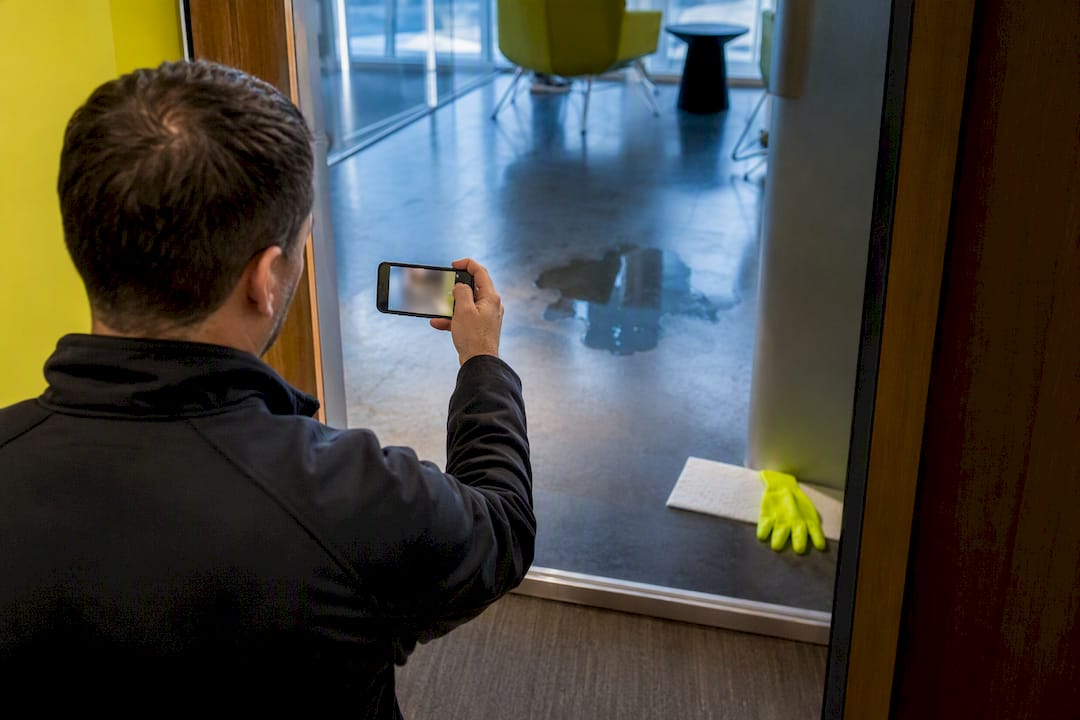
- Photograph the scene before you touch anything, with a timestamp, for insurance and for the crew that arrives later.
This sequence lines up with the "contain, control, clean" approach taught in most workplace spill training, and it's the same logic Cornell's environmental health team uses when it tells staff to alert others and evacuate before deciding whether a spill is minor or major.
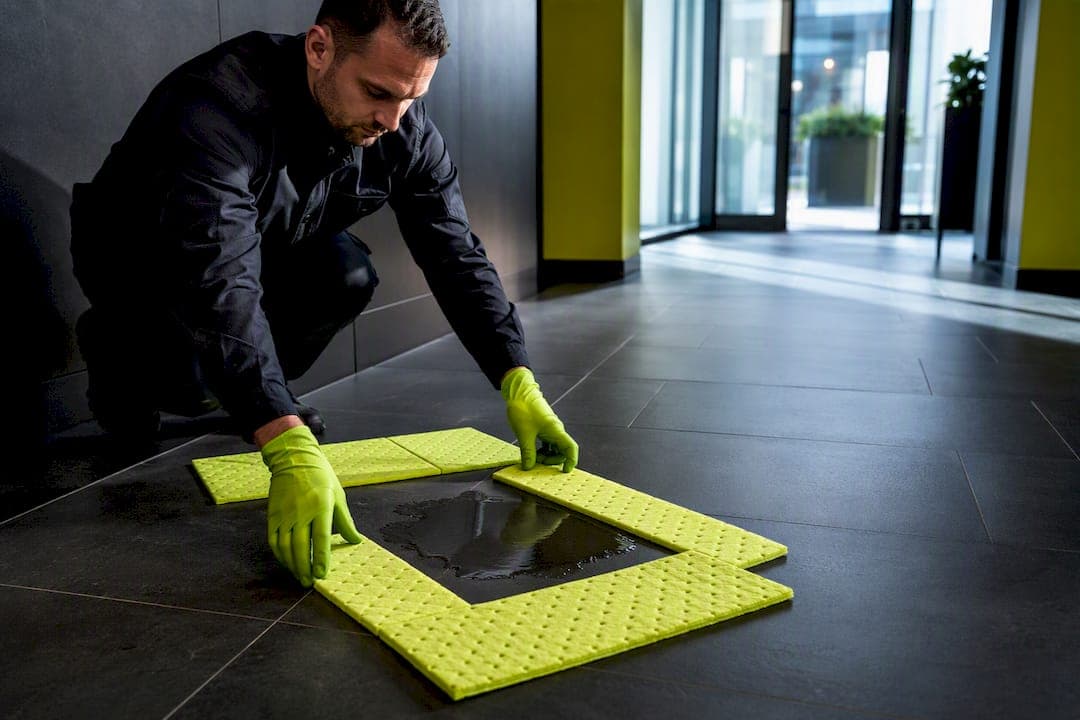
For containment, whatever is on hand works: old towels, socks, kitty litter, or purpose-built absorbent pads. Don't reach for a fan or open a window if you suspect a chemical spill with flammable vapours; ventilation can spread fumes or feed a spark risk rather than clear the air.
Pro Tip: Take your photos from a doorway rather than stepping into the mess. You get the evidence you need without tracking contamination further into the property.
When should you stop and call a professional cleaner?
Some spills are a mop-and-bucket job. Others need trained technicians, and getting that call wrong costs you money and health.
Call a professional rapid-response team when you see:
- Blood, vomit, or any bodily fluid, regardless of the volume.
- Sewage backup or grey water contamination.
- An unidentified chemical, or one without a readable label.
- Water covering more than a small area, or water that's been sitting for hours.
- Any exposed wiring or power point near the wet zone.
- Persistent odour after you've cleaned, which usually means contamination has soaked into a porous surface.
Cornell's guidance is blunt on this point: only attempt cleanup yourself if you're trained, equipped with proper PPE, and have suitable materials on hand; otherwise, notify and call trained responders. A comparison of janitorial versus remediation cleaning shows why the two aren't interchangeable, one is routine tidying, the other is hazard control.
What a professional emergency cleaner actually does on arrival
A crew that knows what it's doing doesn't start scrubbing the moment it walks in. It assesses first.
- Checks the Safety Data Sheet (SDS) if a chemical is involved, to confirm hazard class before touching anything.
- Suits technicians in PPE appropriate to the risk, gloves, respirators, or full biohazard gear.
- Contains and cordons the affected zone to stop cross-contamination.
- Removes gross contamination, then brings in submersible pumps or specialised extraction units for standing water.
- Deploys industrial air movers and dehumidifiers, mapping moisture levels room by room.
- Decontaminates biologically affected surfaces using bloodborne pathogen protocols where relevant.
- Bags and disposes of hazardous waste through a compliant channel, not the household bin.
- Writes an incident report covering products used, disposal method, and before/after photos for your insurer.
Rapid-response operators commonly run this as a 24/7 service, because the damage clock doesn't wait for business hours. One insight worth remembering: the gap between a "quick clean" and a "full restoration project" often comes down to how fast extraction and drying start, not how bad the initial spill looked.
How long do you have before water damage turns into mould?
Mould spores don't wait for you to find time on the weekend. Given warmth and moisture, mould colonies can establish quickly on porous material like carpet underlay or plasterboard.
- Extraction starts immediately. Standing water gets pumped or vacuumed out before anything else happens.
- Drying equipment runs continuously. Air movers and dehumidifiers work in tandem, and technicians track moisture readings daily until materials return to a safe range.
- Contents get triaged. Porous items that have been wet for more than 48 hours, carpet, mattresses, plasterboard, usually get discarded rather than dried, because health authorities recommend disposing of water-soaked porous items that can't be reliably disinfected.
- Documentation continues throughout, so your insurer sees a clear record from first response to final moisture reading.
Once drying is verified and readings stabilise, the job shifts from remediation into restoration, patching, repainting, replacing flooring.
Handling hazardous or chemical spills safely
If you're not certain what you're looking at, treat it as dangerous until proven otherwise. That's not caution for caution's sake, it's the standard line from every workplace safety body.
- Don't attempt cleanup without gloves, eye protection, and, where fumes are present, a proper respirator.
- Check the SDS before doing anything else; it tells you the hazard class and the correct response.
- Never mix cleaning agents or "neutralise" a chemical spill on guesswork, wrong combinations can produce toxic gas.
- Evacuate and call emergency services if you smell strong fumes, see smoke, or the area feels unsafe to breathe in.
- Leave electrical systems switched off if water has reached wiring or power points, and get an electrician or trained technician to check before restoring power. Speedy Restoration's advice on managing electrical risk after water damage is worth reading before you touch a switchboard.
Pro Tip: Keep the SDS folder or app on your phone if your business stores multiple chemicals. Finding the right sheet in a panic wastes minutes you don't have.
Model WHS guidance from Safe Work Australia puts the onus on employers to control hazards and supply proper training and PPE, which is exactly why untrained staff shouldn't be handling anything beyond an incidental spill.
How to choose an emergency cleaning provider
Under pressure, it's easy to call whoever answers first. Don't. A few quick questions separate a genuine rapid-response outfit from a general cleaner with a van.
- Do they run a genuine 24/7 line, or does it roll to voicemail after hours?
- What's their guaranteed arrival window, and is it in writing?
- Are technicians certified in bloodborne pathogen or biohazard handling?
- Do they carry insurance, and can they show waste disposal credentials?
- Will you get a written incident report with products used and disposal method?
A vendor that can't answer these clearly is a liability, not a solution, particularly if documented response times and reporting matter to your insurance claim.
| What to check | Why it matters |
|---|---|
| Response time guarantee | Determines mould and structural risk exposure |
| Technician certification | Confirms safe handling of biohazards |
| Insurance and disposal credentials | Protects you from liability on hazardous waste |
| Written incident report | Required for most insurance claims |
Red flags include vague answers on certification, no fixed price structure, and reluctance to provide documentation upfront.
How Grime Scene Services approaches emergency cleaning
Grime Scene Services runs a two-hour tactical rapid-response offering built around non-toxic, bleach-free agents, so you're not trading one hazard for another during cleanup.
- Certified technicians trained in biohazard and bloodborne pathogen handling.
- Eco-friendly decontamination agents safe for pets, kids, and waterways.
- Full documentation, incident record, products used, disposal method, for your insurer.
- The Scene Reset protocol for turnover-critical properties, restoring a space to guest-ready condition fast.
A rapid-response job isn't just about speed, it's about not leaving behind a chemical residue that creates a second problem while solving the first.
For a deeper look at how decontamination works room by room, the garage decontamination walkthrough shows the process in practice.
What most emergency-cleaning advice gets wrong
Most guides on this topic split into two extremes: hardcore DIY hacks or blanket "always call a professional" warnings. Neither serves you well in the moment. The research is clearer than the advice usually is, small incidental spills are genuinely safe to handle yourself with basic PPE, and everything past that threshold, biohazards, sewage, chemical unknowns, needs a trained crew with proper disposal channels.
Where conventional advice really falls short is the mould conversation. Most articles treat drying as a secondary concern after "the mess is gone." It's the opposite. The visible spill is the easy part. What happens in the following 24 to 48 hours, extraction, air movement, moisture tracking, determines whether you've got a clean floor or a hidden mould problem behind the skirting boards in six weeks.
Prioritise speed over thoroughness in the first hour. Contain, document, and call the right people. Thoroughness matters, but it comes second to stopping the clock on moisture and contamination.
— Lead
Book a rapid-response clean with Grime Scene Services
If you're staring down a spill that's ticked any of the boxes above, blood, sewage, an unknown chemical, or standing water that's been there more than an hour, call Grime Scene Services rather than waiting to see if it dries out on its own. Booking is straightforward: describe the incident, confirm your address, and a certified crew is briefed and on the road within the two-hour response window.
What happens first when the crew arrives:
- SDS check and hazard assessment before anyone touches the affected area.
- PPE-fitted containment to stop the spread while extraction gear is set up.
- Industrial extraction and drying equipment deployed immediately, not "next available slot."
- A written incident report handed over for your insurer, covering products used and disposal method.
For spills that have gone beyond surface contamination, into flooring, walls, or furniture, the Deep Decontamination Full Sweep service covers the complete remediation job using non-toxic agents from start to finish. Get in touch now and have a certified technician on the way before the damage sets in.
Sources
- Spill response and major spill guidance (Cornell EHS)
- Recovering after the flood – clean‑up for householders (Healthy WA)
- Model code of practice: managing work environment and facilities (Safe Work Australia)