
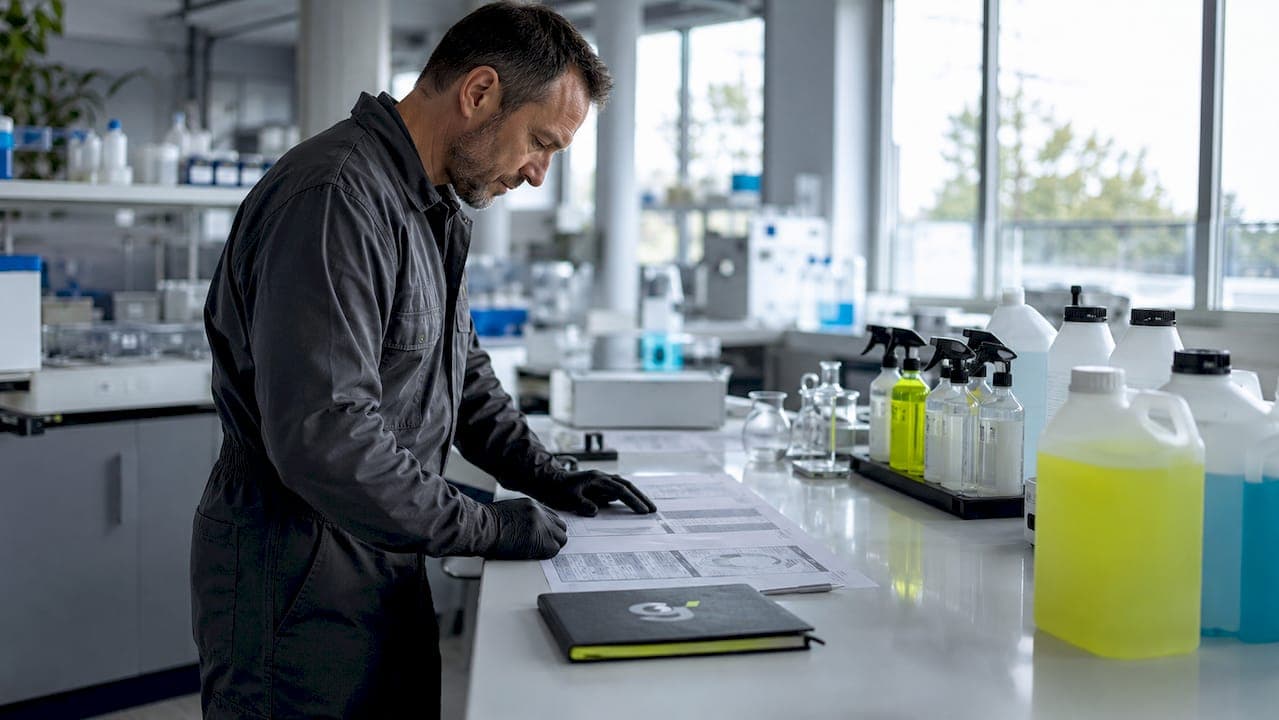
Conventional cleaners are defined as products designed to remove visible soil, not to neutralise resistant pathogens or penetrate the protective structures that shield them. This distinction is the core reason why conventional cleaners fail biohazards. Biohazard remediation, the industry term for the safe removal and decontamination of biological hazards such as blood, bodily fluids, and infectious material, requires a fundamentally different approach to chemistry and protocol. Standard products like quaternary ammonium compounds, household bleach, and soap cannot reliably achieve microbial safety in contaminated environments. OSHA's Bloodborne Pathogens Standard (29 CFR 1910.1030) exists precisely because visual cleanliness and genuine microbial safety are not the same thing.
Why conventional cleaners fail biohazards: the chemistry explained
The failure of standard cleaning agents against biohazards begins with how they work. Common household and commercial cleaners fall into three categories: soaps and detergents that lift soil from surfaces, quaternary ammonium compounds (quats) that disrupt bacterial cell membranes, and bleach solutions that oxidise organic material. Each has a specific mechanism, and each has a specific ceiling.
The most critical distinction in biohazard remediation is the difference between cleaning and disinfecting. Cleaning removes visible debris. Disinfecting kills pathogens. These are separate steps, and skipping physical cleaning before applying a disinfectant is one of the most common and costly errors in standard practice. Organic matter such as blood, tissue, and bodily fluids directly neutralises disinfectants on contact, rendering them ineffective before they can act on pathogens.
The "99.9% kill rate" claim on consumer product labels reflects ideal laboratory conditions. In real biohazard settings with significant organic load, actual kill rates can drop below 90%. That gap between lab performance and field performance is not a minor technicality. In a biohazard context, a 10% survival rate across millions of organisms represents a serious ongoing contamination risk.
Pro Tip: Before applying any disinfectant in a biohazard situation, physically remove all visible organic matter first. Disinfectants applied to soiled surfaces are chemically neutralised before they reach the pathogens underneath.
Quats are particularly problematic in biohazard scenarios because they fail against norovirus and C. diff spores, two of the most common and resilient pathogens encountered in contaminated environments. CDC guidance specifies that effective disinfection of these organisms requires diluted bleach at concentrations of 1,000 parts per million or higher, or accelerated hydrogen peroxide. Standard off-the-shelf quats do not meet this threshold.
How do biofilms protect pathogens from standard disinfection?
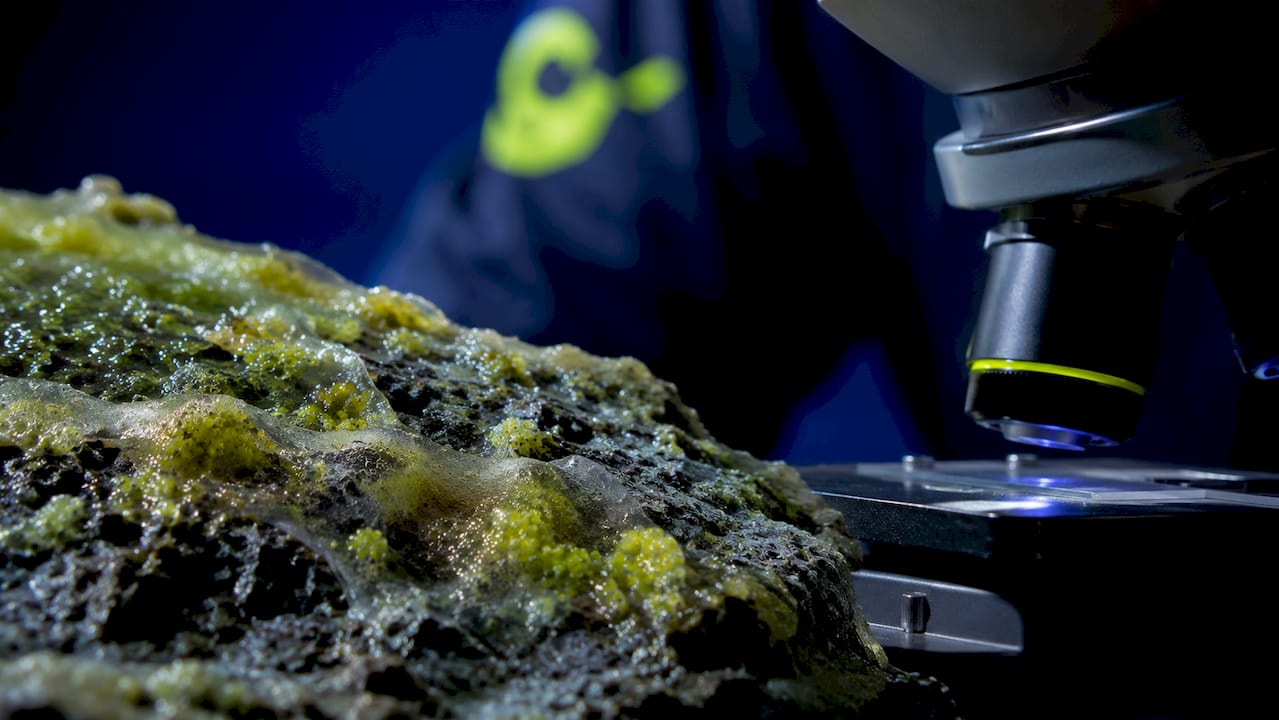
Biofilms are the single greatest reason why the limitations of standard cleaners become dangerous in biohazard contexts. A biofilm is a structured community of microorganisms encased in a self-produced matrix of proteins, polysaccharides, and DNA. This matrix acts as a physical shield, dramatically reducing the penetration of chemical disinfectants.
Dry surface biofilms form on hard surfaces including countertops, floors, and medical equipment. They are invisible to the naked eye. A surface can appear clean and still harbour a dense, active biofilm community. This is the central deception of visual cleaning: what you cannot see is what kills you.
The resistance numbers are striking. Biofilms can resist chlorine concentrations up to 20,000 parts per million, compared to just 1 part per million needed to kill the same bacteria in their free-floating (planktonic) state. That is a resistance factor of 20,000 times. Chemical strength alone does not overcome this barrier.
Multi-drug-resistant organisms persist in biofilms even after double disinfection with chlorine, with 90% persistence on surfaces demonstrated in a 2012 ICU study. Regrowth was observed after storage, confirming that standard disinfection protocols do not eradicate biofilm-protected communities.
The table below summarises how biofilm-protected pathogens compare to planktonic (free-floating) bacteria in terms of disinfectant resistance.
| Factor | Planktonic bacteria | Biofilm-protected bacteria |
|---|---|---|
| Chlorine resistance threshold | ~1 ppm | Up to 20,000 ppm |
| Visibility on surfaces | Not visible | Not visible |
| Response to standard quats | Largely effective | Largely ineffective |
| Survival after double disinfection | Low | Up to 90% in ICU studies |
| Risk of regrowth after cleaning | Low | High |
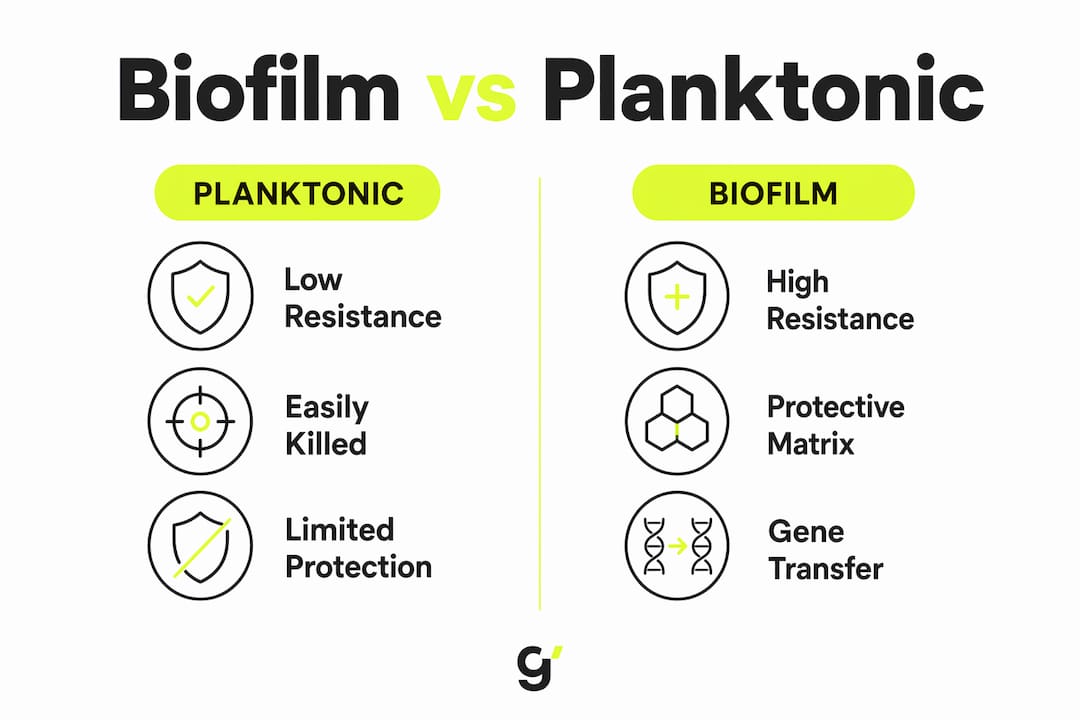
Biofilms also enable horizontal gene transfer, a process where resistance genes pass between bacteria through physical connections called pili. This means that a biofilm community does not just survive chemical attack. It actively evolves resistance to it. Professor Greg Whiteley has described this as a "knowing-doing gap," where cleaning teams follow protocols that were designed for a microbial world that no longer exists.
The practical consequence is that a site cleaned with standard products may test visually clean, smell clean, and still harbour a thriving community of multi-drug-resistant organisms ready to recolonise surfaces within hours.
What do OSHA regulations say about biohazard cleaning standards?
Regulatory frameworks make the biohazard cleaning challenges explicit. OSHA's Bloodborne Pathogens Standard, codified as 29 CFR 1910.1030, sets legally binding requirements for the handling, cleaning, and decontamination of environments contaminated with blood and other potentially infectious materials.
The standard does not accept visual cleanliness as evidence of compliance. It requires:
- Written exposure control plans specific to the worksite
- Use of EPA-registered disinfectants proven effective against bloodborne pathogens
- Personal protective equipment (PPE) appropriate to the contamination level
- Training for all workers who may encounter biohazardous material
- Recordkeeping of exposure incidents and corrective actions
The financial penalties for non-compliance are severe. A single serious violation carries a fine of up to $16,550. Willful or repeat violations reach up to $165,514 per violation. These figures reflect 2026 penalty levels and apply per incident, not per site.
$165,514 is the maximum OSHA fine per willful or repeat Bloodborne Pathogens violation in 2026. A single serious violation costs up to $16,550.
The standard exists because the gap between perceived and actual cleaning effectiveness is measurable and dangerous. Conventional cleaning products are not EPA-registered for use against bloodborne pathogens in most cases. Using them in a biohazard context is not just ineffective. It is a regulatory violation with direct financial and legal consequences.
Professional biohazard remediation services use validated, EPA-registered products and follow documented protocols that satisfy 29 CFR 1910.1030. This is not optional for workplaces. For residential settings, it is the difference between genuine safety and the illusion of it.
What approaches actually work where conventional cleaners fail?
Effective biohazard remediation requires products and protocols specifically designed to overcome biofilm protection and pathogen resilience. Three approaches have demonstrated measurable superiority over conventional methods.
Accelerated hydrogen peroxide and high-concentration bleach
Accelerated hydrogen peroxide (AHP) works by generating free radicals that penetrate biofilm matrices more effectively than quats or standard bleach. High-concentration bleach at 1,000 ppm or above meets CDC thresholds for C. diff and norovirus. Neither of these is a standard consumer product. Both require trained handling and correct dilution to be safe and effective.
Microbial management with beneficial organisms
Microbial management introduces beneficial microbes that outcompete pathogens for surface colonisation. This approach does not rely on chemical toxicity alone. Instead, it creates a sustained biological environment that prevents pathogen regrowth after initial decontamination. This is particularly effective in environments where recontamination risk is ongoing.
Environmentally preferable protocols with verified outcomes
A 2026 study found that modern non-toxic remediation achieved microbiological safety outcomes equal to or better than conventional systems, while reducing chemical consumption by 82.6% and cutting climate impact by 47.7%. These are not marginal gains. They represent a fundamental shift in what effective remediation looks like.
The table below compares conventional and advanced remediation approaches across key performance factors.
| Factor | Conventional cleaning | Advanced remediation |
|---|---|---|
| Biofilm penetration | Poor | High (AHP, validated protocols) |
| C. diff and norovirus efficacy | Unreliable with quats | Reliable with bleach/AHP |
| Chemical load | High | Reduced by up to 82.6% |
| Regulatory compliance | Often non-compliant | Designed for compliance |
| Recontamination risk | High without sustained protocol | Low with microbial management |
Pro Tip: When selecting a remediation product, check for EPA registration and confirm it is listed on the EPA's Disinfectants for Use Against SARS-CoV-2 list or equivalent pathogen-specific list. Label claims alone are not sufficient evidence of biohazard efficacy.
The shift toward eco-friendly remediation protocols is not just an environmental preference. It is a performance upgrade. Non-toxic agents that achieve validated microbial safety thresholds protect people and surfaces without the chemical residue that can itself become a health hazard.
Key takeaways
Conventional cleaners fail biohazards because they cannot penetrate biofilms, are neutralised by organic matter, and lack the chemistry required to kill resistant pathogens like C. diff and norovirus.
| Point | Details |
|---|---|
| Cleaning is not disinfecting | Removing visible soil and killing pathogens are separate steps; skipping the first ruins the second. |
| Biofilms resist standard chemicals | Biofilm-protected bacteria can withstand chlorine concentrations 20,000 times higher than planktonic bacteria. |
| Lab claims do not equal field results | Real-world kill rates drop below 90% when organic matter is present, compared to the 99.9% on product labels. |
| OSHA penalties are significant | Willful violations of 29 CFR 1910.1030 carry fines up to $165,514 per incident in 2026. |
| Advanced protocols outperform conventional ones | Non-toxic remediation methods have achieved equal or better microbial safety while cutting chemical use by 82.6%. |
The gap nobody talks about
The most uncomfortable truth in biohazard cleaning is not that conventional products are weak. It is that most people using them do not know they are weak. A surface that smells like bleach feels clean. That sensory signal is powerful and completely unreliable as a measure of microbial safety.
I have seen this play out in professional contexts repeatedly. A site gets cleaned with standard products, passes a visual inspection, and is declared safe. Nobody swabs it. Nobody validates the outcome. The assumption is that effort equals result. In biohazard remediation, that assumption is wrong.
The biofilm science is not new. The 2012 ICU data showing 90% pathogen persistence after double disinfection has been available for over a decade. The problem is that this knowledge has not translated into changed practice at the ground level. Professor Whiteley's "knowing-doing gap" is real, and it costs people their health.
The good news is that the solutions exist. Accelerated hydrogen peroxide, validated EPA-registered products, and microbial management approaches all outperform conventional methods when applied correctly. The barrier is not technology. It is awareness and the willingness to treat biohazard cleaning as a specialised discipline rather than an extension of routine housekeeping.
If you are managing a property, a workplace, or a rental and you are relying on off-the-shelf products to handle a biohazard situation, the science says you are not done. Understanding what third-party bio-cleaning actually involves is the first step toward making a genuinely safe decision.
— Lead
When standard cleaning is not enough, Grimescene is
Grimescene provides biohazard remediation that goes beyond surface-level cleaning. Every service uses advanced, non-toxic agents validated against resistant pathogens, following protocols aligned with OSHA 29 CFR 1910.1030 requirements.
For urgent situations, the Rapid Response Tactical Clean deploys within two hours, covering blood, bodily fluids, and other biohazardous material with full PPE and documented decontamination. For short-term rental hosts, Grimescene's rental property cleaning service combines the Scene Reset protocol with deep decontamination to protect guest safety and host ratings. Both services are available across residential and commercial sites. Contact Grimescene directly to discuss your situation and get a response that matches the actual risk.
FAQ
Why do regular cleaners fail against biohazards?
Regular cleaners are formulated to remove visible soil, not to neutralise resistant pathogens or penetrate biofilms. Organic matter in biohazard scenes chemically neutralises most disinfectants before they can act on the pathogens present.
What is a biofilm and why does it matter for cleaning?
A biofilm is a community of microorganisms encased in a protective matrix that shields them from chemical disinfectants. Biofilm-protected bacteria can resist chlorine concentrations up to 20,000 times higher than free-floating bacteria require.
Are quaternary ammonium products effective against all biohazards?
Quaternary ammonium compounds fail against norovirus and C. diff spores, two of the most common biohazard pathogens. CDC guidance requires diluted bleach at 1,000 ppm or accelerated hydrogen peroxide for reliable efficacy against these organisms.
What are the OSHA penalties for improper biohazard cleaning?
Under OSHA's Bloodborne Pathogens Standard (29 CFR 1910.1030), a single serious violation carries a fine of up to $16,550. Willful or repeat violations reach up to $165,514 per violation as of 2026.
Can non-toxic cleaning products handle biohazard remediation safely?
Yes. A 2026 study found that non-toxic remediation protocols achieved microbial safety outcomes equal to or better than conventional systems, while reducing chemical use by 82.6% and cutting climate impact by 47.7%.