
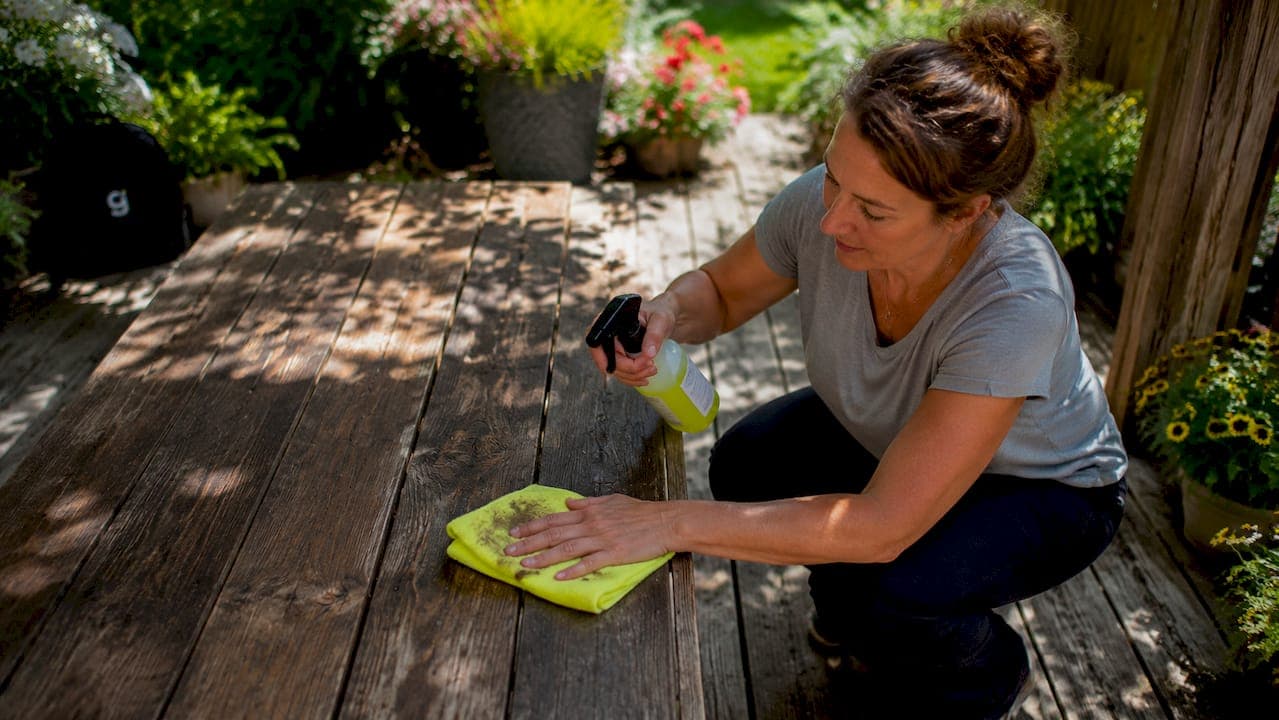
Store-bought cleaners leave residue because they contain surfactants, disinfectants, and polymer films that do not fully evaporate or rinse away after use. The technical term for this is cleaning product residue: trace amounts of product left on a surface after the cleaning process ends. Most households experience this as streaks on glass, sticky floors, or a dull film on benchtops. Understanding why it happens is the first step to preventing it.
Why store-bought cleaners leave residue: the ingredient explanation
The root cause of store-bought cleaner residue is chemistry. Most products contain several ingredient types that serve different purposes during cleaning, but not all of them leave with the dirt.
Surfactants are the workhorses of any spray or liquid cleaner. They lift grease and grime by surrounding particles and suspending them in water. The problem is that surfactants can remain as insoluble species on surfaces depending on surface energy and roughness. A smooth glass benchtop rinses differently from a textured tile grout line. That variation explains why the same product leaves no trace in one spot and a visible film in another.
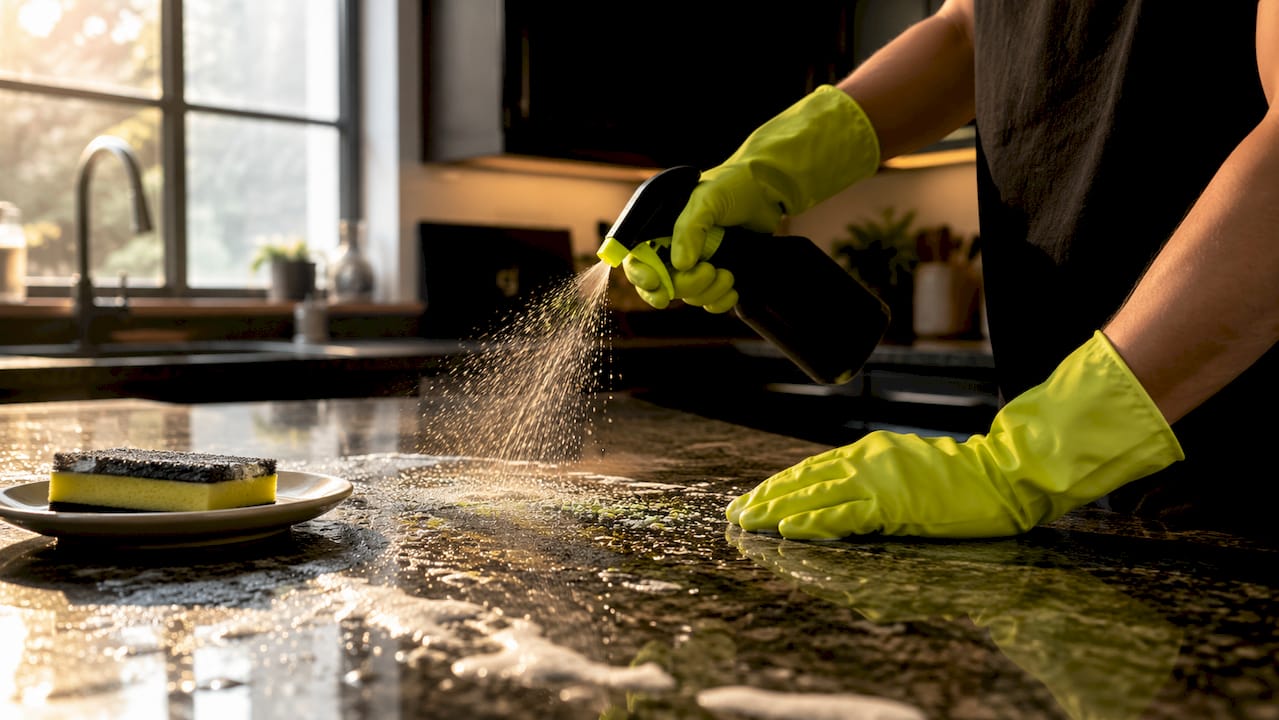
Polymer films are a less obvious culprit. Products like Method All-Purpose and Pledge deposit these films intentionally to create a protective or shine-enhancing layer. With repeated use, polymer films build up and dull surfaces over time, attracting dust and creating a slippery feel. What starts as a feature becomes a problem within weeks of regular application.
Disinfectants, particularly quaternary ammonium compounds found in products like Dettol Multi-Purpose Cleaner, require a specific dwell time to kill pathogens. After that dwell time, the chemical deposit still sits on the surface. Disinfectant residue removal is treated as a separate control step in regulated environments, requiring a secondary wipe or rinse after disinfection is complete. Most home users skip this step entirely.
Fragrances and dyes round out the residue picture. These additives create the perception of cleanliness through scent and colour but do not contribute to cleaning efficacy. They linger on surfaces and in the air after use, adding to the overall chemical load in your home without removing a single particle of dirt.
- Surfactants bind to surfaces based on texture and surface energy, not just water volume
- Polymer films are intentional product features that accumulate with repeated use
- Quaternary ammonium disinfectants require a secondary wipe to remove chemical deposits
- Fragrances and dyes stay behind as non-functional residue after the cleaning is done
- Overapplication of any product increases residue load regardless of ingredient type
Pro Tip: Read the label for "rinse after use" instructions. Most multi-purpose sprays require a damp cloth wipe-down after application, but this step is rarely printed prominently on the front of the bottle.
How does residue from cleaners affect surfaces and safety?
Residue is not just a cosmetic issue. Residue accumulation can accelerate surface deterioration, create slip hazards, and harbour microorganisms, all of which directly affect safety and disinfectant performance.
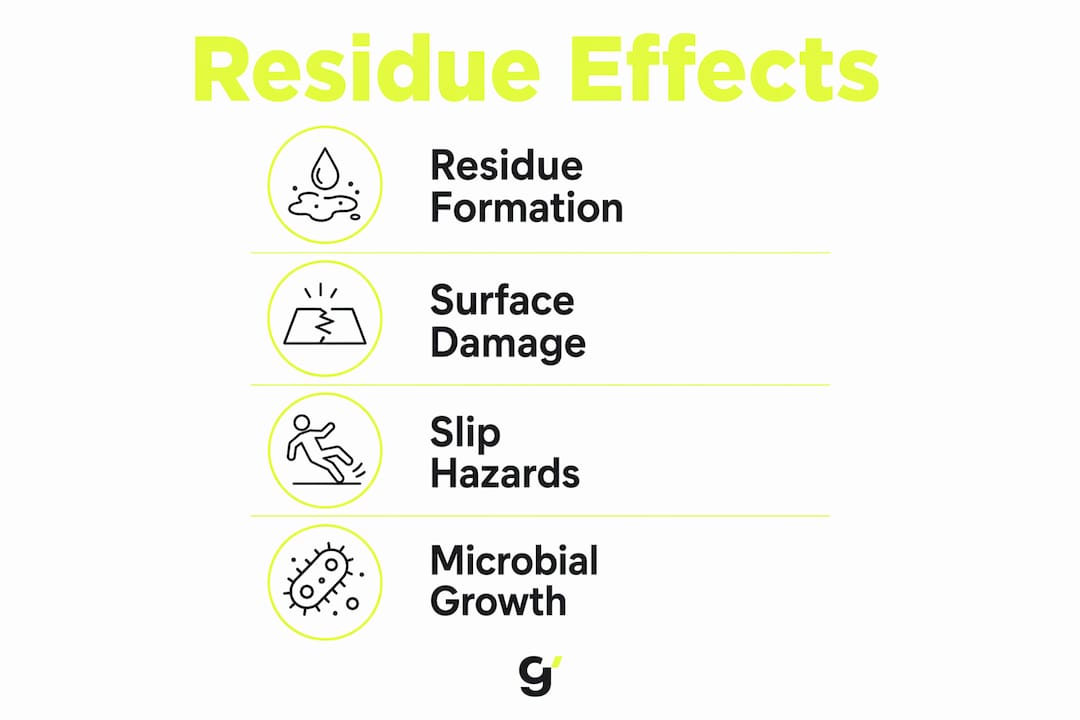
The most immediate practical effect is faster re-soiling. Residue left on floors causes stickiness, streaking, and faster accumulation of new dirt. A floor cleaned with a surfactant-heavy product and no rinse pass will look dirty again within days. The residue acts like a magnet for airborne dust and foot-traffic grime.
The table below shows the most commonly affected surfaces and the specific residue risks each one carries.
| Surface | Common residue type | Practical impact |
|---|---|---|
| Timber floors | Polymer film, surfactant | Dulling, stickiness, faster re-soiling |
| Glass and mirrors | Surfactant, fragrance | Streaking, smearing, reduced clarity |
| Benchtops (stone, laminate) | Disinfectant, polymer | Chemical buildup, reduced disinfectant efficacy |
| Tiles and grout | Surfactant, dye | Discolouration, microbe harbouring in grout lines |
| Bathroom fixtures | Polymer, fragrance | Soap scum acceleration, slippery surfaces |
Microbiological risk is the least visible but most serious concern. Residue films on benchtops and bathroom surfaces can harbour bacteria, which reduces the efficacy of the next round of disinfection. A surface that looks clean but carries a chemical film may actually be harder to disinfect on the next application. This is why eco cleaning approaches that avoid heavy polymer and surfactant loads are gaining traction in family homes.
Slip hazards from polymer and surfactant buildup on floors are a real safety concern, particularly in bathrooms and kitchens. The film is often invisible until wet, at which point it becomes dangerously slick. Regular grime buildup on surfaces compounds this problem by trapping residue layers beneath new soiling.
Does cleaning technique affect how much residue builds up?
Technique matters as much as product choice. The same cleaner applied correctly leaves far less residue than one applied carelessly.
- Apply the right amount. Overapplication is the single biggest driver of residue buildup at home. More product does not mean more cleaning power. It means more chemical left behind when you stop wiping.
- Follow with a damp cloth. Multi-purpose cleaners require wiping with a damp cloth or paper towel after application to remove the surfactant film. Skipping this step leaves the residue intact.
- Use a rinse pass on floors. Commercial floor cleaning requires a dedicated rinse pass after scrubbing. The same logic applies at home. A second pass with clean water removes the loosened soil and the surfactant carrying it.
- Dilute concentrates correctly. Concentrated cleaners used at full strength deposit far more chemical per square centimetre than the label intends. Always follow dilution ratios.
- Match the product to the surface. Rough or porous surfaces like grout and unfinished timber hold surfactants more stubbornly than smooth surfaces. These areas need more thorough rinsing and less product volume.
The format of the product also matters. Pre-moistened wipes deposit a fixed amount of product and are harder to over-apply than sprays. Foam cleaners cling to vertical surfaces longer, which increases dwell time but also increases residue risk if not wiped thoroughly. Concentrated liquids give the most control over dilution but require accurate measuring.
Pro Tip: After cleaning any hard floor, run a clean mop dampened with plain water as a final pass. This single step removes the majority of surfactant residue and prevents the sticky re-soiling cycle.
How to avoid cleaning residue at home
Prevention is more effective than remediation once residue has built up. A few consistent habits make a measurable difference to surface condition over time.
- Choose low-residue products. Look for labels that state "rinse-free", "no-rinse formula", or "residue-free". Branch Basics and similar concentrate-based products are formulated to leave minimal trace when diluted correctly.
- Use microfibre cloths. Microfibre picks up surfactant films more effectively than cotton cloths or paper towels. The mechanical action of the fine fibres lifts residue rather than spreading it.
- Rotate polymer-based cleaners. Avoid using shine-enhancing or protective-film products on the same surface every clean. Rotate with a plain surfactant cleaner or a diluted white vinegar solution to prevent film accumulation.
- Remove polymer buildup with alcohol. A diluted isopropyl alcohol solution (available at Bunnings or Chemist Warehouse) cuts through polymer film on glass, tiles, and benchtops without leaving its own residue.
- Deep clean quarterly. A quarterly deep clean targeting residue buildup, particularly on floors and tiles, resets the surface and prevents the compounding effect of layered films.
The comparison below shows how different product types compare on residue risk and ease of removal.
| Product type | Residue risk | Ease of removal |
|---|---|---|
| All-purpose spray | Medium | Easy with damp wipe |
| Disinfectant spray | Medium to high | Requires secondary wipe |
| Polymer-based shine cleaner | High | Requires alcohol or deep clean |
| Concentrate (correctly diluted) | Low | Easy with standard wipe |
| Pre-moistened wipe | Low to medium | Easy, fixed product amount |
A residue-free cleaning method focuses on using the minimum effective amount of product, following with a clean damp wipe, and avoiding polymer-heavy formulas on high-contact surfaces. This approach protects surface finishes and reduces the chemical load in your home environment.
Key takeaways
Store-bought cleaners leave residue because surfactants, polymer films, and disinfectant actives do not fully evaporate, and skipping a rinse or damp wipe pass locks that chemistry onto your surfaces.
| Point | Details |
|---|---|
| Residue is chemistry, not dirt | Surfactants, polymers, and disinfectants remain on surfaces when not fully wiped or rinsed away. |
| Polymer films compound over time | Shine-enhancing products build up with repeated use, dulling surfaces and attracting dust. |
| Technique drives residue levels | Overapplication and skipping a damp wipe-down are the two most common causes of residue buildup. |
| Residue affects safety, not just appearance | Sticky floors, slip hazards, and reduced disinfectant efficacy are all linked to residue accumulation. |
| Low-residue habits prevent buildup | Microfibre cloths, correct dilution, and a quarterly deep clean keep surfaces genuinely clean. |
The residue problem most people never think about
Most home cleaners assume that if a surface smells clean and looks clean, it is clean. That assumption is wrong, and I have seen the consequences of it play out on surfaces that should have lasted decades.
The most common mistake I observe is treating cleaning spray as a spray-and-walk-away product. The spray does the lifting. The wipe does the removing. Without the wipe, you have just redistributed chemistry across your surface. Fragrance makes it smell like progress, but the surfactant film is still there, attracting the next round of dust within hours.
The second issue is polymer buildup on floors. Homeowners often blame their floors for looking dull when the real culprit is six months of shine-enhancing cleaner layered on top of itself. A single deep clean with an appropriate stripping agent reveals the original surface finish underneath. The floor was never the problem.
What I find most encouraging is how simple the fix actually is. A microfibre cloth, correct dilution, and a plain water rinse pass cost nothing extra. They just require a small shift in habit. The surfaces in homes that follow this approach consistently look better for longer, and the indoor air quality improves noticeably when fragrance and dye residues stop accumulating on every horizontal surface.
Mindful cleaning is not about using more products. It is about using fewer products more correctly.
— Lead
Grimescene's approach to residue-free cleaning
Residue buildup is one of the most common problems Grimescene encounters in both residential and short-term rental properties. Standard cleaning routines often layer product on product without ever fully removing what came before.

Grimescene's non-toxic agents neutralise buildup rather than masking it, and every service includes rinse passes and microfibre wiping protocols that prevent residue from forming in the first place. For short-term rental hosts, the Scene Reset protocol delivers a genuinely residue-free turnover that protects surfaces and preserves guest ratings. For homeowners who want a clean slate, book a rapid response appointment and let the team reset your surfaces properly.
FAQ
What causes residue from store-bought cleaners?
Residue forms when surfactants, polymer films, disinfectant actives, fragrances, and dyes remain on a surface after cleaning because they were not fully wiped or rinsed away. Overapplication and skipping a damp wipe-down are the two most common causes.
Is cleaning product residue harmful to health?
Residue from fragrances, dyes, and disinfectant actives contributes to indoor chemical exposure and can harbour microorganisms on surfaces. Polymer and surfactant films on floors also create slip hazards, particularly when wet.
How do I remove polymer film buildup from surfaces?
A diluted isopropyl alcohol solution cuts through polymer film on glass, tiles, and benchtops. For floors, a dedicated stripping product followed by a clean water rinse pass removes accumulated layers effectively.
Does rinsing after cleaning actually make a difference?
A clean water rinse pass after scrubbing removes loosened soil and the surfactant carrying it, preventing stickiness and faster re-soiling. Commercial floor cleaning standards require this step, and the same principle applies at home.
Are some cleaning products less likely to leave residue?
Concentrates used at the correct dilution ratio and products labelled "rinse-free" or "residue-free" leave significantly less trace than polymer-based shine cleaners or undiluted disinfectant sprays. Microfibre cloths also remove residue more effectively than cotton or paper alternatives.