

The best practice for commercial cleaning frequency is a risk-based schedule: set how often you clean according to how often surfaces are touched, how many people use the space, and how vulnerable those occupants are. That single rule replaces every generic "clean weekly" calendar and gives you a defensible, auditable system instead.
Quick categories to orient your schedule:
- High risk (daily or between every use): toilets, door handles, reception desks, lift buttons, shared kitchen benches. Think: anything touched by dozens of hands per hour.
- Moderate risk (weekly): open-plan workstations, communal seating, hallways, storerooms.
- Low risk (monthly to quarterly): ceiling vents, window sills, behind large equipment, storage shelving.
Table of Contents
- Why risk-based scheduling beats a fixed calendar
- Recommended frequencies by zone, with schedule templates
- What to actually do at each cleaning frequency
- Choosing eco-friendly cleaning agents that actually work
- When to increase frequency and how to respond fast
- How frequency affects your cleaning budget and contract
- Key takeaways
- The field reality of risk-based cleaning
- Grimescene covers the full spectrum, from routine to rapid response
- Useful sources and further reading
Why risk-based scheduling beats a fixed calendar
Risk-based frequency is the approach endorsed by CDC environmental cleaning guidance: determine method and frequency from the probability of contamination, the number of occupants, and how vulnerable those occupants are. A fixed calendar quota ignores all three variables and wastes money on over-cleaning low-risk zones while under-protecting high-risk ones.
The three variables work like a simple scoring system. First, surface touch frequency: a door handle touched 200 times a day carries far more contamination risk than a filing cabinet opened twice a week. Second, occupant numbers and traffic: a 50-person open office generates more cross-contamination opportunity than a two-person studio. Third, occupant vulnerability: a childcare centre, aged-care facility, or medical waiting room demands a higher baseline than a warehouse, because the consequences of a missed clean are more severe.
Classify each zone in your property as high, moderate, or low risk using those three variables. Then assign frequency accordingly. The result is a schedule you can justify to insurers, regulators, and Safe Work Australia compliance audits.
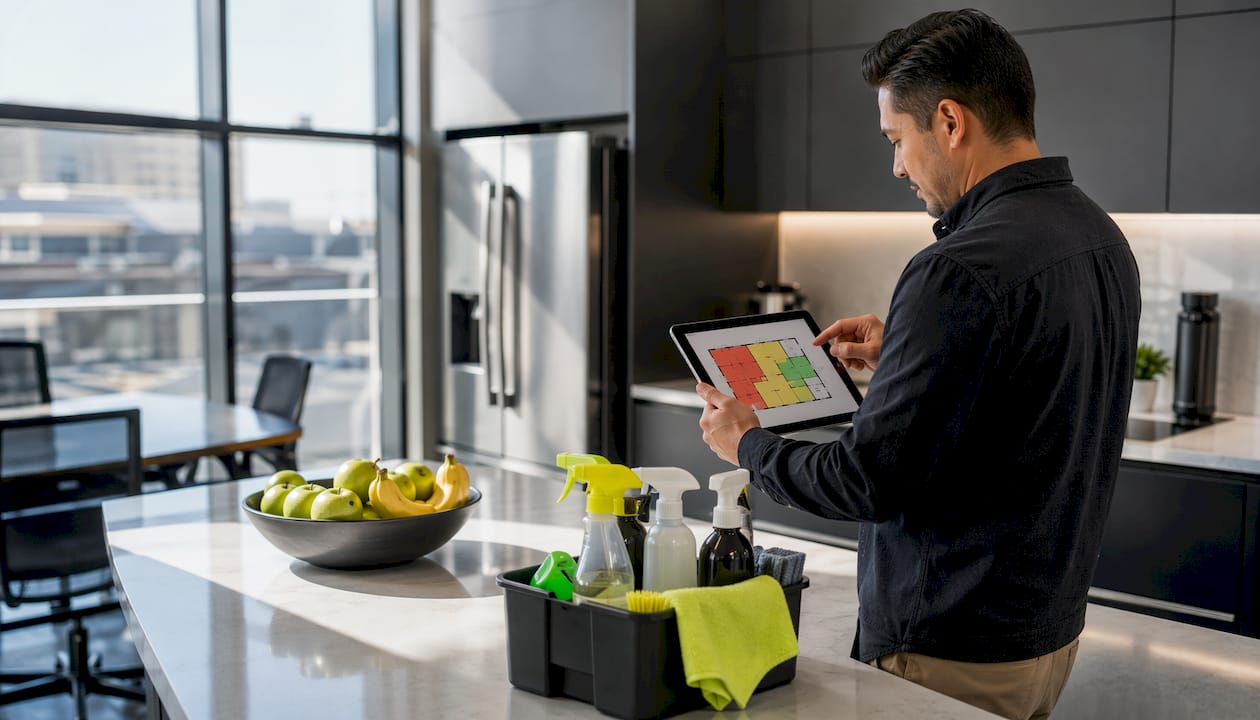
Pro Tip: Walk your property with a simple tally counter or phone app for one business day. Count how many times each surface category is touched. That raw number is your best evidence for classifying zones and defending your schedule to a contractor or auditor.
Recommended frequencies by zone, with schedule templates
The table below maps common zones to recommended cleaning intervals and flags where disinfection is needed beyond routine cleaning.
| Zone | Recommended frequency | Tasks | Clean only or clean + disinfect? |
|---|---|---|---|
| High-touch surfaces (handles, switches, lift buttons) | Daily (or between uses in high-traffic settings) | Wipe with detergent, rinse, dry | Clean + disinfect if illness confirmed |
| Bathrooms / toilets | Daily minimum; twice daily in high-traffic venues | Scrub fixtures, disinfect toilet bowl and seat, mop floor | Clean + disinfect always |
| Commercial kitchens / break rooms | Daily (benches after each use); weekly deep | Wipe surfaces, degrease equipment, sanitise food-contact areas | Clean + disinfect food-contact surfaces |
| Open-plan offices / workstations | Weekly | Dust, wipe desks, vacuum, empty bins | Clean only (disinfect during illness events) |
| Lobbies / communal areas | Daily light; weekly thorough | Vacuum, mop, wipe reception desk | Clean daily; disinfect high-touch weekly |
| Short-term rental turnover | Between every guest | Full Scene Reset: linen, surfaces, kitchen, bathroom, consumables | Clean + disinfect bathroom and kitchen always |
| Post-construction areas | Once-off or staged | Remove debris, HEPA vacuum, wipe all surfaces, air out | Clean thoroughly before any disinfection |
| Healthcare / childcare waiting areas | Twice daily minimum | Wipe all surfaces, disinfect high-touch, mop | Clean + disinfect every cycle |
For a practical commercial workspace deep cleaning schedule, a one-week office template looks like this: Monday — bathrooms and kitchen deep; Tuesday — workstation wipe-down; Wednesday — floors and vacuuming; Thursday — communal areas; Friday — bins, glass, spot-check high-touch surfaces. Monthly: HVAC vents, behind equipment, window sills. Quarterly: full deep decontamination of high-use zones.
For short-term rental hosts, a turnover checklist should cover: strip and replace all linen, sanitise bathroom fixtures, wipe all kitchen surfaces and appliances, restock consumables, check and wipe all high-touch surfaces (remotes, light switches, door handles), vacuum and mop all floors, and air the property before guest arrival.
What to actually do at each cleaning frequency
Daily tasks: Wipe all high-touch surfaces with a damp microfibre cloth and detergent. Empty bins. Clean and disinfect bathroom fixtures. Sweep or vacuum high-traffic floors. Spot-clean visible soiling immediately.
Between-turnover tasks (short-term rentals): Strip all linen. Sanitise bathroom and kitchen. Restock consumables. Wipe all appliances, remotes, and switches. Final visual check of every room.
Weekly tasks: Vacuum all carpeted areas and upholstered furniture. Mop hard floors. Wipe down workstations, shelving, and communal furniture. Clean glass and mirrors. Degrease kitchen equipment.
Monthly tasks: Clean inside appliances (microwave, fridge, oven). Wipe cabinet fronts and interiors. Dust light fittings and ceiling fans. Clean window sills and skirting boards. Inspect and clean floor drains.
Quarterly deep decontamination: Full sweep of all surfaces including behind and under furniture. HEPA vacuum upholstery and carpets. Clean HVAC vents and air returns. Degrease exhaust fans. Treat any mould-prone areas.
Annual tasks: Clean gutters and external surfaces. Deep clean behind large appliances. Inspect and clean roof vents. Full audit of all cleaning records and schedules.
Clean vs sanitise vs disinfect: Cleaning (soap, water, mechanical action) removes visible soil and most pathogens. Sanitising reduces bacteria to safe levels on food-contact surfaces. Disinfecting kills a broader spectrum of pathogens and is warranted after confirmed illness, body fluid contact, or outbreak conditions. Cleaning must always precede disinfection because organic matter neutralises disinfectants before they can work. When you do disinfect, follow the product's labelled contact time and keep the surface wet for that full duration.
Choosing eco-friendly cleaning agents that actually work
Plain soap and water, applied with physical scrubbing action, removes most germs from surfaces without the indoor air quality risks that come with fragranced or harsh chemical products. For most commercial and residential cleaning tasks, that is genuinely sufficient.
When selecting products beyond basic detergent, look for: fragrance-free and dye-free formulations, low volatile organic compound (VOC) content, minimal residue after drying, and certification under schemes like EPA Safer Choice or equivalent Australian standards. Understanding commercial-grade eco cleaning means knowing that "antibacterial" on a label does not mean better — many fragranced antibacterial sprays add chemical load without meaningfully outperforming plain detergent on routine soiling.
Dos: use microfibre cloths (they remove more soil with less product than cotton), pre-clean visibly soiled surfaces before applying any disinfectant, and test products on stone or natural surfaces before full application. Stone floors and benchtops need pH-neutral cleaners; acidic or alkaline products etch the surface over time. For specialist guidance on stone surface care, a property manager's stone guide covers the product selection detail worth knowing.
Don'ts: mix bleach with ammonia or other chemicals, rely on fragrance as a proxy for cleanliness, or apply disinfectant to unclean surfaces.
Pro Tip: After cleaning, ventilate the space for at least 15 minutes before occupants return. This is especially relevant in commercial kitchens and bathrooms where product concentration can build up quickly. Good airflow reduces chemical exposure and speeds drying, which cuts re-contamination risk.
When to increase frequency and how to respond fast
Increase cleaning frequency immediately when any of these triggers appear: confirmed illness or outbreak among occupants, sudden spike in foot traffic (events, seasonal peaks), visible soiling or pest activity, post-construction dust or debris, or a body fluid incident.
A practical escalation plan:
- Isolate the affected area where possible and restrict access.
- Deploy immediate targeted cleaning and disinfection of the affected zone.
- Notify occupants clearly — what happened, what was done, when the area is safe to re-enter.
- Increase frequency of high-touch surface cleaning across the whole property for at least 48–72 hours.
- If the situation exceeds routine capacity, engage a rapid-response tactical clean to limit downtime.
- Document the trigger event, actions taken, products used, and time of completion.
Grimescene's Rapid Response (2-Hour Tactical Clean) is built for exactly this scenario: a confirmed incident, a guest complaint, or an unexpected turnover crunch where waiting until the next scheduled clean is not an option. The Scene Reset protocol for short-term rentals combines this rapid-response capability with linen rotation and consumable restocking so hosts do not lose a booking night.
Pro Tip: Keep a simple incident log — date, trigger, action taken, products used, staff involved. This costs almost nothing to maintain and is invaluable if you face an insurance claim, a WHS audit, or a guest dispute about property condition.
How frequency affects your cleaning budget and contract
More frequent visits lower the scope per visit but increase monthly spend. Deep decontamination raises per-visit labour and equipment costs significantly. The trade-off worth understanding: daily high-touch wipe-downs during a busy season cost less per visit than a reactive deep clean after a contamination event, and they protect revenue by keeping the property operational.
Key budgeting considerations:
- Per-visit vs monthly contract: Per-visit pricing suits irregular or seasonal properties; monthly contracts suit stable commercial spaces with predictable traffic.
- Scope creep: Define exactly what each visit covers in writing. Vague scope leads to disputes about what was included.
- Staffing and time estimates: A standard office clean for 200 sqm typically takes 1.5–2 hours. A full deep decontamination of the same space takes several hours and requires specialist equipment.
- Rapid-response add-ons: Budget for at least one or two unplanned rapid-response visits per quarter if you operate a short-term rental or high-traffic venue.
- Eco-product costs: Non-toxic, certified products can cost slightly more per litre but reduce staff health risks and liability.
Questions to ask any contractor before signing: What are your SLAs for turnover cleans? What products do you use and can you provide safety data sheets? Do you carry eco-certification? How do you document completed tasks and incidents? What is your turnaround time for a rapid-response booking? For a detailed framework, managing cleaning contractors efficiently covers the contract clauses worth insisting on.
Key takeaways
Risk-based scheduling, matched to surface touch rate, occupancy, and occupant vulnerability, is the most defensible and cost-effective approach to commercial cleaning frequency.
| Point | Details |
|---|---|
| Classify zones by risk | Assess touch frequency, occupant numbers, and vulnerability before setting any schedule. |
| Match tasks to frequency | Daily for high-touch; weekly for workstations; quarterly deep decontamination for full-property resets. |
| Clean before you disinfect | Organic soil neutralises disinfectants; always remove visible soiling first, then apply disinfectant with correct contact time. |
| Choose eco-friendly agents | Fragrance-free, low-VOC, certified products protect indoor air quality without sacrificing cleaning effectiveness. |
| Grimescene for escalation | Grimescene's Scene Reset protocol and Rapid Response (2-Hour Tactical Clean) cover outbreak response and short-term rental turnovers. |
The field reality of risk-based cleaning
The gap between a cleaning schedule written on paper and one that actually protects a property is almost always about specificity. Generic "clean weekly" instructions leave too many decisions to whoever shows up on the day. The risk-based approach forces specificity: this surface, this frequency, this product, this sequence.
What most property managers underestimate is the cost of reactive cleaning. A single contamination event that closes a commercial kitchen for a day, or a guest complaint that tanks a short-term rental's review score, costs far more than the incremental spend of a properly calibrated recurring schedule. The maths are not complicated.
Grimescene's approach in the field uses the risk-based framework from the ground up. Every property assessment starts with zone classification, not a standard package. The Scene Reset protocol for short-term rentals is structured around the between-turnover checklist above: linen, surfaces, kitchen, bathroom, consumables, high-touch wipe-down, final visual check. For outbreak or post-construction scenarios, the Full Sweep deep decontamination brings specialist equipment and a documented process that satisfies both WHS requirements and insurance records. The difference between a property that maintains its ratings and one that doesn't is usually not the cleaning product. It's the frequency and the sequence.
Grimescene covers the full spectrum, from routine to rapid response
When a property needs more than a standard clean, Grimescene delivers the right level of service without the guesswork. For short-term rental hosts, the Scene Reset turnover service handles linen, consumables, and full surface reset between every guest. For outbreak response or heavy soiling, the Full Sweep deep decontamination brings systematic, eco-friendly decontamination that goes well beyond what a routine clean covers. And when something goes wrong between scheduled visits, the Rapid Response (2-Hour Tactical Clean) gets a team on-site fast.
All services use non-toxic, bleach-free agents that are safe for occupants, pets, and the environment. To book a service or discuss a recurring schedule for your property, visit grimescene.services and get a quote today.
Useful sources and further reading
- Environmental Cleaning Procedures — CDC Healthcare-Associated Infections: Primary public-health guidance on risk-based frequency and zone classification.
- When and How to Clean and Disinfect a Facility — CDC: Practical guidance on cleaning vs disinfection triggers for community and commercial settings.
- Safe Cleaning Practices — Washington State Department of Health: Evidence base for eco-friendly product selection and indoor air quality protection.
- Best Practices for Environmental Cleaning — Public Health Ontario: Detailed procedural guidance on cleaning sequences, microfibre use, and contact times.
- Safe Work Australia (safeworkaustralia.gov.au): Australian workplace health and safety guidance relevant to cleaning staff training, PPE requirements, and WHS compliance. Check current requirements for your industry and state.
- Grime Scene Services — Service Store: Full Sweep deep decontamination, Scene Reset, and Rapid Response service details.
This article provides general information about cleaning frequency and scheduling. It is not a substitute for professional WHS advice. Confirm current regulatory requirements with Safe Work Australia or a qualified WHS professional for your specific property and industry.