
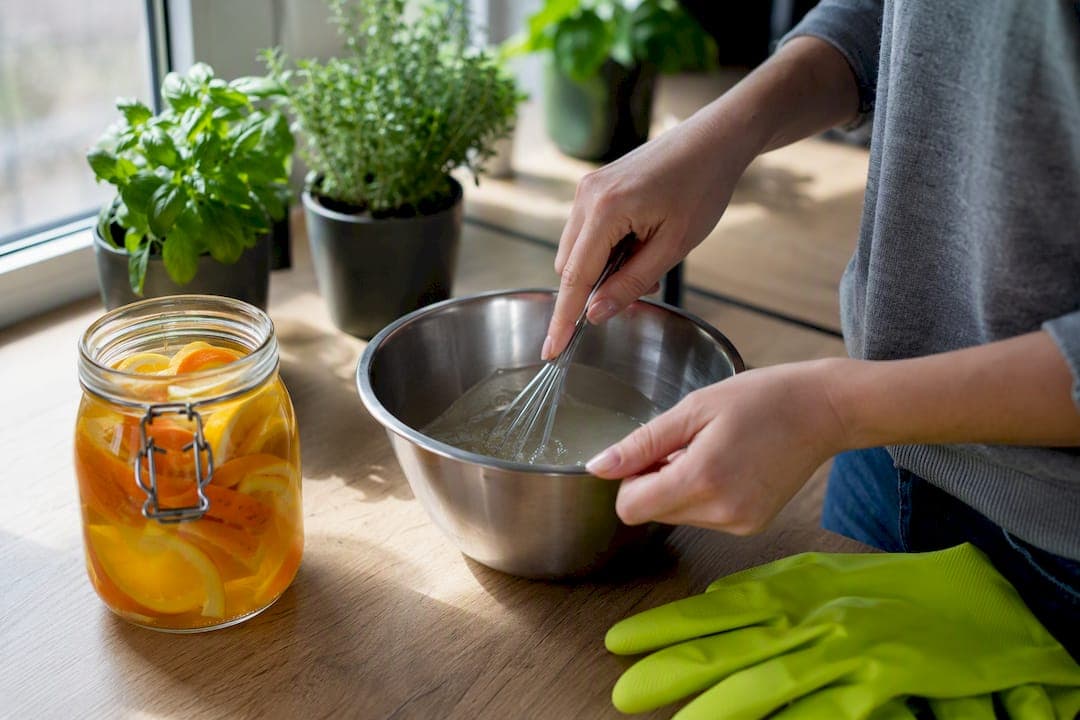
Use mild, non-toxic cleaners like baking soda, dilute vinegar and unscented detergent, then keep pets away from any treated surface until it's completely dry. That's the rule the CDC backs for pet items, and it's echoed by veterinary sources like Trupanion. Skip bleach, phenols, ammonia and most essential oils around cats and dogs. Grimescene's own decontamination crews follow the same principle at commercial scale: low-toxicity chemistry, proper drying time, no shortcuts.
TL;DR:
- Use only non-toxic cleaners like baking soda, vinegar, and unscented detergent, avoiding bleach, phenols, ammonia, and essential oils around pets.
- Store cleaning products out of pets' reach and ensure surfaces are fully dry before allowing animals back into cleaned areas.
- Regularly wash pet bowls daily, wash bedding weekly, and clean toys and litter trays frequently to prevent bacterial buildup.
- Disinfect only when cleaning up feces, vomit, or after illness, following label instructions precisely to avoid chemical residue hazards.
- Opt for professional non-toxic deep cleaning services for embedded grime or persistent odors that routine cleaning cannot resolve.
Table of Contents
- Which cleaning ingredients are pet safe?
- What DIY pet safe cleaning recipes actually work?
- When do you need to disinfect instead of just clean?
- How often should you clean pet items and pet laundry?
- What to do if your pet is exposed to a cleaning product
- When does a professional non-toxic clean make sense?
- What the evidence actually tells pet owners to prioritise
- Book a professional non-toxic deep clean with Grimescene
- Sources
Which cleaning ingredients are pet safe?
Most kitchen cupboards already hold the safest cleaning tools you own. Baking soda, diluted white vinegar and a plain unscented dishwashing detergent handle the bulk of household grime without putting your dog or cat at risk. Vinegar's acidity breaks down soap scum and mineral deposits; baking soda absorbs odours and lifts light stains through mild abrasion. Neither leaves a toxic residue behind once it's wiped up, which is exactly why AKC's DIY dog-safe cleaning guidance leans on them so heavily.
The ingredients to keep locked away are a shorter but more dangerous list. Bleach fumes irritate a pet's respiratory tract even at low concentrations, and a lapped puddle can cause serious chemical burns. Phenols, found in many pine-scented and multi-surface cleaners, are particularly nasty for cats. Their livers lack the enzyme needed to break phenols down efficiently, so what a dog tolerates can poison a cat. Quaternary ammonium compounds (often labelled "quats" on the fine print) and ammonia-based glass cleaners cause similar respiratory and skin irritation. Most essential oils, including tea tree, citrus and eucalyptus, sit in the same risky category for cats specifically, according to toxicology research reviewed on NCBI.
Before anything goes in your trolley or under the sink, run through this checklist:
- Scan the label for "danger" or "poison" signal words, not just "caution".
- Check the active ingredients list for bleach, phenol, ammonia or quaternary compounds.
- Look for a fragrance-free or unscented option, since synthetic fragrance often hides essential oils.
- Confirm the room has open windows or a running exhaust fan before you start.
- Keep pets in a separate room until the surface has fully air-dried.
Trupanion's own reporting cites ASPCA poison-control data showing household chemicals made up around 6.5% of animal poison-control calls in 2024, enough that reading a label properly is genuinely worth the extra thirty seconds.
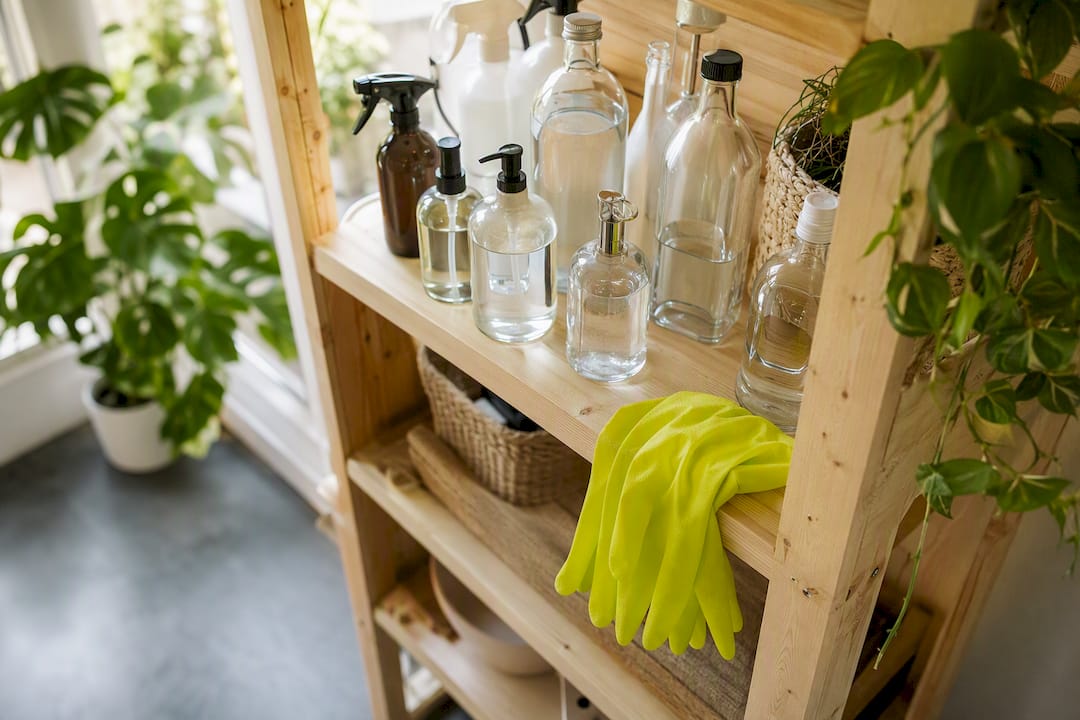
Pro Tip: Store cleaning products on a shelf above pet-nose height, not under the sink where a curious dog can nose the cupboard open.
What DIY pet safe cleaning recipes actually work?
Homemade cleaners are cheap, effective for most jobs, and easy to get wrong if you skip the caveats. Here's what holds up.
- All-purpose floor cleaner: mix one part white vinegar with three parts warm water in a spray bottle. It cuts through pet hair grease and dried mud on tile, laminate and sealed timber. Skip it on natural stone like marble or travertine, where the acid etches the surface over time.
- Baking soda deodoriser: sprinkle liberally over carpet or a fabric bed, leave for 15 minutes, then vacuum thoroughly. It pulls odour out of fibres rather than masking it with fragrance.
- Stain lifter: for set-in stains, dab with a 3% hydrogen peroxide solution after a spot test on an inconspicuous patch, since peroxide can bleach some dyed fabrics.
- Glass and mirror cleaner: equal parts vinegar and water with a few drops of dish soap, applied with a microfibre cloth rather than paper towel to avoid streaking.
- Toilet and spot cleaning: baking soda paste for grout and tile grime, left to sit before scrubbing.
None of these recipes are disinfectants, and neither the AKC nor any credible vet source claims otherwise. They clean; they don't kill pathogens reliably. Leave essential oils out of every one of these mixes, no matter how tempting a lavender or citrus scent sounds. Ventilate the room while you work, let treated surfaces dry fully before pets return, and always rinse anything that touches food, like a bench where the dog bowl sits.
Pro Tip: Test any new homemade cleaner on a small hidden patch first. Vinegar can dull certain waxed finishes, and peroxide bleaches faster than you'd expect on coloured grout.
When do you need to disinfect instead of just clean?
Cleaning and disinfecting solve different problems, and mixing them up is one of the most common mistakes pet owners make. Cleaning removes dirt, hair and visible grime using soap or detergent and physical scrubbing. Disinfecting kills the germs left behind, and it needs a product specifically labelled as a disinfectant, used at the correct dilution and left on the surface for its full contact time. The CDC's guidance on pet supplies is blunt about this: plain soap and water clean, but only a disinfectant kills the germs that spread illness between animals.
You need to disinfect, not just clean, in a few specific situations:
- Any surface or item that's touched faeces, urine or vomit, especially during a bout of illness.
- Food and water bowls after a sick pet has used them.
- Bedding, crates and floors following a parasite or fungal infection like ringworm.
- Shared spaces in multi-pet households where one animal is unwell.
Always pre-clean the visible mess first. Disinfectants work on germs, not grime, and dirt left behind can shield bacteria from the chemical entirely. Follow the label's exact dilution and contact time, then rinse food-contact surfaces afterward.
Once you've disinfected, ventilate the room and keep pets out until the surface is completely dry, not just visibly dry to the touch. Damp disinfectant residue is exactly what a paw or a curious nose picks up first.
How often should you clean pet items and pet laundry?
Bowls, bedding and toys each need their own rhythm, and skipping it lets bacteria build up faster than most owners expect.
- Food and water bowls: wash daily with hot water and detergent, either by hand or in the dishwasher if the bowl is dishwasher-safe. Bacteria multiply quickly in leftover food residue and standing water.
- Bedding: machine wash weekly using an unscented, dye-free detergent to reduce skin irritation, following the CDC's laundering guidance. A hot dryer cycle afterwards adds a disinfecting effect that cold washing alone doesn't.
- Toys: hard plastic and rubber toys can go through the dishwasher or a soapy hand wash monthly, or immediately after illness. Fabric toys follow the same schedule as bedding.
- Litter trays and feeding stations: scoop daily, wash the tray weekly with detergent, and keep it separate from human dishwashing sponges and cloths.
Porous items like fabric-covered scratching posts or plush beds that can't go in a machine are the trickiest. If a porous item has been exposed to illness and can't be properly disinfected, it's often safer to replace it than risk reinfection. Store clean bowls and bedding away from cleaning chemicals and separate from any laundry basket holding soiled items, to avoid cross-contamination between a freshly washed bowl and a dirty rag sitting nearby.
What to do if your pet is exposed to a cleaning product
Move fast, but don't panic. Remove your pet from the area immediately and keep the product's label or container within reach, since a vet or poison helpline will ask for the exact ingredients. Only rinse the pet's skin, paws or mouth with water if the label specifically says the chemical is a skin or eye irritant. Never induce vomiting unless a vet or the Pet Poison Helpline instructs you to.
Call your vet straight away for mild symptoms like drooling or a single instance of vomiting. Go to an emergency vet or ring a poison helpline immediately if you see:
- Difficulty breathing or persistent coughing
- Repeated vomiting or bloody stool
- Seizures, staggering or collapse
- Chemical burns around the mouth or paws
Household cleaners accounted for roughly 6.5% of animal poison-control calls in 2024, according to figures Trupanion cites from the ASPCA, a large enough share that having a plan matters. Save your vet's number and an emergency poison helpline in your phone now, keep cleaning product labels until the container's empty, and check whether your pet insurance covers accidental poisoning before you need it.
When does a professional non-toxic clean make sense?
Some jobs go beyond what a spray bottle and a Sunday afternoon can fix. Grimescene's DEEP DECONTAMINATION protocol uses non-toxic agents to break down grime, pet dander and embedded odour at a level routine cleaning doesn't reach, with occupants and pets kept clear of treated zones until surfaces are fully cured. That approach makes sense after post-construction dust settles, when odour keeps returning despite regular cleaning, or when allergy-triggering dander has worked into carpet and upholstery fibres.
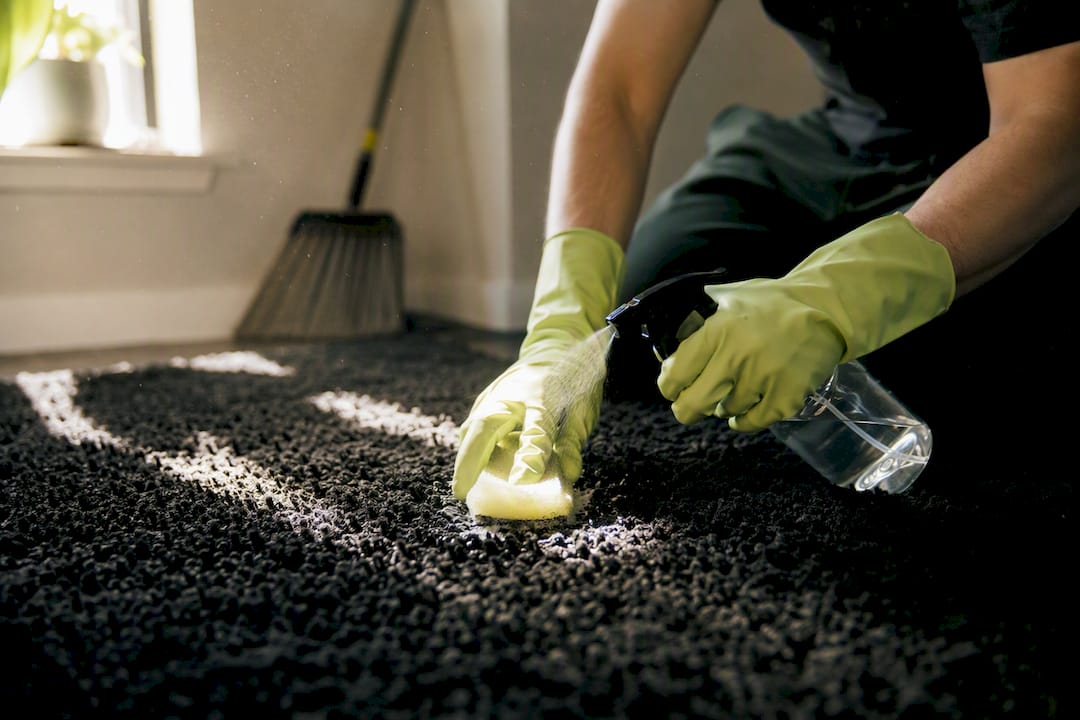
Before hiring anyone, ask three things: what chemicals are in the products they use, how long you need to keep pets out of treated rooms, and whether they can supply a safety data sheet on request. A credible operator answers all three without hesitation.
What the evidence actually tells pet owners to prioritise
Most pet-safe cleaning advice online focuses on which products to buy. That's the easy part. The harder, more overlooked issue is drying time. A cleaner can be perfectly non-toxic on the label and still cause a problem if a dog walks across a damp floor and licks its paws ten minutes later. The chemistry matters less than the timeline.
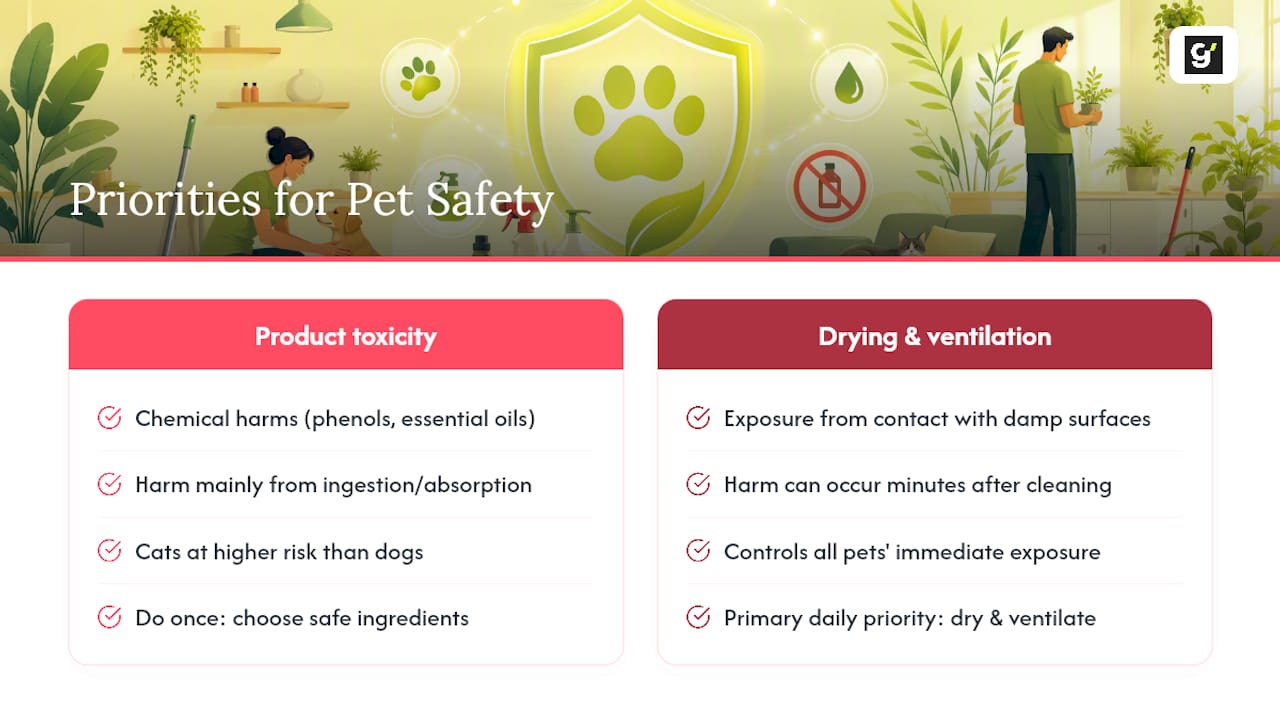
The conventional advice also undersells species differences. Guidance written for "pets" in general often glosses over the fact that cats face a distinctly higher risk from phenols and essential oils than dogs do, because of how their livers process these compounds. If you own both species, the cat's tolerance should set your household rule, not the dog's.
My honest read: get the ingredient basics right once (baking soda, vinegar, unscented detergent, no phenols or essential oils near cats), then spend your remaining attention on drying and ventilation discipline. That's the step people skip, and it's the one that actually causes most preventable exposures.
— Lead
Book a professional non-toxic deep clean with Grimescene
Grimescene is the alternative to reaching for a stronger chemical when DIY methods aren't cutting through embedded odour, dander or post-construction grime. The DEEP DECONTAMINATION service uses non-toxic, bleach-free agents to strip out buildup that regular mopping and vacuuming can't touch, without leaving residue that puts your dog or cat at risk once you're back in the room.

Booking is straightforward: a technician assesses the space, confirms which rooms need pets kept clear of during treatment, and works through the Scene Reset protocol for upholstery, floors and high-touch zones. If you're a short-term rental host juggling turnovers between guests and their pets, the Scene Reset service for rental properties handles the same non-toxic standard on a tighter schedule. This is the option worth taking for anyone who'd rather hand the harder jobs to a crew that already works pet-safe by default. Book a deep decontamination clean and get a straight answer on timing before you commit.
Sources
- About cleaning and disinfecting pet supplies | CDC
- 5 DIY dog-safe cleaning solutions you can make yourself at home | AKC
- Pet-safe cleaning products | Trupanion
- NCBI veterinary/toxicology review (PMC)