

Cleanliness is a direct signal of brand quality, professionalism, and care. The role of cleaning in brand perception goes far beyond hygiene maintenance. It shapes the first impression a customer forms, influences whether they return, and determines what they say about you online. Research confirms that cleanliness drives 42% of customer satisfaction in restaurants, with direct links to revisiting intention. Facility upkeep is now recognised as a critical marketing asset that silently advocates for your brand and influences purchasing decisions.
How does cleaning impact customer perceptions and satisfaction?
The psychological mechanism behind cleanliness and brand trust is the halo effect. When customers encounter a clean environment, they unconsciously associate it with high quality, competence, and professionalism across the entire business. A spotless floor does not just mean a clean floor. It means the brand cares about detail, and customers extend that assumption to your products, your staff, and your service.
Consumer research backs this up with hard numbers. Cleanliness accounts for 42% of customer satisfaction scores in restaurants, based on a study of 384 customers. That figure makes cleanliness the single largest driver of satisfaction in that sector, outweighing food quality and service speed in the model tested.
Restrooms deserve particular attention. 78% of restaurant guests compare restroom cleanliness with kitchen hygiene as a key trust indicator. This is a striking finding because most businesses invest heavily in front-of-house presentation while neglecting back-of-house spaces that customers actually visit. Restroom hygiene functions as a proxy for the entire facility's standards.
"Restroom hygiene often serves as a proxy for a facility's overall cleanliness, influencing customer trust more than people realise. A single dirty bathroom can undo the impression created by a beautifully designed dining room or reception area."
The impact extends directly to online reputation. Negative reviews mentioning unclean facilities strongly damage brand reputation and deter future customers. A single cleanliness complaint in a review carries disproportionate weight because it signals systemic neglect, not a one-off incident. Customers read it as evidence that the business does not maintain standards when no one is watching.
Key signals customers use to judge cleanliness include:
- Restroom condition and smell
- Floor and surface cleanliness in high-traffic areas
- Staff presentation and uniform hygiene
- Odour throughout the premises
- Visible waste management and bin maintenance
Why does consistency in cleaning standards matter for brand integrity?
Sporadic deep cleans do not build brand trust. Consistent cleaning outperforms occasional intensive sessions because customers form impressions on every visit, not just the ones that follow a scheduled clean. A business that looks immaculate on a Monday and neglected by Thursday sends a confusing signal about its values.
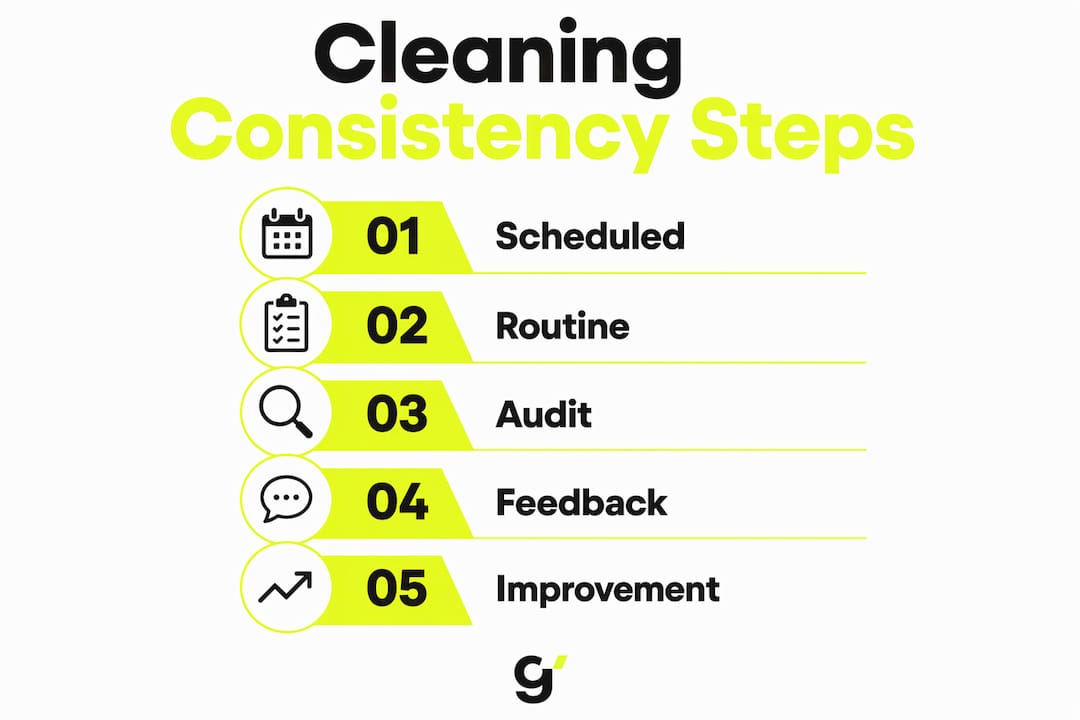
Cleaning consistency communicates operational discipline. When a customer sees the same high standard on their third visit as their first, they infer that the business runs well across all areas. The reverse is equally true. Fluctuating cleanliness levels cause customers to question what else is inconsistent, whether that is food preparation, product quality, or service reliability.
The strategic framing here is important. Cleaning is not maintenance. It is continuous brand communication. Every surface, every bin, every window is a touchpoint that either reinforces or undermines the brand promise. Businesses that treat cleaning as a background task miss the marketing value of an always-on clean environment.
Common pitfalls include relying on reactive cleaning rather than scheduled routines, under-resourcing cleaning staff during peak periods, and failing to audit standards across all areas of a premises. High-traffic zones like entrances, counters, and waiting areas deteriorate fastest and require more frequent attention than back-office spaces.
Pro Tip: Schedule cleaning audits at the same times customers are most likely to visit, not during off-peak hours. A clean premises at 7:00 AM means nothing if it deteriorates by the lunch rush.
How can different sectors apply cleaning strategically?
Different industries face different brand perception challenges, but the underlying principle is the same. Cleanliness signals quality, and quality drives loyalty.
Retail
In retail, cleanliness influences premium positioning directly. A clean store communicates that the products inside are worth the price. Cluttered, dusty shelving undermines even a well-curated product range. Shoppers make value judgements about a brand within seconds of entering a space, and physical environment is the first input they process.
Hospitality
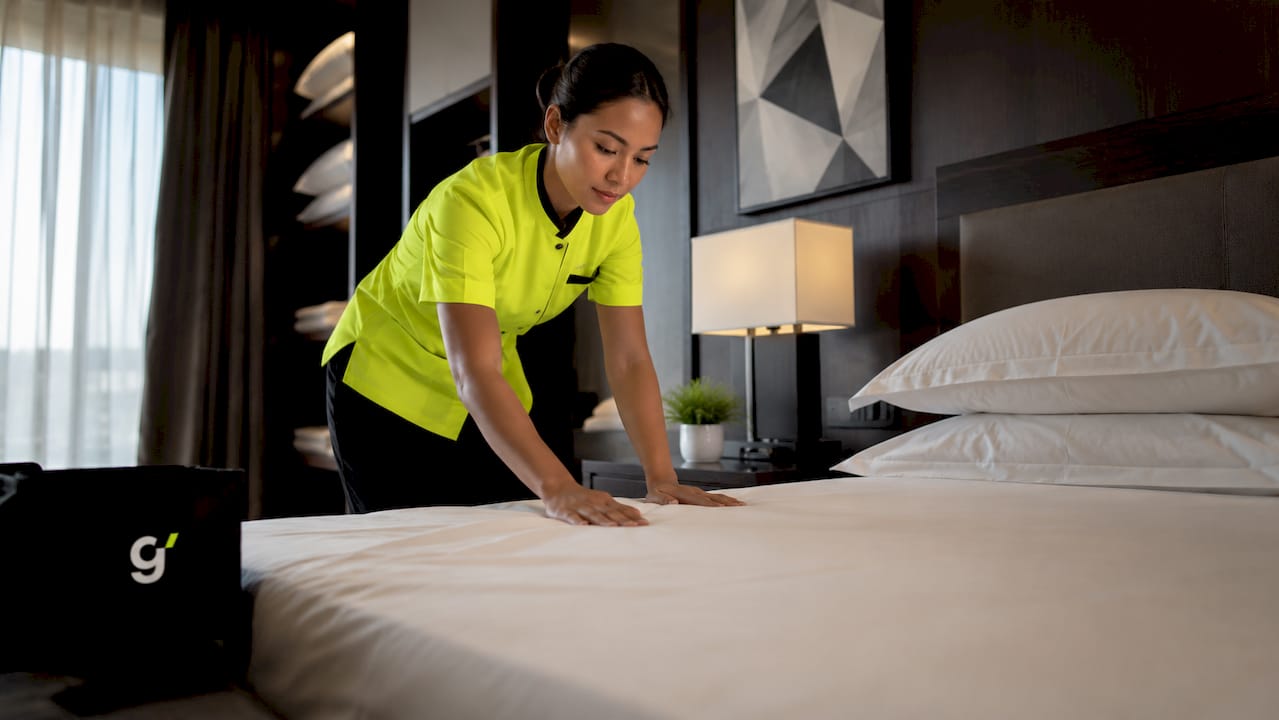
The hotel industry has the clearest data on this relationship. Clean hotel rooms are the leading driver of guest experience and loyalty, outweighing value for money and amenities. A guest who pays a premium rate expects a premium standard of cleanliness. When that standard is not met, the entire stay is reframed negatively, regardless of other positives.
Cleaning has moved from back-office maintenance to a front-line brand strategy in hospitality. Properties that treat turnover cleaning as a brand investment, rather than a cost to minimise, consistently outperform on review platforms and repeat booking rates.
Corporate and office environments
Clean workspaces affect more than client impressions. Clean workspaces improve employee wellbeing, reduce absenteeism, and support lease renewals. That last point is significant. Landlords and property managers increasingly factor cleaning standards into renewal decisions, making hygiene a financial consideration, not just a reputational one.
ESG reporting has also elevated cleaning standards in corporate settings. Businesses that use third-party certified eco-friendly products demonstrate environmental responsibility to clients and staff alike. This is a brand defence as much as a compliance measure.
| Sector | Primary brand benefit | Key cleaning focus |
|---|---|---|
| Retail | Premium positioning and shopper confidence | High-traffic floors, shelving, and change rooms |
| Hospitality | Guest loyalty and positive reviews | Rooms, bathrooms, and common areas |
| Corporate offices | Employee retention and client trust | Workstations, kitchens, and meeting rooms |
| Short-term rentals | Host ratings and repeat bookings | Full property turnover between guests |
What are the measurable business benefits of prioritising cleanliness?
The business case for treating cleaning as a brand investment is clear. Cleanliness directly affects customer retention, revenue, and operating costs. Businesses that maintain high standards consistently see fewer negative reviews, higher repeat visit rates, and stronger word-of-mouth referrals.
In the hospitality sector, the link between cleanliness and loyalty is particularly direct. Guests who rate cleanliness highly are significantly more likely to book again and recommend the property. A single negative cleanliness review on a platform like Google or TripAdvisor can suppress booking rates for weeks, making the cost of a cleaning lapse far higher than the cost of prevention.
For commercial property, the connection between cleaning and tenant retention is well established. Tenants who experience consistently clean common areas and facilities are more likely to renew leases and less likely to raise maintenance complaints. That reduces vacancy costs and administrative burden for property managers.
The cost-benefit calculation favours investment in consistent cleaning over reactive remediation. A deep decontamination after a complaint costs more in time, money, and reputational damage than a scheduled maintenance programme. Businesses that treat cleaning as a line item to cut during budget reviews typically pay a higher price in customer churn and negative publicity.
| Cleaning approach | Brand outcome | Business risk |
|---|---|---|
| Consistent scheduled cleaning | Positive reviews, repeat customers | Low |
| Reactive cleaning after complaints | Temporary recovery, trust damage | High |
| Sporadic deep cleans only | Inconsistent impressions, confused customers | Medium to high |
| Eco-certified cleaning programme | ESG credibility, staff and client confidence | Low |
Key takeaways
Cleanliness is a brand asset that directly drives customer satisfaction, loyalty, and revenue when maintained consistently across all customer-facing environments.
| Point | Details |
|---|---|
| Cleanliness drives satisfaction | Perceived cleanliness accounts for 42% of customer satisfaction in restaurants, making it the top driver. |
| Consistency beats intensity | Scheduled cleaning routines build more trust than occasional deep cleans because customers judge every visit. |
| Restrooms are brand signals | 78% of guests use restroom hygiene as a proxy for overall facility standards and brand care. |
| Eco-certified cleaning adds value | Third-party certified products strengthen ESG credibility and reassure both staff and clients. |
| Cleanliness affects retention | Clean environments support tenant lease renewals, employee wellbeing, and repeat customer bookings. |
Cleaning as a silent brand ambassador
I have spent years watching businesses pour money into logos, fit-outs, and social media while their premises quietly undermine every dollar spent. The most underestimated brand touchpoint in any physical business is the one customers experience with their senses the moment they walk in.
What strikes me most in 2026 is how customer expectations have shifted. Post-pandemic, cleanliness is no longer a baseline assumption. It is an active signal that customers seek out and evaluate. They notice the smell of a space before they notice the signage. They check the bathroom before they order a second round. They photograph the dust on a shelf and post it before they speak to a manager.
The businesses getting this right are the ones that have stopped treating cleaning as a cost and started treating it as a communication strategy. A commercial deep cleaning schedule is not an operational document. It is a brand document. It tells your team, your clients, and your landlord what your standards are and whether you hold yourself to them.
The missed opportunity I see most often is in short-term rentals. Hosts invest in photography, pricing tools, and guest communication, then lose their rating on a single turnover that was rushed or under-resourced. Cleaning in that context is not a chore. It is the product.
— Lead
Grimescene's approach to cleaning and brand protection
Maintaining a strong brand reputation through consistent cleaning is exactly what Grimescene is built for. Grimescene's eco-friendly cleaning solutions go beyond surface-level tidying, using non-toxic agents that neutralise buildup rather than masking it.
For short-term rental hosts, Grimescene's Scene Reset protocol delivers a full property turnover that protects your host ratings and guest satisfaction scores. Every clean is thorough, chemical-free, and designed to meet the standard guests expect from a five-star listing. Whether you manage one property or a portfolio, Grimescene's tailored service removes the risk of a cleanliness complaint derailing your reputation. Professional cleaning is not an overhead. It is a brand investment with a measurable return.
FAQ
How does cleanliness affect brand perception?
Cleanliness triggers the halo effect, leading customers to associate a clean environment with overall quality and professionalism. This directly influences satisfaction, trust, and the likelihood of returning.
Why do restrooms matter so much for brand image?
78% of guests use restroom hygiene as a measure of a facility's overall standards. A dirty restroom signals systemic neglect, regardless of how well the rest of the premises presents.
Does eco-friendly cleaning improve brand reputation?
Third-party certified eco-friendly cleaning products reassure clients and staff about safety and demonstrate environmental responsibility. This supports ESG goals and adds a layer of brand credibility in corporate and commercial settings.
How does cleaning affect customer loyalty in hospitality?
Clean hotel rooms are the top driver of guest loyalty, outweighing amenities and value for money. Guests who rate cleanliness highly are far more likely to rebook and recommend the property.
What is the cost of inconsistent cleaning for a business?
Inconsistent cleaning erodes customer trust, generates negative online reviews, and increases the cost of reactive remediation. Scheduled cleaning programmes cost less over time than managing the reputational fallout from a cleanliness complaint.