
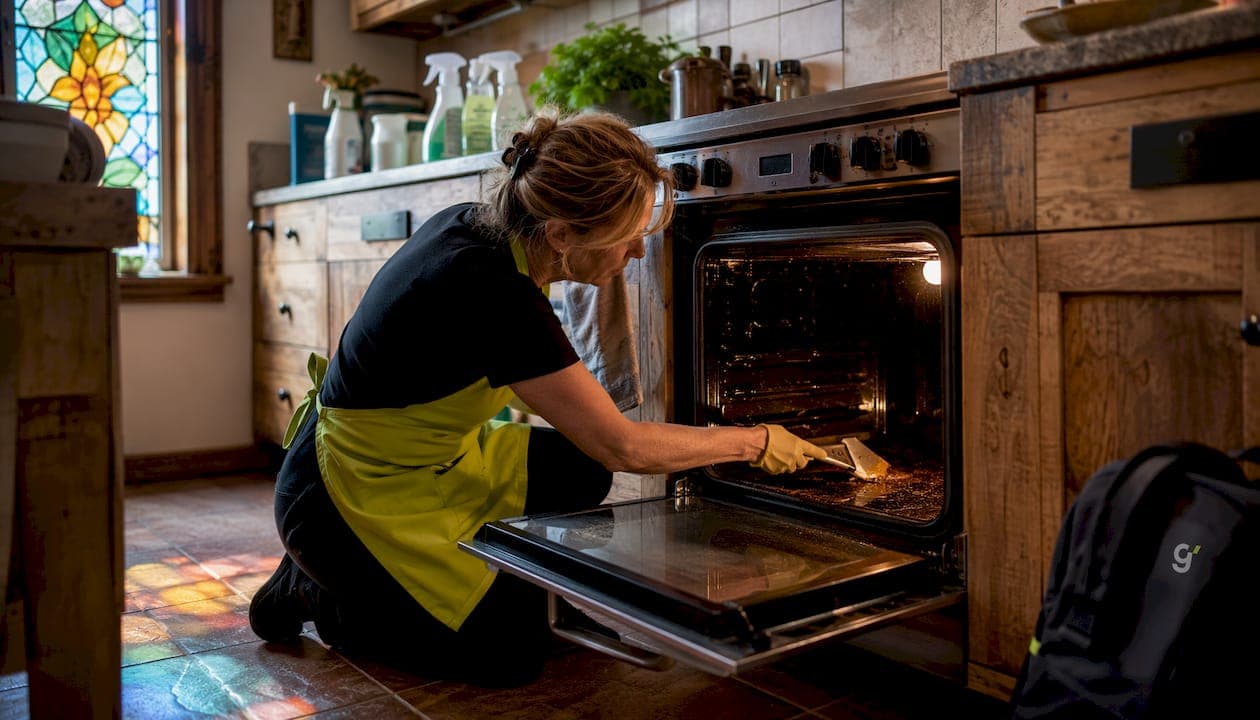
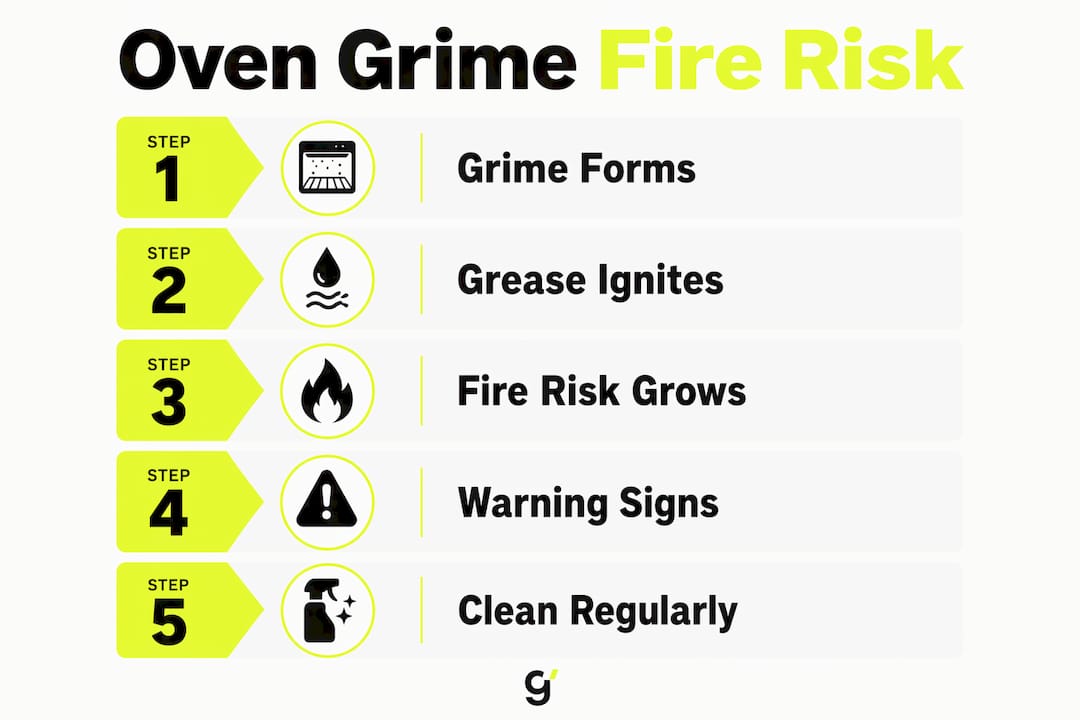
Oven grime is defined as the accumulated layer of burnt fat, food drippings, and carbonised residue that coats oven surfaces during normal cooking. This buildup is directly flammable. Cooking appliances cause over 50% of accidental house fires in the UK, and the oven is a primary contributor. Understanding why oven grime is a fire hazard means understanding what grease does at high temperatures: it ignites. Beyond fire risk, grime releases volatile organic compounds (VOCs) and degrades indoor air quality every time you cook. The good news is that regular cleaning eliminates the hazard entirely.
Why oven grime is a fire hazard
Grease and carbonised food residue are the two main culprits behind oven fires. Both are flammable at the temperatures a standard oven reaches during everyday cooking. Approximately 25% of dirty ovens constitute a genuine fire risk due to fat and carbon buildup. That figure means one in four households with a neglected oven is operating a potential fire source in their kitchen.
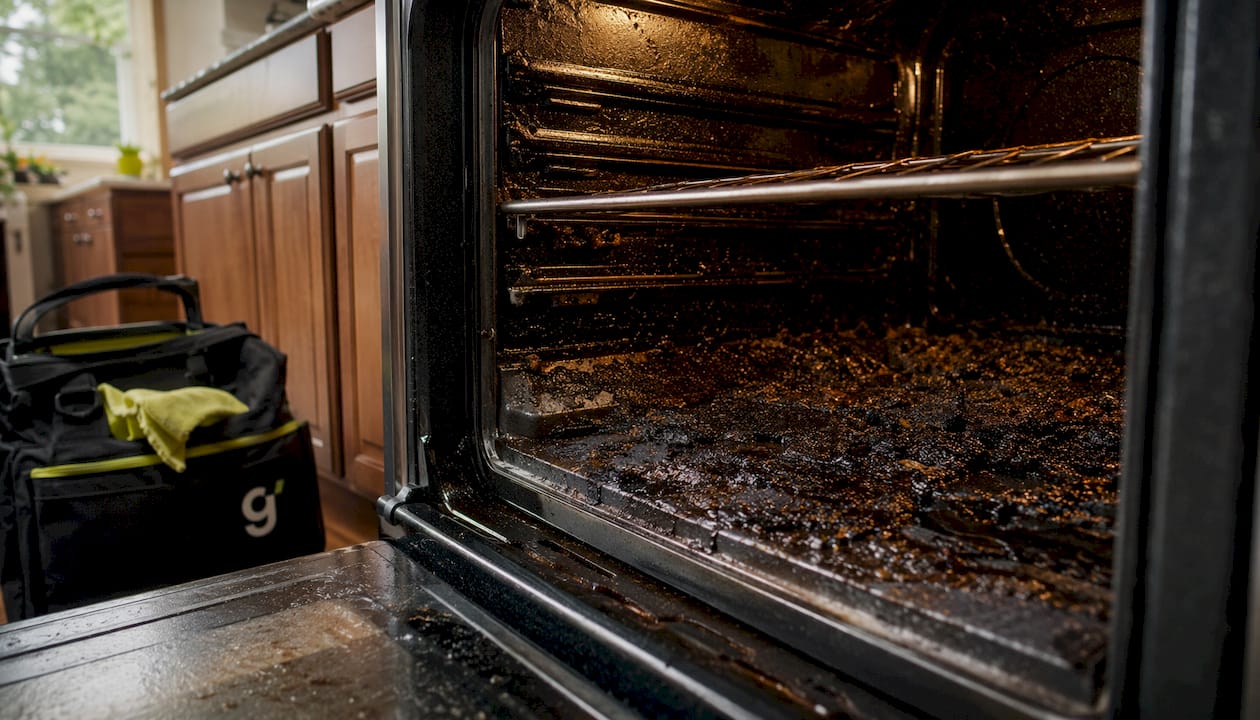
Cooked-on grease begins to ignite at around 190°C. Most ovens operate well above that threshold during roasting or grilling. When a thick layer of residue sits on the oven floor or walls, it does not need a direct flame to catch. Radiant heat from the element alone is enough to start a smoulder.
The fire risk compounds over time. Each cooking session adds a new layer of residue on top of the last. Older deposits harden and bond to surfaces, making them more resistant to airflow and more likely to overheat in concentrated spots. Heavily encrusted ovens waste about 10% more energy due to restricted heat circulation. That wasted energy is a sign the oven is working harder and running hotter than it should, which accelerates the ignition risk.
What causes oven grime and how does it accumulate?
Grime builds up from three main sources: fat splatter, food drippings, and boil-overs. Every time you roast meat, bake a dish with cheese, or cook anything with oil, small particles of fat become airborne inside the oven cavity. They land on walls, the door glass, the roof, and the floor, then bake on at high heat.
The main components of oven grime include:
- Fat and grease splatter from roasting meats, frying, and baking pastry
- Food drippings from casseroles, pies, and baking trays that overflow
- Sugar residue from baked goods, which caramelises and carbonises quickly
- Starchy deposits from bread and pasta dishes that char at high temperatures
High temperatures accelerate the bonding process. A light grease splatter that sits on the oven floor for one cooking session becomes significantly harder to remove after three sessions. The heat essentially polymerises the fat, turning it from a soft residue into a hard, carbon-rich crust. This crust is what creates the fire hazard.
Frequency matters too. Homeowners who cook daily accumulate grime far faster than those who use their oven occasionally. Roasting and grilling are the highest-risk activities because they involve high heat and uncovered food. Baking at lower temperatures still contributes, but at a slower rate.
Pro Tip: Place a baking tray or oven liner on the shelf below whatever you are cooking. It catches drippings before they hit the oven floor and bake on, cutting your cleaning time significantly.
How does oven grime ignite and what are the warning signs?
The ignition mechanism is straightforward. Carbonised grease on oven surfaces reaches its flash point when the oven temperature climbs high enough. At that point, the residue smoulders, then flames. The fire can spread to nearby food packaging, oven mitts, or cabinetry if the door is opened.
A burning smell from an empty oven is a key sign that grime has penetrated hard-to-clean areas and the oven is at high fire risk. Such ovens often show thick dark deposits and persistent smoke escaping from vents or the door seal.
Grease trapped in fan cavities, door seals, or beneath heating elements is particularly dangerous. These areas are difficult to see and even harder to clean without disassembly. The heat concentrates in those cavities, and the residue there reaches ignition temperature faster than grime on open surfaces.
The warning signs of a hazardous oven are specific and recognisable:
- A persistent burning smell when the oven is empty or preheating
- Visible smoke escaping from door seals or vents during cooking
- Thick, dark deposits on the oven floor, walls, or around the element
- Neglect of more than six months without any cleaning
Experts define high-risk ovens by the presence of persistent burning smells, smoke, dark deposits, or neglect over six months. Any one of these signs warrants immediate attention. All four together mean the oven should not be used until it has been cleaned.
Dirty ovens also release VOCs and particulate matter during heating cycles, degrading indoor air quality. Grease buildup aggravates asthma and can transfer unwanted flavours to food. The fire hazard gets the headlines, but the health impact is a daily reality for anyone cooking in a grimy oven. For a deeper look at how grime affects your home environment, the Grimescene guide on grime and home surfaces covers the broader picture.
What is the best cleaning schedule to prevent oven fires?
Consistent cleaning is the single most effective fire prevention measure for ovens. A deep clean should be performed every four months to prevent dangerous grease accumulation. That schedule suits most households cooking regularly. Heavy users, such as those who roast meat weekly, should clean more frequently.
A practical cleaning routine looks like this:
- Spot clean after every use. Wipe down the oven floor and walls with a damp cloth once the oven has cooled. This takes two minutes and prevents residue from hardening.
- Do a light clean monthly. Remove the oven racks and wipe all interior surfaces with a non-caustic degreaser. Check the door seal for trapped grease.
- Deep clean every three to four months. Use a purpose-formulated oven cleaner or run a self-cleaning cycle. Remove all racks and accessories first.
- Inspect the heating element quarterly. Look for dark spots, pitting, or residue buildup directly on the element. Do not apply cleaning agents directly to it.
- Check the fan cavity every six months. In fan-forced ovens, grease accumulates around the fan. This area requires careful attention and, in some cases, professional cleaning.
Self-cleaning cycles are effective but carry their own risks. Self-clean cycles operate at temperatures between 800°F and 900°F to incinerate debris. That extreme heat can cause fumes and, in rare cases, damage oven components if the buildup is severe. Self-cleaning cycles can take up to six hours and should never be run when you are away from home. Good ventilation is non-negotiable during and after the cycle.
Pro Tip: If you prefer to avoid harsh chemicals entirely, Grimescene's guide on removing grease without chemicals outlines non-toxic methods that work just as well for routine maintenance.
What safety precautions apply when cleaning a grimy oven?
Oven cleaning carries real chemical hazards that most homeowners underestimate. Oven cleaners are among the most hazardous household chemicals, with strong alkaline properties that can cause severe skin and eye burns on contact. The chemical composition typically involves caustic soda and solvents that cut through carbon but require careful handling.
COSHH guidance specifies forearm-length gloves and face shields as non-negotiable when using commercial oven cleaners. Standard rubber gloves are not sufficient. The caustic solution can soak through thin gloves quickly, particularly during prolonged cleaning sessions.
The key safety precautions for oven cleaning are:
- Wear forearm-length chemical-resistant gloves and eye protection before opening any oven cleaner product
- Ventilate the kitchen fully by opening windows and running the rangehood fan throughout the cleaning process
- Never apply cleaning agents directly to heating elements as this causes chemical off-gassing and can permanently damage the element
- Allow the oven to cool completely before applying any cleaning product
- Keep children and pets out of the kitchen during and for at least 30 minutes after cleaning
Applying cleaning agents directly to heating elements can damage oven parts and cause hazardous chemical off-gassing. This is one of the most common mistakes homeowners make. The element should be wiped gently with a damp cloth only, never soaked or sprayed. For households wanting to sidestep chemical risks entirely, Grimescene's appliance degreasing guide covers non-toxic approaches suited to family homes.
Key takeaways
Oven grime is a genuine fire hazard because flammable grease and carbon deposits ignite at standard cooking temperatures, and the risk grows with every cleaning cycle skipped.
| Point | Details |
|---|---|
| Grime ignites at cooking temperatures | Cooked-on grease reaches its flash point at around 190°C, well within normal oven operating range. |
| One in four dirty ovens is high-risk | Approximately 25% of neglected ovens carry a genuine fire risk from fat and carbon buildup. |
| Clean every three to four months | A deep clean on this schedule prevents dangerous grease accumulation and keeps the oven efficient. |
| Warning signs demand immediate action | Burning smells, smoke from vents, and thick dark deposits all indicate the oven is unsafe to use. |
| Chemical cleaners require proper PPE | COSHH guidance mandates forearm-length gloves and face shields when using commercial oven cleaners. |
What I have learned from years of watching ovens get ignored
Most homeowners treat oven cleaning as a cosmetic task. They clean when the oven looks bad, not when it becomes dangerous. That is the wrong trigger. By the time an oven looks visibly grimy, the fire risk is already established.
The warning sign I find most telling is the burning smell from an empty oven. Homeowners often dismiss it as "just the oven heating up." It is not. That smell means grease has reached areas that radiant heat hits directly, and it is already smouldering. Waiting until that smell becomes smoke is waiting too long.
The other mistake I see constantly is skipping the fan cavity. In fan-forced ovens, which are the standard in most Australian kitchens, grease accumulates around the fan housing at the back of the oven. That area runs hot, it is hard to reach, and most cleaning products never touch it. A thorough clean addresses the fan cavity specifically, not just the visible surfaces.
Regular cleaning also pays off beyond fire prevention. A clean oven heats more evenly, uses less energy, and produces food that actually tastes the way it should. Grease buildup transfers flavours between dishes in ways that are subtle but noticeable. The practical benefits of a clean oven stack up quickly once you make it a routine rather than a reaction.
The simplest habit change is the spot clean after every use. Two minutes with a damp cloth while the oven is still warm prevents the hardening process entirely. That one habit, done consistently, reduces the need for heavy-duty cleaning by a significant margin.
— Lead
When professional oven cleaning makes sense
Some ovens are simply beyond what a standard cleaning product and an afternoon can fix. Thick carbon deposits, grease in fan cavities, and residue baked on over years of neglect require a different approach.

Grimescene's Rapid Response Tactical Clean is built for exactly this situation. The service uses advanced non-toxic agents that neutralise grease and carbon buildup without the chemical hazards of caustic commercial cleaners. It is safe for families, pets, and the oven itself. For rental property owners managing turnovers, Grimescene's short-term rental cleaning service includes oven decontamination as part of the Scene Reset protocol, keeping appliances safe and host ratings intact. If your oven is showing warning signs, professional cleaning is the fastest way to eliminate the risk.
FAQ
How often should I clean my oven to prevent fires?
A deep clean every three to four months is the recommended schedule for most households. Homeowners who roast or grill frequently should clean more often.
What temperature does oven grease ignite at?
Cooked-on grease begins to ignite at around 190°C. Standard ovens operate well above this during roasting and grilling, making residue buildup a direct fire risk.
Is a burning smell from my oven a fire hazard?
A burning smell from an empty or preheating oven signals that grease has reached hard-to-clean areas and the oven is at high fire risk. The oven should be cleaned before further use.
Can I use the self-cleaning cycle instead of manual cleaning?
Self-cleaning cycles are effective but must be run with good ventilation and only when someone is home. The cycle can take up to six hours and produces fumes that require an open, well-ventilated kitchen.
Are commercial oven cleaners safe to use at home?
Commercial oven cleaners are effective but carry significant chemical hazards. COSHH guidance requires forearm-length gloves and eye protection. Never apply them directly to heating elements, and always ventilate the kitchen fully during use.